

CNC Press Brake: How It Works, Types, and Key Components
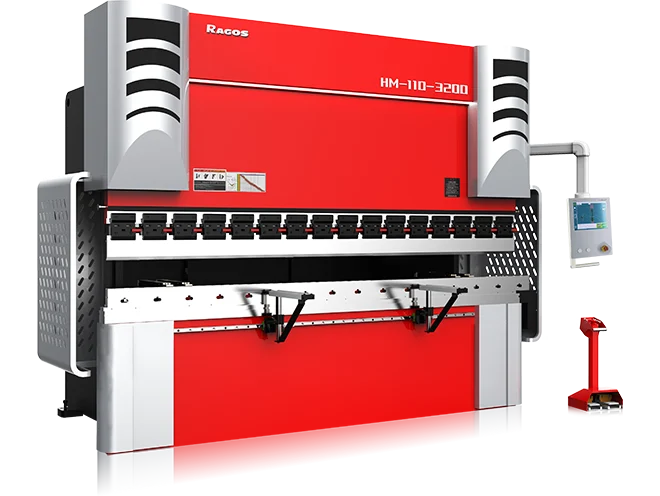
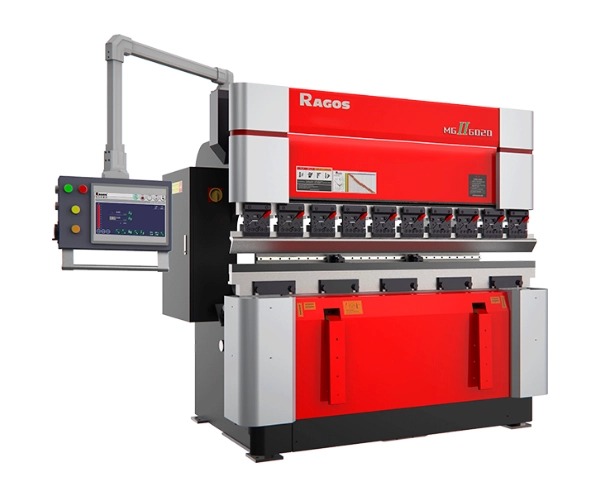
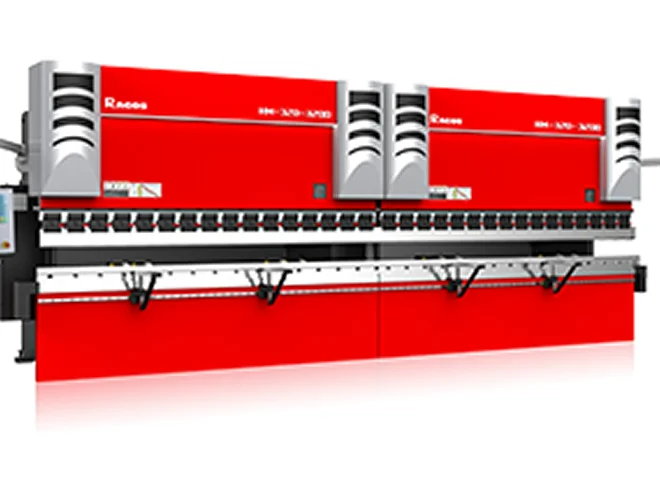
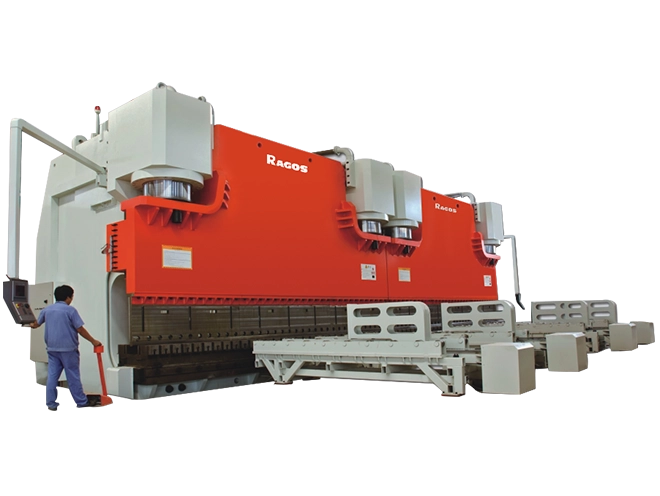
A CNC Press Brake is used to bend sheet metal with precision. JS RAGOS is an expert press brake manufacturer and uses advanced control and a powerful mechanical structure to produce high-performance CNC press brakes. The better a fabricator understands a CNC press brake, the better they are at creating accurate, repeatable parts, and the more efficient they are at accomplishing the task in less time.
Why Is a CNC Press Brake Important in Manufacturing?
Programming a CNC press brake to perform a bending task can be done with utmost precision and repeatability. CNC press brakes are extremely useful in metalworking, as they can be used to bend sheet metal at varying levels of difficulty, and can be used on a variety of metals such as steel, aluminum, and stainless steel. Because of that functionality, CNC press brakes are often found in industries that work with metal and require custom component parts.
What Are the Main Types of CNC Press Brakes?
Hydraulic Press Brakes
To control the bending process, hydraulic press brakes utilize oil cylinders. CNC hydraulic press brakes increase efficiency and accuracy by automating multiple functions. An advanced version, the synchronized hydraulic press brake, uses two cylinders to increase control and versatility, but is usually more costly to operate, and is more difficult to maintain.
Electric Press Brakes
Electric press brakes are faster than hydraulic brakes and are more energy-efficient and repeatable, but may lack versatility and bending force. Servo press brakes, a subtype of electric press brakes, operate a servo motor to control the bending process so that the brakes are quieter, making them ideal to use in an environment that requires precision in bending as well as a quieter workspace.
Hybrid Press Brakes
Combining elements from both hydraulics and electricity, hybrid press brakes introduce superior design from both realms. As hybrid press brake manufacturers, JS RAGOS places emphasis on:
•Momentous accuracy – guarantees repeatable and precise bends
•Efficiency – saves on energy by 78% compared to traditional hydraulic press brakes
•Flexibility – applicable to wider operations than electric press brakes
When selecting a press brake, the following should be considered:
| Feature | Hydraulic | Electric | Hybrid (JS RAGOS) |
| Force capacity | Highest | Moderate | High |
| Versatility | High | Limited | Highest |
| Maintenance | More frequent | Low | Moderate |
| Energy efficiency | Lower | High | Highest |
| Noise level | Moderate | Low (servo) | Low |
Main Components of a CNC Press Brake
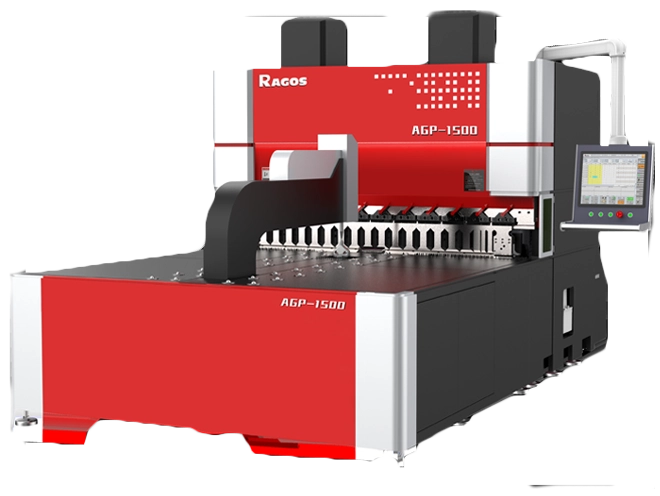
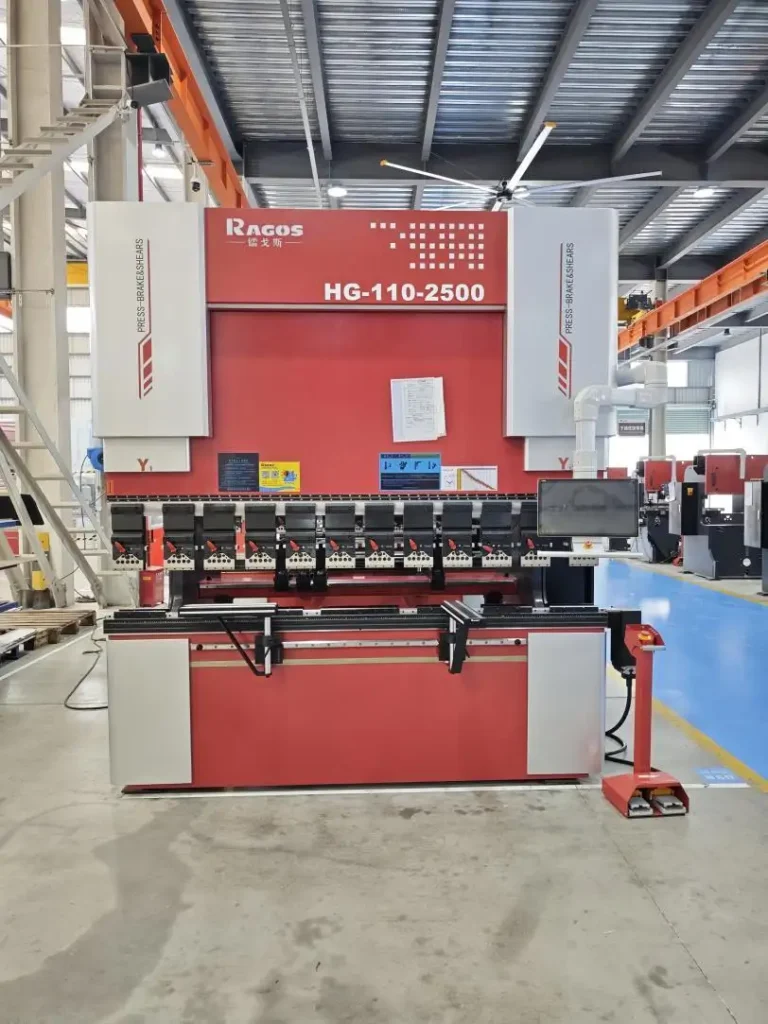
CNC press brakes incorporate a significant number of mechanical assemblies. Principal assemblies include the bed, ram, punch & die, and a back gauge.
Frame (Ram)
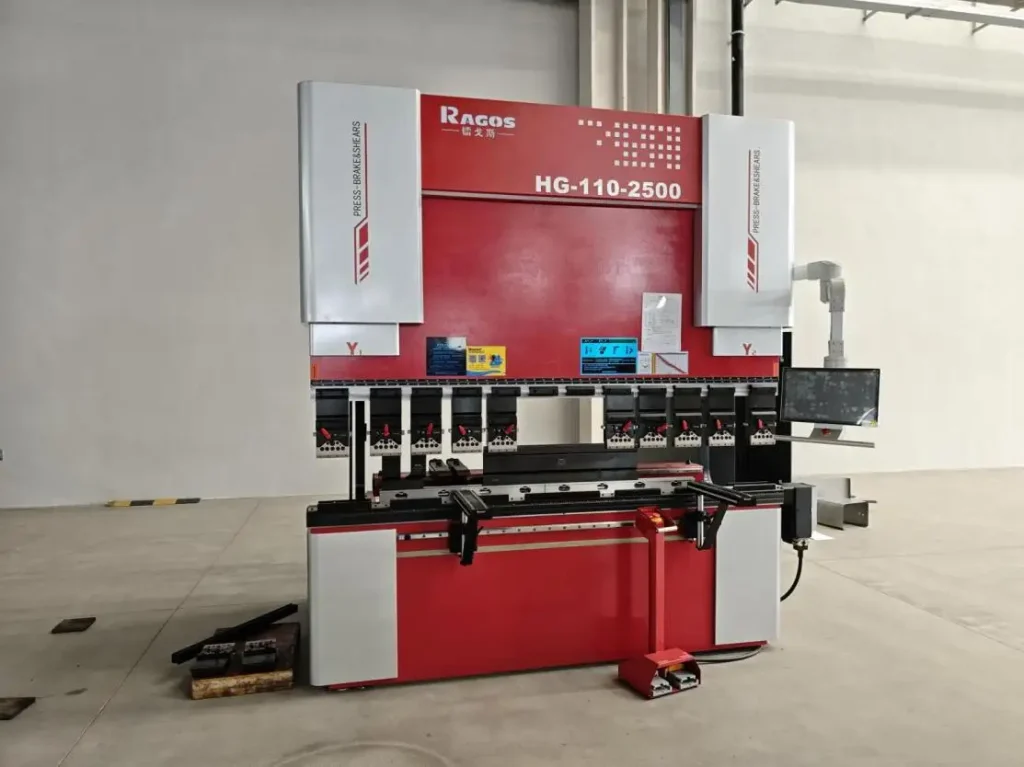
The ram is the movable part on which the punch is installed. It runs vertically along the Y-axis and is positioned by numerical control. Independent Y1 and Y2 axes regulate possible imbalance of the ram (in hydraulic presses, these correspond to different cylinder strokes).
Bed (Bench)
The bed is the fixed part under the ram where the die is installed. It may include a crowning system to compensate for frame deformation, especially in machines 2 meters (6 feet) or wider. JS RAGOS uses a hydraulic crowning system: high-pressure, low-flow cylinders inside the bench produce a counterforce from underneath, ensuring uniform bending along the entire length.
Lateral Frames
Lateral frames are the side plates that define the machine’s width. Some machines have a gap called a “throat,” allowing sheets wider than the distance between frames to be inserted.
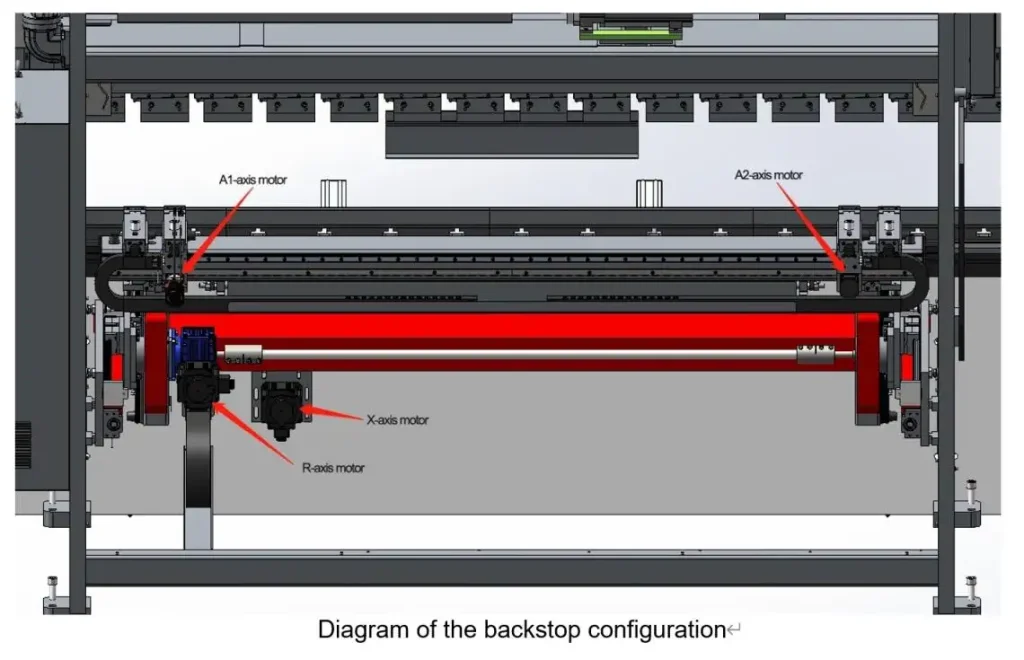
Rear Backgauge
The backgauge guarantees accurate placement of bends. It usually has a beam with two or more finger stops that slide sideways. The axes are as follows:
•X-axis (for and back) – determines the distance from the die center to the tip of the fingers and the length of the bend
•R-axis (up and down) – adjusts the stops for the size of the die
•Z-axis (left and right) – the stops are located for best support
CNC Control System: How It Works
The CNC system is the control center of a CNC press brake. It interprets commands and regulates the automated bending of the machine.
•Control System
The CNC system of JS RAGOS press brakes has intuitive visual interfaces paired with intelligent CNC controllers.
•Programming
Manipulating the CNC system requires the creation of a bending program. The software defines the parameters (i.e. material thickness, overall dimensions, required angles) to be bent. The software and system generate proprietary machine code.
•Axis Control
The CNC system controls the vertical movements of the ram as well as the horizontal movements of the backgauge, including the crowning system of the machine to facilitate control of the curvature of uniform bends.
Key bending parameters:
•Thickness of sheet
•Dimensions of sheet
•Angle of Bend
An advantage of numerical controls is bend simulations where the machine performs a check to ensure there are no collisions or overloads.
Advantages of CNC Press Brake
With CNC, a lot of good things can happen.
•Speed – quicker setup and lower cycle times
•Accuracy – retains same bending angles and dimensions with every bend
•Repetition – enables same results to be repeated on every batch
•Adaptation – enables quick job changeover
•Flexibility – accommodates both short and long production runs
•Agility – helps you to modify designs in short times
Numerical Control Technologies
ESA 650 & 660 Control
The system comes with color images and supports multiple languages. It automatically calculates the PMI (Precision Mandrel Index) based on tool type and required angle, plus the bending force. Optimization options include optimal bending sequence, collision display, and anti-collision checks between axes and the die.
ESA 675 Control
Equipped with an ultra-large 21” LCD HD multi-touch color screen and an integrated Windows PC, the ESA 675 allows opening PDF or other drawing formats directly on the machine. It supports full Cad-Cam 3D management, with 8 GB RAM, 4 USB 2.0 ports, and 4 USB 3.0 ports.
Delem Numerical Control
A simple, intuitive touch-screen control with high functionality and a modern graphic environment. Available in different screen sizes and customizable configurations.
Press Brake Programming: 3D Project Management
Modern CNC press brakes can run programming software for 3D project preparation and processing. JS RAGOS sheet metal bending brakes include advanced software that ensures:
•Maximum efficiency in tool selection based on bend radius, maximum press brake force, collision control, and tool availability
•Automatic recognition and management of flattened bends using pre-bend angles and inner counter-bends
•Calculation of the optimal bending sequence, avoiding collisions and accounting for split tools and skids
•Although automatic management nearly always finds a solution, operators can manually override and adjust software settings.
For backgauge positioning, JS RAGOS software provides automatic and manual control options with 3D simulation—allowing you to view all moving elements: tools, the part to be bent, and the machine structure.
Finally, the software generates a complete tooling report from the 3D bending sequence, including detailed information per bend. The report can be printed or displayed directly on the numerical control.
Smart Technologies in Manufacturing - Industry 4.0
Press brakes utilizing 4.0 technology are considered smart manufacturing tools. JS RAGOS incorporates sensors and data analytics supported brakes that integrate with networks.
4.0 technology integration has numerous benefits:
•Predictive Maintenance: Avoiding machine breakdowns by scheduling service based on predicted failures.
•Real-time Monitoring: Identifying where work needs to be done by finding interruptions in the workflow.
•Quality Control: An automated system that checks the quality of the product to ensure that it is done correctly.
•Improved Connectivity: Workflow is less disrupted by work done to connect different manufacturing areas.
Automation and Robotics
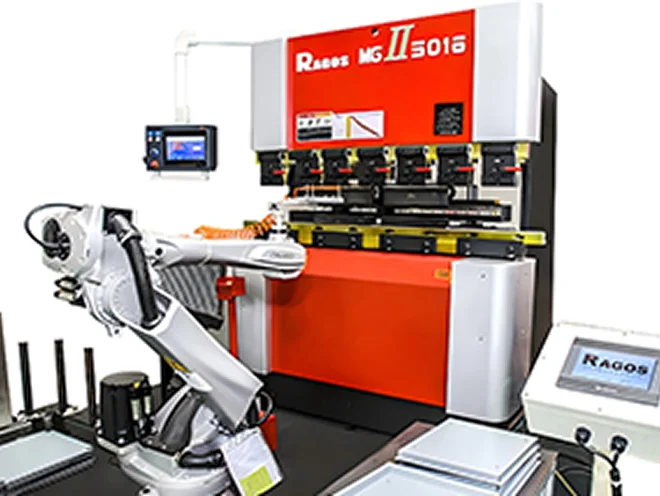
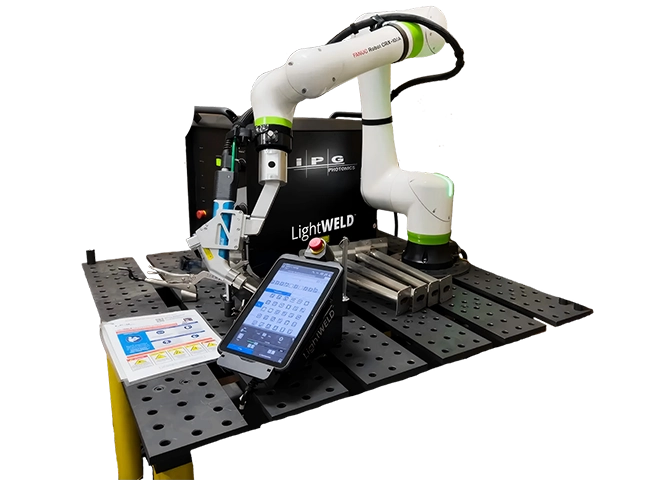
Changes have occurred in the technology used to operate CNC press brakes. Cartesians have been replaced by anthropomorphic and collaborative robots which bend work faster and reduce error in the work.
The advantages of automated bending cells have been:
•Reduced downtime
•Greater quality control resulting in consistent results with less error
•Machines completing the repetitive work has improved the posture of the employees who used to operate the machines.
To enhance production while improving profit margins, JS RAGOS has created cutting-edge technology for automated bending cells. The future of CNC press brakes will likely feature even greater automation and robotics as technology progresses.
If you are in need of a trusted CNC press brake manufacturer, JS RAGOS is your answer. With our Industry 4.0 ready CNC systems, and a selection of hybrid, hydraulic, and electric press brakes, you will be ready for the future of bending. Request a quote to optimize your processes with our bending systems.