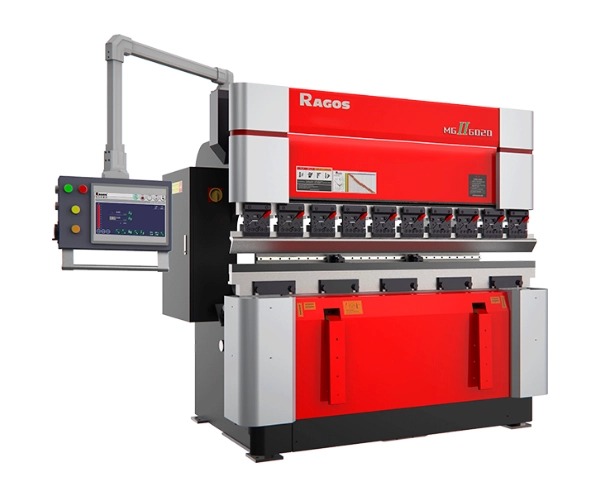
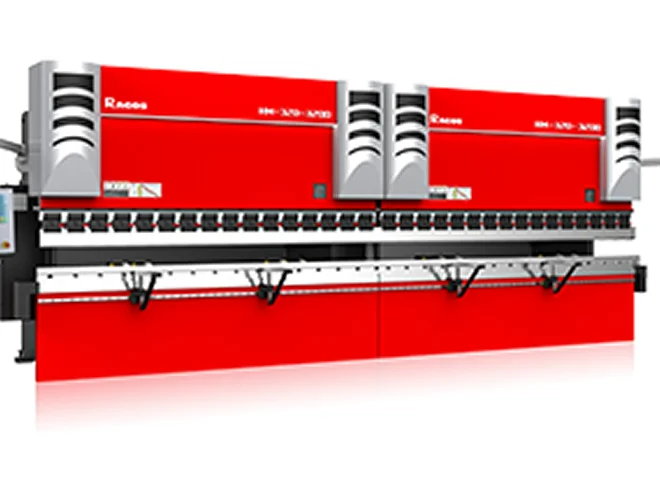
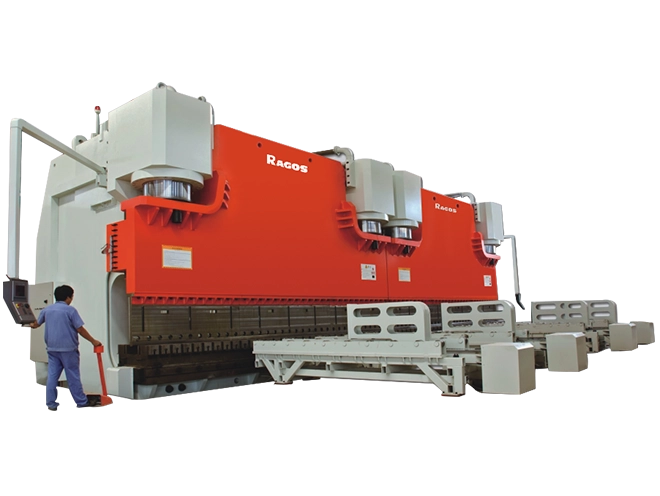
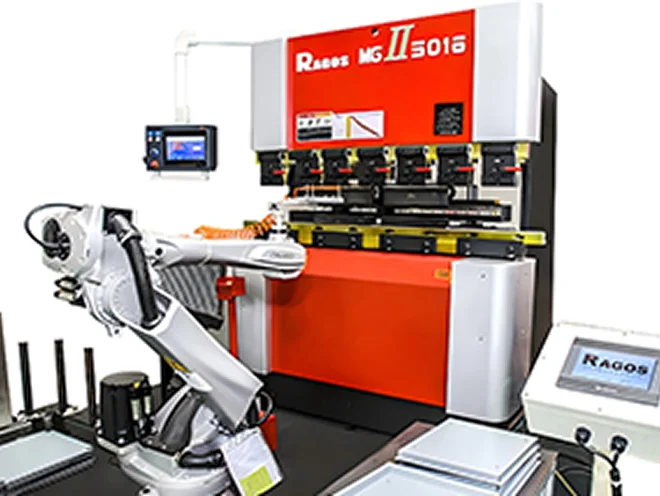



4000mm CNC Press Brake: What Is Crowning & 2 Types You Should Know
When it comes to obtaining uniform bends on a 4000mm CNC press brake, one of the most necessary components is the crowning system. Based on my experience, press brake crowning system helps to minimize the deflection that naturally occurs while bending to help ensure the even stretching of material across a span. JS RAGOS as a manufacturer company recognizes that the type of crowning system, either mechanical or hydraulic, used directly correlates to the accuracy and repeatability to maximize productivity within the system. This article describes press brake crowning, detects two key types, and assists you in selecting the ideal system for your needs.
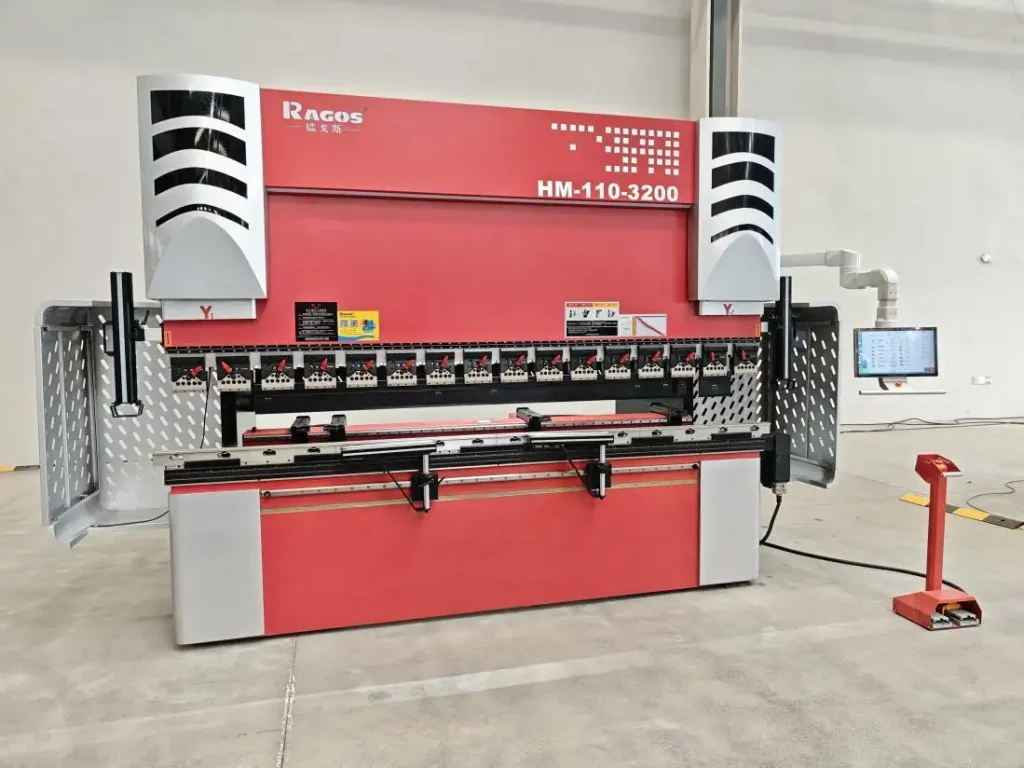
What Is Press Brake Crowning?
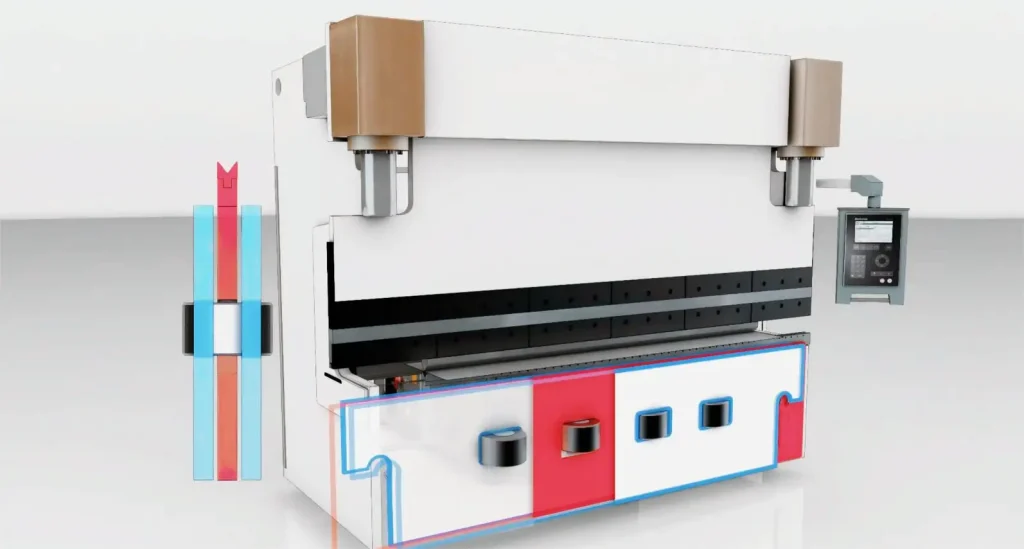
The bending of the sheet metal introduces a reaction force on the machine tool. This force can cause a deformation of the press brake’s slide and table, resulting in inconsistent angles along the length of the workpiece. Crowning is a technique used to alleviate this form of deflection. By imparting a slight, controlled, positive curvature to the worktable, or by a mechanism designed for this purpose, crowning ensures that the upper and lower tool gaps remain parallel under load. Consequently, the workpiece will have uniform angles along its length.
The 2 Types of Press Brake Crowning Systems
There are mainly 2 press brake systems, mechanical crowning and hydraulic crowning. Both systems aim at compensating deflection; however, the method used is fundamentally different.
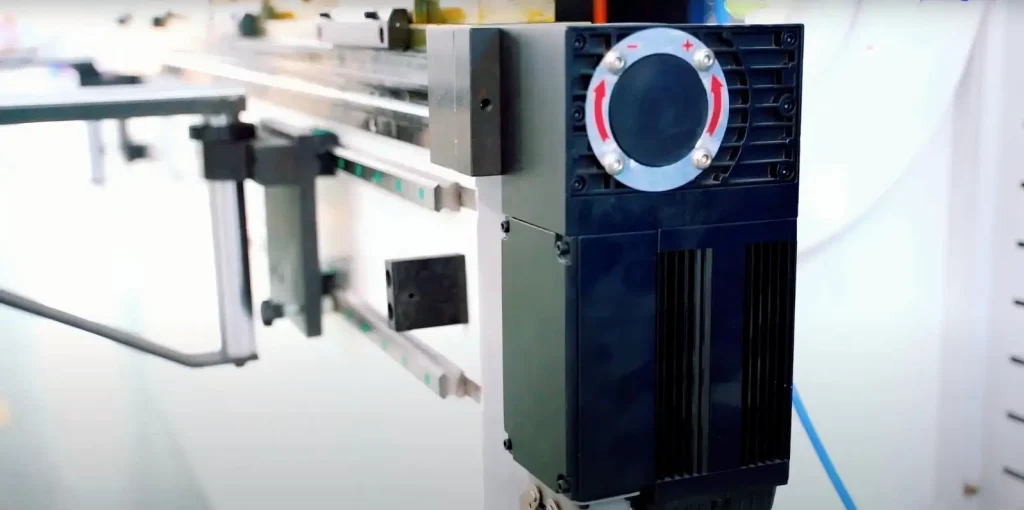
1. Mechanical Crowning System
In mechanical crowning, a set of convex wedges with beveled edges compensates for the sliding and table deflection using finite element analysis (FEA). The CNC controller estimates mechanical crowning based on the load force, which can be determined by the thickness, length, and tensile strength of the given material. The controller then governs the wedges movement.
Some important aspects of the mechanical crowning system are as follows:
• More than three crowning points mean that blind areas are completely eliminated.
• Each axis of the system has motors and drives for CNC control.
• Long-term maintenance is almost negligible, as there are no oil leaks or seals.
• The deflection curve conforms to the actual bend and allows for tools that are spaced evenly with consistent angles.
Because of its use of multiple compensation points to allow for linear crowning, mechanical crowning offers support that is uniform across the entire length of the table. When part-to-part consistency is required, and high-volume production runs are being carried out, mechanical crowning is the most suitable solution.
2. Hydraulic Crowning System
Hydraulic crowning includes several oil cylinders placed under the lower worktable. The placement and size of each of these cylinders comes from the FEA of the slider and table deflection. Upon actuation, these cylinders will push up a bulge in the worktable, therefore compensating for the deflection.
How it works:
The operator inputs the required bending parameters (plate thickness, length, material) into the CNC controller. The controller automatically calculates the required compensation value and sends commands to a compensation amplifier, which then signals a proportional valve to control the small oil cylinders. The worktable bulges elastically within its steel plate’s elastic range.
Key features of hydraulic crowning:
• Simpler operation from the user’s perspective.
• No mechanical wear over time (the steel plate’s elastic deformation remains consistent).
• Suitable for shops with less experienced operators.
Hydraulic systems come with complications. Among them are loss of oil, loose connections, and the deteriorating of seal rings, all of which impact the accuracy of compensation. Inconsistent hydraulic conditions result in differentiation of the hydraulic plates.Pure hydraulic systems consist of three compensation points. Hence, they have possible blind areas.
Mechanical vs. Hydraulic Crowning: A Quick Comparison
| Feature | Mechanical Crowning | Hydraulic Crowning |
| Compensation Method | Wedges (either single or multi-group) | Oil cylinders located beneath the table |
| Compensation Points Count | Numerous (e.g., >3, no blind areas) | Often 3, may have blind areas |
| Precision | Very high, consistent, perfect for large volume production | Average, depends on hydraulic conditions |
| Level of Upkeep | Minimal, no oil leaks, very slow wear | Greater long-term upkeep, oil leaks may occur and seals may fail |
| Skill Level Required | Higher due to multi-step bending | Lower, more user-friendly |
| Longevity | Only possible wear on the wedge after several years | No wear on the steel plate, but hydraulic parts may age |
How to Choose Crowning for 4000mm CNC Press Brake
You must consider the product’s end-use requirements and your production system, operator, and product quality needs to determine if mechanical versus hydraulic crowning is best. Here’s a practical guide from JS RAGOS, a manufacturer dedicated to precision bending solutions.
Choose mechanical crowning if:
• You run mass production with high repeatability requirements.
• You need no compensation blind areas for complex or long workpieces (e.g., full 4000mm length).
• Your operators are skilled and can make real-time adjustments for multi-step bending.
• You want a low-maintenance, environmentally friendly system (no oil leaks).
• Long-term accuracy and consistency are more important than initial ease of use.
JS RAGOS mechanical crowning systems are designed for factories that demand zero-defect bending across thousands of parts.
Choose hydraulic crowning if:
• Your operators have limited experience or you prefer simpler operation.
• You bend workpieces mainly in single-step operations.
• You want to avoid mechanical wear issues over a very long machine life (though seals and oil need periodic replacement).
• You accept that hydraulic variables (oil temperature, leaks) may cause slight part-to-part variation.
For many general fabrication shops, hydraulic crowning offers a good balance of convenience and performance. But for high-precision, high-volume work, mechanical crowning—especially multi-group wedge systems—delivers superior results.
Why JS RAGOS Manufactures Both Crowning Solutions
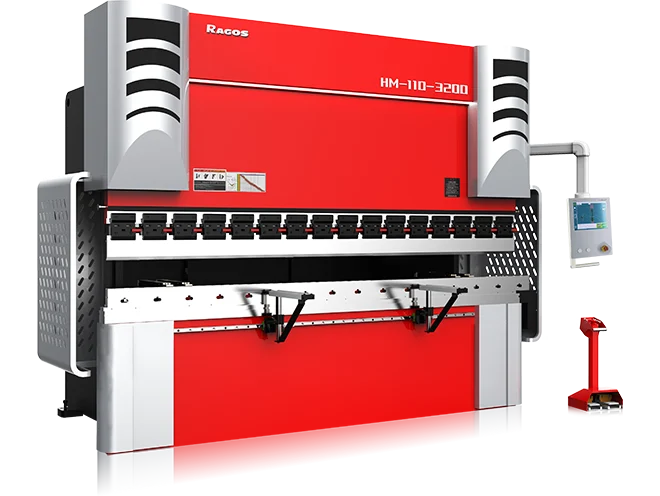
JS RAGOS manufactures 4000mm CNC press brakes and supplies both mechanical and hydraulic crowning systems because customers have varying needs. We report the data concerning normal batch sizes, various types of materials, different levels of staff skill, and goals with respect to quality. There are CNC controllers that can crowning of either type.
• Regarding mechanical crowning: We have motor-driven wedges with +8 compensation points to achieve precision with linear bending.
• Regarding hydraulic crowning: Our cylinders are designed to reduce leakage and offer easy access to all maintenance points.
Selecting the right system means your 4000mm CNC press brake will produce accurate bends from the first to the tenth thousandth.
Conclusion
Achieving consistent bend angles in long workpieces on a press brake can be particularly challenging because of the phenomenon of deflection. Mechanical crowning is more precise with more compensation points. It has less long-term maintenance. Hydraulic crowning is more user-friendly with no deflection. Understanding the two systems means selecting a crowning solution that fits your production system. JS RAGOS will offer both solutions on the 4000mm CNC press brakes at your request, with support on your most accurate, reliable, and user-friendly systems.