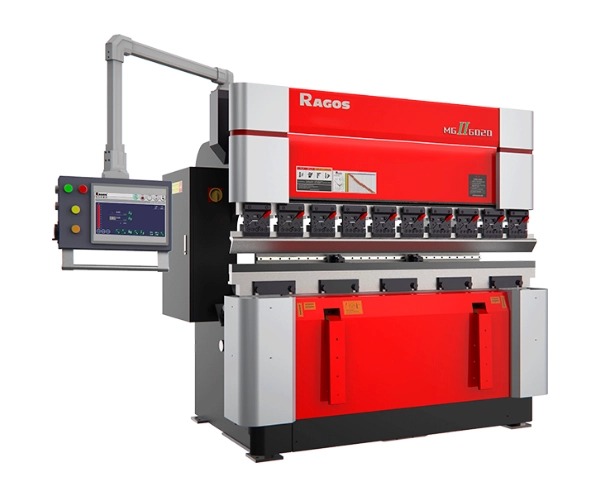
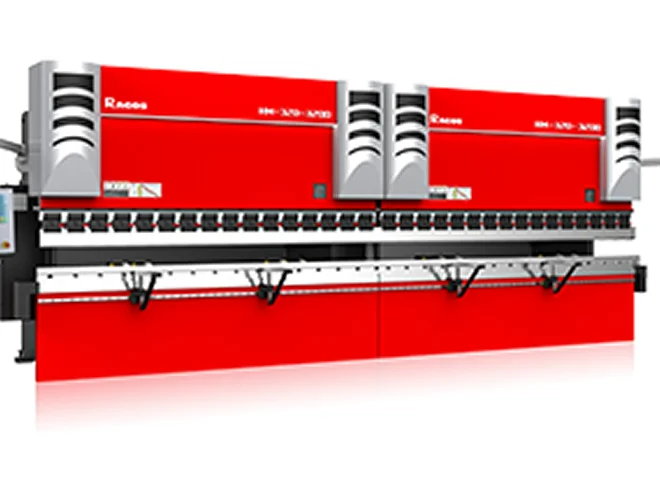
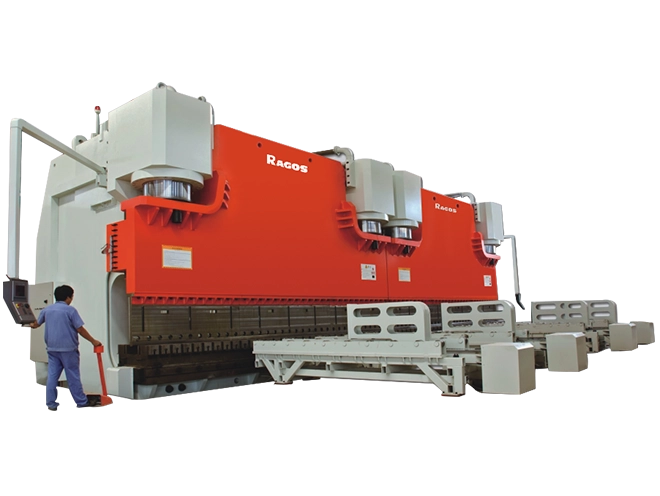
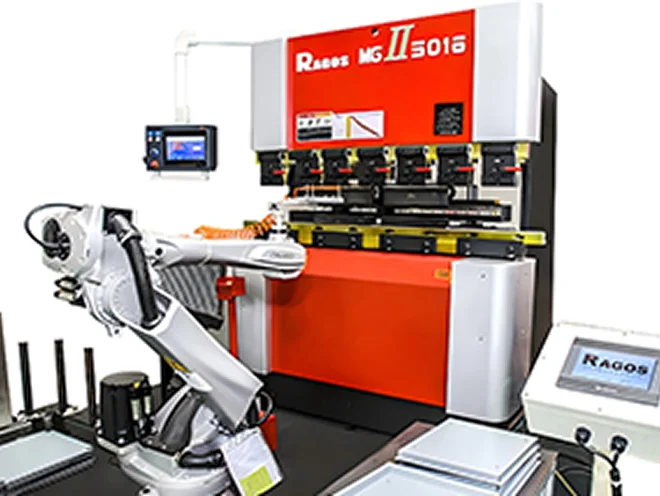



6 Axis CNC Press Brake: How Backgauge Axis Design Supports Precision
6 Axis CNC Press Brake technology gives modern fabricators a more controlled way to manage part positioning, repeatability, and bend quality, especially when workpieces become larger, less symmetrical, or more demanding in tolerance. From the perspective of JS RAGOS, the real value of a multi-axis press brake does not come from adding more motion for its own sake. It comes from matching axis design to the geometry of the part, the material behavior, and the production target. When that match is correct, setup becomes faster, operator intervention drops, and production becomes more stable.
Why Backgauge Design Matters In Modern Bending
Many buyers first compare tonnage, bending length, or controller brand. Those factors are important, but the backgauge often determines whether a machine can hold practical production accuracy across different jobs. A basic backgauge can support simple, repeatable bends. However, once a shop starts producing offset parts, tapered profiles, or multiple bend sequences on one workpiece, limited axis travel quickly becomes a bottleneck.
That is why many fabricators moving toward more varied production are prioritizing press brake capability: in a 2026 industry survey reported by The Fabricator, 70.87% of respondents said they planned to look at press brakes in 2026. At the same time, the broader market continues to expand, with Global Market Insights estimating the global press brakes market at USD 557.3 million in 2023 and forecasting 5.6% CAGR from 2024 to 2032.
For clients, this means one practical thing: machine selection should not stop at "Can it bend the part?" The better question is, "Can it bend the part efficiently, repeatedly, and with less adjustment over time?" That is where backgauge axis design becomes a purchasing decision, not merely a technical specification.
From X Axis to 6-Axis Control
A single X axis backgauge remains relevant for simple production work. Its function is to control forward and backward positioning, which makes it appropriate for standard flange dimensions and repetitive bending tasks. It is economical and easy to operate, but it offers limited adaptability when bend sequences become more complex.
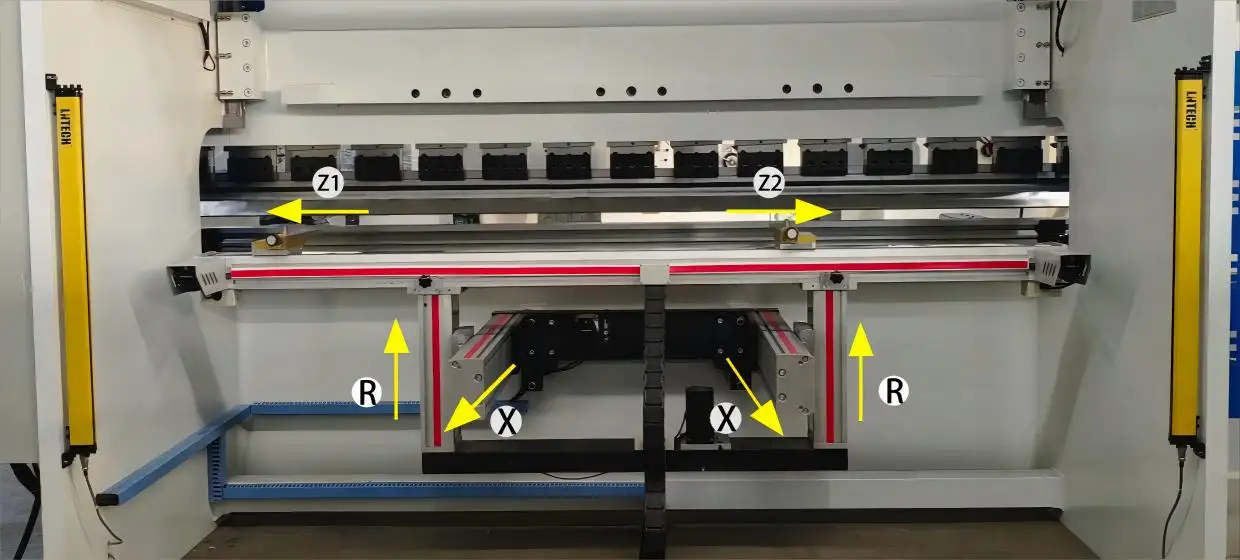
The next step, often described as X+R, adds rotational support. This improves handling for angled parts and jobs where finger orientation matters. Moving further to X+R+Z1+Z2 allows vertical adjustment of the fingers, which helps when part shapes, depths, or material conditions require more careful support.
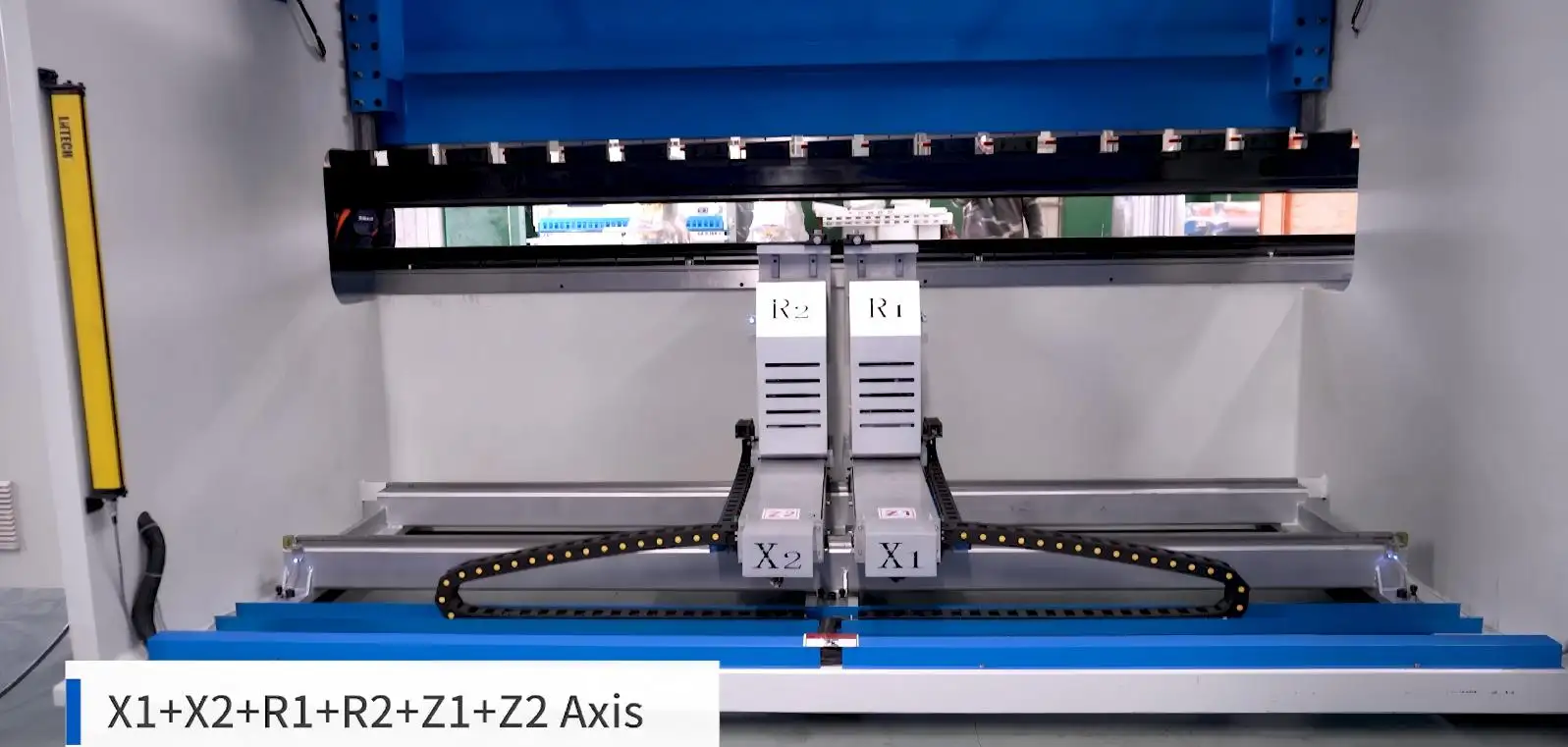
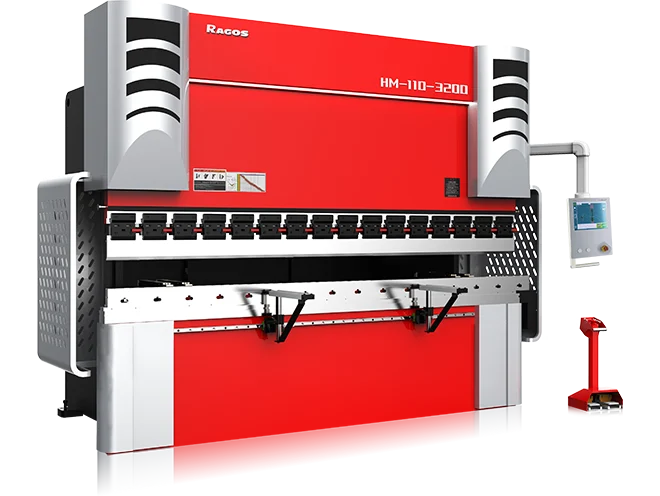
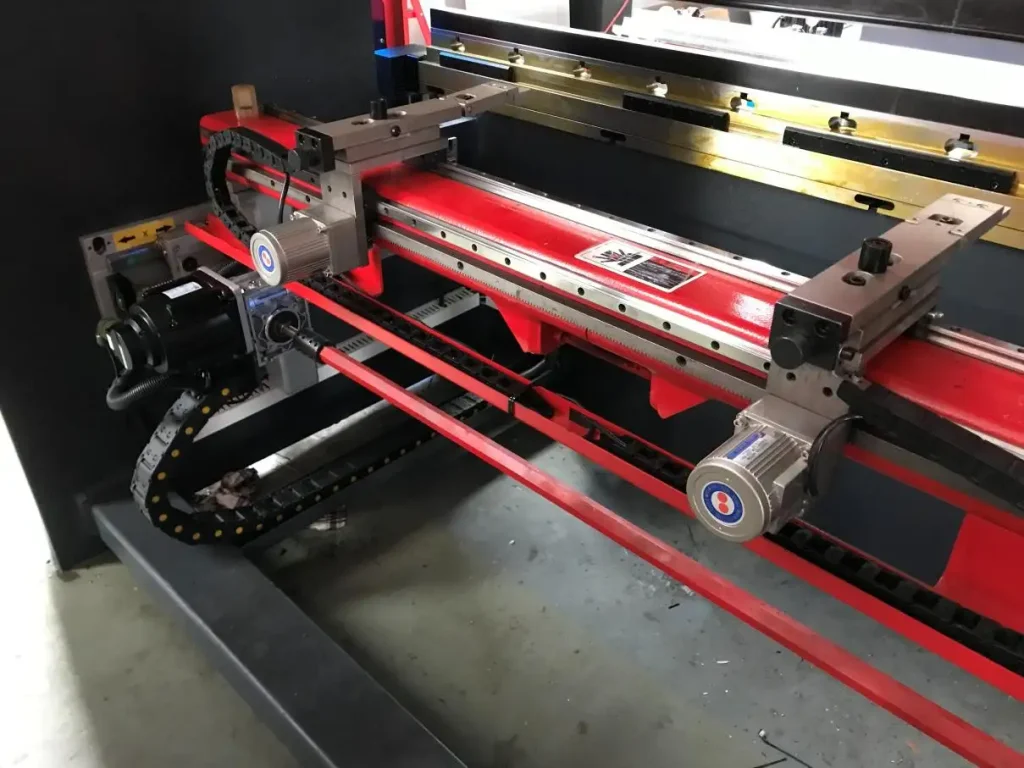
A more advanced setup introduces independent finger movement. In practical terms, this is where a 6 Axis CNC Press Brake becomes especially valuable. At JS RAGOS, the multi-axis concept centers on coordinated backgauge movement that allows each finger to move with greater independence, which is essential for asymmetrical parts, tapered bends, and workpieces whose bend lines are not parallel to the sheet edge. JS RAGOS‘s CNC configurations can be customized in 4-axis, 6-axis, and 8-axis formats according to production needs.
How a 6 Axis CNC Press Brake Supports Precision
In production, precision is not created by one axis alone. It comes from how several axes work together. In a 6 Axis CNC Press Brake, the backgauge is no longer acting like a fixed stop. It becomes a programmable positioning system.
• X1 and X2 movement helps support independent finger positioning for irregular or multi-stage parts.
• R1 and R2 adjustment improves control over finger height and rotational coordination in demanding bend sequences.
• Z1 and Z2 travel allows accurate lateral finger placement for broad or unevenly positioned workpieces.
• Coordinated axis motion reduces manual repositioning between bends.
• Better positioning logic lowers the risk of first-piece error on complex jobs.
For the client, the benefit is practical rather than abstract. More axis control means the machine can adapt to the part, instead of forcing the operator to compensate for machine limitations. That improves repeatability, especially in sectors such as automotive, equipment enclosures, HVAC, and other sheet metal applications where dimensional consistency affects downstream assembly. JS RAGOS highlights this point in its application content, noting that larger and awkward parts often benefit from at least a 4-axis or 6-axis backgauge for tapered bending and offset geometry.
What Clients Gain From the Right Backgauge Configuration
In many cases, buyers looking at a machine specification concentrate first on the number of axes. A more useful approach is to translate each feature into production value.
• Less Manual Correction
Independent backgauge control reduces the number of hand adjustments required during multi-bend work.
• More Stable First-Article Quality
JS RAGOS states that its precision backgauge system can achieve ±0.03 mm positioning accuracy, which helps stabilize flange length and part location across repeated bends.
• Improved Programming Efficiency
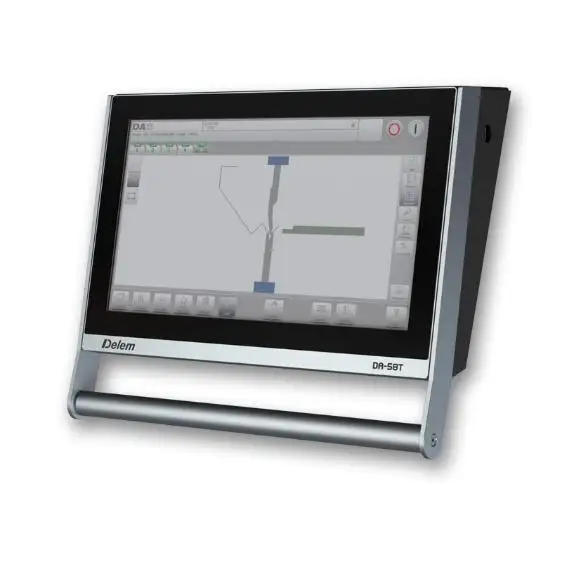
JS RAGOS machines can be paired with control systems from Delem, ESA, Cybelec, and STEP, allowing clients to choose an interface suited to their workflow. The Delem DA-58T, for example, officially supports automatic bend sequence calculation and collision detection, which reduces setup burden for more complex programs.
• Broader Application Range
JS RAGOS lists machine capabilities from 40T to 600T, giving clients room to match backgauge sophistication with appropriate forming capacity instead of overbuying or under-specifying.
These are not theoretical advantages. They affect labor efficiency, scrap exposure, programming confidence, and the ability to quote more complex parts with less production risk.
How to Decide Whether a 6 Axis CNC Press Brake Is the Right Fit
Not every application requires six-axis control. For simple brackets, straight bends, or highly repetitive jobs, a basic system may remain the sounder investment. However, a 6 Axis CNC Press Brake becomes a strong choice when the following conditions appear regularly:
• Parts include multiple bend lines and changing offsets.
• Workpieces are asymmetrical or non-parallel.
• Operators lose time on repositioning and gauge correction.
• Tolerance expectations are rising.
• The shop is expanding into higher-mix production.
At JS RAGOS, we advise clients to evaluate three factors together: part geometry, tolerance requirement, and production rhythm. A machine that is too simple may lower the purchase cost but raise the operating cost. A machine with the right backgauge logic can shorten setup, support more stable quality, and expand the range of jobs your team can accept with confidence. That is often the more important business result.
Why JS RAGOS Recommends a Specification-Led Approach
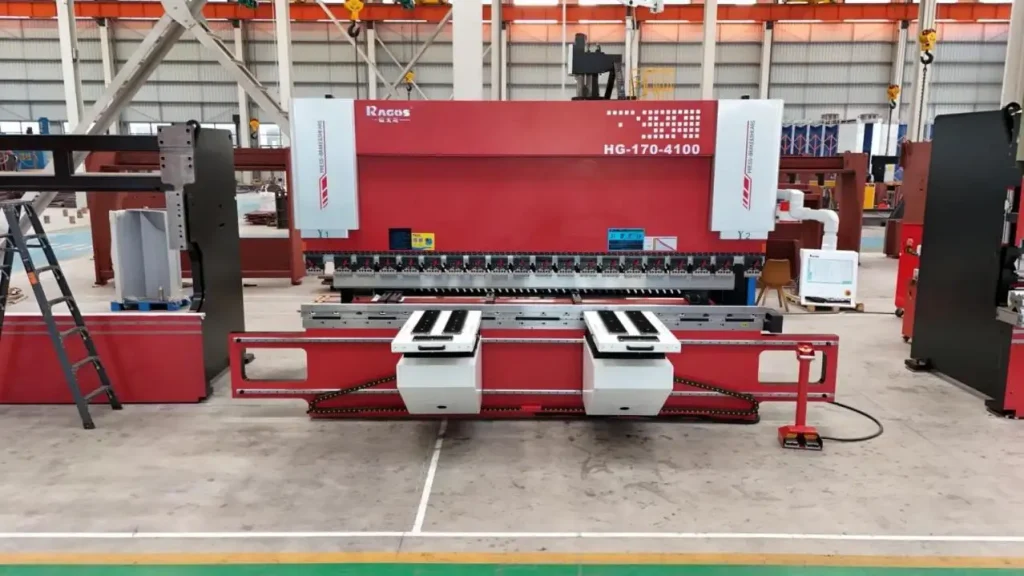
A 6 Axis CNC Press Brake should be selected as a production solution, not as a headline specification. At JS RAGOS, our approach is to configure the machine around the client's actual bending profile, including axis structure, controller preference, and application range. Whether the need is standard production, complex multi-step bending, or future automation integration, the machine should support measurable outcomes in consistency, setup efficiency, and operator control.
If your current jobs involve irregular parts, frequent setup changes, or tighter repeatability targets, this is the right time to review whether your backgauge system is limiting performance. Contact JS RAGOS for an application-based recommendation, machine configuration review, or live demo discussion. We can help you compare axis options against your actual parts, so your next investment supports precision not only in theory, but in daily production.