

Basics of Waterjet Cutting: How It Works and Why It Matters
Waterjet cutting has become one of the most versatile and precise material processing technologies in modern manufacturing. From metal fabrication and aerospace components to stone, glass, composites, and even food processing, waterjets offer a cold cutting process capable of handling diverse materials without thermal distortion.
In this guide, we’ll explain how waterjets work, break down their core components, and explore advantages, limitations, and real-world applications for fabrication shops across North America, Europe, and Asia.
What Is Waterjet Cutting?
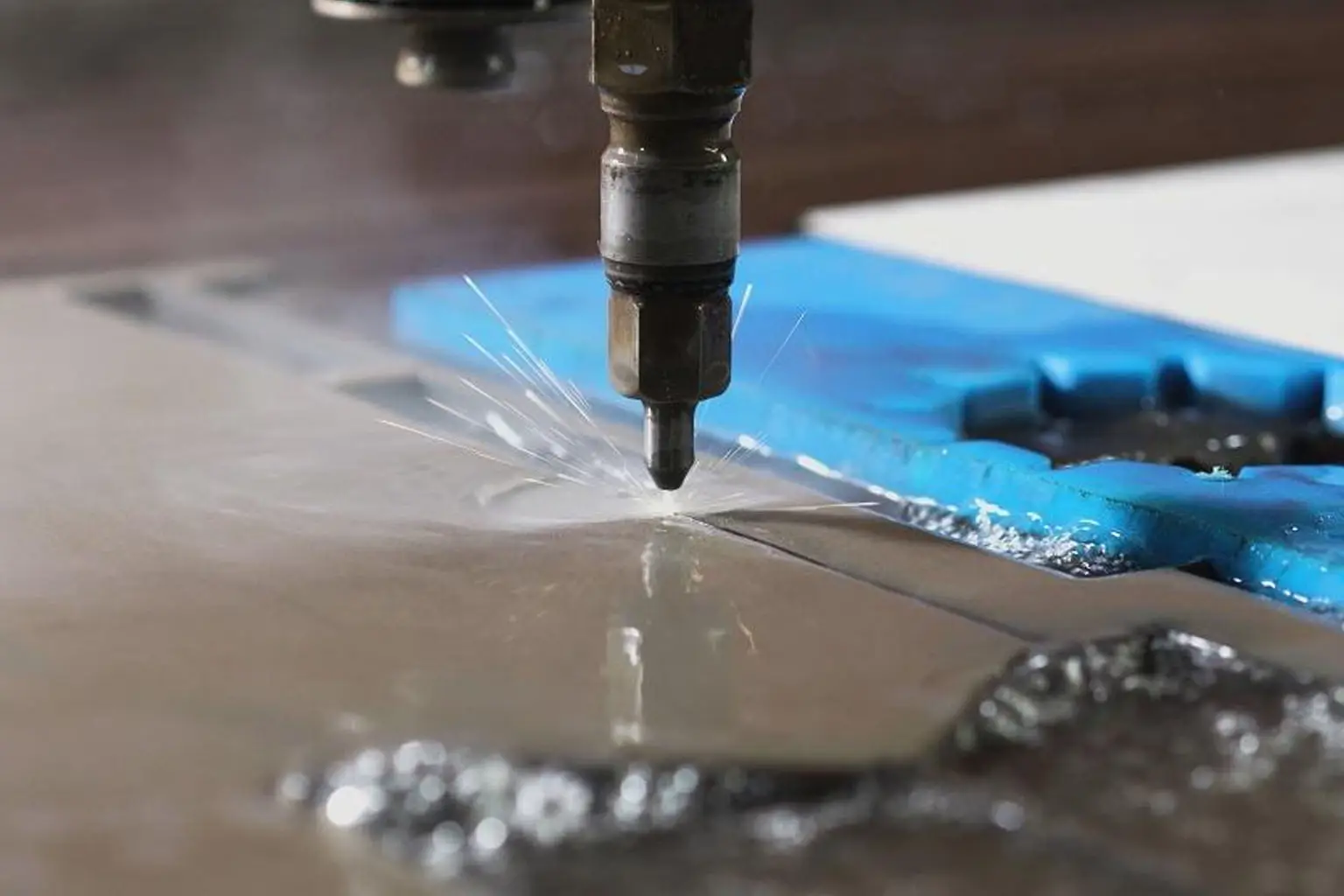
Waterjet cutting is a process that uses ultra-high-pressure water, sometimes combined with an abrasive such as garnet, to erode material along a controlled path. Unlike plasma or laser cutting, waterjet technology does not rely on heat to cut. Instead, it converts hydraulic pressure into kinetic energy to create a supersonic stream capable of slicing through metal, stone, and composites.
Because it is a cold process, waterjet cutting does not create a heat-affected zone (HAZ), which means materials retain their structural and chemical properties after cutting.
Core Components of a Waterjet System
A typical waterjet cutting system includes several critical components:
1. High-Pressure Pump
The pump is the heart of the system. It pressurizes water to extremely high levels—often exceeding 60,000 PSI, and in some systems even higher.
There are two common pump types:
-
Intensifier pumps, which use hydraulic pressure to amplify water pressure
-
Direct-drive pumps, which use mechanical plungers to generate pressure
2. Orifice and Nozzle
Once pressurized, water flows through a tiny jewel or sapphire orifice. This small opening converts pressure into velocity, producing a thin, extremely fast jet.
In many systems, the orifice diameter can be smaller than a pinhole, enabling highly precise cutting paths.
3. Abrasive Delivery System (Optional)
For cutting hard materials such as steel, granite, or glass, a fine abrasive (typically garnet) is introduced into the water stream.
The abrasive dramatically increases cutting capability—by some explanations, the added garnet multiplies cutting power significantly compared to water alone.
In softer materials like foam, rubber, or certain plastics, pure water may be sufficient without abrasive.
4. Cutting Head and Catcher Tank
The cutting head focuses and directs the jet precisely. After passing through the material, the jet enters a water-filled catcher tank that absorbs its remaining energy.
How Waterjets Work: Step-by-Step
Waterjet cutting follows a simple but powerful physical principle:
Step 1 – Generate Extreme Pressure
An ultra-high-pressure pump produces water at tens of thousands of PSI.
Step 2 – Convert Pressure Into Velocity
When water exits through a microscopic orifice, pressure converts into velocity. Industrial waterjets commonly operate in ranges of 50,000 to 90,000 PSI.
Step 3 – Introduce Abrasive (When Needed)
For harder materials, garnet is drawn into the jet stream and accelerated to very high speeds.
The result is a high-speed erosion process that removes material cleanly and precisely.
Key Advantages of Waterjet Cutting
1. Cold Cutting Process
Because waterjets do not use heat, they eliminate heat-affected zones and thermal distortion.
This makes waterjet ideal for:
-
Heat-sensitive metals
-
Laminated composites
-
Tempered materials
-
Aerospace components
2. High Precision
Waterjet systems are capable of intricate shapes, fine detail, and tight tolerances.
Some systems can achieve kerf widths as narrow as fractions of a millimeter depending on application.
3. Material Versatility
Waterjets can cut:
-
Steel and stainless
-
Aluminum and alloys
-
Glass and stone
-
Ceramics
-
Composites
-
Plastics and rubber
Few other cutting methods match this versatility with a single tool.
4. Reduced Secondary Processing
Waterjet cuts often produce smooth edges that require minimal post-processing.
This can reduce finishing time and material waste.
Common Limitations of Waterjets
Despite their strengths, waterjets have trade-offs:
1. Equipment Cost
High-pressure pumps and abrasive systems represent a significant capital investment.
2. Operating Costs
Abrasive consumption, pump maintenance, and energy usage can increase operational expenses.
3. Cutting Speed
Compared to plasma or laser in certain thickness ranges, waterjet cutting may be slower for high-volume applications.
4. Edge Taper
Because the jet slightly diverges as it travels through material, bottom edges may vary slightly from the top unless taper compensation systems are used.
Waterjet vs Other Cutting Technologies
Compared to plasma cutting, waterjet uses water and abrasive rather than electric arcs and compressed gases.
Plasma may cut faster in thick steel applications, but waterjet offers superior material preservation and edge quality in many cases.
Advanced Waterjet Features
Modern systems can include:
-
5-axis cutting heads for bevel and 3D cutting
-
Servo-driven motion systems for accuracy
-
Automatic abrasive feeders
-
Anti-collision systems for head protection
These innovations expand waterjet capabilities for complex fabrication environments.
Where Waterjets Are Used
Waterjet systems are widely used in:
-
Aerospace manufacturing
-
Automotive components
-
Architectural stonework
-
Food processing
-
Mining and drilling
Their ability to cut nearly any material without heat damage makes them valuable across global manufacturing industries.
Final Thoughts
Waterjet cutting combines extreme hydraulic pressure with precision engineering to deliver a versatile, cold-cutting solution. By converting pressure into velocity and optionally adding abrasive, waterjets can cut materials ranging from foam to hardened steel.
While equipment and operating costs can be higher than some alternatives, the benefits—precision, versatility, and material integrity—make waterjets a powerful option for modern fabrication facilities.