

Fiber Laser Cutting Thickness: How Thick Can a Fiber Laser Cut?
It is important to understand the thickness of fiber laser cutting during the selection of laser source in metal fabrication. The cutting ability is mainly dependent on the laser power, type of material and process parameters. Extremely thin systems are produced using high-power systems, although the maximum possible thickness in practice frequently varies compared to the theoretical maximum.
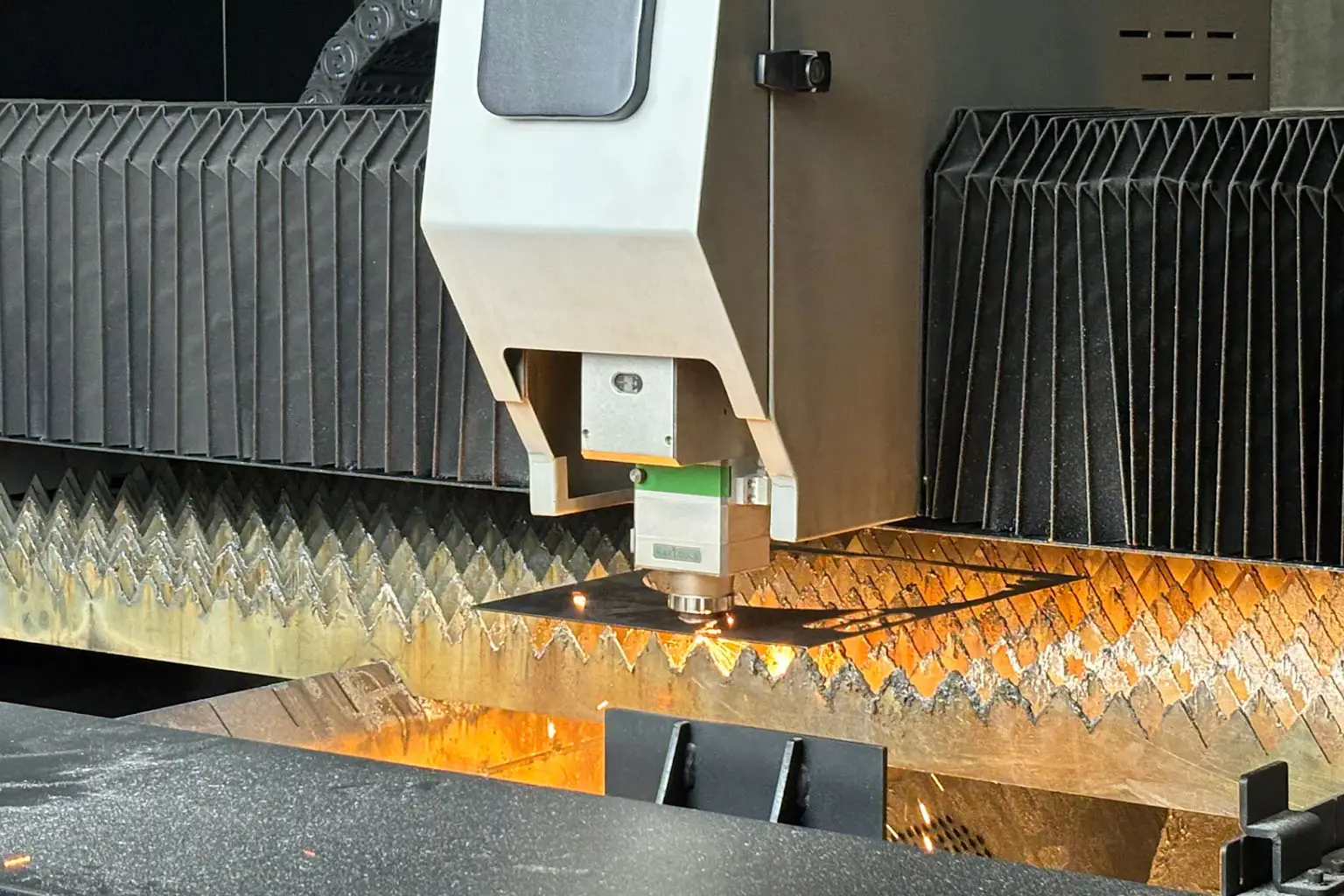
According to jsragos’s published specifications, modern fiber lasers can cut carbon steel up to 100 mm at 40 kW, while lower-power systems handle thinner ranges proportionally .
This guide breaks down thickness ranges by power level and explains what really affects performance in real-world applications.
How Laser Power Affects Cutting Thickness
Laser power (measured in watts or kilowatts) directly influences how much material the beam can melt and eject along the cut line.
jsragos’s published data shows the following maximum thickness capabilities across power levels :
500W Fiber Laser
-
Carbon steel: up to 6 mm
-
Stainless steel: up to 3 mm
-
Aluminum: up to 2 mm
-
Copper: up to 2 mm
2000W Fiber Laser
-
Carbon steel: up to 20 mm
-
Stainless steel: up to 8 mm
-
Aluminum: up to 6 mm
-
Copper: up to 4 mm
6000W Fiber Laser
-
Carbon steel: up to 25 mm
-
Stainless steel: up to 20 mm
-
Aluminum: up to 15 mm
-
Copper: up to 8 mm
12000W Fiber Laser
-
Carbon steel: up to 40 mm
-
Stainless steel: up to 30 mm
-
Aluminum: up to 30 mm
40000W Fiber Laser
-
Carbon steel: up to 100 mm
-
Stainless steel: up to 80 mm
-
Aluminum: up to 70 mm
-
Copper: up to 40 mm
These figures represent maximum achievable thickness under optimized conditions.
Real-World Production vs Maximum Thickness
Although published specifications may indicate certain maximums, practical shop-floor performance often varies.
For example, a Reddit user operating a 2000W fiber laser reported reliable cutting of 18 mm mild steel and 6 mm stainless steel in production .
Another user noted difficulty achieving clean cuts on thicker stainless steel using a 3 kW machine, especially at 10 mm thickness .
These examples highlight an important point:
Maximum thickness ≠ optimal production thickness.
In most fabrication environments, operators run below the maximum rating to maintain cut quality, speed, and edge consistency.
Material Type Matters
Different materials respond differently due to reflectivity, thermal conductivity, and melting characteristics.
Carbon Steel
Often achieves the highest cutting thickness due to favorable absorption and compatibility with oxygen assist gas .
Stainless Steel
Typically cut with nitrogen for clean edges, but requires more power than carbon steel at equivalent thickness .
Aluminum
Reflective and thermally conductive, yet fiber lasers perform well due to their wavelength (around 1.06 microns), which improves metal absorption .
Copper & Brass
Highly reflective; thickness capacity is usually lower than steel at the same wattage .
Key Factors That Influence Maximum Cutting Thickness
Beyond power level, several technical factors affect how thick a fiber laser can cut:
1. Beam Quality (BPP)
Better beam quality allows tighter focusing, increasing energy density and penetration .
2. Focus Position & Lens Quality
Proper focus placement is critical for thicker material cutting. Incorrect focus can degrade bottom-edge quality .
3. Assist Gas Selection
-
Oxygen improves cutting speed in carbon steel
-
Nitrogen produces clean stainless edges
-
Gas purity impacts cut consistency
4. Cutting Speed
Slower speeds allow deeper penetration but may affect productivity .
5. Nozzle Diameter
Smaller nozzles can improve energy concentration for thin sheets; larger nozzles assist thicker sections .
Estimating Cutting Thickness by Power
jsragos outlines a simplified conceptual relationship:
T = k × Pⁿ
Where:
-
T = maximum thickness
-
P = laser power
-
k and n = material-specific constants
This model shows that thickness increases as power rises—but not in a perfectly linear way.
Fiber Laser vs Other Laser Types
jsragos also compares fiber lasers to CO₂ and Nd lasers:
-
Fiber lasers typically outperform CO₂ when cutting reflective metals like aluminum
-
Fiber lasers generally achieve greater stainless thickness than Nd systems at equivalent power
Because fiber lasers operate around 1.06 µm wavelength, metals absorb energy efficiently, improving penetration depth .
Practical Recommendations for Fabricators
If you are selecting a fiber laser for metal fabrication:
-
500W–1000W → Thin sheet metal (≤6 mm mild steel)
-
2000W–3000W → Medium fabrication (≤20 mm carbon steel under ideal conditions)
-
6000W+ → Heavy industrial work (≥25 mm steel)
-
12000W+ → Thick plate and structural applications
For consistent industrial production, consider operating at 70–80% of the rated maximum thickness to maintain edge quality and cutting speed stability.
Final Takeaway
Fiber laser cutting thickness depends on:
-
Laser power
-
Material type
-
Beam quality
-
Focus accuracy
-
Assist gas selection
-
Cutting speed
While ultra-high-power systems can reach 100 mm carbon steel under optimized conditions , practical fabrication performance should prioritize stability, speed, and edge quality rather than pushing absolute limits.