

Laser Cutting History: From Scientific Theory to Industrial Precision
Laser cutting has evolved from a scientific concept into one of the most important technologies in modern manufacturing. Its journey spans more than a century of theoretical breakthroughs, experimental prototypes, and industrial milestones. This article traces the key events that shaped laser cutting into the precision tool used in fabrication today.
1. The Scientific Foundation (1917–1959)
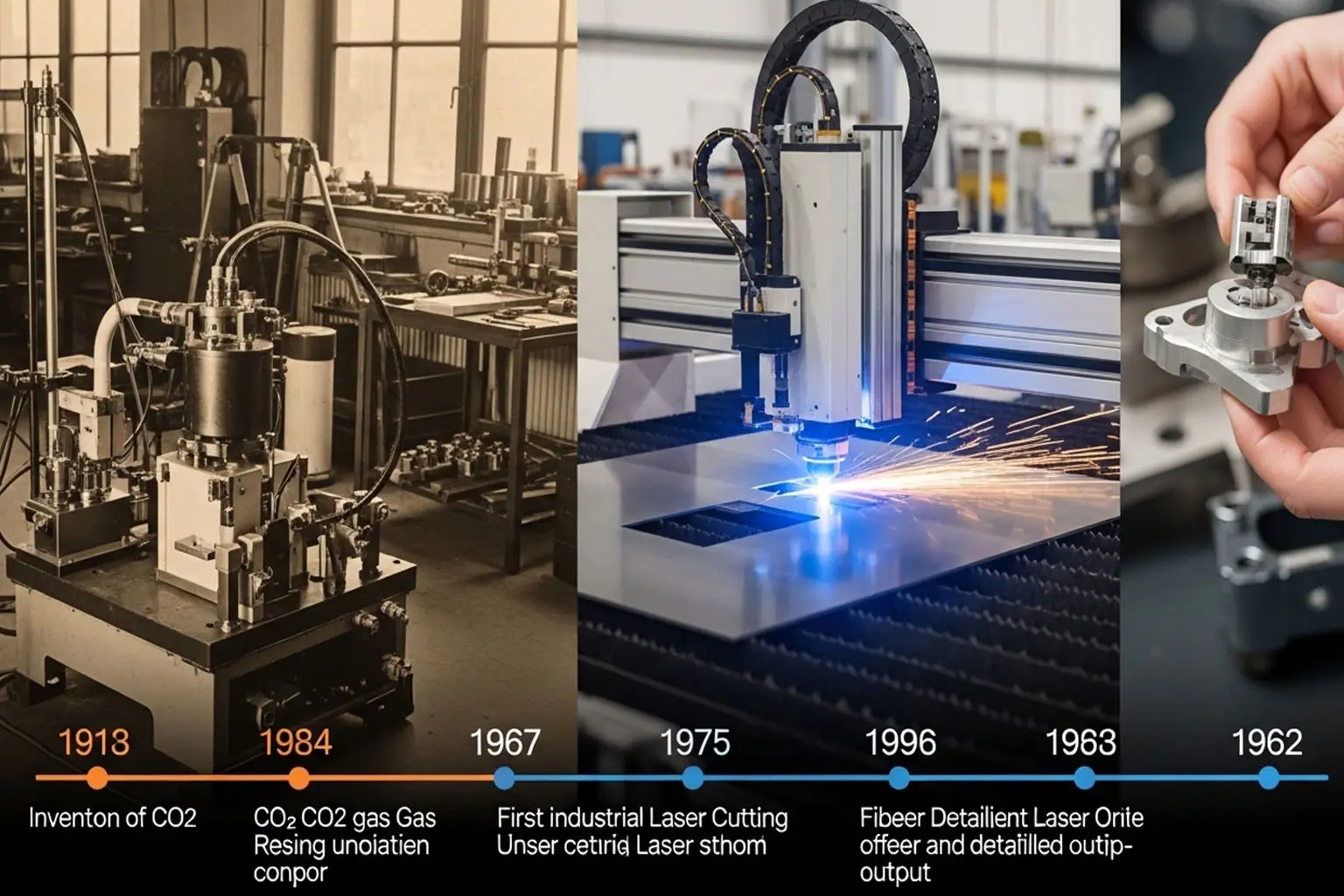
The story begins in 1917 when Albert Einstein introduced the theory of stimulated emission of radiation, the scientific principle behind laser operation .
In 1959, Gordon Gould expanded on this concept and coined the term “LASER,” short for Light Amplification by Stimulated Emission of Radiation .
These theoretical foundations paved the way for the first working laser.
2. The First Working Laser (1960)
In 1960, Theodore Maiman created the first operational laser using synthetic ruby .
Although initially described as “a solution looking for a problem,” this invention quickly sparked research into practical applications .
3. Early Industrial Applications (1960s)
By 1965, laser technology was already being applied in manufacturing. One of the earliest production uses involved drilling holes in diamond dies .
During the same period, researchers began experimenting with gas-assisted laser cutting, combining laser beams with oxygen to improve metal cutting efficiency .
These developments marked the beginning of laser cutting as a practical industrial process.
4. The Rise of CO₂ Lasers (1964–1970s)
A major milestone occurred in 1964 when Kumar Patel invented the CO₂ laser at Bell Labs .
CO₂ lasers operated at approximately 10.6 µm wavelength and produced continuous high-power output, making them highly suitable for industrial cutting .
By the late 1960s and early 1970s, commercial CO₂ laser cutting machines were introduced for metal processing .
Around the same time, aerospace manufacturers began using pulsed ruby lasers to drill cooling holes in turbine blades, demonstrating the laser’s industrial value .
5. Laser Cutting Becomes Industrial (1970s)
In the 1970s, laser cutting transitioned from experimental technology to industrial production. By this time, laser cutting had become a commercial process for titanium cutting in the aerospace industry .
Peter Houldcroft further advanced oxygen-assisted laser cutting, expanding the effectiveness of laser metal processing .
The integration of CNC (Computer Numerical Control) systems allowed laser beams to follow programmed cutting paths, dramatically improving precision and repeatability .
6. Fiber Laser Development (1963–1990s)
While CO₂ lasers dominated early industrial applications, fiber laser technology was conceptualized in 1963 by Elias Snitzer .
However, fiber lasers required decades of refinement before becoming commercially viable. They gained broader industrial adoption in the 1990s .
Fiber lasers provided several advantages:
-
Higher electrical efficiency
-
Lower maintenance requirements
-
Improved metal absorption
-
Compact beam delivery via optical fibers
These advantages positioned fiber lasers as a leading solution in modern metal fabrication.
7. Modern Laser Cutting Technology
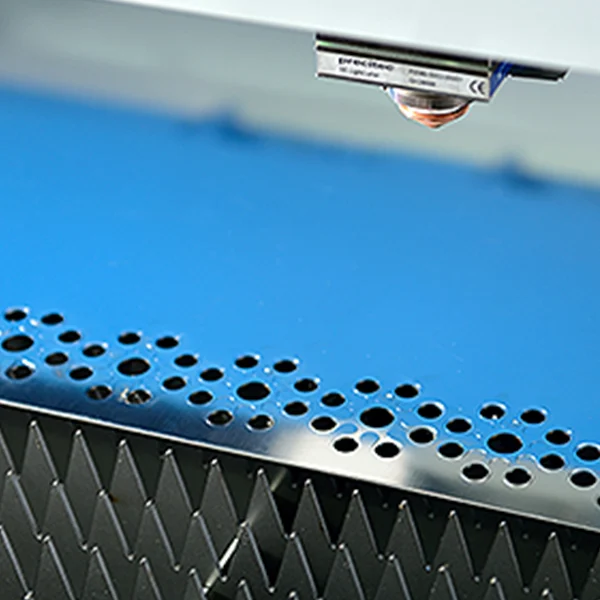
Today, laser cutting uses high-power lasers directed through optics and controlled by CNC systems to vaporize or melt material .
Assist gases such as oxygen and nitrogen play a crucial role in removing molten metal and enhancing cut quality .
Modern laser cutting applications now span multiple industries:
-
Aerospace and automotive manufacturing
-
Jewelry and precision components
-
Medical device manufacturing
-
Electronics production
The technology has evolved to support ultra-short pulse lasers capable of minimizing heat-affected zones in advanced applications .
8. From CO₂ to Fiber: The Industry Shift
Over time, fiber lasers began replacing many CO₂ systems in metal fabrication due to higher efficiency and lower operating costs. Nevertheless, CO₂ lasers remain widely used for non-metal materials such as wood and acrylic .
The evolution of laser sources continues today with improvements in:
-
Beam quality
-
Automation
-
Energy efficiency
-
Digital integration
-
Intelligent process monitoring
Laser cutting has become a cornerstone of smart manufacturing systems worldwide.
Conclusion
Laser cutting history reflects more than technological progress—it represents the convergence of physics, engineering, and industrial innovation.
From Einstein’s theory in 1917
To Maiman’s first laser in 1960
To CO₂ laser commercialization in the 1970s
To fiber laser adoption in modern fabrication
Laser cutting has transformed manufacturing into a highly precise, automated, and efficient process.
As fiber lasers, automation systems, and AI-driven monitoring technologies continue to evolve, laser cutting remains one of the most advanced and influential material processing technologies in modern industry.