

Bending Machine for Manufacturing Street Light Poles: A Practical Production Guide
Bending Machine for Manufacturing Street Light Poles plays a central role in turning flat steel into durable poles that can handle long-term outdoor use. For the manufacturers, it is not just about the shaping of metal. It is about controlling each step, from the preparation of the coil and shaping of the metal to the final protection of the surface, so that the finished pole fulfills all the requirements related to the structure, Dimensões, and aesthetics of the pole.
Manufacturing street light poles is such that any little variation from the norm in the early stages could spell disaster in the subsequent stages of the same pipe. Factors such as material inconsistencies, inaccurate taper cuts, poor rolling consistency, and unstable welding can lead to poor straightness, poor flange positioning, and poor corrosion resistance. It is for this reason that having complete processing equipment is as important as having all the forming machinery.
What follows is a step-by-step breakdown of what pole manufacturing comprises and how each step isolates factors in order to facilitate the achievement of consistency and repeatability.
Passo 1: Uncoiling of the Steel Coil
The first thing that is done in a production line is to get hold of some steel coils. These coils could be carbon steel coils, or any other type that has been predetermined for use in outdoor structural applications. For the shaping of the metal to occur, the coil must first be unlatched so that it can be placed onto the line.
A hydraulic decoiler can be used to uncoil the material.
Durante essa fase, the operators must also perform some tests. These checks include:
1. Coil condition 2. Coil thickness 3. Edges of the coil 4. Presence of rust or coated marks.
This step enhances the overall condition of the working line. If the coil is fed with inappropriate angle of cuts or damages, leveling and bending become more rigorous to regulate.
Passo 2: Edges Trimming
Post decoiling, the materials edges may still have burrs, a slight build-up of material, impacts, or other minor roll/storage induced imperfections. Edge trimming eliminates these irregularities, producing a more uniform strip width.
This is especially true for poles, as the later seam welding technique relies on edge fit-up. If edge finish is poor, the joint may exhibit gaps, overlaps, or the penetration may be poor.
Many workshops consider trimming to be a rudimentary task. Na verdade, trimming has a huge impact on the weld's final quality as well as on the downstream forming process and its stability. It also is much easier to achieve a neat finish when the edges of the pole are already clean.
Passo 3: Leveling the Sheet
Even the best trimming still may not be enough to eliminate the sheet metal's coil memory. Leveling is essential to remove excess curvature from the sheet prior to cutting and rolling. It also establishes a flat condition that is essential for optimum blanking.
A leveling roller is used to improve and flatten the surfaces of the coil sheet.
Leveling entails passing the sheet metal through a series of rollers, which creates distributed and more evenly distributed stress.
Effective leveling significantly improves the following for pole production:
- Accuracy of taper cutting
- Rolling during cone forming
- Reduces misalignment during welding
Without good leveling, the panels may resist forming to the desired curvature or develop a mismatch. This adds to the amount of corrections needed later.
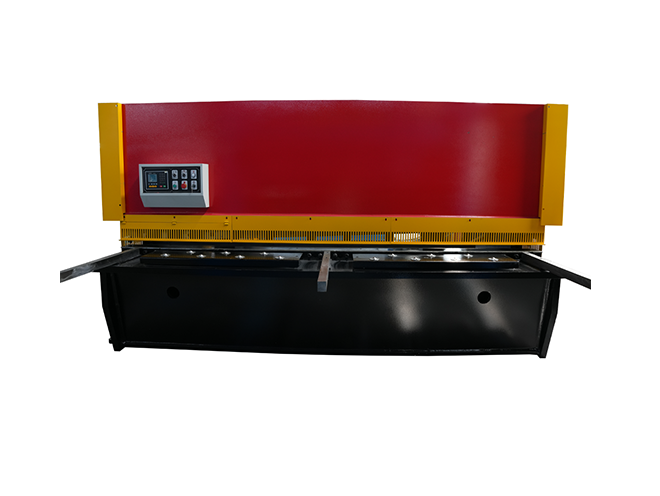
Passo 4: Shearing to Length
After leveling, the sheet is cut to the desired blank length, which is done with a CNC cutting machine or controlled shearing system.
Street light pole designs vary based upon application, road class, and design standard, meaning length control needs to be precise. Bad cuts at this level will affect tapers, flanges, and final installation dimensions.
The aim here is also to reach speed, but consistency is even more important. Regra geral, the neater the cut, the straight the edge, the easier the following steps will be, and the less rework will be required.
Passo 5: Stacking and Handling the Blanks
The cut blanks will be collected, organized, e, before the tapers are cut, stacked. With well performed stacking, the ease of flow with the material is optimized and damage due to excessive handling is decreased.
In high volume production, automated stacking systems are available, e, even in lower volume flows, the manual effort in this regard is important. Surface scratches, corner dents, and mix-ups between thicknesses can all create unnecessary waste.
This stage supports production rhythm more than many people expect. When blanks are stacked clearly and transferred efficiently, the entire line runs with fewer interruptions.
Passo 6: Cutting the Taper Shape
Street light poles are not usually made from simple rectangular sheets. The blank is often cut into a tapered shape so the final pole can form a conical body.
This cutting can be completed by plasma cutting, Corte a laser, or another CNC-guided method depending on material thickness and production priorities. The goal is to generate precise profiles essential to operational rolling.
The following aids effective taper cutting:
• Precise pole geometry
• Optimized seam matching
• Enhanced rolling functionality
• Reduced requirements for post-rolling weld corrections.
Taper inaccuracies can also result in pole shape deformations as well as unsatisfactory seam closures following pole bending.
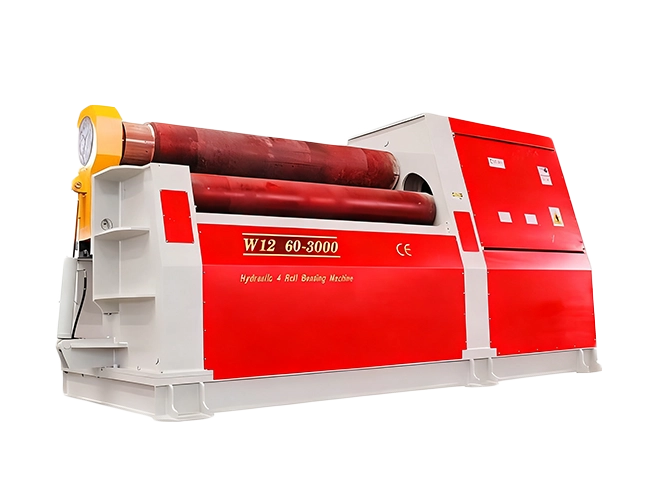
Passo 7: Pole Body Rolling and Forming
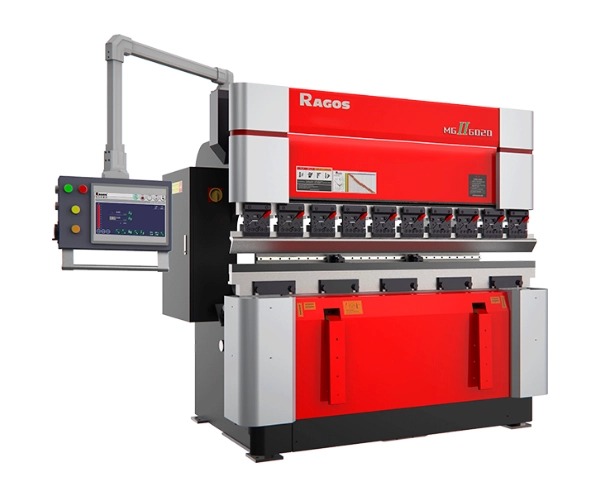
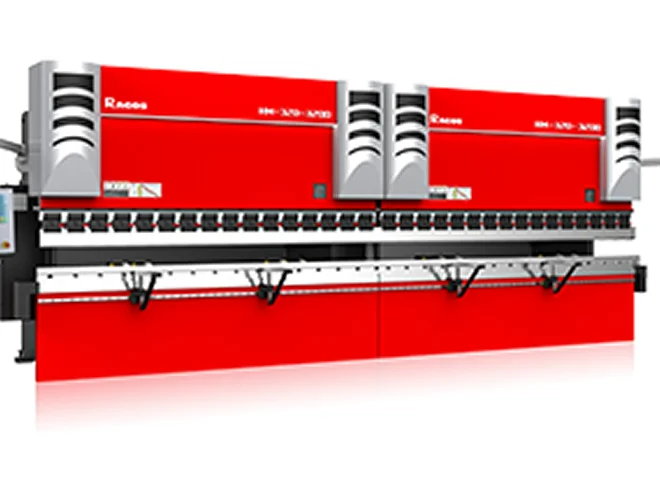
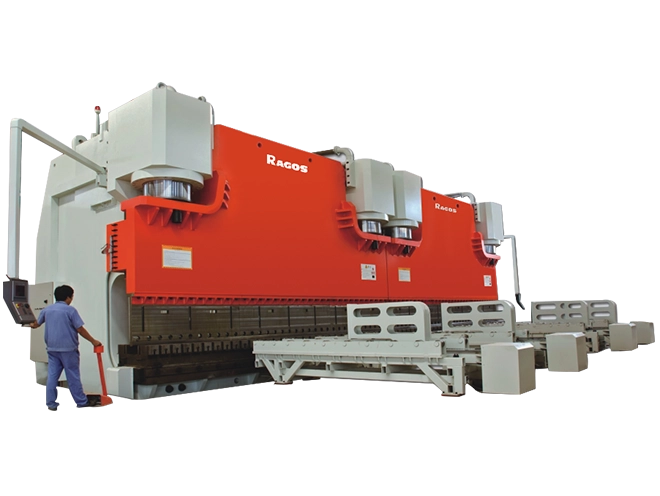
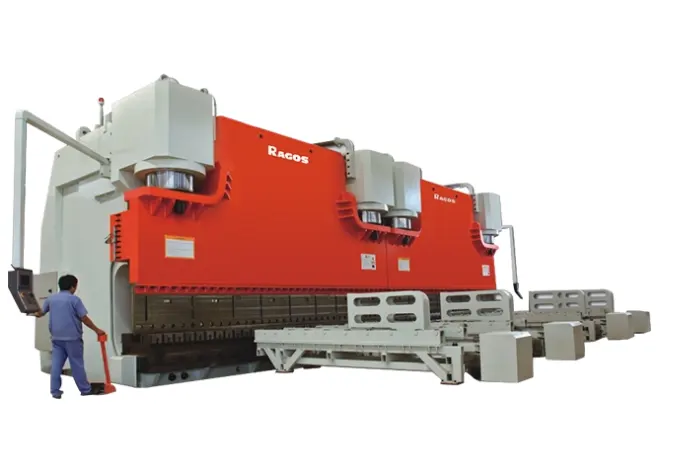
This is when the street light pole bending machine becomes the central apparatus of the operational line. A tapered blank is introduced into the pole body plate rolling machine and is successively constructed into a cylindrical or tapered pole body.
For this kind of work, consistency outweighs the significance of force ample.
Pole body formation involves a rolling machine as well as a plate bending machine, the resultant geometry of which is an accurate taper section. This is critical in street light poles, which typically feature long tapered sections, as it determines seam closure and the pole’s overall straightness.
It is expected that a reliable rolling apparatus yields:
• Even consistent curvatures
• Manageable taper forming
• Precise seam positioning
• Reduced pre-welding manual corrections.
Welding teams are made to do seam location adjustments. This can extend production and compromise the overall quality of the poles.
Passo 8: Welding the Longitudinal Seam
The open seam of the pole body is the first to be welded after the forming and shape adjustments are executed. This weld is a critical structural load-carrying attachment that determines the durability of the pole to be formed.
In making streetlight poles, welded seams automated singed welding because it is much better for consistency, and there is more control regarding fit-up and heat input.
Welded seams are cleaned and then inspected. Welds that are acceptable have stability with even penetration and have a defect free profile. Profiles do not have anything that would compromise the welded structure, defects that affect adhesion of coatings.
Passo 9: Straightening the Pole
Welding heat and rolling stress cause slight bends or axial deviation. Straightening is done to access before the base flange is added.
Controlled force from a hydraulic straightening tool is used to bring the pole withing the specified tolerances. If the pole was not straight it would hinder the install, look, and cause unexpected load behavior while in use.
The better straightening is done, the better the product looks and the better it functions.
Passo 10: Flange Welding at the Base
Welding is done after the base flange is set at the bottom of the pole. This flange will attach the pole to the bottom, so it must be aligned.
The flange must be square relative to the axis of the pole, and the welds must be sufficiently strong to tolerate wind load and environmental stresses for the long term. Flanges that are not properly fit-up create more trouble on site for the installer, even if the pole body was produced to standard.
This explains why most manufacturers use specialized fixtures to keep the flange and pole in place when welding.
Passo 11: Cleaning and Anti-Corrosion Treatment
The last step deals with the protection from corrosion. The outdoor service poses direct impacts on the street light poles service life, and this is where the surface treatment comes to play.
This can involve, surface cleaning, shot blasting or sand blasting, followed by application of primer and top coating. In some production systems, depending on project requirements, galvanizing is done too.
Apart from making the pole look nice and clean, a good anti-rust finish will help the pole withstand moisture, temperature swings, and the impacts of the open air.
Importance of The Right Production Line
The production of street light poles is not a one machine job. It is the outcome of the synchronization of the entire workflow. The forming stage is one of the most important because it ties together the prep of the materials with the quality of the welds and the geometry at the end.
For buyers and manufacturers evaluating equipment, the real question is whether the line can support repeatable production, practical handling, and dimensional stability across different pole sizes.
JS RAGOS focuses on forming solutions that help metal fabricators improve rolling consistency, reduce correction time, and build a more reliable workflow for heavy-duty conical products.
Conclusão
A high-quality street light pole comes from disciplined process control at every stage, from decoiling and trimming to rolling, Soldagem, straightening, and coating. When these steps work together properly, the factory can produce poles that are strong, straight, and ready for long outdoor service.
For manufacturers aiming to improve efficiency and forming accuracy, choosing the right Bending Machine for Manufacturing Street Light Poles is a practical place to start. When the equipment is configured correctly, JS RAGOS supports smoother production flow and more reliable results in pole manufacturing.