

Buy Industrial Bending Machine: Complete Buyer's Guide (2026)
Buying an industrial bending machine requires matching three variables: machine type (press brake, tube bender, plate roller, or panel bender), tonnage capacity (matched to your material and thickness), and CNC controller brand (Delem, Cybelec, or ESA are industry standard). CE-certified machines from verified manufacturers offer the safest procurement path for international buyers. Prices range from approximately $8,000 for entry-level CNC hydraulic models to $150,000+ for high-tonnage automated configurations. Buy direct from the manufacturer for the best pricing, lead time, and after-sales support.
The global bending machine market reached USD 9.5 billion in 2024 — growing at nearly 6% annually as factories worldwide upgrade to CNC-controlled, IoT-ready machines for precision sheet metal fabrication. If you are ready to buy an industrial bending machine, the challenge is not finding options. It is knowing which type, configuration, and supplier is right for your specific production requirements.
This guide covers exactly that: the machine types available, the specifications that drive performance, realistic price ranges by tonnage, and how to buy directly from a verified manufacturer — without the risks that come with marketplace sourcing.
What Types of Industrial Bending Machines Can You Buy?
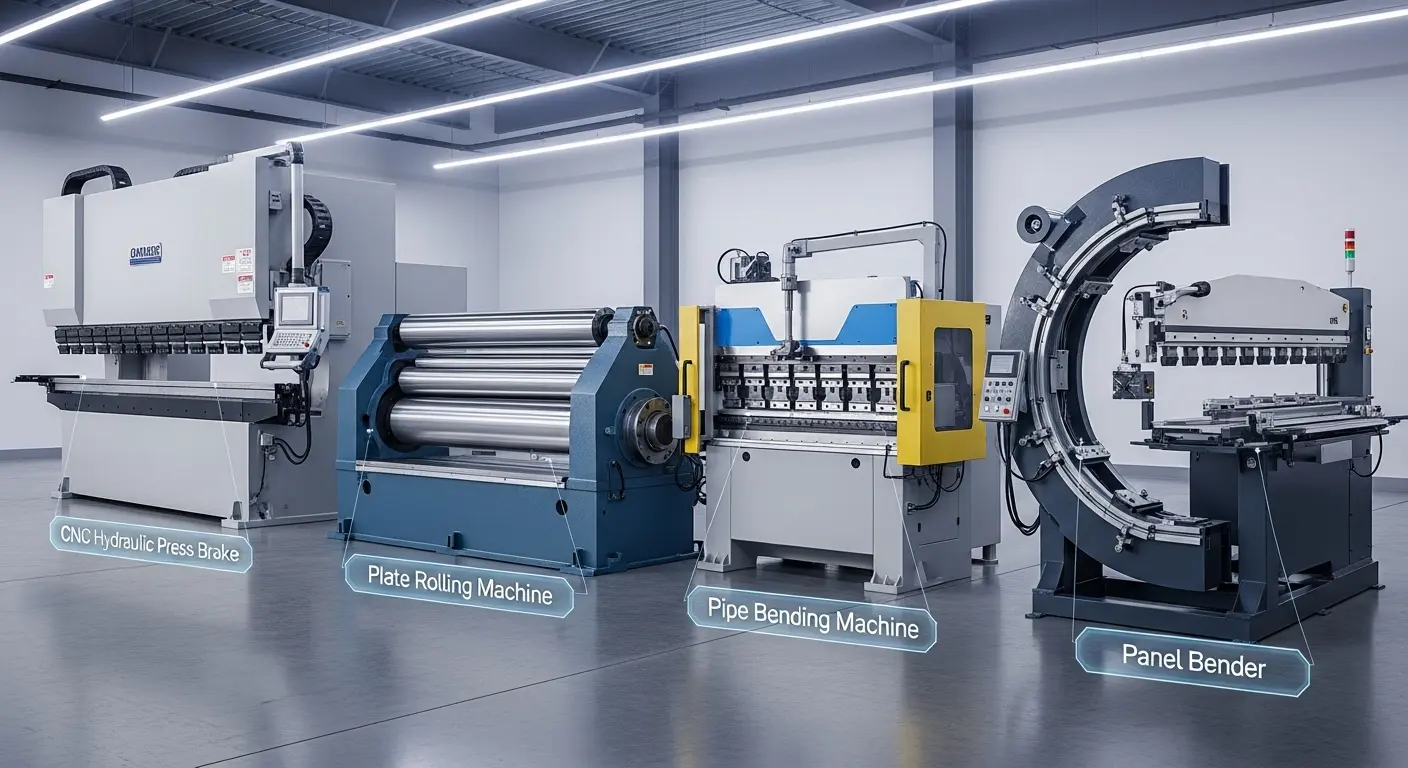
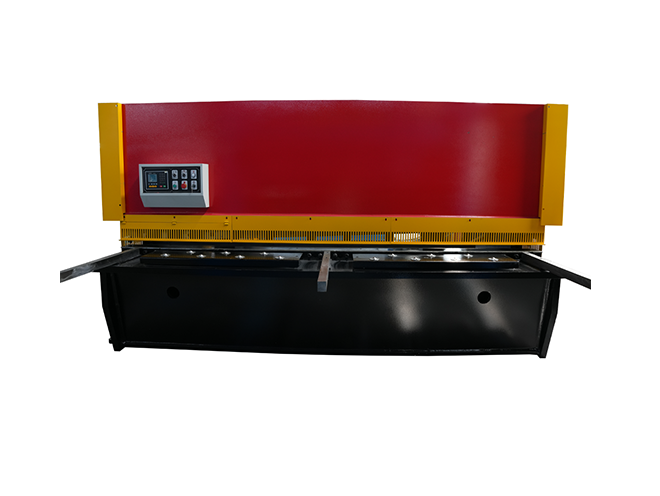
Before you buy an industrial bending machine, you need to confirm you are buying the right category of machine for your application. There are four primary types — each designed for a different bending task.
The wrong machine type is the most expensive procurement mistake a fabrication shop can make. A tube bending machine cannot replace a press brake. A plate roller cannot do what a panel bender does. Understanding these distinctions takes less than five minutes and protects your entire capital investment.
CNC Hydraulic Press Brake
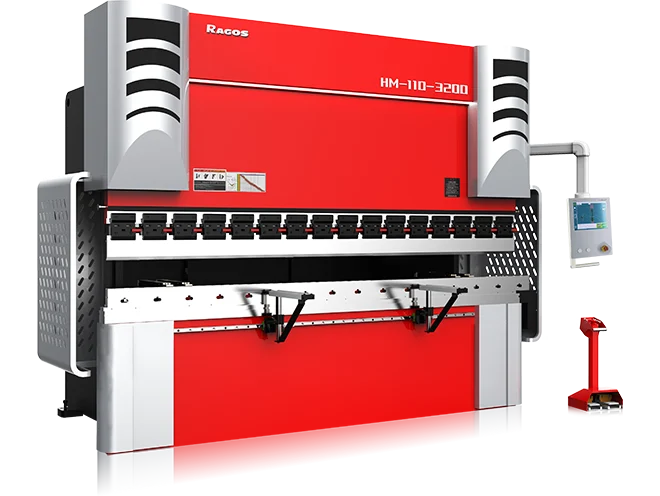
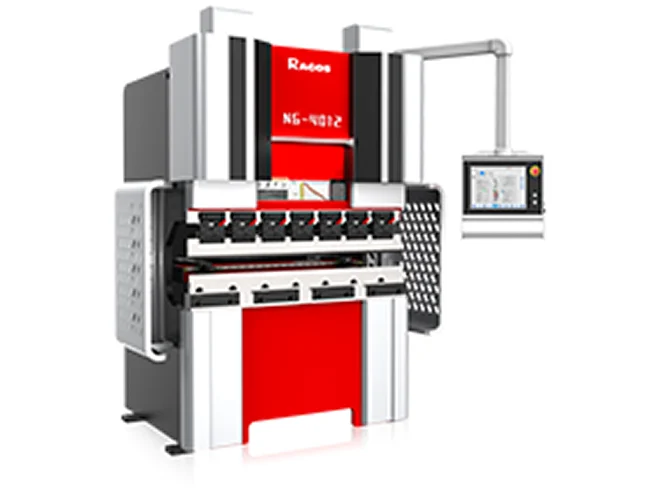
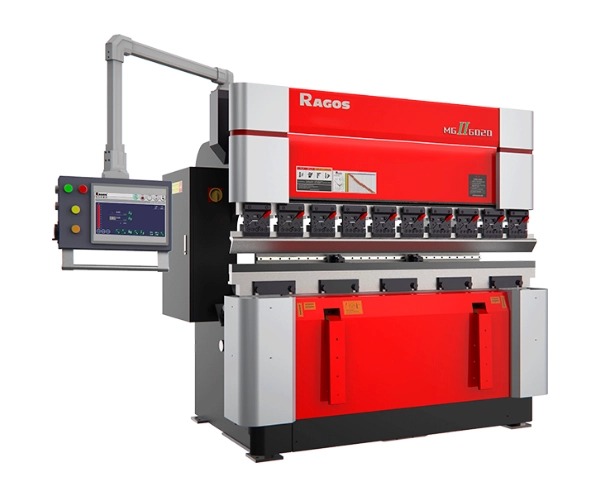
The CNC hydraulic press brake is the most versatile and most widely purchased industrial bending machine in the world. It uses synchronized dual hydraulic cylinders to drive a ram downward onto a punch-and-die tooling set, bending flat sheet metal to a precise angle.
Best for: Sheet metal fabrication across aerospace, automotive, HVAC, cabinet manufacturing, and modular construction. Handles mild steel, stainless steel, aluminum, and high-tensile alloys from 0.5 mm to 25 mm+ thickness depending on tonnage. Explore CNC hydraulic bending machines for full configuration details.
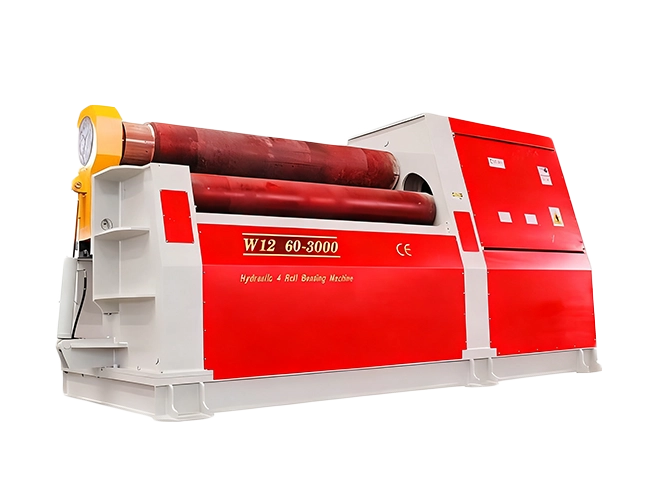
Plate Rolling Machine
A plate rolling machine uses a series of rollers to form flat sheet metal into curved or cylindrical profiles. It does not bend at a single point — it progressively curves the entire plate.
Best for: Pressure vessels, tanks, pipes, curved structural elements, and architectural metalwork. Not a substitute for a press brake in standard sheet metal fabrication.
Pipe and Tube Bending Machine
Pipe and tube bending machines bend hollow structural sections — round, square, or rectangular profiles — without collapsing the tube wall. They use mandrel or rotary-draw mechanisms depending on the material and bend radius required.
Best for: Automotive exhaust systems, structural steel frames, HVAC ducting, furniture, and modular building frames.
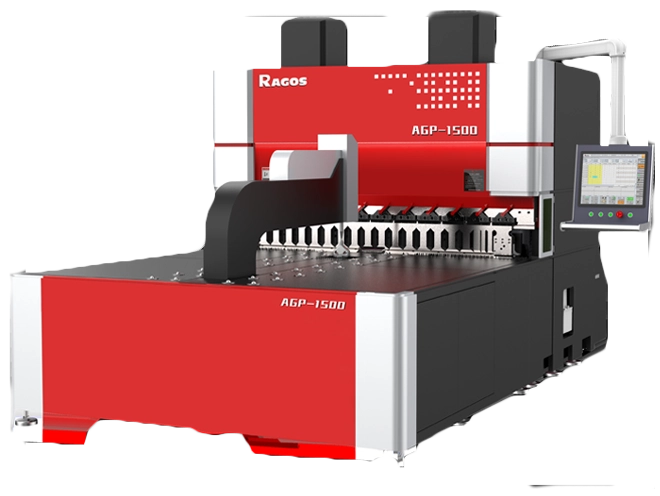
Panel Bender
A panel bender is a highly automated machine designed for high-volume production of folded sheet metal panels — control enclosures, machine housings, and architectural cladding. It operates faster than a press brake for standardized panel shapes but offers less flexibility for custom geometries.
Best for: High-volume cabinet and enclosure manufacturing where consistent panel dimensions and fast cycle times are the priority.
For the majority of buyers seeking a sheet metal bending machine for industrial fabrication, the CNC hydraulic press brake is the correct machine to buy. The rest of this guide focuses primarily on this category — the dominant choice across global manufacturing industries.
What Specifications Matter When You Buy an Industrial Bending Machine?
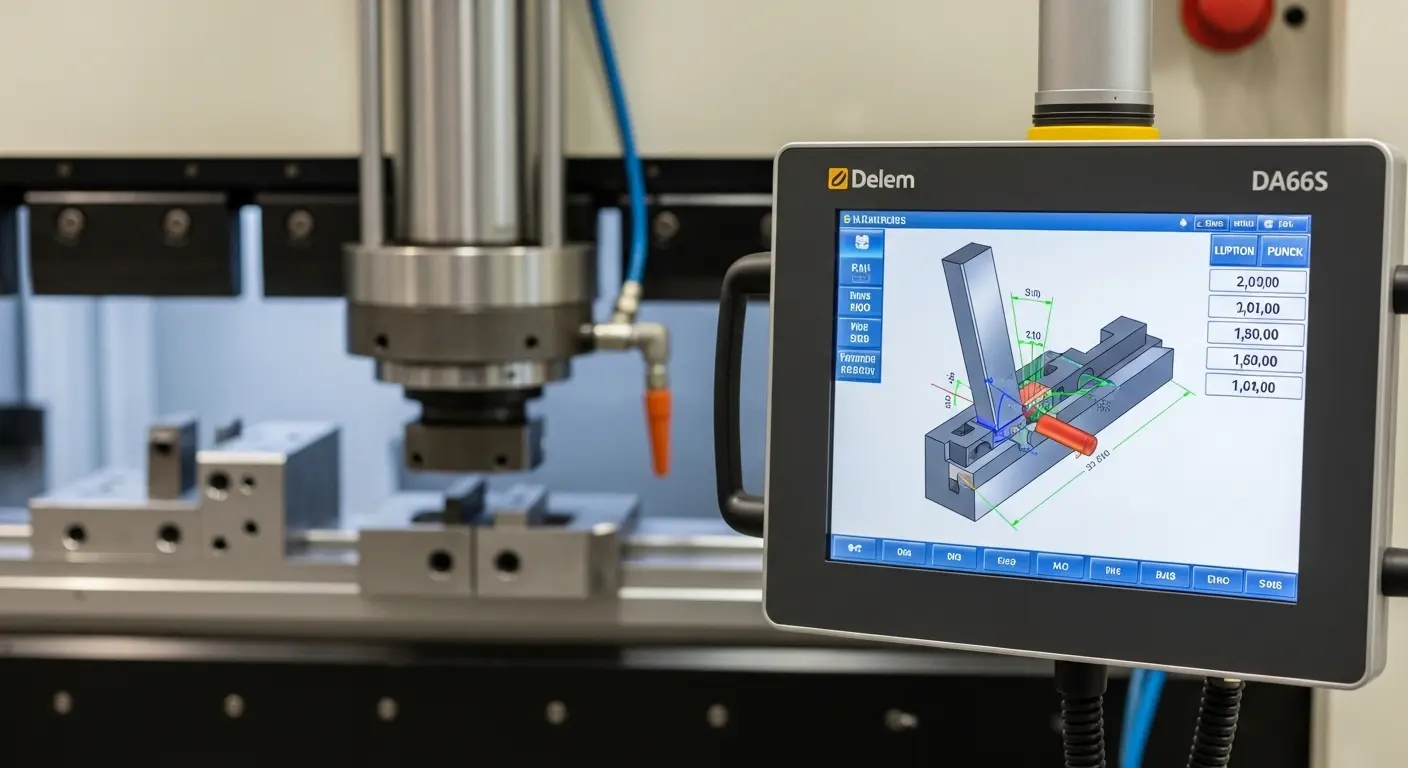
Choosing the wrong specifications is the second most common and most costly buyer mistake. Once a machine is ordered and shipped, changing the configuration is either impossible or prohibitively expensive.
Five specifications control every industrial CNC bending machine purchase. Review each one against your production requirements before requesting any quote.
Tonnage: How to Match Machine Force to Your Material
Tonnage is the bending force the machine can apply, measured in metric tons. It determines which materials and thicknesses the machine can process accurately.
A common rule used across the industry: a 100-ton machine processes up to approximately 10 mm mild steel across its working length. Stainless steel requires approximately 1.5× the tonnage of equivalent mild steel, while aluminum requires approximately 0.5×. If you regularly process stainless steel panels, plan for a higher tonnage machine than your mild steel calculations suggest.
Other tonnage considerations:
- Bending length matters. Longer bending lengths require more tonnage for the same material — force requirements are distributed across a wider span
- Over-tonning is acceptable. Running a 200-ton machine at 60% capacity extends machine life and allows future production expansion
- Under-tonning is not recoverable. A machine that cannot reach required force will produce inconsistent angles, spring-back errors, and premature tooling wear
Industrial CNC hydraulic press brakes are available from 40 tons to 2,000+ tons depending on application. Most general fabrication shops operate effectively in the 80–300 ton range.
CNC Controller: Why Brand and Compatibility Matter
The CNC controller is the brain of an industrial bending machine. It governs ram movement precision, back gauge positioning, bend sequence programming, and angle correction feedback. The controller brand you specify at purchase determines your machine's long-term programming capability, spare parts availability, and technical support access.
The three internationally proven CNC controller brands are:
- Delem DA53Tx / DA66S (Netherlands) — Industry standard for CNC hydraulic press brakes; DA66S includes 3D offline simulation, real-time angle correction, and profile-based bend sequence programming
- Cybelec CT12 (Switzerland) — Graphic touchscreen interface with bend sequence optimization; widely used across European and Asian markets
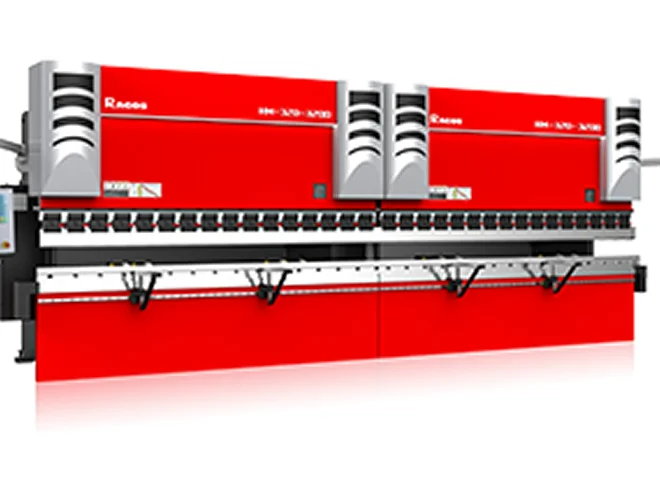
- ESA S840 (Italy) — Preferred for tandem press brake configurations and complex multi-axis back gauge control
Budget manufacturers sometimes equip machines with proprietary or unknown controllers to reduce cost. This creates a critical long-term risk: if the controller brand has no regional distributor, no spare parts supply chain, and no software update pathway, your machine becomes unserviceable within years of purchase. Always specify the controller brand in writing before confirming your order.
Additional specifications to confirm:
- Bending length (machine table width) — must match or exceed your largest workpiece
- Back gauge axes — more axes enable more complex multi-bend sequences
- Frame construction — welded stress-relieved steel with FEA-validated design is the standard for precision long-life machines
- Crowning system — hydraulic or mechanical crowning compensates for frame deflection across the bending length, ensuring consistent angles along the full table
How Much Does an Industrial Bending Machine Cost?
Price is the most searched piece of information for buyers evaluating an industrial bending machine purchase — and the least transparently disclosed by most suppliers. Here are realistic price ranges by machine type and tonnage tier.
Industrial CNC Bending Machine Price Guide (2026)
| Machine Type | Tonnage Range | Est. Price Range | Typical Source |
|---|---|---|---|
| CNC Hydraulic Press Brake | 40–80 ton | $8,000–$20,000 | China manufacturer |
| CNC Hydraulic Press Brake | 100–200 ton | $20,000–$45,000 | China manufacturer |
| CNC Hydraulic Press Brake | 250–500 ton | $45,000–$150,000 | China / European |
| CNC Hydraulic Press Brake | 500–2,000 ton | $100,000–$400,000+ | China / European |
| Plate Rolling Machine | 10–50 mm plate | $15,000–$80,000+ | China manufacturer |
| Panel Bender (automated) | N/A | $80,000–$300,000+ | European / Japanese |
| European Premium (Trumpf, Bystronic, AMADA) | Any | $100,000–$500,000+ | Germany / Switzerland / Japan |
Factors that shift price within each tier:
- Controller brand — Delem DA66S adds $3,000–$8,000 vs. basic controllers
- Bending length — Each additional 1,000 mm of table length adds material and structural cost
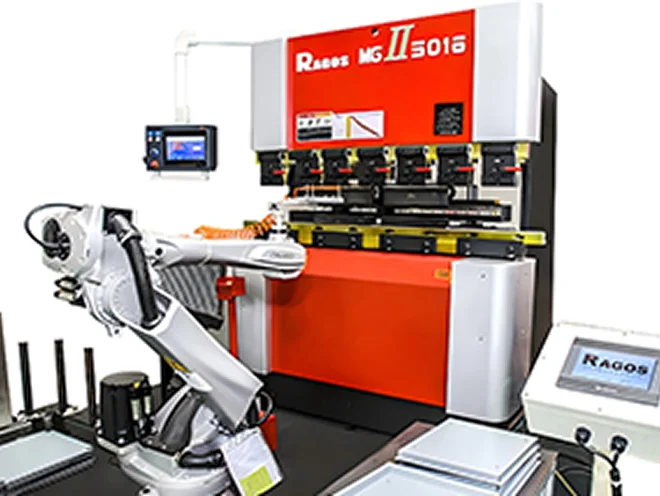
- Automation level — Robotic loading systems, automatic tool changers, and 6-axis back gauges significantly increase price
- CE certification — CE-compliant machines carry testing and documentation costs; uncertified machines may be cheaper upfront but are not legally importable into European markets
- Warranty and after-sales package — A manufacturer offering 24-month warranty with remote diagnostic support provides measurable cost value over the machine's lifespan
Buying directly from a manufacturer consistently delivers 15–30% better pricing than sourcing equivalent machines through a marketplace, because you eliminate trading company margins. Get a direct factory price quote from JS RAGOS with your exact tonnage and configuration requirements.
Should You Buy from a Manufacturer or a Marketplace?
This is the question most buyers do not know to ask — until they have experienced a bad marketplace purchase. Understanding the difference can save you tens of thousands of dollars and months of production delay.
Marketplace vs. Manufacturer Direct
| Dimension | B2B Marketplace (Alibaba, IndiaMART) | Direct Manufacturer |
|---|---|---|
| Price | Higher — trading company margins included | Lower — factory pricing |
| Configuration | Standard models only | Custom tonnage, length, controller available |
| CE Certification | Claimed, often unverifiable | Documented and verifiable at factory level |
| Controller specification | May be substituted without notice | Locked in writing at quote stage |
| After-sales support | Through intermediary; slow and inconsistent | Direct factory technical team |
| Warranty accountability | Shared between trading company and factory | Single-point manufacturer responsibility |
| Lead time | Variable; dependent on trading company stock | Planned production schedule; predictable |
| Engineering consultation | Rarely available | Pre-sale specification consultation available |
When a marketplace makes sense: Comparing multiple suppliers quickly, sourcing standard models under $10,000 for non-critical applications, or when you need escrow payment protection for a first-time transaction.
When buying direct from the manufacturer is essential: Any purchase above $15,000, custom tonnage or configuration requirements, European import requirements requiring verified CE documentation, or applications requiring long-term after-sales support.
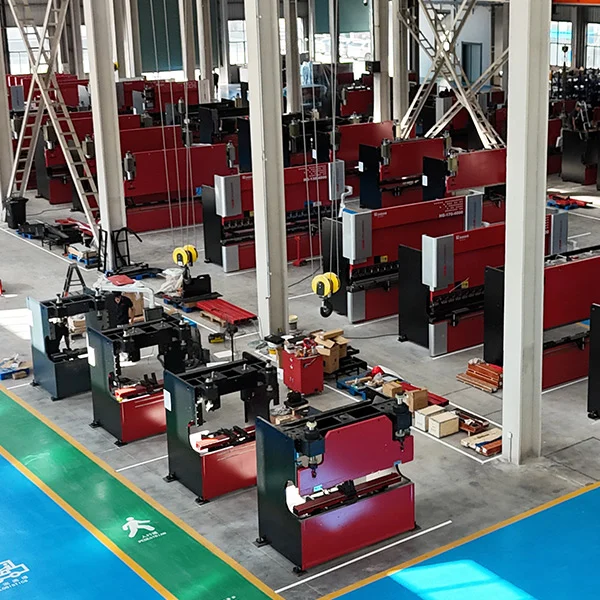
JS RAGOS has manufactured and exported CNC industrial bending machines directly to clients across Europe, Southeast Asia, and the Middle East since 2011 — with engineering consultation available before purchase and direct factory technical support after delivery. That level of accountability is structurally impossible through a marketplace intermediary.
What Certifications Should an Industrial Bending Machine Have?
Certification requirements are non-negotiable for international imports — yet this is one of the most commonly skipped verification steps in industrial machinery procurement.
Before you finalize any purchase of an industrial bending machine, confirm the following:
- CE Marking — Required for operation and import into European Union markets; confirms compliance with the EU Machinery Directive and applicable safety standards
- EN 12622:2009+A1:2013 — The specific European safety standard for hydraulic press brakes; covers guarding requirements, control systems, and emergency stopping functions
- ISO 9001 — Quality management system certification at the factory level; confirms systematic quality controls govern manufacturing, not just final inspection
- IEC/EN Electrical Safety Compliance — Confirms the machine's electrical control system, wiring, and safety circuits meet international standards
- Full Machine Documentation — At purchase, require: CE Declaration of Conformity, electrical wiring schematics, hydraulic system diagrams, controller manual, and spare parts list
Ask your supplier for these documents in writing before making any payment. A manufacturer who cannot or will not provide CE documentation is a supplier you should not buy from — regardless of price. View CE-certified industrial bending machines from JS RAGOS with full export documentation.
How Do You Place an Order for an Industrial Bending Machine?
You have identified your machine type, confirmed your specifications, reviewed pricing, and verified certification requirements. Here is the exact six-step process for placing a successful order with a manufacturer.
- Define your production specifications in writing. Document: material type (mild steel, stainless, aluminum), maximum material thickness, maximum bending length, required bending angle accuracy, and estimated production volume per shift. This becomes the basis of your specification request.
- Request a formal machine configuration quote. Contact the manufacturer with your specification document. Ask for: machine model, exact tonnage, bending length, controller model (with version number), back gauge axes, crowning system type, warranty period, and lead time. Everything should be in writing.
- Confirm CE certification and controller brand in writing. Request the CE Declaration of Conformity document before payment. Confirm the exact controller model (e.g., Delem DA66S, Cybelec CT12) is listed in the machine specification — not a generic placeholder.
- Review warranty, lead time, and logistics. Confirm: warranty duration and what it covers (hydraulic seals, electrical components, controller), estimated factory lead time from order to shipment, shipping terms (FOB, CIF, DAP), and customs documentation requirements for your country.
- Request a factory video inspection or virtual machine demo. Before final payment on any order above $20,000, request a pre-shipment video inspection showing the machine operating under load with a test bend. Reputable manufacturers accommodate this without hesitation.
- Confirm after-sales support and spare parts availability. Ask specifically: Is remote technical support available? Are Delem/Cybelec spare parts stocked or sourced on demand? Is on-site service possible in your region? A manufacturer who cannot answer these questions clearly is a manufacturer who will be unreachable when you need post-delivery support.
Start your industrial bending machine order enquiry with JS RAGOS — our engineering team responds within 24 hours with a full machine specification and price proposal.
Frequently Asked Questions
Where can I buy an industrial bending machine?
Industrial bending machines can be purchased directly from manufacturers (recommended for custom configurations and warranty support), through B2B marketplaces like Alibaba or IndiaMART, or via regional machinery distributors. Buying directly from a verified CNC manufacturer consistently delivers better pricing, configurable specifications, and direct technical accountability — especially for purchases above $15,000.
How much does an industrial bending machine cost?
Prices range from approximately $8,000–$20,000 for entry-level 40–80-ton CNC hydraulic models from Chinese manufacturers, to $25,000–$80,000 for 100–300-ton mid-range configurations with Delem DA66S controllers. Premium European brands (Trumpf, Bystronic, AMADA) start at $100,000+. Price is determined by tonnage, bending length, controller brand, automation level, and certification status.
What is the best industrial bending machine for sheet metal fabrication?
For most sheet metal fabrication applications, a CNC hydraulic press brake is the optimal choice. It handles a wide range of material types and thicknesses, supports programmable multi-bend sequences, and delivers consistent angle accuracy within ±0.05–0.1 mm with industry-standard Delem or Cybelec CNC controllers. This is the machine type that dominates global industrial fabrication.
Are Chinese industrial bending machines reliable?
Yes — when sourced from verified manufacturers with CE certification, ISO 9001 quality management, and internationally proven controllers (Delem, Cybelec, ESA). Quality varies significantly among Chinese suppliers. Protect your purchase by requesting CE documentation, bending accuracy test reports, and factory registration verification before payment.
What is the difference between a press brake and a bending machine?
"Press brake" and "CNC bending machine" are used interchangeably in the sheet metal industry. Both refer to machines that bend flat metal sheets using a punch-and-die system driven by hydraulic or servo-electric force. "Bending machine" is the broader category term; "press brake" describes the specific press-action mechanism. For sheet metal fabrication, both terms describe the same class of industrial equipment.
Can I buy an industrial bending machine with a custom configuration?
Yes — purchasing directly from a manufacturer allows full customization: custom tonnage, non-standard bending length, specific CNC controller brand, automation integration (robotic loading, automatic back gauge systems), and tandem configurations for extra-long workpieces. Marketplace platforms rarely offer true custom configurations. Direct manufacturer contact is required for non-standard specifications.
What certifications should I require when buying an industrial bending machine?
At minimum, require CE marking and compliance with EN 12622:2009+A1:2013 (European standard for hydraulic press brake safety). Also confirm ISO 9001 factory certification and IEC/EN electrical safety compliance. Ask for the CE Declaration of Conformity document in writing before finalizing any payment — not after delivery.
Ready to Buy an Industrial Bending Machine Directly from the Manufacturer?
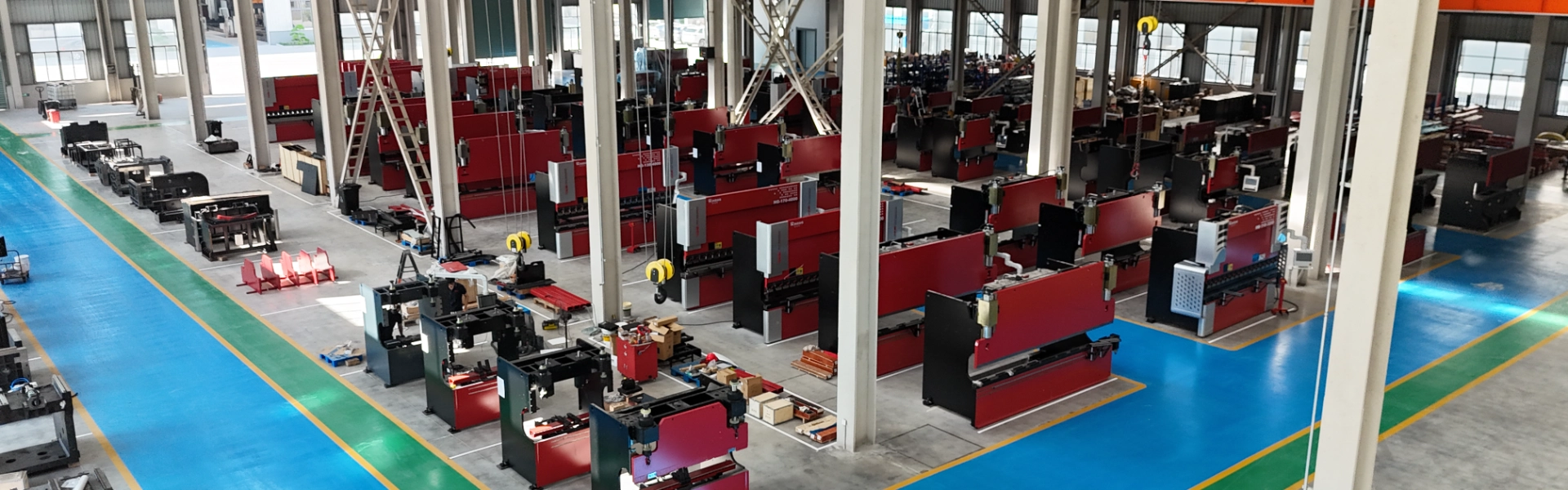
JS RAGOS has manufactured CNC hydraulic press brakes and industrial bending machines from Jiangsu, China since 2011 — with machines built around Delem DA66S, Cybelec CT12, and ESA S840 controllers, CE-certified for global export, and configurable to your exact tonnage, bending length, and automation requirements.
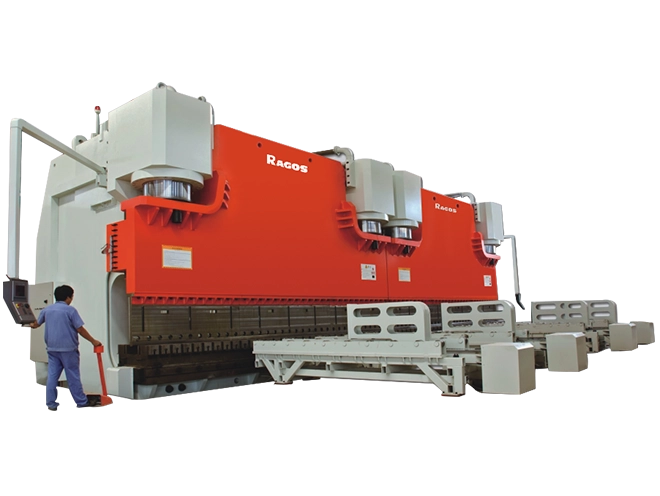
Whether you need a standard 100-ton sheet metal bending machine or a custom 500-ton tandem configuration for structural fabrication, our engineering team prepares a full machine specification and factory-direct price proposal within 24 hours of your enquiry.