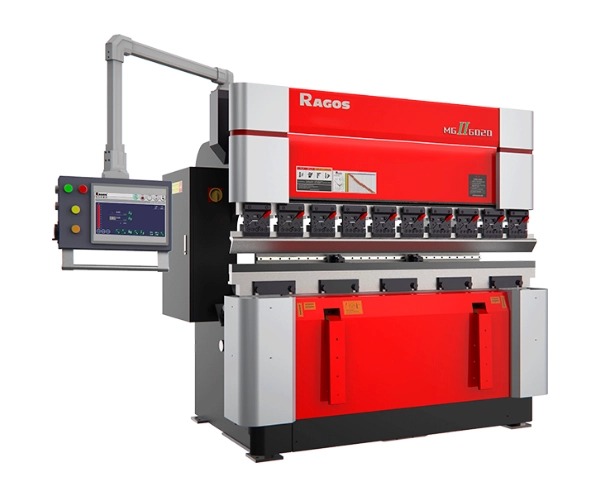
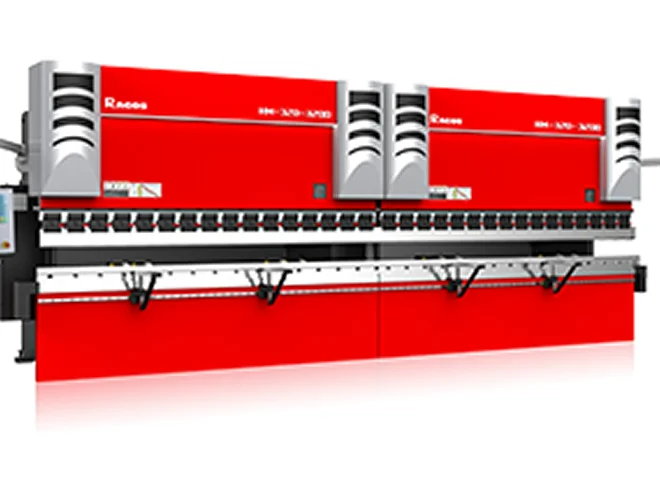
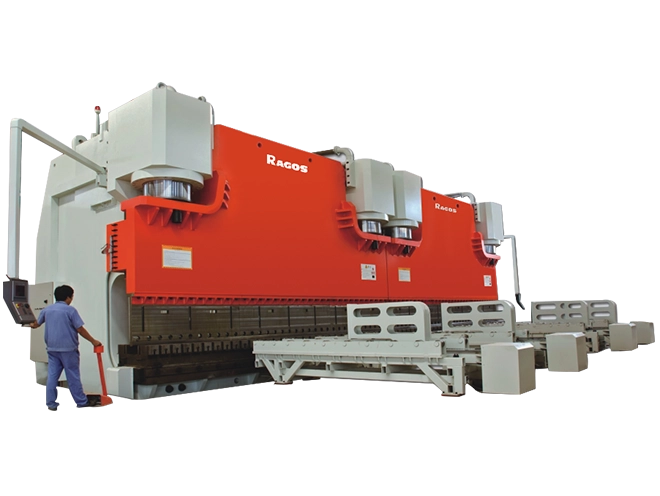
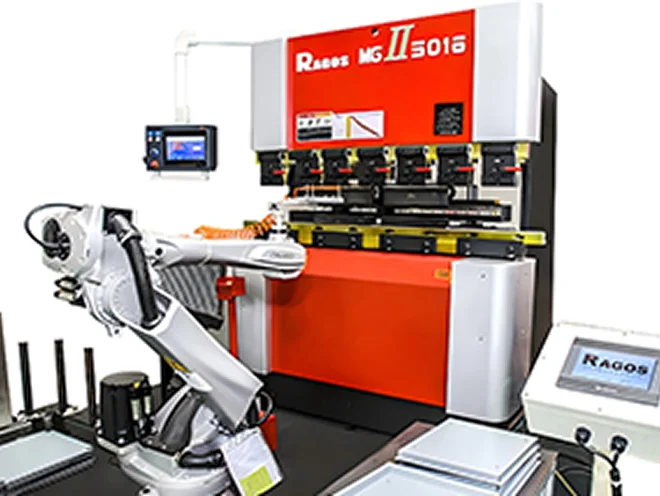


CNC Stainless Steel Bending Machine In 2026: Methods, Geometry, And Repeatable Results
CNC stainless steel bending machine work is often described as “simple bending,” but real production is controlled deformation, controlled recovery, and controlled surface quality—especially in 2026, when tolerance and appearance matter as much as strength. Stainless steel is unforgiving when your settings drift. A small change in die opening, punch radius, or material batch can turn a clean 90° into a costly rework loop. The good news is that bending can be made predictable. Once you understand the few technical levers that truly control angle, length, and finish, stainless bending stops feeling like a guessing game.
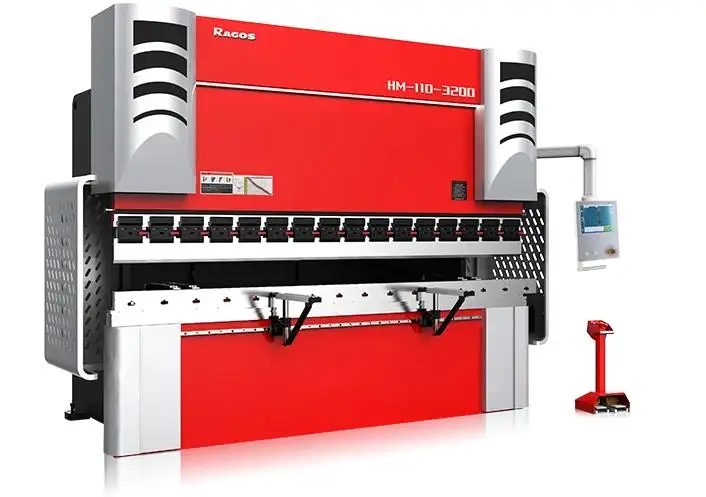
At JS RAGOS, we design CNC systems for workshops and factories that want bending results that can be taught, repeated, and scaled. This guide is written for beginners and production teams who want a clear “map” of stainless bending—without hiding behind vague theory.
What Sheet Metal Bending Really Means in 2026
Sheet metal bending forms a flat sheet into a defined angle or radius by pressing a punch into a die. On paper, the idea is simple: apply force, create a bend. In practice, stainless steel adds three real-world complications:
•Elastic recovery (springback) that changes the final angle after pressure is released
•Work hardening that makes corrections harder and increases risk during rework
•Surface sensitivity where tool marks can become cosmetic scrap, not “minor defects”
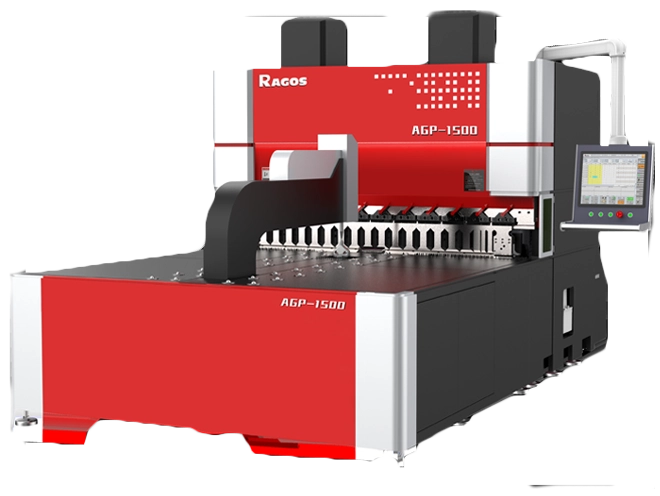
Because of these factors, a CNC stainless steel bending machine is the most reliable path to repeatability. CNC control makes penetration depth, backgauge positioning, and compensation consistent from part to part. It also allows you to store proven settings, so successful bends become a process library—not tribal knowledge.
Before the first bend, your team should agree on the parameters that decide fit and function:
•Material thickness and grade
•Inside radius and target angle
•Bend allowance, bend deduction, and K factor
•Tooling selection (die opening, punch radius)
•Quality target (dimension only, or dimension + cosmetics)
When these are defined and recorded, stainless bending becomes measurable instead of emotional.
Why Stainless Steel Bending Feels Harder Than Mild Steel
Many operators feel confident with mild steel or aluminum, then get surprised by stainless. The reason is not bad luck. Stainless combines properties that amplify variation:
•Higher strength → requires more tonnage and more rigid machine structure
•Good ductility → can form complex shapes, but does not “lock” into an angle easily
•Work hardening → the bend zone becomes tougher after the first hit, raising the cost of corrections
The daily enemy is springback. A “finished 90°” is rarely created by bending to exactly 90° under load. Depending on grade, thickness, tooling, and bend radius, you often must overbend to get the final angle you want. That is exactly why a CNC stainless steel bending machine matters: you can dial in compensation, then repeat it without operator-to-operator drift.
For shops that do mixed work, the biggest productivity gain usually comes from standardizing how you react to springback. Instead of “try again,” you build a rule-set: grade + thickness + tooling = starting compensation.
Choosing the Right Bending Method for Stainless Jobs
Different methods can produce similar shapes, but not with the same stability, speed, or surface outcome. Below is a practical “when to use what” map for stainless production.
- V Bending: The Workhorse Method
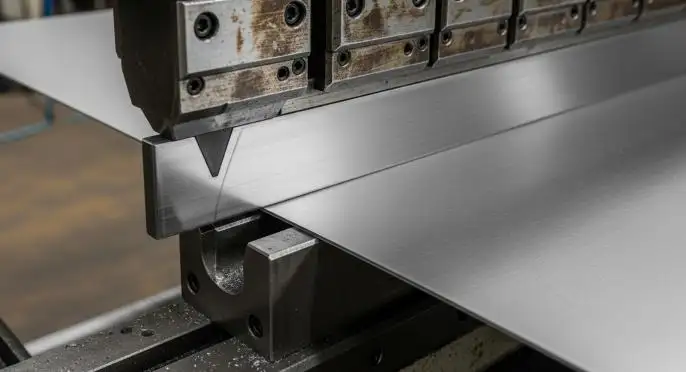
V bending is the most common approach. A punch presses the sheet into a V die, creating an angle.
- Air Bending
Air bending does not fully seat the sheet into the die. Angle results depend mainly on punch penetration depth, which is why modern CNC control makes such a difference.
•Best for: mixed-job shops with frequent angle changes
•Strength: one tool set can deliver multiple angles with the right depth control
•Trade-off: springback is higher, so compensation must be managed carefully
- Bottoming (Including Coining-Style Bottoming)
Bottoming pushes material closer to the die walls, improving consistency and minimizing springback.
•Best for: repeat runs where angle stability is the KPI
•Strength: fewer test pieces and faster setup stabilization
•Trade-off: higher tonnage and more tooling stress than air bending
In JS RAGOS workflows, air bending is often the practical default for high-mix production, while bottoming is chosen when repeatability targets tighten. In both cases, a CNC stainless steel bending machine improves control because successful penetration values can be saved, recalled, and standardized.
The Geometry That Decides Whether Parts Fit
If bending feels unpredictable, it is usually because flat pattern calculations and neutral axis assumptions are not aligned with reality. Focus on three items: neutral axis, K factor, and bend allowance.
When bending, the inner surface compresses and the outer surface stretches. Between them sits the neutral axis, the layer that does not change length. Your flat pattern is calculated around this axis, not around the sheet’s mid-thickness by default.
K Factor: The Practical Meaning
The K factor describes where the neutral axis sits within the thickness. Many beginners assume it is always centered. In reality, it shifts depending on material and bending method.
•In common practice, K factor often falls between 0.30–0.50
•For stainless in air bending, it is often closer to 0.42–0.48 (a practical starting band, not a universal rule)
Why this matters: if your K factor is wrong, your flat lengths are wrong. Wrong flat lengths become wrong flange sizes. Wrong flange sizes become assembly problems.
Bend Allowance: A Formula Worth Remembering
A widely used bend allowance expression is:
BA = A × (π/180) × (R + K × T)
Where:
A = bend angle (degrees)
R = inside bend radius
K = K factor
T = material thickness
The advantage of a CNC stainless steel bending machine workflow is consistency. Once you validate tooling + K factor for a material, you can reuse it and reduce repeat trial cuts.
How to Control Springback Without Guessing
Springback cannot be eliminated, but it can be controlled with a repeatable approach. Three factors dominate the final angle:
•Material strength and thickness: stronger materials spring back more
•Inside radius and die opening: larger radii and wider die openings usually increase springback
•Bending method: air bending has the most springback; bottoming reduces it; coining-style methods reduce it further but demand higher tonnage
A common guideline for stainless V-die selection is choosing a die opening around 6–8× material thickness as a starting point. It is not a law, but it helps you avoid extreme setups that cause inconsistent angles and surface damage.
The most dependable shop method is controlled overbending + measurement:
•Start with a reasonable compensation target (often a few degrees)
•Test bend, measure the final angle after release
•Adjust in small steps
•Store the final setting as a standard for that grade/thickness/tooling combination
At JS RAGOS, we encourage building a “material–method–tooling” library that includes grade, thickness, die opening, punch radius, target angle, and compensation value. This turns bending into a repeatable process, not a memory test.
A Beginner-Friendly Stainless Example and How to Scale It
Consider a simple training case: 304 stainless, 3.0 mm thickness, 500 mm bend length, target 90°.
A practical workflow is:
•Choose the V-die opening for thickness and bend goal
•Pick air bending (flexible) or bottoming (repeatable)
•Test bend and measure the released angle
•Compensate and store the setting
•Check angle, flange length, and surface marks
A CNC stainless steel bending machine standardizes outcomes, reduces reliance on “feel,” and shortens training time. Instead of each operator building personal habits, the shop builds shared bending standards.
What JS RAGOS Focuses on for Measurable Outcomes
A CNC system is only valuable if it improves production metrics you actually care about. JS RAGOS focuses on outcomes that can be measured on the shop floor:
•Repeatable CNC control → fewer test pieces, less scrap, more stable delivery schedules
•Process-friendly parameter input → beginners learn faster, experienced operators work with less stress
•Method and tooling guidance → better angle stability, fewer springback surprises
•Surface-protection awareness → fewer tool marks on brushed or mirror stainless, lower cosmetic rejection
When stainless bending is standardized, your quality improves in two directions at once: parts fit better, and surfaces look better. That combination is what “2026-ready” bending really means.
CTA: If you are planning stainless steel bending in 2026 and want a process that is easier to train, easier to repeat, and easier to scale, contact JS RAGOS for a CNC stainless steel bending machine recommendation. Share your stainless grade, thickness range, part length, and bend types, and we will help match the method, tooling approach, and control strategy to your production goals.