

CYBELEC CT8PS Controller for CNC Press Brake:Functions,Alarms&Troubleshooting
By Author: Mark Hanks
In modern sheet metal fabrication, the bending accuracy, production efficiency, and ease of operation of a press brake depend not only on its mechanical structure and hydraulic system, but also on the performance of the CNC control system. A stable and reliable press brake CNC controller helps improve bending angle consistency, reduce manual setup and adjustment time, and increase efficiency in batch production.
The CYBELEC CT8PS Controller (CybTouch 8 PS) is a CNC controller for synchronized press brakes that incorporates a touchscreen, is configurable for Y1/Y2 connection, supports back gauge, tooling, and program data, and includes diagnostics. This article will provide a overview to the main functions, hardware interfaces, bending modes, common alarm messages, and troubleshooting solutions of the CYBELEC CT8PS Controller, helping users to gain a more comprehensive understanding of the application of this control system in CNC bending machines.
Sheet metal components are widely used in automotive, appliance, electronics, telecommunications, construction, and equipment manufacturing industries becuause of their lightweight, cost-effectiveness, and suitability for high-volume production. A press brake is versatile as a forming machine and when equipped with appropriate tooling, can accommodate special forming processes.
Traditional press brakes that utilize torsion bars are still prevalent. However, the demand for improved accuracy, enhanced productivity, reduced workforce demand, and consistent bending results, have fueled the adoption of electro-hydraulic synchronous CNC press brakes. Electro-hydraulic synchronization, in contrast to torsion bar systems, enhances proportional control of the Y-axis, and position control, without requiring mechanical synchronization elements.
While fully electric press brakes are extremely energy-efficient, they are primarily restricted to lower tonnage applications due to the limitation of higher power in electric servos and the drive screw mechanism. Therefore, electro-hydraulic synchronous press brakes remain a practical solution for medium- and high-tonnage production.
These systems are mainly divided into:
•Servo proportional valve-controlled hydraulic synchronous press brakes
•Servo pump-controlled hydraulic synchronous press brakes
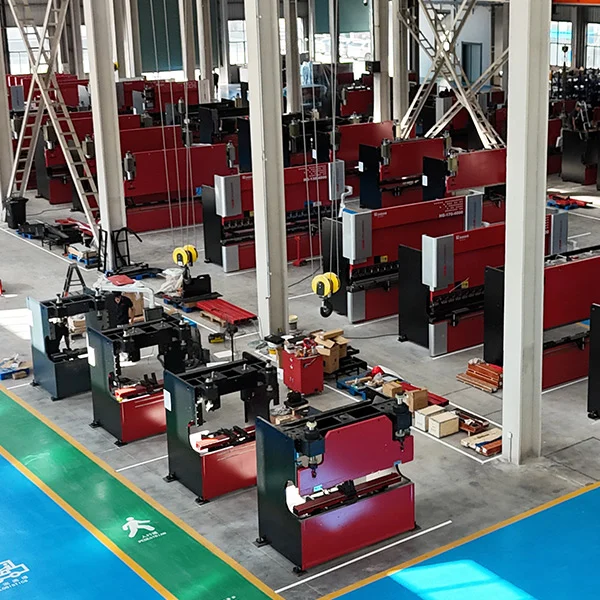
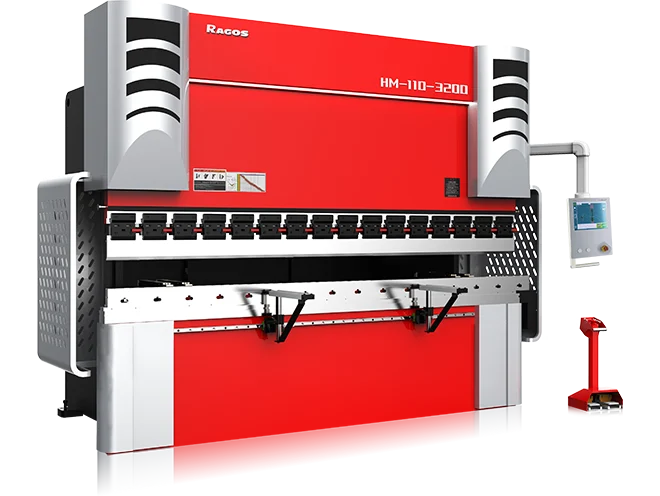
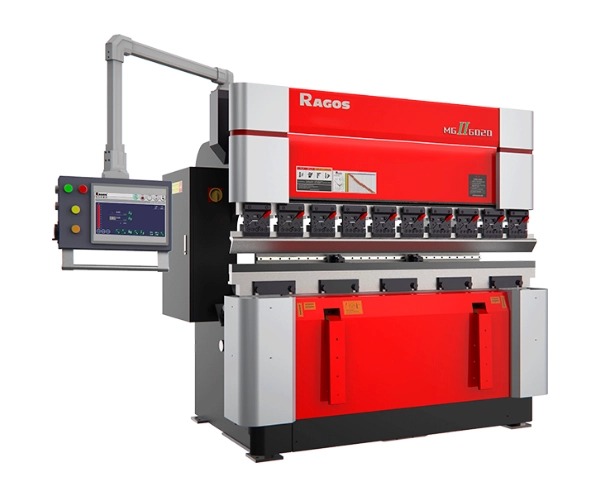
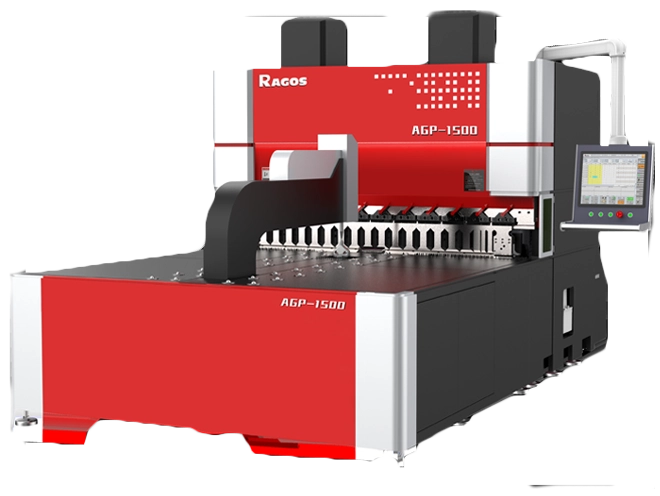
Major CNC system suppliers include DELEM, CYBELEC, and ESA. JS Ragos economic electro-hydraulic CNC press brakes use the CYBELEC CT8PS Controller with Bosch Rexroth proportional directional valves to improve positioning performance while maintaining competitive cost.
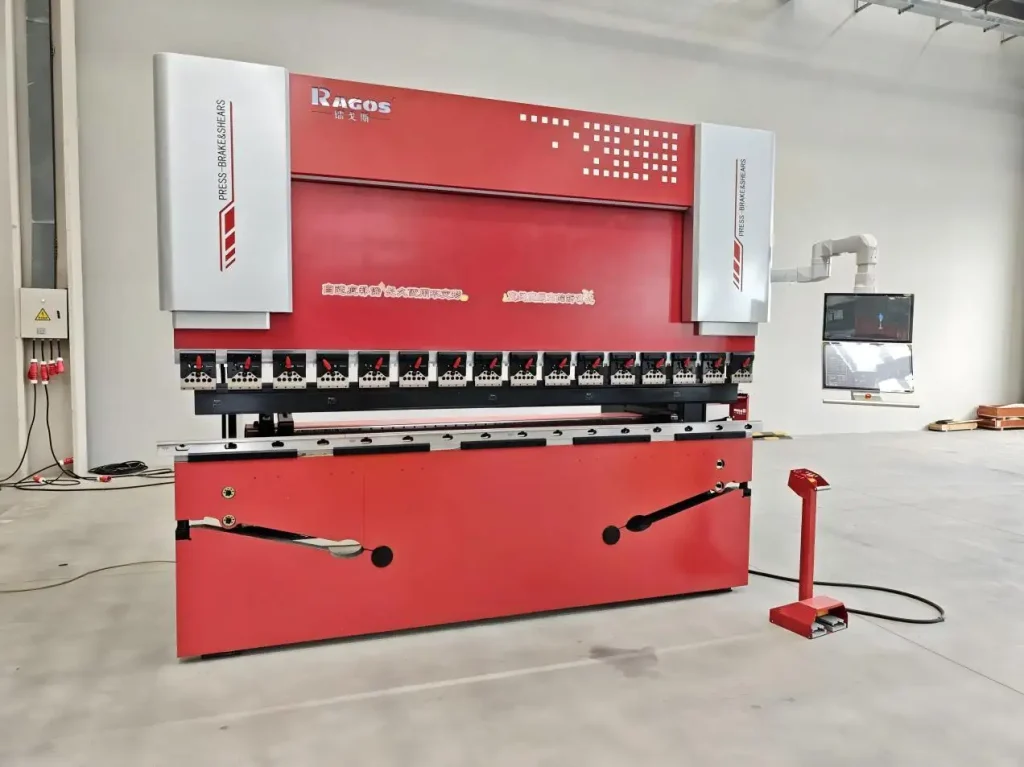
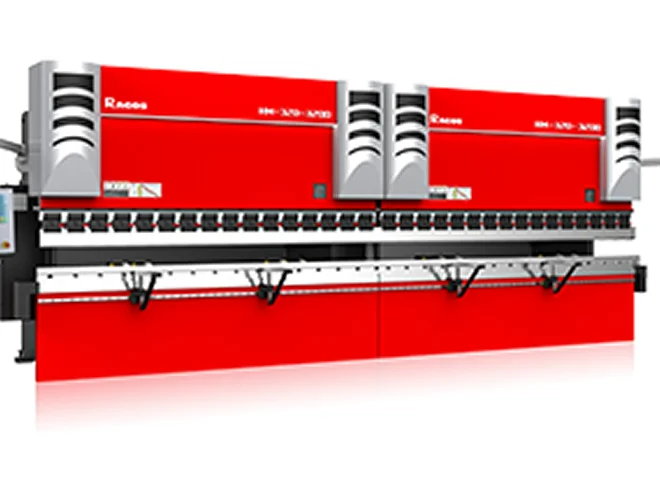
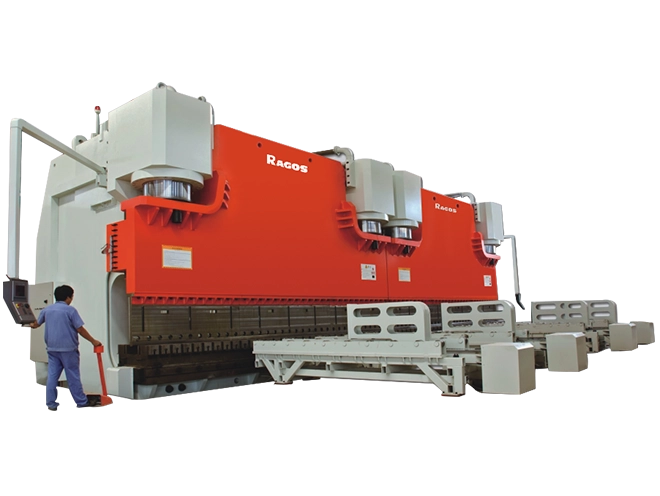
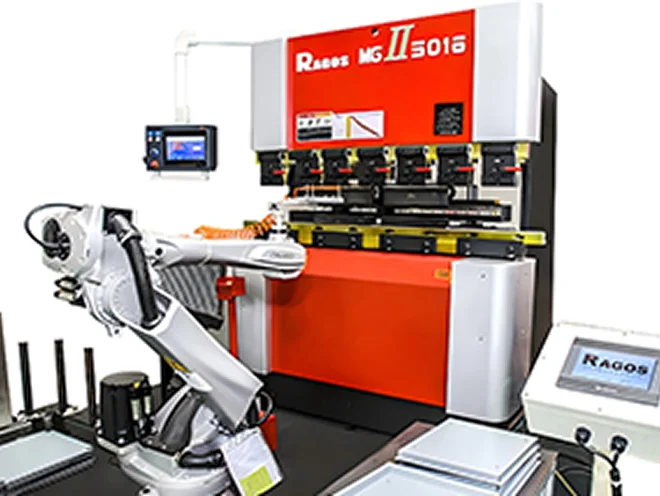
Figure 1 — Economic Electro-Hydraulic CNC Press Brake Overview
1. System Overview
The CYBELEC CT8PS Controller is developed for electro-hydraulic synchronized press brakes. With its fully touch enabled human machine interface (HMI), The controller provides access to bending programs, machine parameters, tooling databases, and diagnostic functions.
The standard configuration supports Y1/Y2 synchronization and X-axis back gauge positioning. An optional R-axis can be added for back gauge height adjustment. The standard configuration supports 3-axis control, including Y1/Y2 synchronization and X-axis back gauge positioning, with optional additional axis available.
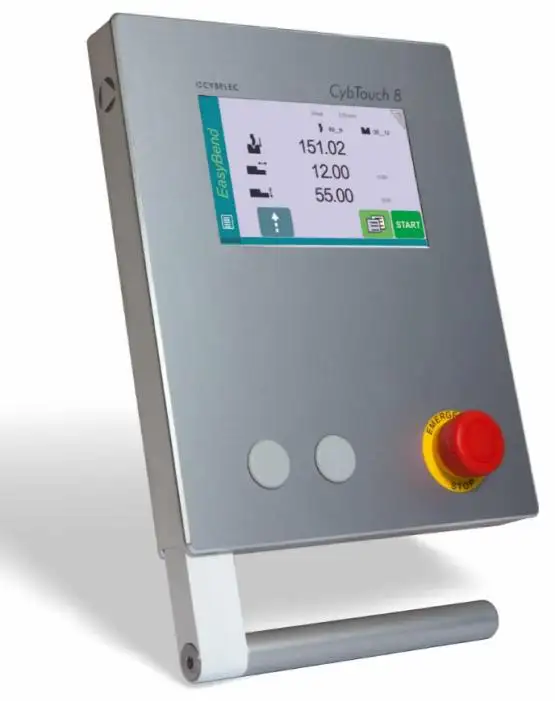
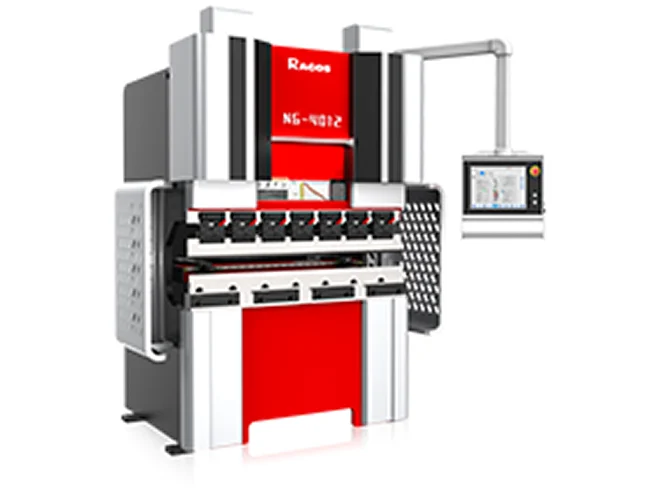
Figure 2 — CYBELEC CT8PS Controller Overview
Key functions include USB data backup, machine parameter management, manual bend sequencing, optional 2D profile drawing, tooling database management, and wireless RFlink data transfer. RFlink supports backup, restore, firmware update, and beam movement trace monitoring when used with the required RFlink USB key.
| Item | Capacity |
| Upper tools / punches | 100 |
| Lower tools / dies | 100 |
| Bending programs | 300 |
| Program steps | 24 per program |
1.1 CYBELEC CT8PS Hardware Interfaces and Specifications
The controller uses a 7-inch color touchscreen with LED backlight and provides digital, analog, encoder, USB, RFlink, and RS232 communication interfaces. It receives signals from foot pedals, linear scales, and machine sensors, then sends control commands to the pressure valve, Y1/Y2 proportional valves, crowning system, and servo back gauge.
| Interface Type | Specifications |
| Digital Inputs | 8 optocoupled inputs |
| Digital Outputs | 12+1 optocoupled outputs, short-circuit protected |
| Analog Inputs | 2 channels, 0–10 VDC |
| Analog Outputs | 4 or 6 channels, ±10 VDC, depending on version |
1.2 CYBELEC CT8PS Bending Modes
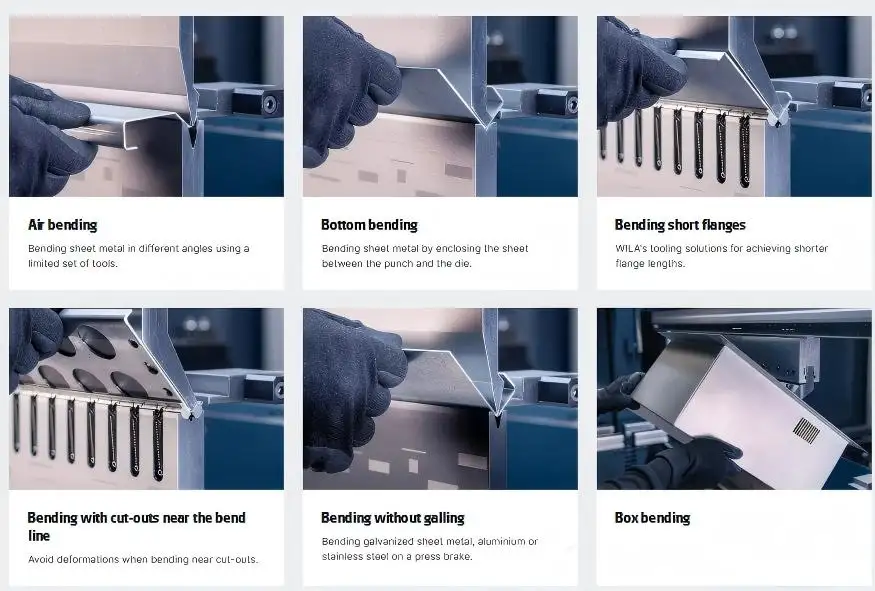
| Mode | Description |
| Angle Bending | The operator enters the target angle. The controller calculates the bottom dead center according to material, tooling, and machine data. |
| Depth Bending | The operator directly defines the ram position. It is suitable when a fixed forming depth is required. |
| Bottoming Bending | The bend is formed under higher final pressure. It requires suitable tooling, machine tonnage, and process verification. |
1.3 Key CYBELEC CT8PS Functions
1.3.1 Slow Return
Slow Return improves safety and handling when bending large or heavy sheets. After bending, the ram moves upward slowly while the foot pedal is activated. When the pedal is released or the preset clamping point is reached, the system switches to fast return.
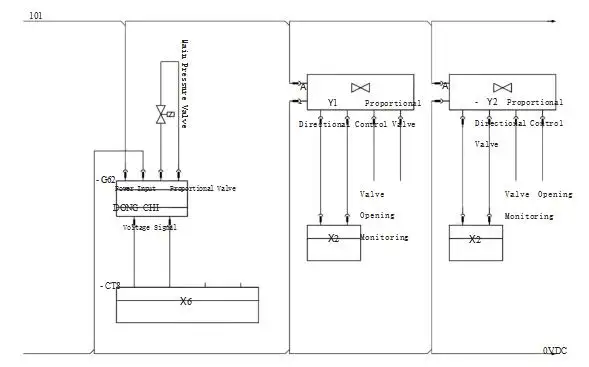
Figure 3 — Proportional Valve Wiring Diagram
1.3.2 Clamping Point Offset
Clamping Point Offset eases the transition from slow to fast movement. It is beneficial in techniques such as Tool Alignment or Manual Positioning and works in the production of single or small batch components and prototypes. This helps reduce setup time.
1.3.3 Easy Bending
Easy Bending means that the operator can stop the machine at any point in the program and use the existing tooling to create a bend for a task. The program is then able to continue from the same point, essentially allowing an override for the program.
Setup Navigation provides an easy commissioning guide. The operator inputs the machine's data in a step by step fashion. The operator can check the movement of each individual axis and fine-tune each setting, thus optimizing performance and reducing time to install and set up the machine.
1.3.5 Leakage Correction
Ram position at Top Dead Center can drift due to leakage at the hydraulic valve or wear of the cylinder seals. Leakage Correction identifies height deviation of Y1/Y2 measured by linear scales and provides compensation signals to the proportional valve, allowing synchronization and repeat positioning to be maintained.
1.4 CYBELEC CT8PS Alarm Messages and Troubleshooting
The controller displays machine status, operation errors, and CNC faults on the screen. Information messages usually indicate normal operating conditions, while error messages remain active until the problem is corrected.
| Code | Message | Description |
| W05 | Pump motor running | The hydraulic pump motor has started and the hydraulic system is ready. |
| W11 | Reference point found | The machine has completed reference positioning. |
| E02 | Pump motor off | The pump motor has not started. Check power, start command, and machine status. |
| E15 | Bottoming not allowed | Bottoming is selected, but tooling or machine settings do not support it. |
| E52 | Upper tool missing | No upper tool has been assigned in the bending program. |
Table 1 — Common Alarm Messages
1.5 What Types of Press Brakes Is the CYBELEC CT8PS Suitable For?
The CT8PS is mainly suitable for:
•Entry-level electro-hydraulic synchronized press brakes
•Standard sheet metal fabrication without highly complex bending requirements
•Small- to medium-batch production
•Applications requiring stable Y1/Y2 synchronized axis control
1.6 What to Check Before Buying or Replacing a CYBELEC CybTouch 8 PS
When determining whether a CYBELEC CybTouch 8 PS is suitable for a specific press brake, the controller model alone is not sufficient. The machine configuration must also be evaluated, including the Y1/Y2 synchronized axis control, backgauge axis configuration, linear encoder feedback, proportional valves and hydraulic system, crowning system, and the total number of controlled axes required. CYBELEC specifies the CybTouch 8 PS for synchronized press brakes, with configurations supporting Y1, Y2, X and, depending on the version, R-axis control.
For a new press brake, the machine manufacturer should match and configure the CNC system according to the machine’s mechanical, electrical, and hydraulic architecture.
For a retrofit or controller replacement, additional checks are required to verify compatibility with the existing I/O configuration, feedback signals, sensors/encoders, actuators, proportional or servo valves, and electrical interfaces. This is especially important because Y1/Y2 synchronization, valve control, pressure control, and crowning functions may require different feedback loops, analog command signals, or dedicated interface/amplifier modules depending on the hydraulic configuration.
2. CYBELEC CT8PS vs Other CNC Press Brake Controllers
2.1 Overview of CNC Press Brake Controller Selection
When selecting a CNC press brake control system, users should generally consider their bending requirements, production complexity, and equipment budget. Different control systems vary in terms of operator interface, number of controlled axes, graphical programming capabilities, and level of automation.
For economical and standard electro-hydraulic synchronized press brakes, the CYBELEC CT8PS provides reliable Y1/Y2 synchronized control together with essential CNC programming functions, making it a cost-effective solution for improving bending accuracy and production efficiency. Compared with high-end 3D graphical CNC control systems, it retains the core functions required for standard bending operations while helping reduce the overall machine investment cost.
2.2 Comparison Table
| Control System | Primary Application | Key Features |
| CYBELEC CT8PS | Cost-effective electro-hydraulic synchronized CNC press brakes | Touchscreen operation, Y1/Y2 synchronized control, and suitability for cost-conscious standard bending applications |
| DELEM DA53Tx | Standard CNC press brakes | 2D graphical programming, well suited for conventional bending production |
| DELEM DA69S | High-end CNC press brakes | 3D graphical simulation, 3D programming, and 3D file import |
| DELEM DA66S | Mid- to high-end CNC press brakes | Supports control of more axes and 3D graphical simulation |
2.3 Why Choose CYBELEC CT8PS?
For high-volume production of standard sheet metal parts, such as:
•Electrical cabinets
•Machine enclosures
•Door panels
•Ventilation equipment
users often do not require advanced 3D simulation capabilities. Instead, they typically place greater emphasis on:
•Stable machine operation
•Ease of use
•Short operator training time
•Reliable synchronized control
For these applications, the CYBELEC CT8PS Controller is an ideal choice for cost-effective electro-hydraulic synchronized CNC press brakes, providing the essential control functions required for efficient and reliable production.
3. How CYBELEC CT8PS Controls Electro-Hydraulic Synchronous Press Brake Systems
The constituents of the hydraulic control system are the pressure control block, synchronization control block, filling valve, pump motor unit and left and right hydraulic cylinders. The pressure control block and synchronization control block are bespoke designs for electro-hydraulic synchronous CNC press brakes.
The synchronization control block integrates Hengli 4WREE6E16 series proportional directional valves and Rexroth cone-type solenoid directional valves. As shown in Figure 4, this hydraulic configuration provides high synchronization accuracy and strong resistance to eccentric loads.
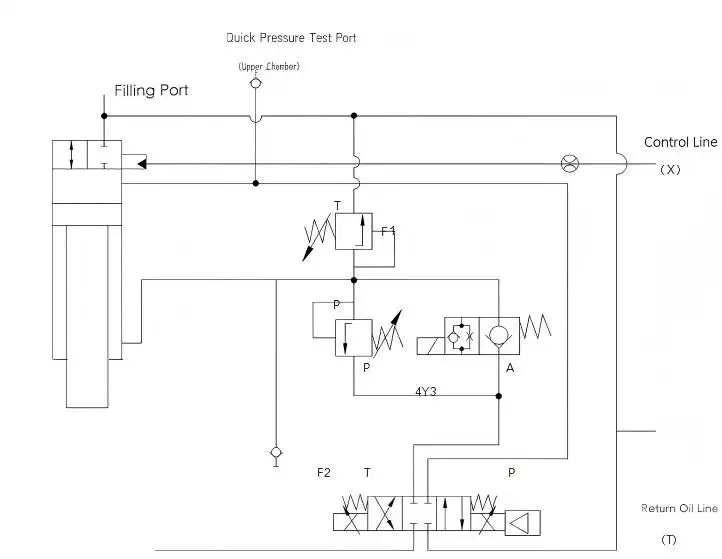
Figure 4: Hydraulic schematic diagram of the synchronization control block
The hydraulic cycle consists of five main stages:
1)Rapid Descent
During rapid descent, the filling valve opens through the control circuit, and solenoid valve 4Y3 is energized. A positive voltage signal causes proportional directional valve 4Y1 to activate. This allows the ram to increase its speed downward due to gravity.
Hydraulic oil transfers to the upper chambers of the cylinders through the filling valve. Simultaneously, oil is pushed from the pump outlet to the upper chambers of proportional directional valve 4Y1. Oil in the lower chambers flows back to the tank through solenoid valve 4Y3 and proportional directional valve 4Y1. Descent speed is maintained by the proportional directional valve input voltage adjustment to change the valve opening.
2)Working Feed
In the working feed phase, the filling valve is closed and solenoid valve 4Y3 is de-energized. Oil is allowed to flow to the upper chambers of the cylinders via proportional directional valve 4Y1.
Oil in the lower chambers flows back to the tank through exit check valve F2 and proportional directional valve 4Y1, allowing a controlled backpressure to be maintained to stabilize the bending ram. The speed of the working feed is adjustable by the input voltage, which controls the opening of the proportional valve. Safety valve F1 protects against excessive pressure in the lower chambers.
3)Pressure Holding
In the pressure holding phase, a 0V control signal is sent to the proportional directional valve to close the hydraulic circuit and contain pressure in the cylinders. This maintained pressure ensures a constant bending angle.
4)Pressure Unloading
The phase of pressure holding is terminated by switching to pressure unloading, where a negative control voltage is applied to the proportional directional valve and 4Y2 is energized to allow the valve to be slightly opened.
To minimize hydraulic impact during transition, the proportional directional valve allows for gradual release of pressure in the upper chambers.
5) Return Stroke
For the return stroke, the proportional directional valve is subjected to a negative control voltage, resulting in increased opening of the valve. As a result, pressure oil present in the inlet line is allowed to flow through the proportional directional valve, and solenoid valve 4Y3, into the lower chambers of the cylinders.
Meanwhile, oil from the upper chambers returns to the tank through the filling valve, allowing the ram to return rapidly. The return speed is adjusted by controlling the opening of the proportional directional valve through its input voltage.
Conclusion: Is the CYBELEC CT8PS Right for Your Press Brake?
The CYBELEC CT8PS Controller is a great compromise interfacing bending systems combining torsion bars CNC press brakes with high-end electro-hydraulic systems. Where proportional hydraulic systems dominate in Y-axis accuracy, bending systems of greater consistency and reliability are achieved.
With a touch screen, different bending modes with sequence guides, a system to correct leakage and alarm systems, and data backup easily accessible, the controller allows a noticeable improvement to productivity and bending precision without the cost of high-end CNC press brake systems.
CTA: If you are evaluating a CT8PS CNC press brake, please share your material type, max thickness, bending length, and production requirements with us. Our engineering team can help recommend a suitable press brake configuration based on your application.
For more information about our CNC press brake solutions or to discuss your specific requirements, please contact JS RAGOS.
FAQ
Q1. What is the role of the CYBELEC CT8PS Controller in CNC press brakes?
The CYBELEC CT8PS Controller (CybTouch 8 PS) is a CNC control system designed for electro-hydraulic synchronized press brakes. It is mainly responsible for bending process control, program management, and machine status monitoring.
It can control and manage:
Y1/Y2 ram synchronization
X-axis back gauge positioning
Bending program editing
Tooling parameter management
Machine diagnostics and alarm display
With its touchscreen interface, operators can set bending parameters more conveniently, helping improve production efficiency and process stability.
Q2. How Many Axes Can the CYBELEC CT8PS Controller Control?
In its standard configuration, the CYBELEC CT8PS supports 3-axis control:
Y1 axis
Y2 axis
X-axis back gauge
Depending on the press brake configuration, an additional axis may also be added, such as:
R axis for back gauge height adjustment
Through synchronized Y1/Y2 control combined with linear scale feedback, the CT8PS can improve ram synchronization accuracy and help maintain consistent bending angles.
Q3. Does the CYBELEC CT8PS Use a Touchscreen Interface?
Yes.
The CYBELEC CT8PS is equipped with a 7-inch color touchscreen, allowing operators to perform functions such as:
Bending program input
Machine parameter setting
Tooling data management
Angle and back gauge correction
2D graphical profile creation with manual sequencing (optional)
Compared with conventional button-based controllers, the touchscreen interface can simplify operation, shorten operator training time, and improve overall usability.
Q4. Which Bending Modes Does the CYBELEC CT8PS Support?
The CYBELEC CT8PS supports several common bending modes, including:
1. Air Bending
The operator enters the target bending angle, and the control system calculates the required ram position according to material parameters, tooling data, and machine settings.
2. Depth Bending
The operator directly specifies the ram penetration depth. This mode is suitable for applications where a defined forming depth is required.
3. Bottoming
The workpiece is formed with higher bending force and closer contact with the die. The bending process should be confirmed according to material properties, tooling configuration, and available machine tonnage.
Q5. How Does the CYBELEC CT8PS Improve CNC Press Brake Accuracy?
The CYBELEC CT8PS improves bending accuracy through several control functions, including:
Y1/Y2 synchronized control
Linear scale feedback
Proportional hydraulic valve control
Leakage correction
These functions help minimize height differences between the two sides of the ram and improve bending angle consistency, particularly during repetitive batch production.
Q6. What Are Common CYBELEC CT8PS Alarm Messages?
The CT8PS can display both information and error messages. In the examples listed in this article:
W05 — Pump motor running
W11 — Reference point found
E02 — Pump motor off
E15 — Bottoming not allowed
E52 — Upper tool missing
Always use the exact code and message shown on the controller when troubleshooting; the applicable procedure may depend on the press brake configuration.
Q7. How Do You Troubleshoot CYBELEC CT8PS Alarm Problems?
When an alarm appears, first need to check the machine power supply and startup status, hydraulic-pump operation, tooling assignments, Y1/Y2 linear-scale feedback, and relevant CNC parameter settings. If the issue still remains unresolved, contact the machine manufacturer or qualified technical support personnel.
Q8. Is the CYBELEC CT8PS Suitable for Retrofitting or Upgrading an Existing Press Brake?
Whether the CYBELEC CT8PS is suitable for a retrofit cannot be determined by the controller model alone. Compatibility must be evaluated based on the existing machine’s hydraulic system, Y1/Y2 feedback configuration, backgauge axis setup, I/O interfaces, and installed actuators.
Before replacing the controller, it is recommended that the machine manufacturer or a qualified technician familiar with the press brake verify the existing electrical and hydraulic configuration. This will determine whether the CT8PS can be installed directly or whether related components, interfaces, and control parameters also need to be modified.
Q9. How Does the CYBELEC CT8PS Differ From Other CNC Press Brake Controllers?
The main differences among CNC press brake control systems typically involve:
Programming method
Number of controlled axes
Graphical programming capabilities
Level of automation
The CYBELEC CT8PS focuses more on:
Stable and reliable bending control
Consistent bending accuracy
Simple and intuitive operation
Competitive cost-performance ratio
For standard bending applications that do not require advanced 3D simulation, 3D programming, or CAD file import, the CT8PS provides a practical and cost-effective control solution.
Q10. What Types of Press Brakes Is the CYBELEC CT8PS Suitable For?
The CYBELEC CT8PS is mainly considered on cost-effective and entry-level electro-hydraulic synchronized CNC press brakes, and general sheet-metal work such as electrical cabinets, machine enclosures, and door panels included. If the application requires advanced graphical programming or a higher level of automation, then the client need to consider about other higher level of CNC controller models.