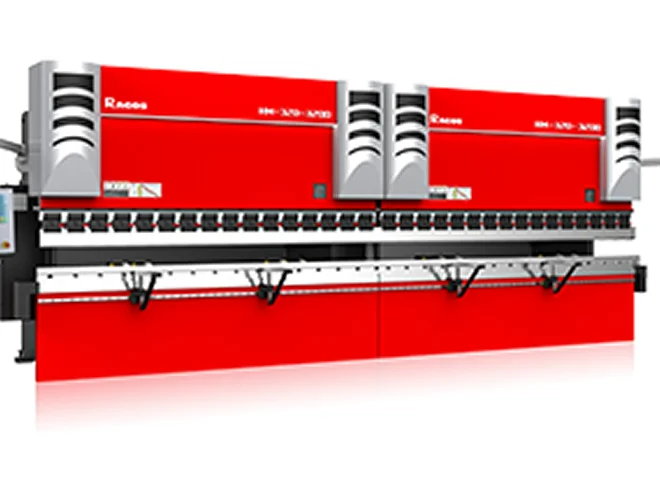
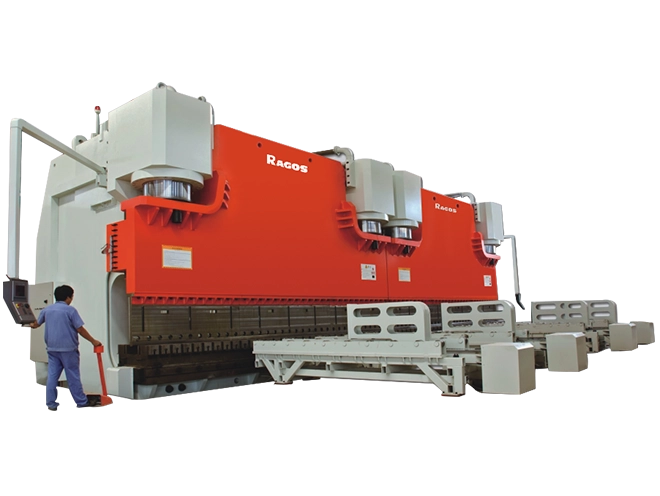



Hybrid CNC Press Brake vs Electro-Hydraulic Synchronous CNC Press Brake: Key Differences
By Author: Mark Hanks
Manufacturers looking to boost production efficiency, cut costs, and design for cost-effective performance over a longer period can benefit from knowing the key differences between a Hybrid CNC Press Brake and an Electro-Hydraulic Synchronous CNC Press Brake.
Choosing the right CNC press brake technology directly influences energy consumption, maintenance cost and long-term production efficiency. This article will explain the difference between Hybrid CNC Press Brake and Electro-Hydraulic Synchronous CNC Press Brake systems, focus on hydraulic control principles, energy saving performance, oil consumption, bending speed and total operating cost.
Both kinds of systems are found in many modern-day press brakes. However, differences in hydraulic control systems, energy consumption, maintenance and bending efficiency dictate the most appropriate production environment for each.
Hybrid CNC Press Brake vs Electro-Hydraulic Synchronous CNC Press Brake: Overview
| Feature | Hybrid CNC Press Brake | Electro-Hydraulic Synchronous CNC Press Brake |
| Hydraulic Control | Two Servo motors + two servo pumps | pump + proportional valve |
| Energy Efficiency | Higher energy utilization efficiency; servo pump provides hydraulic flow only when required, reducing energy loss | Lower efficiency due to continuous pump operation and throttling losses |
| Hydraulic Oil Temperature | Lower oil temperature with smaller temperature fluctuations; reduced thermal stress helps extend hydraulic seal service life | Higher oil temperature variation due to continuous hydraulic power generation, which can accelerate oil aging and seal wear |
| Noise Level | Low level | Normal level |
| Ram Speed | Faster approach and return speed due to servo-controlled hydraulic response, improving bending cycle time and worker productivity | Standard speed controlled by proportional hydraulic valves |
| Production Efficiency | Higher efficiency, shorter cycle time and increased output for high-volume production | Good reliability but lower efficiency in continuous production |
| Best Application | High-volume production, automated bending, energy-sensitive factories | General sheet metal fabrication and cost-sensitive applications |
How Does a Hybrid CNC Press Brake Work?
Hybrid CNC Press Brake Control System
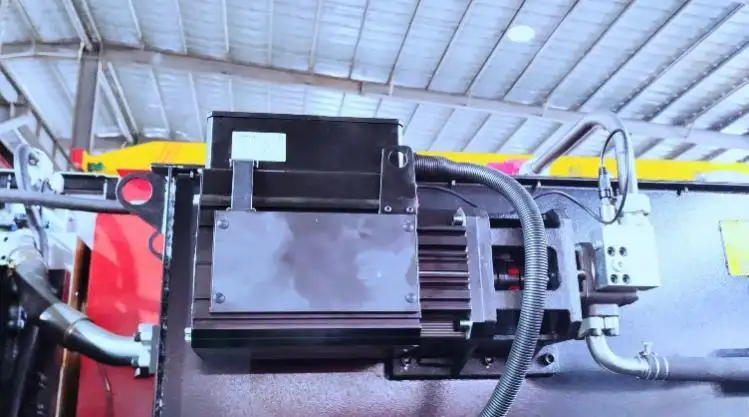
A Hybrid CNC Press Brake refers to two servo motors and two servo pumps to independently control the left and right hydraulic cylinders. By controlling the pump speed according to the actual bending requirements, the system provides precise hydraulic flow control, improves energy utilization efficiency, and lower unnecessary hydraulic losses.
Compared with traditional hydraulic systems that continuously generate flow and regulate pressure through proportional valves, the hybrid system supplies hydraulic energy only when required. This greatlt improves energy utilization efficiency and lower unnecessary hydraulic losses.
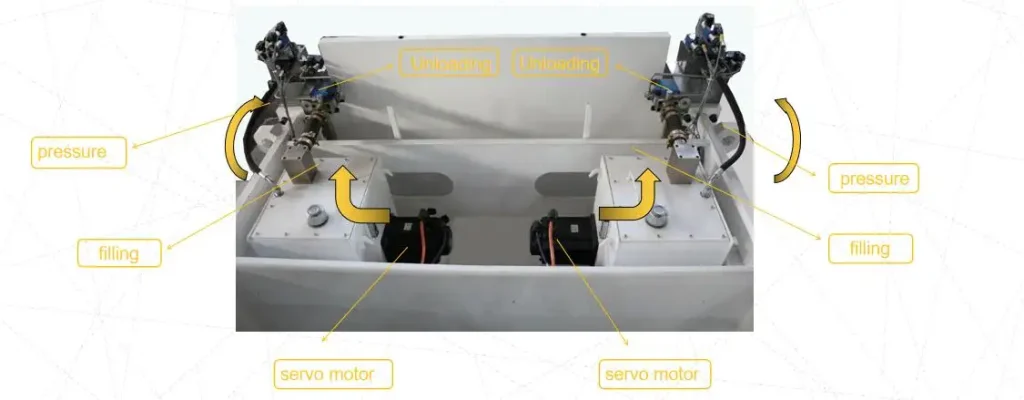
This design provides an energy consumption advantage that makes the system optimal for any production environment that demands long operating hours.
Electro-Hydraulic Synchronous CNC Press Brake Control System
An Electro-Hydraulic Synchronous CNC Press Brake control system consists of a fixed-displacement hydraulic pump and proportional control valves.
This design results in a constant hydraulic flow and, therefore, a constant energy loss due to throttling.
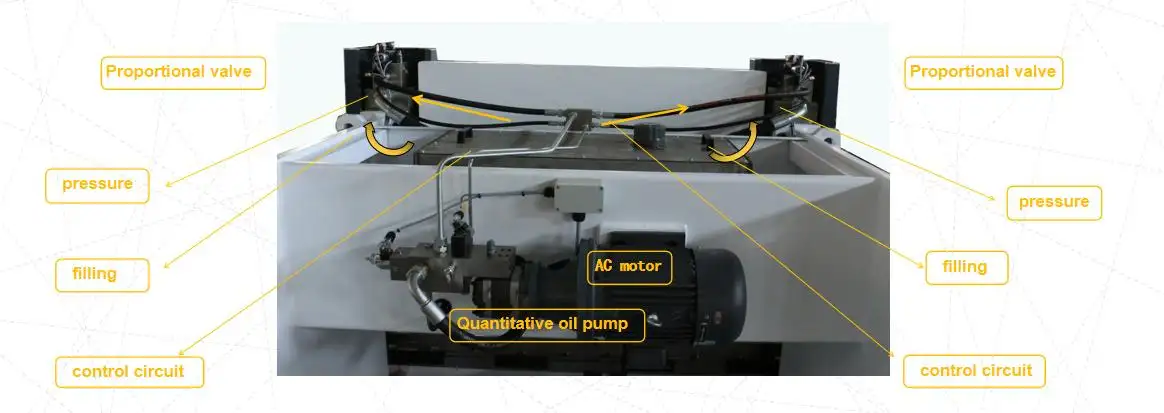
The reliable architecture and advanced control technology have increased this system's availability and contributed to its widespread use over the last few decades. However, compared with hybrid systems, it generally consumes more energy during continuous operation.
Energy Consumption Comparison
Due to differences in hydraulic control methods, hybrid CNC press brakes can achieve significant energy savings compared with conventional electro-hydraulic synchronous systems.
Depending on machine tonnage, bending cycle, idle time and production conditions, Hybrid CNC Press Brakes can achieve huge energy savings compared with conventional electro-hydraulic systems due to higher hydraulic energy utilization efficiency.
The following estimates are based on a working schedule of 10 hours per day and 25 working days per month:
| Model | Electro-Hydraulic Synchronous | Hybrid CNC Press Brake | Potential Annual Savings |
| 100T | $3,250 | $960–$1,625 | Up to $1,625 |
| 130T | $4,750 | $1,400–$2,375 | Up to $2,375 |
| 170T | $6,500 | $1,950–$3,250 | Up to $3,250 |
| 250T | $8,000 | $2,360–$4,000 | Up to $4,000 |
| 400T | $12,900–$19,300 | $3,860–$6,450 | Up to $6,450 |
| 700T | $23,600 | $7,080–$11,800 | Up to $11,800 |
For high-tonnage machines operating multiple shifts, the energy-saving advantage becomes increasingly valuable over the equipment lifetime.
Hydraulic Oil Consumption Comparison
Because hybrid systems generate less hydraulic heat during operation, they typically require less hydraulic oil and experience slower oil degradation.
| Model | Total Oil Capacity (L) | Hydraulic Oil Volume (L) | Oil Savings (L) |
| 100T | 300 | 180 | 120 |
| 250T | 460 | 160 | 300 |
| 400T | 800 | 200 | 600 |
| 600T | 1,200 | 300 | 900 |
| 800T | 1,900 | 480 | 1,420 |
Reduced hydraulic oil consumption leads to decreased maintenance costs, extended oil replacement intervals, and reduced waste oil.
Hydraulic Oil Consumption Comparison
Because of the servo pump control system, Hybrid CNC Press Brakes generate less hydraulic heat during operation. The hydraulic oil temperature remains lower and has smaller temperature floating compared with conventional electro-hydraulic systems.
Lower and more stable oil temperature reduces thermal stress on hydraulic components, helping extend the service life of O seal rings in oil tank and cylinders, improving long-term machine reliability and lower the maintenance frequency.
Other Performance Differences
Noise Level
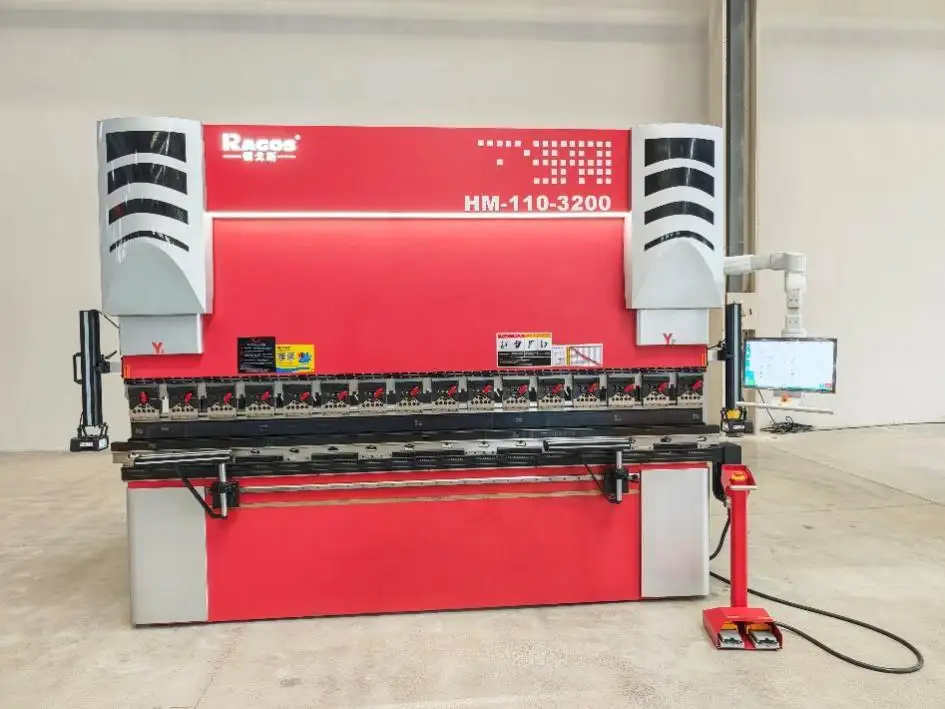
An important design enhancement that comes with the introduction of hybrid press brakes is the reduction of standby noise.
In contrast to other press brake systems, hybrid systems have a very low noise hydraulic system as the servo motor can stop completely or run at a very low speed during standby.
In contrast, traditional electro-hydraulic synchronous press brakes run standby with the hydraulic motor and pump constantly in operation, resulting in pump noise.
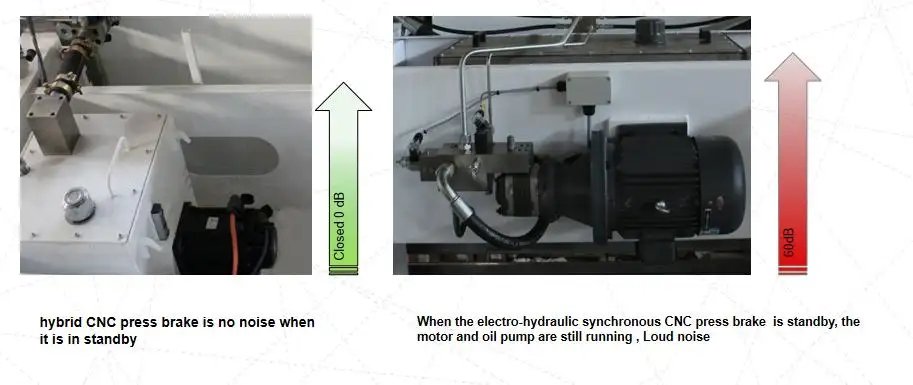
Companies that try to create the best working conditions and minimize environmental noise will benefit from the low noise operating systems of hybrid press brakes.
Environmental Benefits
CNC press brakes that utilize hybrid technology have positive effects on the environment due to:
• Less electricity consumption
• Less hydraulic oil consumption
• Less waste oil
• Less heat
Due to the improved efficiency of the hydraulic system, the temperature of the operating oil of the hydraulic system is more uniform and stable, resulting in an extension of the service life of the hydraulic oil. The replacement intervals of hydraulic oil are dependent on the working conditions, the quality of the oil, and the maintenance.
Bending Efficiency
Compared with traditional proportional valve systems, servo-driven hydraulic systems provide better response time and more accurate flow control.
The optimized hydraulic response allows the ram to achieve faster approach and return speeds, reducing bending cycle time. Eventually, operators can bend more parts within the same production period and improve overall productivity.
In general, hybrid press brakes can have shorter bending cycle times. For example, a 100-ton hybrid press brake can reach bending cycle times of 18 cycles per minute, while a conventional model can reach only 13 cycles per minute.
Productivity factors are:
• Material thickness
• Degree of bend
• Type of tooling
• Back stop movement
• Manual or automated
Beyond Hybrid Technology: Additional Solutions for Improving Press Brake Efficiency
A Hybrid CNC Press Brake employs two servo motors and two servo pumps for added control of the hydraulic system. There are tremendous advantages for the user that come along with the incorporation of these technologies; some are related to productivity and efficiency and others relate to the control of the temperature of the hydraulic oil and response speed of the system.
Users, however, have different needs. They have different budgets, different production conditions, and different levels of desired automation. In addition to hybrid technologies, performance of press brakes can be enhanced further with industrial cooling systems, robotic bending automation, and the newer, more affordable, servo-based, energy-saving technologies.
1. Industrial Cooling Systems for Extreme Operating Environments
A Hybrid CNC Press Brake uses pumps that employ servos to target energy losses to make the hydraulic system more energy efficient, but also reduces heating and encourages the hydraulic oil to remain at a stable temperature. This increases the efficiency of the system.
As is the case in certain regions of Africa and northern India, as well as other hotter industrial areas, the machine's current temperature-control systems may not be sufficient for long-term stable production.
In these scenarios, a hydraulic oil chiller may be installed to induce cooling of the hydraulic oil.
An industrial cooling system can provide the following benefits:
• Lower the hydraulic oil operating temperature
• Decrease hydraulic oil temperature variations
• Ensure stable operation of the hydraulic system
• Enhance the service life of hydraulic seals and components
For machines that operate in high ambient temperatures, a dedicated air-conditioning or cooling system can be installed in the electrical cabinet.
Cooling of the electrical cabinet can provide the following benefits:
• Stable operation of the CNC control system
• Lower operating temperatures for the electronic components
• Enhanced reliability of the electrical equipment
• The service life of the control system can be extended
For factories that operate in extreme climates or that run continuous production shifts, a combination of a Hybrid CNC Press Brake and industrial cooling systems can offer a reliable bending solution.
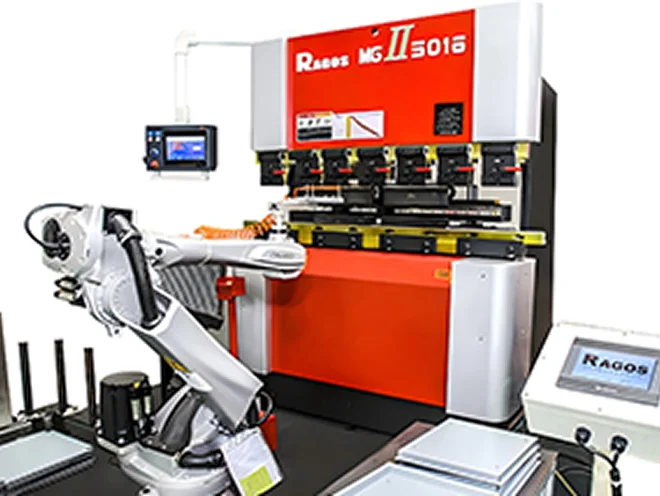
2. Robotic Bending Cells for Higher Production Efficiency
Robotic bending cells increase the level of automation available for the bending process and can help manufacturers achieve the productivity levels they desire.
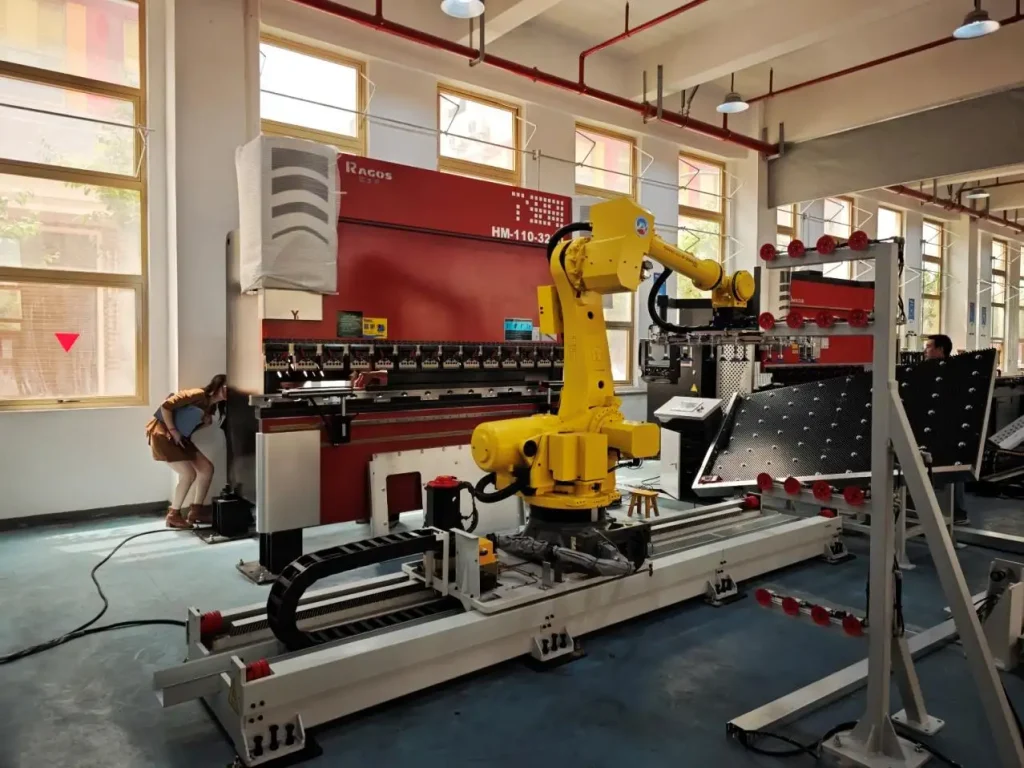
When combined with a CNC press brake, industrial robots are able to:
• Load/unload the CNC press brake
• Position the workpiece
• Perform the bending operation
• Minimize the handling of the workpiece by personnel
JS RAGOS provides bending solutions with robotics for a variety of production levels and supports a number of leading industrial robotics manufacturers, including:
• FANUC
• ABB
• KUKA
• Yaskawa
• Estun
Robotic bending systems are ideal for:
• Producing high quantities of parts
• Processing the same part repeatedly
• Continuous operation for extended periods of time
• Applications where consistent quality of production is required
The combination of a robotic bending cell and a Hybrid CNC Press Brake gives manufacturers the ability to further enhance productivity and reduce labor levels while allowing the company to move toward the paradigms of smart manufacturing.
This section may be internally linked to the article about robotic press brake cells.
3. Single-Servo Pump Solutions for Cost-Sensitive Customers
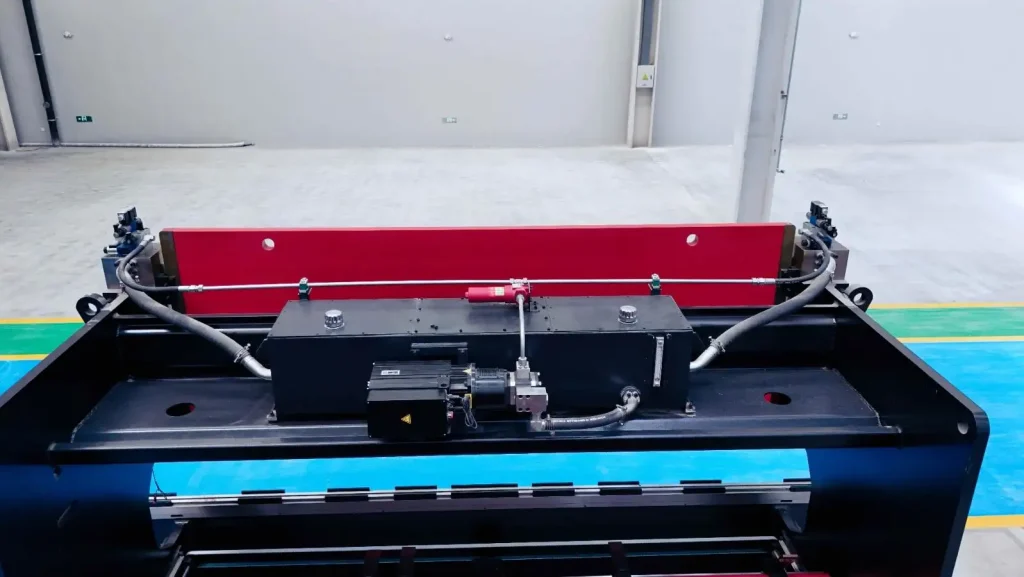
The design for the Full Hybrid CNC Press Brake provides independent control of right and left sides of the press using two servo motors and two servo pumps. This design is incredibly responsive, precise, and uses energy efficiently.
Typically, budget-conscious customers experience higher costs for equipment with fully dual-servo hybrid systems.
As a solution to these budget concerns, we can provide a simplified hydraulic system using one servo motor and one servo pump.
This system can:
• Control the pump operation to what is necessary
• Reduce pump operation when the system is idle
• Reduce the overall energy costs
• Reduce the overall operating costs
In a typical electro-hydraulic synchronous system, one of the biggest savings is from a single-servo pump.
Additionally, when compared to a fully Hybrid CNC Press Brake with two servo motors and two servo pumps, a single-servo system generally results in:
• Increased energy consumption
• Fewer opportunities for energy savings
• Decreased control over the left and right hydraulic circuits
However, depending on a number of varying factors, to include how they balance production performance with bending and system control, customers can choose among several available options for hydraulic control.
The best available control option typically reflects a balance between the costs of the control system and improvements in production performance and operating costs.
Initial Investment vs Long-Term Operating Cost
Although Hybrid CNC Press Brakes usually require a higher initial investment due to servo hydraulic components, the total operating cost can be reduced through lower electricity consumption, reduced hydraulic maintenance and higher production efficiency.
| Cost Factor | Hybrid | Electro-Hydraulic |
| Machine price | Higher a little bit | Lower |
| Energy cost | Lower | Higher |
| Hydraulic oil replacement | Less frequent | More frequent |
| Maintenance cost | Lower | Higher |
| Production output | Higher | Standard |
Initial Investment vs Long-Term Operating Cost
Although Hybrid CNC Press Brakes usually require a higher initial investment due to servo hydraulic components, the total operating cost can be reduced through lower electricity consumption, reduced hydraulic maintenance and higher production efficiency.
| Cost Factor | Hybrid | Electro-Hydraulic |
| Machine price | Higher a little bit | Lower |
| Energy cost | Lower | Higher |
| Hydraulic oil replacement | Less frequent | More frequent |
| Maintenance cost | Lower | Higher |
| Production output | Higher | Standard |
Summary
Both types of Press Brakes are valid solutions for modern day sheet metal fabrication.
As a mature technology with a high level of penetration in the market, Electro-hydraulic Synchronous systems are a dependable option. On the other hand, the Hybrid CNC Press Brakes offers clear benefits in energy use, reduction in volume of hydraulic oil, noise in operation, and production efficiency.
The Hybrid CNC Press Brake offers superior technology for the future of sheet metal fabrication for the manufacturer who is most concerned with costs of operation over the long run, most sustainable and most efficient. For manufacturers who use the machine for long production hours, the combination of higher energy efficiency, lower hydraulic temperature, longer component lifetime and faster bending cycles makes hybrid technology a wise choice to improve total production efficiency.
For efficient, reliable and smart solutions in metal fabrication, check out JS RAGOS.
FAQs
Q1. What is the main difference between a Hybrid CNC Press Brake and an Electro-Hydraulic Synchronous CNC Press Brake?
The main difference is the hydraulic control system. A Hybrid CNC Press Brake uses two servo motors and two servo pumps to independently control two sides of hydraulic cylinders, while an Electro-Hydraulic Synchronous CNC Press Brake uses a fixed hydraulic pump with proportional valves.
Q2. Why is a Hybrid CNC Press Brake more energy efficient?
A Hybrid CNC Press Brake improves energy utilization efficiency because servo pumps can provide hydraulic flow according to actual bending requirements. The system saves unnecessary hydraulic losses caused by continuous pump operation.
Q3. How much energy can a Hybrid CNC Press Brake save?
The actual energy savings depend on machine tonnage, bending cycle, and idle time. Compared with conventional hydraulic systems, Hybrid CNC Press Brakes can greatly reduce power consumption due to higher hydraulic energy utilization efficiency.
Q4. Does a Hybrid CNC Press Brake have faster bending speed?
Yes. The servo pump hydraulic system can provide faster response and more precise pump flow control. This allows faster ram speed, shorter bending cycle time and higher production output.
Q5. Does a Hybrid CNC Press Brake require less hydraulic oil?
Because hybrid systems generate less hydraulic heat, the oil temperature is lower and more stable. This can help extend hydraulic o seal rings lifetime a lot.
Q6. Does a Hybrid CNC Press Brake reduce hydraulic maintenance cost?
Yes. Lower heat generation, more stable oil temperature can reduce maintenance possibility and extend the hydraulic components lifespan.
Q7. Is a Hybrid CNC Press Brake suitable for hot working environments?
Hybrid CNC Press Brakes can provide better oil temperature control compared with conventional hydraulic systems. For some extremely hot places, additional industrial cooling systems can be integrated with cool hydraulic oil tanks and electrical cabinets.
Q8. Can a Hybrid CNC Press Brake be integrated with a robot bending cell?
Yes. Hybrid CNC Press Brakes can be integrated with robotic bending cells to achieve automatic bending. And JS RAGOS can provide robotic bending solutions using industrial robots from FANUC, ABB, KUKA, Yaskawa and Estun.
Q9. Is there a lower-cost alternative to a Hybrid CNC Press Brake?
For customers with limit budgets, a single servo motor and servo pump system also can provide energy-saving can be useful to improve energy efficiency. However, the energy efficiency and independent cylinder control performance are not as good as a full hybrid system with two servo motors and two servo pumps.
Q10. Is a Hybrid CNC Press Brake worth the investment?
For manufacturers who use press brake 24/7 pursuing high production volume but suffering with increasing electricity costs, a Hybrid CNC Press Brake can provide long-term benefits through lower electricity consumption, reduced maintenance requirements and improved productivity.