

Hydraulic Press Brake Manufacturer: How to Find, Evaluate, and Choose the Right One
Hydraulic press brake manufacturers vary significantly in precision, tonnage range, CNC control capability, and after-sales support. Leading manufacturers use industry-proven controllers — Delem DA66S, Cybelec CT12, and ESA S840, to deliver bending accuracy within ±0.1 mm backgauge repeatability. When evaluating suppliers, prioritize CE certification, structural frame quality, controller brand, and custom configuration capability. Chinese manufacturers now compete directly with European alternatives on precision while offering significant cost advantages, especially for buyers sourcing 40–2,000-ton CNC hydraulic press brakes for sheet metal fabrication.
Introduction
The global press brake market is valued at over USD 621.5 million in 2025 and is projected to reach USD 1.07 billion by 2035 — driven almost entirely by rising demand for CNC hydraulic press brakes across automotive, aerospace, and industrial sheet metal fabrication. Yet for most procurement managers and plant engineers, finding the right hydraulic press brake manufacturer is one of the least-guided decisions in the entire equipment sourcing process. Dozens of manufacturers compete across China, Europe, Japan, and North America — each with different tonnage ranges, controller systems, accuracy specifications, and support capabilities.
This guide identifies exactly what separates reliable hydraulic press brake suppliers from risky ones, names the manufacturers worth evaluating seriously, and gives you a practical pre-purchase checklist to use before signing any purchase order.
What Makes a Hydraulic Press Brake Manufacturer Worth Evaluating?
Not all press brake manufacturers are built the same. A premium nameplate does not automatically mean the machine will meet your production accuracy requirements — and a Chinese supplier is not automatically inferior to a European one. Before you shortlist any hydraulic press brake manufacturer, assess them against five core criteria.
Tonnage Range and Bending Length
Tonnage is the single most important specification when matching a machine to your production requirements. Reputable manufacturers offer a wide range — typically from 40 tons to 2,000+ tons — with custom configurations available for heavy industrial applications. The material you work with directly determines the tonnage you need.
As a practical benchmark: stainless steel requires approximately 1.5× the tonnage of mild steel, while aluminum requires approximately 0.5×. A manufacturer who cannot provide tonnage calculation support before your purchase is a manufacturer you should be cautious about.
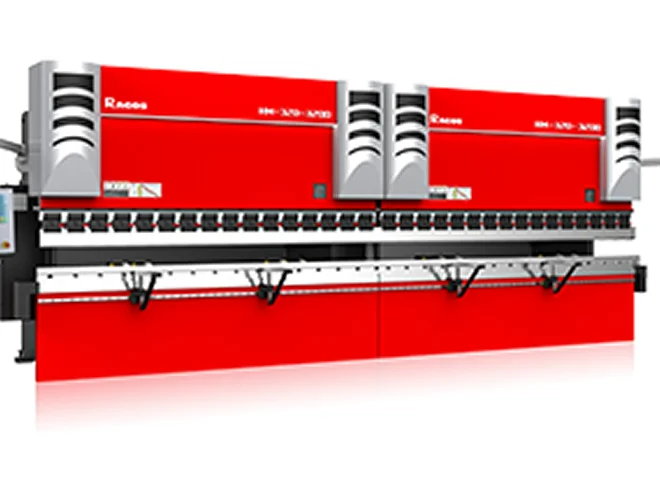
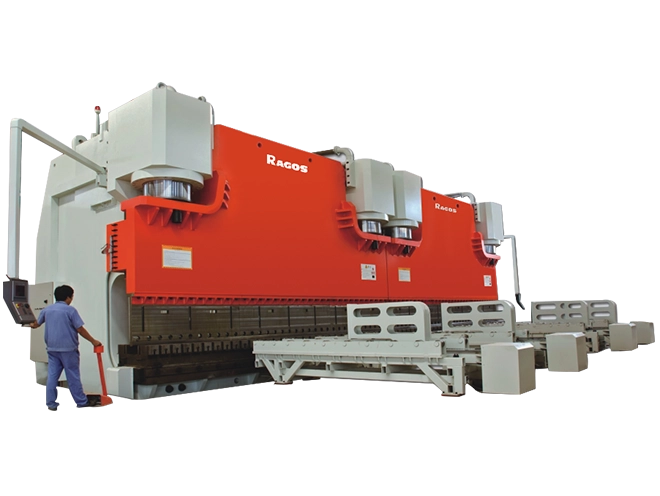
Bending length matters equally. Standard machines range from 1,600 mm to 6,000 mm. If your production involves large structural panels or shipbuilding plates, ask whether the manufacturer supports tandem press brake configurations — two machines synchronized to bend extra-long workpieces as a single unit.
CNC Controllers: Why the Brand Behind the Brake Matters
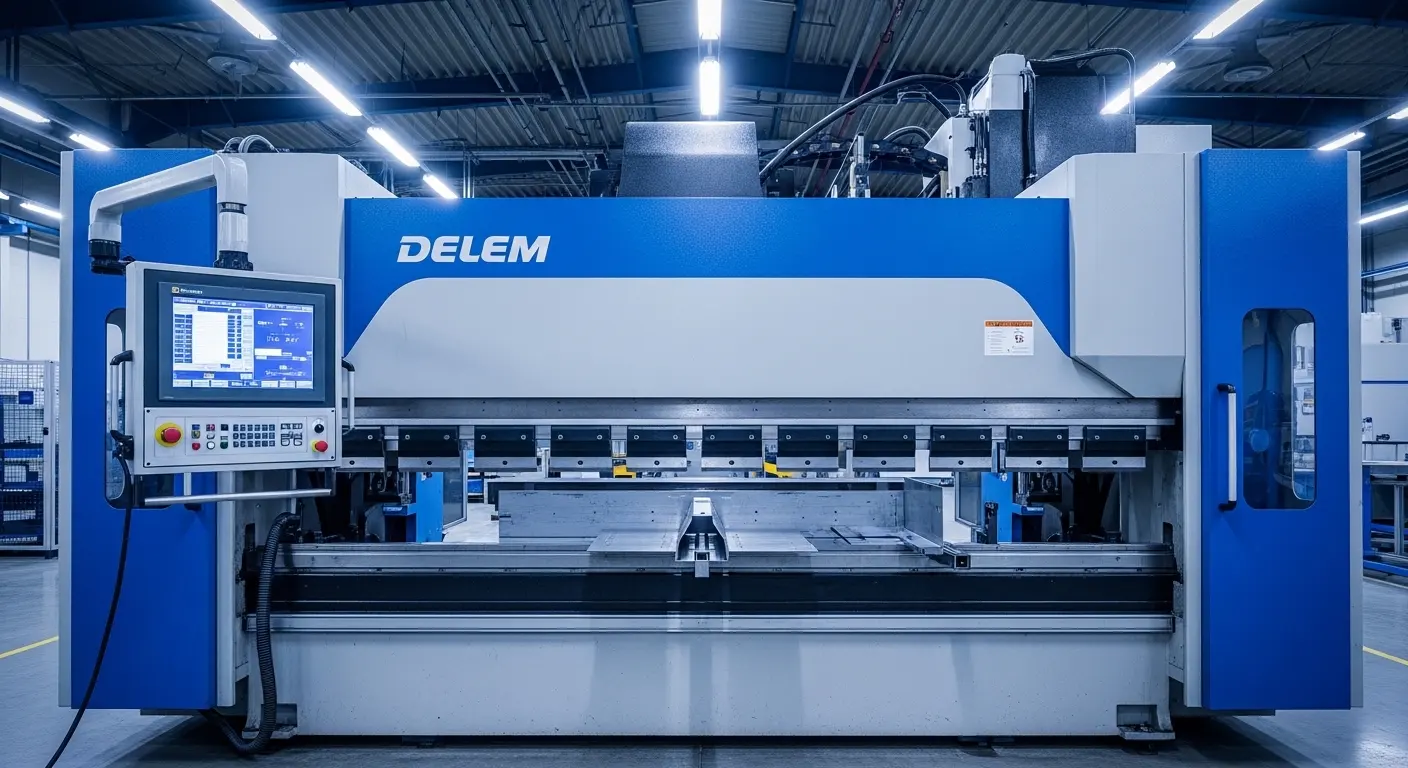
The CNC controller is the brain of a hydraulic press brake — and the brand of that controller will determine your machine's programming capability, spare parts availability, and long-term support access. The three internationally proven controller brands are:
- Delem DA53Tx / DA66S (Netherlands): The industry standard for mid-to-high range CNC hydraulic brakes; DA66S includes 3D offline simulation and real-time angle correction
- Cybelec CT12 (Switzerland): Known for graphic touchscreen programming and bend sequence optimization
- ESA S840 (Italy): Popular for tandem configurations and multi-axis back gauge control
Budget manufacturers sometimes equip machines with unknown or proprietary controllers to reduce cost. This creates a long-term maintenance risk — if the controller brand disappears or lacks regional support, your entire machine becomes a liability. Always confirm the controller model before purchasing, and verify that regional technical support exists in your country.
Who Are the Leading Hydraulic Press Brake Manufacturers?
The hydraulic press brake market is genuinely global. Understanding the competitive landscape — by geography, positioning, and capability — allows you to make a faster, better-informed supplier decision.
European and North American Manufacturers
These manufacturers command a premium price point, typically justified by ultra-precision tolerances, proprietary software ecosystems, and strong regional service networks.
| Manufacturer | Country | Tonnage Range | CNC Controller | Market Positioning |
|---|---|---|---|---|
| AMADA | Japan | 30–3,000 ton | Amnc 4ie | Premium automation, global service |
| Trumpf | Germany | 20–1,000 ton | Proprietary TruBend | Ultra-precision, high acquisition cost |
| Bystronic | Switzerland | 40–2,000 ton | ByVision / Bysoft | Automation-focused, complex bending |
| LVD | Belgium | 40–1,600 ton | CADMAN-B | Flexible, mid-to-high European range |
| Accurpress | Canada/USA | 44–3,000 ton | Delem, ESA | Heavy-duty, North American market |
| Cincinnati | USA | 44–2,000 ton | Delem DA66S | Long-established North American brand |
European mid-range CNC hydraulic press brakes typically cost €40,000–€150,000, while North American machines range from $50,000 to $200,000+ depending on specifications.
Chinese Hydraulic Press Brake Manufacturers
Chinese manufacturers have moved significantly up the quality curve over the past decade, particularly those using international controllers (Delem, Cybelec, ESA) and stress-relieved welded frames engineered with finite element analysis.
| Manufacturer | Province | Tonnage Range | CNC Controller | Positioning |
|---|---|---|---|---|
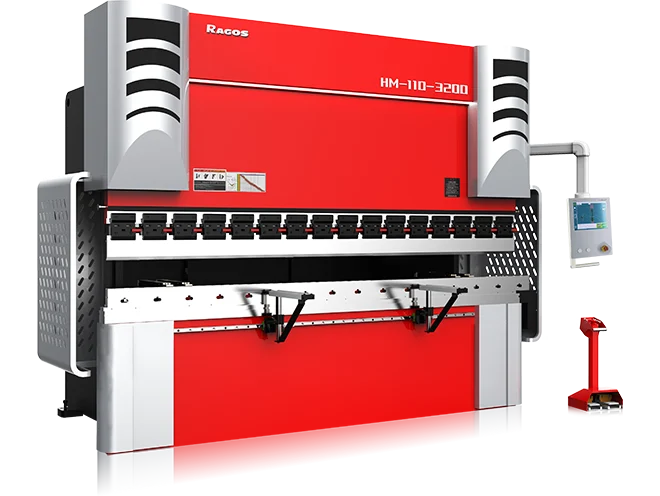
| JS RAGOS | Jiangsu | 40–2,000+ ton | Delem DA66S, Cybelec, ESA S840 | Precision CNC bending, global export, 14 years manufacturing |
| Yawei Machine Tool | Jiangsu | 40–2,500 ton | Delem DA66S | Listed company; strong 80–160 ton range |
| HARSLE | Anhui | 40–1,600 ton | Delem, E21 | Value-accessible; wide model range |
| ADH Machine Tool | Anhui | 40–1,000 ton | Delem, ESA | Global exporter; laser and press combo |
| Jinqiu Machinery | Wuxi | 80–6,000+ ton | Delem | Heavy-duty and extra-long specialization |
Chinese CNC hydraulic press brake prices are significantly more competitive: 40–125-ton models typically range from $16,500–$35,000, and 160–300-ton models from $26,800–$51,500. For buyers seeking a high-precision machine without a six-figure acquisition cost, Chinese manufacturers — particularly those with European export certification — represent the most compelling value in the current market.
The quality gap with European manufacturers has narrowed dramatically — particularly for manufacturers who have invested in international controller partnerships, R&D infrastructure, and CE certification for global export compliance.
Asia-Pacific leads global hydraulic press brake demand, with China simultaneously the world's largest producer and largest consumer of these machines. That scale of domestic production has created a tier of Chinese manufacturers whose quality control now meets European import standards. The key difference is no longer capability — it is after-sales support reach and buyer familiarity.
The hydraulic press brake market was valued at approximately USD 1.2 billion globally in 2024, forecast to reach USD 2.0 billion by 2033 at a 6.2% CAGR. Chinese manufacturers are capturing a disproportionate share of this growth — not by competing on price alone, but by offering Delem-controlled, CE-certified machines at a price point that European factories simply cannot match.
For buyers evaluating Chinese suppliers, three credentials are non-negotiable:
- CE marking — confirms compliance with EU safety and performance directives
- Delem, Cybelec, or ESA controller inclusion — confirms alignment with international standards, not proprietary systems
- Documented factory R&D investment — separates serious manufacturers from commodity resellers
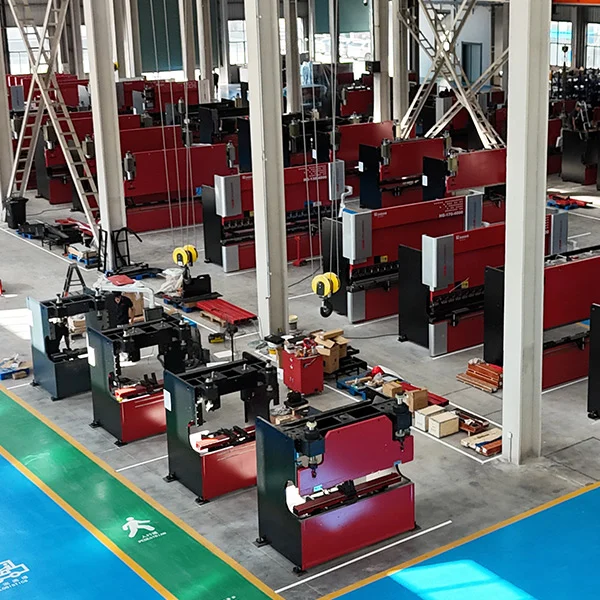
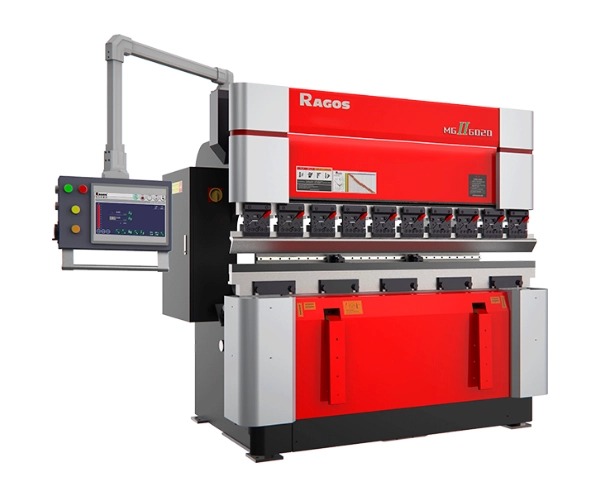
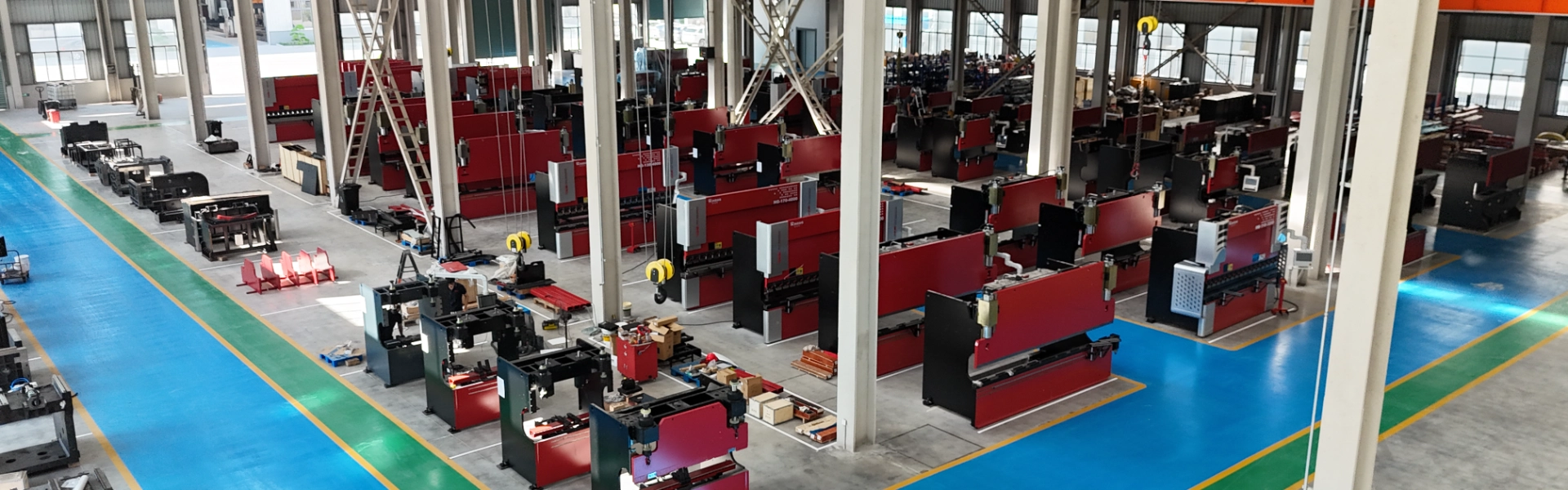
JS RAGOS, for example, has operated from Jiangsu since 2011, reinvests over 10% of annual revenue into R&D, and exports machines equipped with Delem DA66S and Cybelec controllers to clients across Europe, Southeast Asia, and the Middle East — credentials that demonstrate a manufacturer operating at international standards, not domestic-only quality levels.
How Do You Evaluate a Hydraulic Press Brake Manufacturer Before Buying?
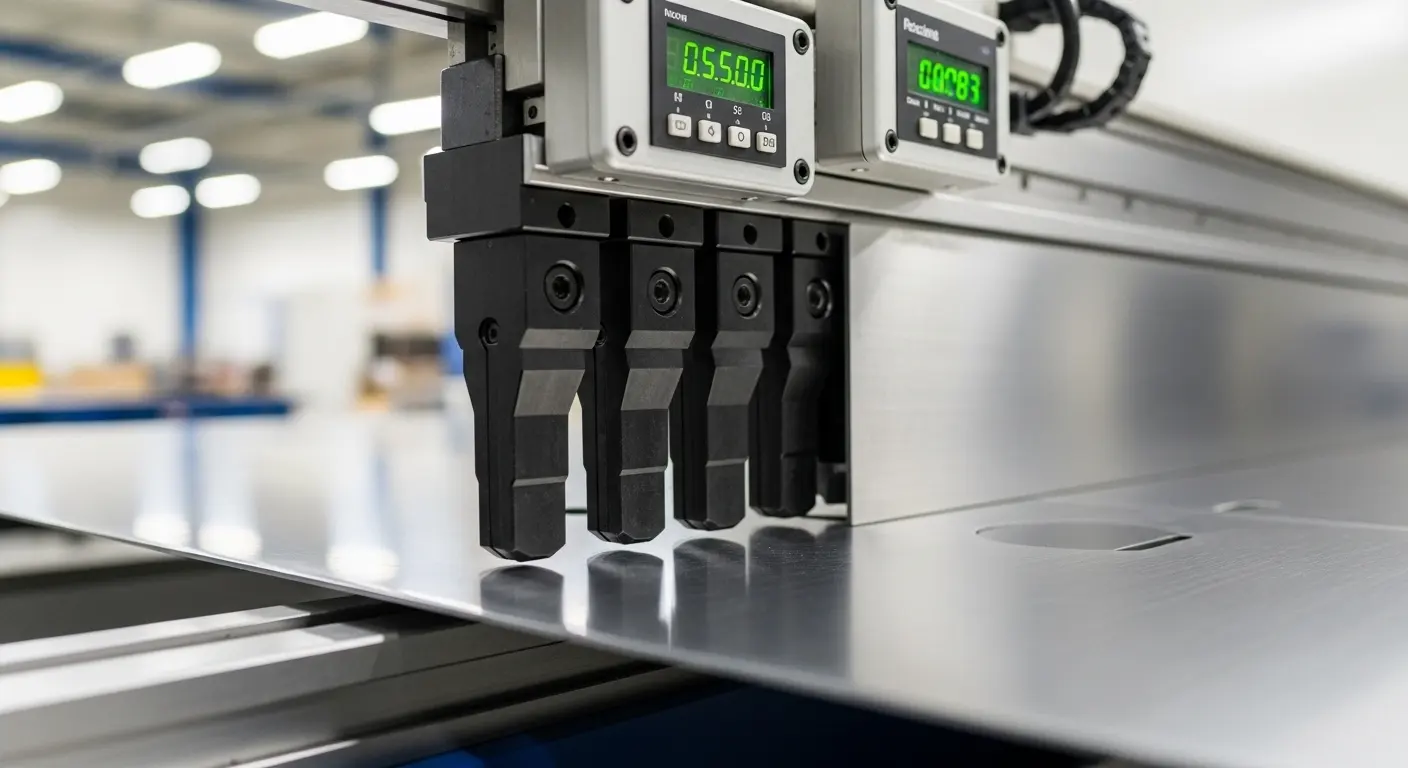
Shortlisting a manufacturer is only the first step. A structured pre-purchase evaluation protects your investment and prevents costly post-delivery surprises. Use this checklist with every supplier you seriously consider.
Pre-Purchase Evaluation Checklist
- Request CE certification documentation — Confirm the machine carries valid CE marking and verify compliance with EN 12622:2009+A1:2013, the European safety standard for hydraulic press brakes. This standard specifies technical safety requirements for the design, manufacture, and supply of hydraulic press brakes working cold metal.
- Ask for bending accuracy test reports — Standard CNC hydraulic press brakes achieve positioning accuracy within ±0.1–0.2 mm and bending angle accuracy of approximately ±0.5° under normal shop conditions. High-precision servo backgauge systems can achieve repeatability of ≤ ±0.02 mm. Require documented test data, not verbal assurances.
- Confirm the CNC controller model and regional support availability — Ask for the exact controller model (e.g., Delem DA66S, Cybelec CT12, ESA S840). Then verify that spare parts and trained technicians are available in your region. A machine with an unsupported controller in your country is a maintenance liability from day one.
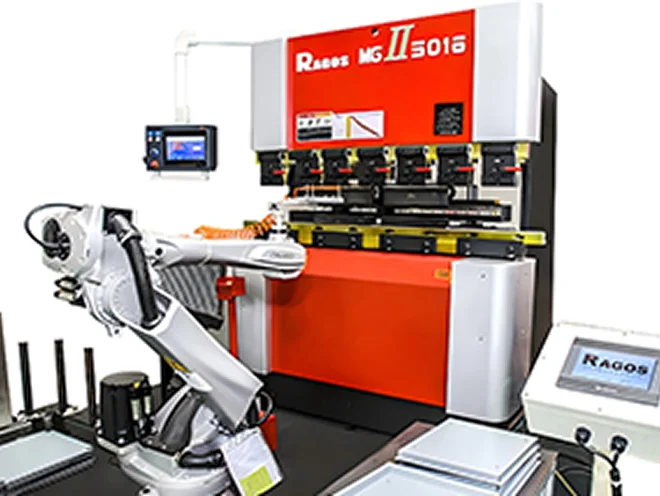
- Verify customization capability — Ask whether the manufacturer can configure custom tonnage, bending length, and automation options (robotic loading, automatic back gauge systems, tandem configuration). Manufacturers with in-house engineering teams handle custom orders far more reliably than pure resellers.
- Examine frame construction and stress-relief treatment — A quality hydraulic press brake frame uses heavy-duty welded steel construction, thermally stress-relieved after welding, and precision-machined mounting surfaces. Ask specifically whether the manufacturer uses finite element analysis (FEA) for structural design validation.
- Clarify warranty terms and after-sales service coverage — Confirm the warranty period (industry standard is 12–24 months), what it covers (electrical components, hydraulic seals, controller), and whether remote diagnostic support and on-site service are available in your country.
- Request references or application case studies — Ask for documented examples from clients in your specific industry. A manufacturer who has delivered machines to aerospace or medical device fabricators operates at a different quality standard than one serving only general job shops.
Which Industries Use Hydraulic Press Brake Manufacturers Most?
Hydraulic press brakes are the primary sheet metal bending solution across a wide range of manufacturing industries — each with distinct precision, tonnage, and configuration requirements.
- Automotive manufacturing — chassis components, brackets, body panels; requires high repeatability and fast cycle times
- Aerospace fabrication — structural panels, frame elements; demands tight angle tolerances (often ±0.1°) and documentation-grade traceability
- HVAC and ventilation — ductwork, casing panels; high-volume production with moderate precision requirements
- Electrical cabinet manufacturing — server racks, control panels, enclosures; backgauge accuracy critical for consistent flange dimensions
- Medical device fabrication — precision enclosures, surgical equipment housings; requires clean-environment-compatible machines and ISO-grade tolerances
- Modular building and construction — structural steel profiles, roofing elements; large bending length and high tonnage essential
- Furniture and architectural metalwork — decorative panels, stainless steel fixtures; surface quality and angle consistency are priority
JS RAGOS machines serve all seven of these sectors, with machines configured specifically for each application's precision and throughput requirements.
What Trends Are Shaping Hydraulic Press Brake Manufacturing in 2025–2026?
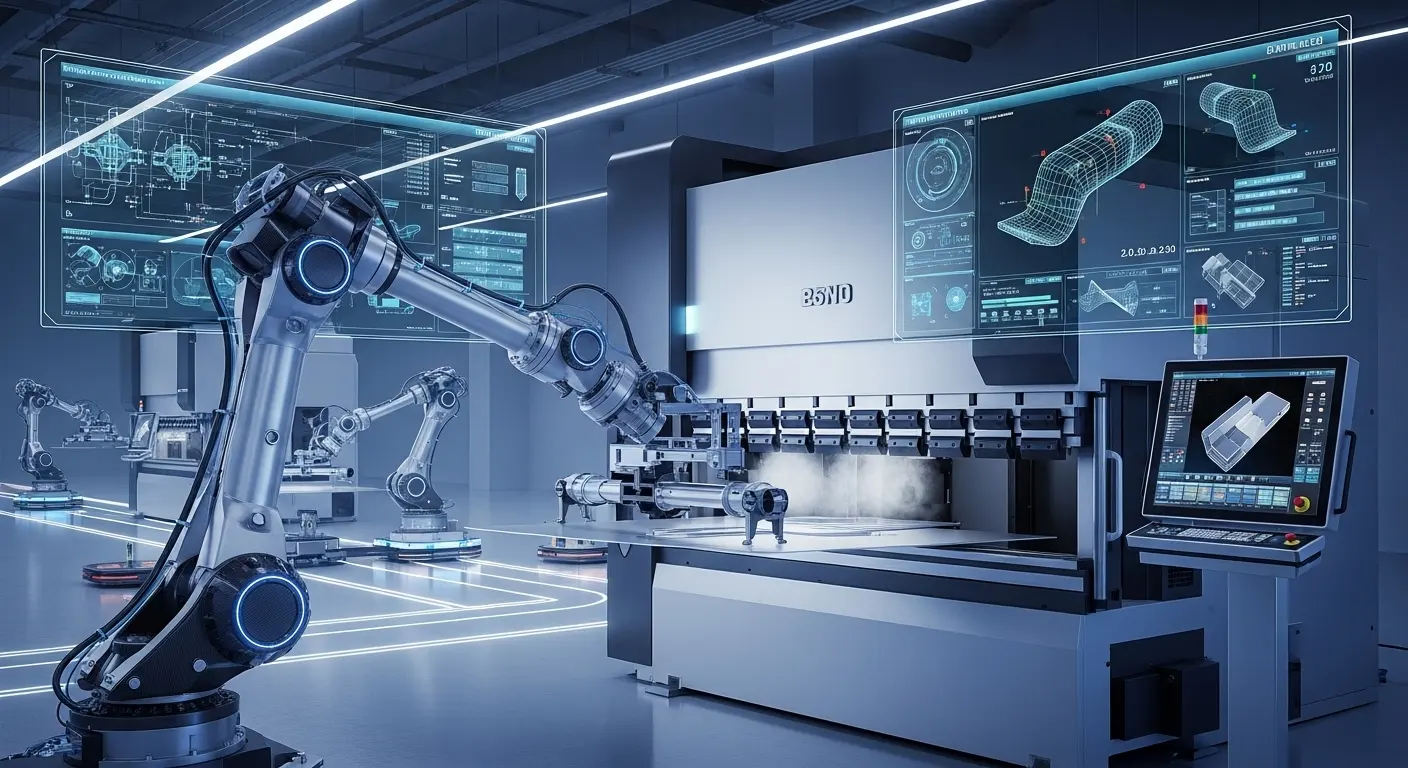
The hydraulic press brake sector is in a period of meaningful technological evolution — and the manufacturers investing in these advances now are the ones who will be easiest to work with five years from today.
Servo-hydraulic hybrid systems are replacing pure hydraulic drives on mid-range machines, delivering 30–50% energy savings by activating hydraulic pressure only during active bending strokes, not continuously. This reduces operating costs and oil heat generation over long production runs.
AI-assisted real-time angle correction is becoming standard on premium CNC systems. Sensors measure the actual bend angle mid-stroke and the controller makes closed-loop corrections in real time — eliminating the spring-back compensation guesswork that previously required skilled operators.
3D offline programming and simulation — now standard on Delem DA66S-equipped machines — allows engineers to program complex multi-bend sequences off the shop floor, simulate potential collisions before running the actual job, and dramatically reduce setup time and material scrap.
Tandem press brake configurations — two hydraulic brakes synchronized as one machine — are growing in demand for aerospace, shipbuilding, and structural steel applications requiring bending lengths beyond 6,000 mm.
The press brake market is forecast to grow at a CAGR of 4.7–5.6% through 2029–2035, driven primarily by CNC press brake adoption in emerging industrial markets. Manufacturers who have already integrated Delem DA66S 3D simulation and servo-hydraulic hybrid drives are best positioned to serve this growing demand.
Frequently Asked Questions
Who are the top hydraulic press brake manufacturers in the world?
Leading global manufacturers include AMADA (Japan), Trumpf (Germany), Bystronic (Switzerland), LVD (Belgium), Accurpress (Canada), and Cincinnati (USA) in the Western tier. Among Chinese manufacturers, JS RAGOS, Yawei, HARSLE, and ADH are widely recognized for precision CNC hydraulic press brakes with international controller systems and CE export certification.
What is the difference between a hydraulic and a CNC press brake?
"Hydraulic" describes the drive mechanism — dual hydraulic cylinders applying bending force. "CNC" describes the control system — computer numerical control of ram movement, back gauge positioning, and angle correction. Nearly all modern hydraulic press brakes also incorporate CNC controls, making "CNC hydraulic press brake" the dominant industry standard. The two terms are not opposites — they describe different components of the same machine.
How much does a hydraulic press brake cost from a manufacturer?
Chinese-manufactured CNC hydraulic press brakes range from approximately $16,500–$35,000 for 40–125-ton models, and $26,800–$51,500 for 160–300-ton machines. European brands (Trumpf, Bystronic) command $100,000–$500,000+ depending on automation level. North American machines typically cost $50,000–$200,000. Price is driven by tonnage, bending length, controller brand, and automation options.
Are Chinese hydraulic press brake manufacturers reliable?
Yes — when properly vetted. Reputable Chinese manufacturers use internationally proven controllers (Delem, Cybelec, ESA), comply with CE marking requirements under EN 12622, and use stress-relieved welded frames validated by finite element analysis. Request CE documentation, accuracy test reports, and controller model confirmation before purchasing. The quality tier among Chinese manufacturers varies significantly — evaluate credentials, not just price.
What certifications should a hydraulic press brake manufacturer have?
At minimum: CE marking (required for European market compliance) and compliance with EN 12622:2009+A1:2013 — the European standard specifying safety requirements for hydraulic press brakes. Additionally, look for ISO 9001 quality management certification and IEC/EN electrical safety compliance. Manufacturers exporting globally should provide full machine documentation, including wiring diagrams, hydraulic schematics, and controller manuals.
What tonnage hydraulic press brake do I need?
Match tonnage to your material type and maximum bend length. Stainless steel requires approximately 1.5× the tonnage of mild steel; aluminum requires approximately 0.5×. Most general fabrication shops operate effectively with 80–200 ton machines. Aerospace and automotive structural work typically requires 300–600 tons. Shipbuilding and heavy structural fabrication may demand 1,000–2,000+ tons. Request a formal tonnage calculation from your manufacturer based on your actual part geometry.
How do I find a hydraulic press brake manufacturer for custom configurations?
Look specifically for manufacturers with in-house engineering and R&D teams — not resellers. Request documentation of their customization capability: custom tonnage, non-standard bending length, automation integration (robotic loading, tandem sync, automatic back gauge systems). Confirm the manufacturer has built similar custom configurations for clients in your industry, and ask for reference contacts you can verify independently.
Ready to Evaluate a Hydraulic Press Brake Manufacturer Directly?
JS RAGOS has manufactured CNC hydraulic press brakes from Jiangsu, China since 2011 — with machines built around Delem DA66S, Cybelec CT12, and ESA S840 controllers and exported to fabrication clients across Europe, Southeast Asia, and the Middle East. Our engineering team supports custom tonnage configurations, tandem setups, and automated bending line integration for aerospace, automotive, HVAC, medical, and modular construction applications.
If you are currently evaluating hydraulic press brake manufacturers, our team can prepare a detailed specification proposal based on your exact material, tonnage, and bending length requirements — at no obligation.