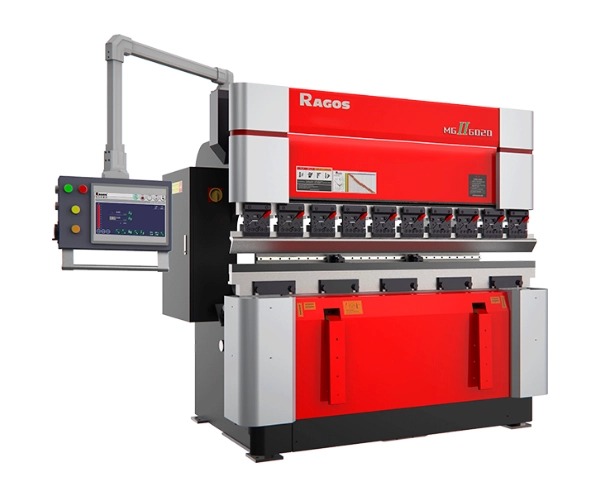
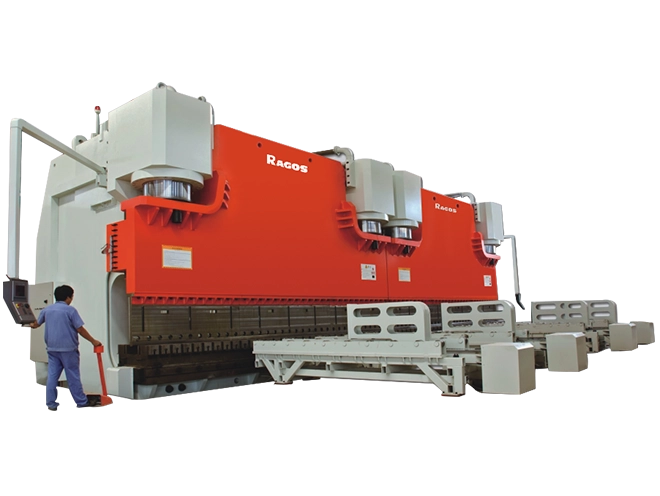



Industrial Press Brake CNC: Choosing V-Die Openings Right
Industrial press brake CNC operators often learn bending through habits, yet the most reliable improvements come from one quiet decision made before the first hit: the V-die opening. At JS RAGOS, we build press brake systems and application support for shops that want fewer test parts, fewer surprises, and bends that match the drawing—shift after shift. When the V opening is chosen with intention, it stabilizes angle, controls inside radius, reduces marking, and prevents short flanges from dropping into the die.
Why V-Die Opening Matters in Industrial Press Brake CNC Bending
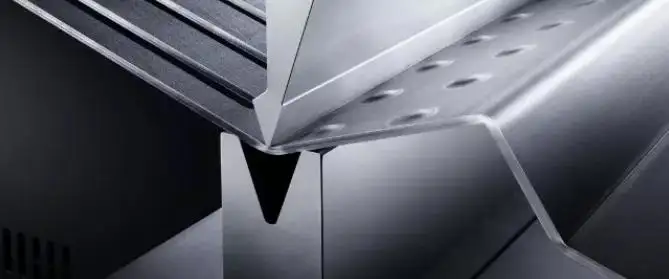
A V-die is not a passive “holder.” It is working geometry that guides how metal contacts the shoulders, how the sheet spans the gap, and how force is distributed through the bend line. If the V opening is too small, the sheet may not seat correctly, required tonnage rises, and die marks can become more visible. If the V opening is too large, the bend radius grows and the part may require a longer minimum flange to stay supported during the stroke.
For beginners, the clearest way to think about this is a three-way balance. In industrial press brake CNC bending, one V opening influences three outcomes at the same time:
✅ Pressure (Tonnage Demand): smaller V usually increases pressure demand
✅ Radius (Inside Bend Radius): larger V usually increases radius
✅ Minimum Flange (Leg Support): larger V usually requires a longer flange
A “good” choice is not universal. It is the choice that matches your part requirements, material, and machine limits with the least compromise.
Material Behavior Is Real: UTS and Why It Changes Your Setup
Many workshops rely on a rule of thumb. Rules are not wrong, but they can be incomplete. Commercial sheet metals “behave” similarly within a grade, yet not identically across batches or across alloys. Steel is an alloy of iron and carbon with other elements mixed under heat. Small changes in composition can shift how the metal resists deformation and how it springs back after bending.
A practical specification that helps operators think clearly is UTS (Ultimate Tensile Strength). Higher UTS usually means the material resists bending more strongly and often needs more tonnage to form. A common shop-level comparison illustrates the direction:
• Mild steel is often around 42 kg/mm² UTS
• Stainless steel can be around 70 kg/mm² UTS
You do not need to calculate metallurgy to make a better decision. You only need to respect the trend: higher UTS → higher pressure requirement, especially when you try to bend in a tight V opening. In industrial press brake CNC work, that matters because the machine is rated in tonnage, and pushing beyond comfortable capacity can reduce accuracy and accelerate tool wear.
✅ Check the material grade early, not after the first failed part
✅ Expect higher tonnage needs when UTS is higher
✅ Do not “force” a small V opening simply because it worked on a different batch
The Practical Starting Rule: V = 8×T (And When to Adjust)
A useful way to begin selecting a V opening is to start from a relationship between inside radius and die opening. In many air-bending cases, operators observe an empirical outcome:
Inside Radius R ≈ V / 8
This is not a physics law, but it is a dependable starting point in common ranges, especially when bending mild steel up to about 1/2 inch thickness. The reason this matters is simple. When you bend, material is not lost or gained. If the inside radius is much smaller than the material thickness, excess material has to flow somewhere, and that often shows up as distortion along the bend zone. The part may look rougher, and strength can be compromised in ways that only appear later in assembly.
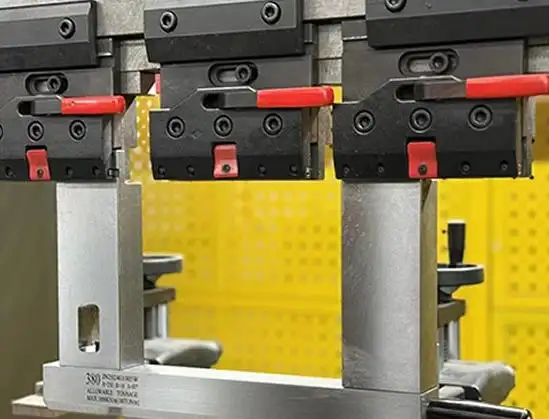
So many industrial press brake CNC teams begin with a target idea: avoid an inside radius that is far smaller than thickness. That naturally leads to a working starting point:
V ≈ 8 × T (for many jobs up to about 1/2 inch thickness)
When thickness increases, many shops allow radius to grow and may choose a larger multiplier. The key is not the number itself. The key is the sequence: pick a V opening that controls radius first, then verify flange and tonnage limits.
✅ Use V = 8×T as a starting point, not a fixed rule
✅ If the part is cosmetic, consider marking risk before choosing a tighter V
✅ If the machine tonnage is near the limit, a larger V may be safer
How V-Die Opening Changes Radius, Springback, and Surface Finish
Beginners often assume the punch determines bend radius. In many air-bending operations, the V opening strongly influences the formed radius. One easy mental model is the “hanging bridge” effect: when the distance between supports becomes wider, the span naturally creates a larger curve.
Two shop realities follow from this:
Larger V opening → larger inside radius
Stronger material (higher UTS) → radius tends to increase under the same V
That is why two parts can look different even with the same program and the same tools. Your industrial press brake CNC code may be identical, yet the material’s strength and springback behavior change the result. Aluminum, often lower in UTS than many steels, may form a slightly tighter radius under the same V opening. Stainless, typically higher in UTS, often produces a larger radius and more springback under the same conditions.
Surface finish is also connected. A very small V opening can concentrate contact and pressure, increasing the chance of visible die marks. A larger V can be gentler on the surface, but it may increase radius and minimum flange needs. This is why “choosing V” is never only about geometry. It is also about what your customer will see and accept.
✅ If appearance matters, avoid unnecessary tight V openings
✅ If radius must be small, confirm tonnage capacity before committing
✅ Expect more springback when strength increases, and plan corrections
Minimum Flange Length: The Quiet Reason Many Bends Fail
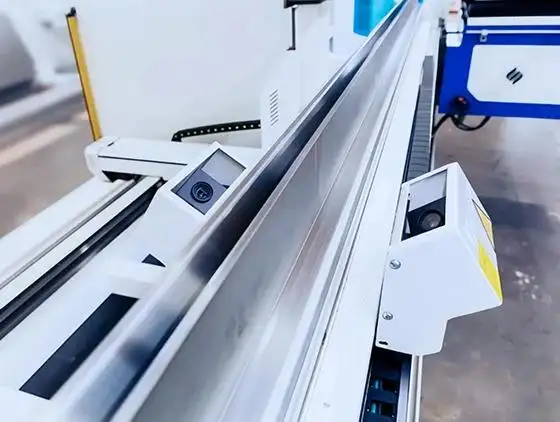
Even when tonnage and radius appear reasonable, a bend can still fail if the flange is too short for the chosen V opening. During bending, the sheet must remain supported on the die shoulders. If the flange is too small, it can slip into the V opening, and the bend can lose stability mid-stroke.
A widely used geometry shortcut for a 90° bend is:
Minimum Internal Flange (b) ≈ V × 0.67
This simple checkpoint is easy to apply before cutting a full batch. If your flange is smaller than this minimum, you typically have two choices: increase the flange length in the design, or choose a smaller V opening. If you choose a smaller V, you must re-check tonnage requirements and marking risk, because tight V openings often raise both.
Angle changes also affect contact geometry. Many shops adjust minimum flange estimates for different bend angles because the way the sheet seats on the shoulders changes with the bend. The exact adjustment method varies, but the principle does not: short flanges and wide V openings often conflict.
✅ Confirm minimum flange before production, not after scrap
✅ A larger V can reduce pressure, but it increases minimum flange needs
✅ When flange is short, tooling choice becomes more constrained
How JS RAGOS Turns Tooling Logic Into Customer Value
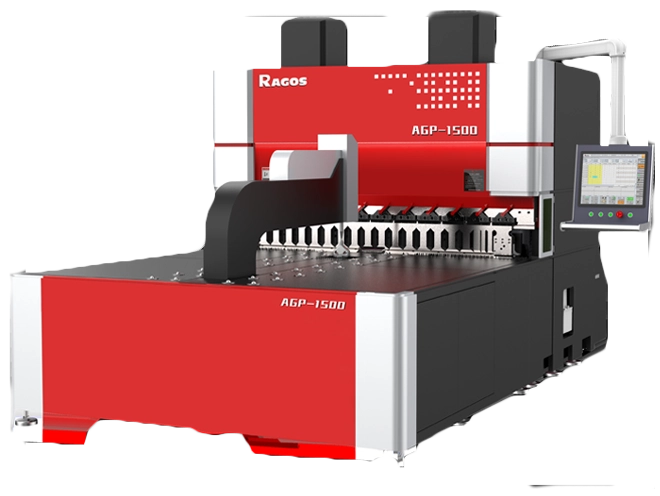
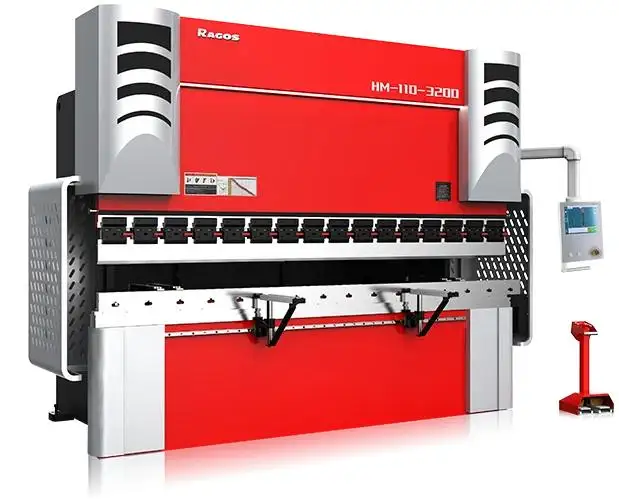
JS RAGOS designs industrial press brake CNC solutions for predictable bending decisions, not endless trial parts. The goal is practical: help operators choose tooling that matches real parts, real materials, and real schedules. When machine capability and tooling logic align, your team spends less time troubleshooting and more time producing acceptable parts on the first pass.
Here is how our approach becomes usable value for customers and readers:
✅ Faster Setup Choices: We guide V selection around thickness, radius goals, and flange limits, so your first setup is closer to production-ready.
✅ More Repeatable Output: A stable industrial press brake CNC platform supports consistent positioning and depth control, helping reduce angle variation and rework.
✅ Safer Tonnage Planning: Matching V opening to material strength and thickness helps you avoid overload conditions that reduce accuracy and shorten tool life.
✅ Cleaner Part Appearance: Correct V choices reduce deformation risk and help limit visible marks on parts where finish matters.
CTA: If you want to replace guesswork with a repeatable method, contact JS RAGOS for an industrial press brake CNC tooling and setup recommendation. Share your material type, thickness range, target inside radius, and minimum flange requirements. We will help you select V-die openings that fit your production goals, protect machine capacity, and deliver cleaner bends from the first run.