

What Makes the New CNC Press Brake Machine a Precision Upgrade?
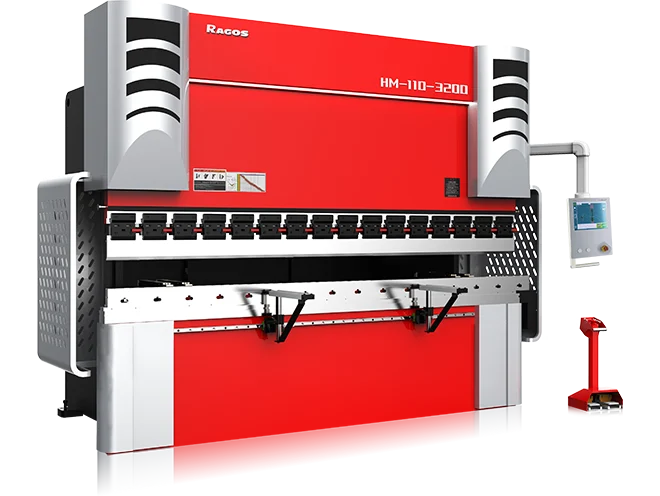
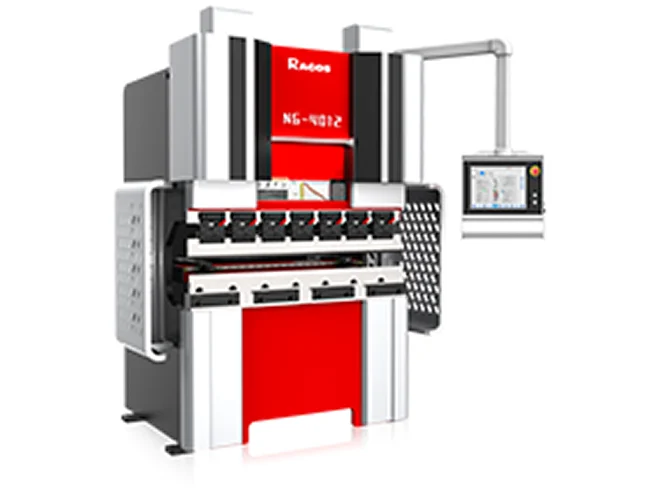
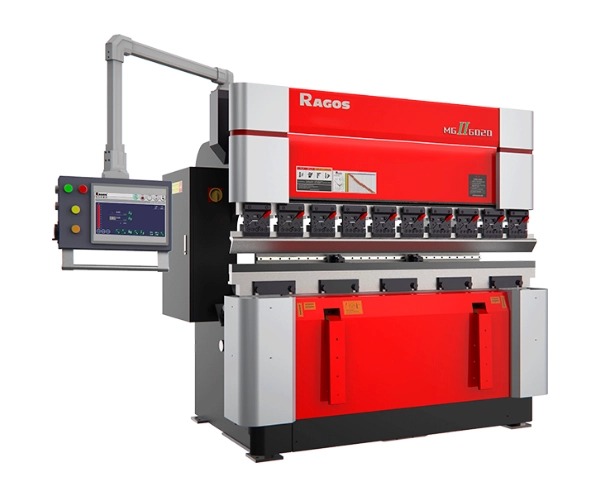
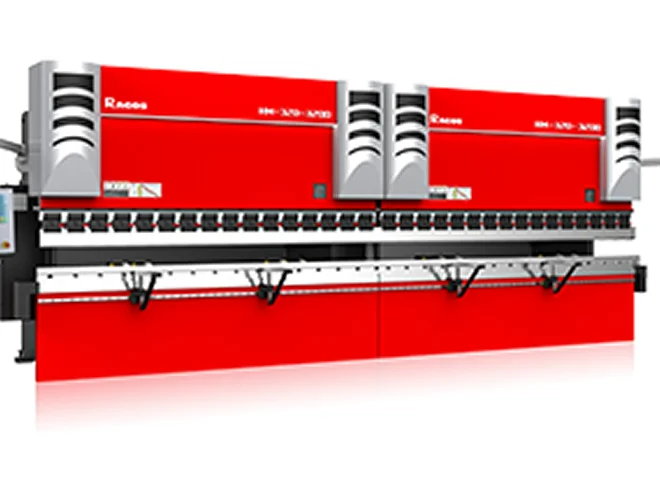
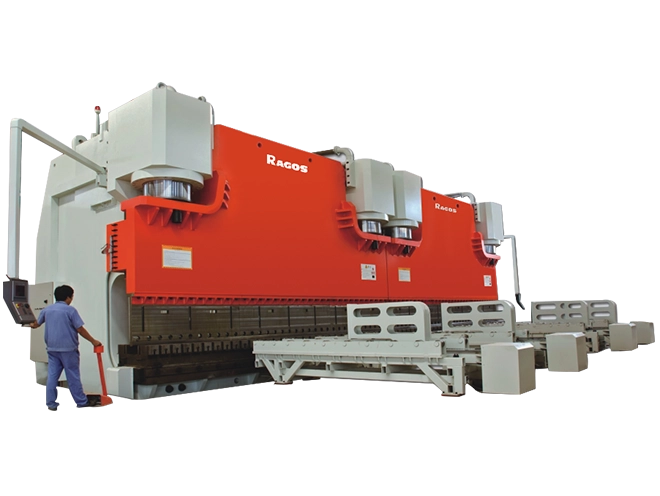
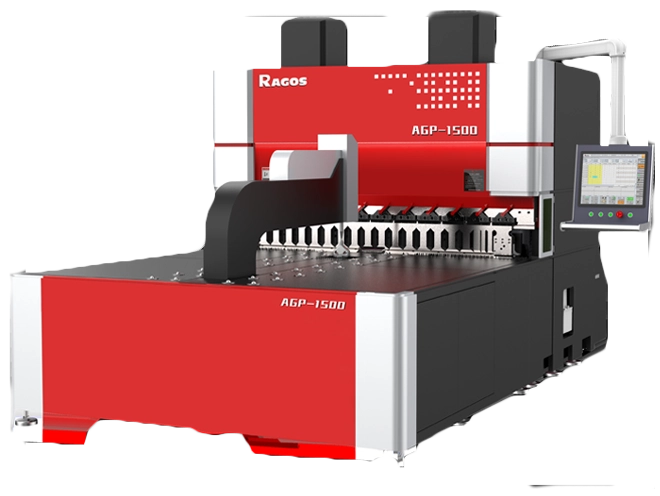
The New CNC Press Brake Machine is a bending system built for accuracy and speed. It blends advanced CNC controls with robotic handling to keep angles steady and changeovers fast. Laser angle checks cut trial bends. Safety sensors protect people without slowing the line. Tooling and grippers are chosen to fit real parts, not theory. It aims to solve drift, rework, and labor gaps. But what makes its precision different from a standard press brake? And how does it stay consistent all day? Let's uncover that next.
Why The New CNC Press Brake Machine Is A Precision Upgrade
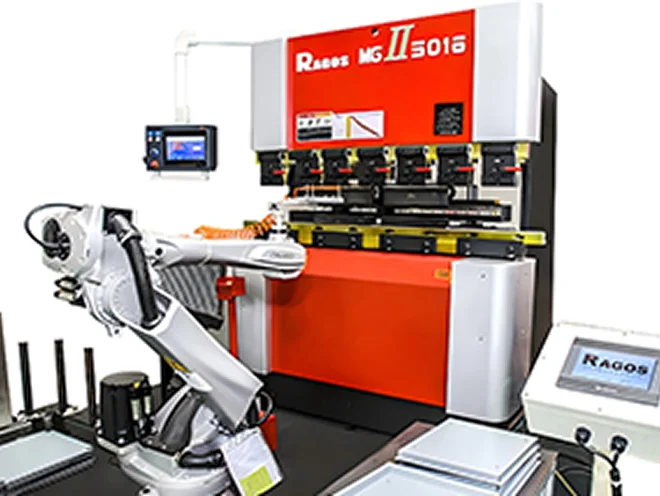
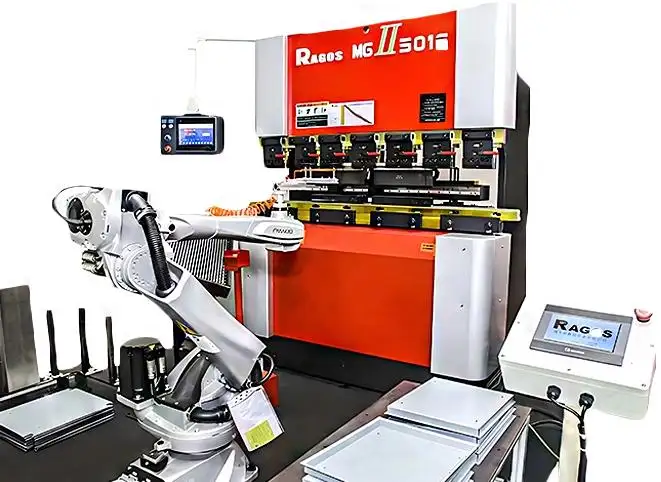
Manufacturers fight three stubborn issues: angle variation, setup loss, and labor gaps. The New CNC Press Brake Machine tackles all three. Our bending cell pairs advanced CNC press brakes with robots from FANUC, KUKA, ABB, or Yaskawa, and intelligent controls such as DELEM, ESA, and Cybelec. The system keeps motion smooth and repeatable. You get consistent bends across shifts and materials.
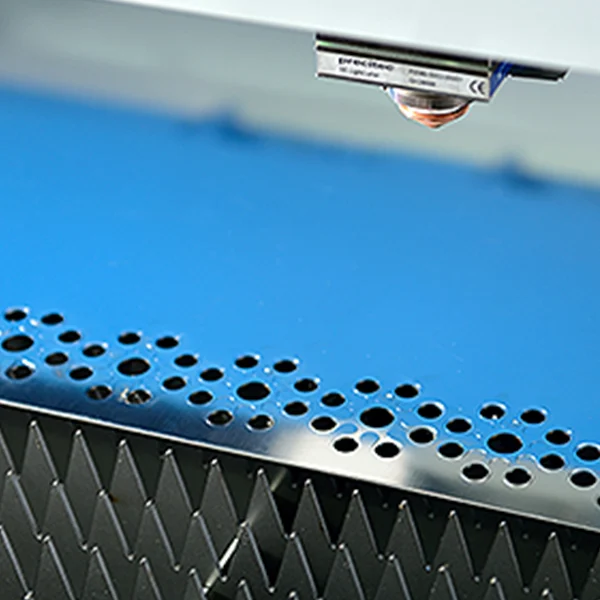
Precision starts at measurement, not rework. Our laser-assisted angle check (developed with Data-M & Vision Components) verifies angles after the first hit, then applies automatic correction. Accuracy better than ±0.1° means less trial bending and less scrap. Safety supports precision too. A DSP LASER light curtain forms a moving protection zone that stops motion the instant an obstacle enters the field. Operators can work confidently, and downtime from near-misses drops.
We also focus on the bend ecosystem - tooling, clamping, and part handling. Compatible high-quality tooling and clamps (Wila, Amada, Rolleri) reduce deflection and speed changeovers. Our custom end-of-arm grippers handle thin sheet, heavy plate, tubes, and enclosures without scratches. Every touchpoint is stable, and that stability shows up as tighter angles and cleaner surfaces.
✅ Real Problems We Solve
• Angle drift between shifts or operators
• Slow first-article approval due to manual checks
• Skilled-labor shortages at the press brake
• Surface defects from manual handling and regrips
• Costly changeovers when moving between short runs
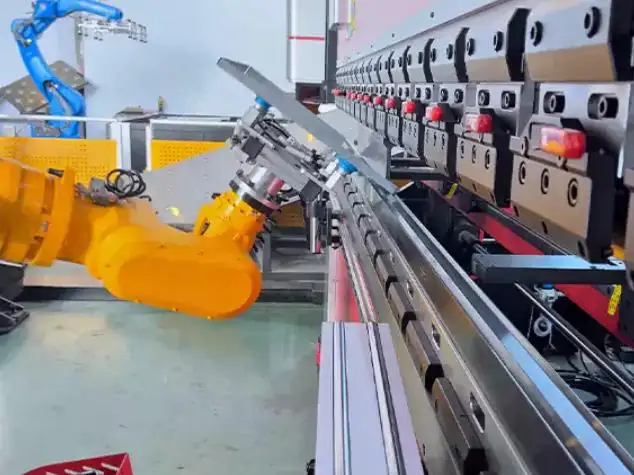
Inside The JS RAGOS Bending Cell
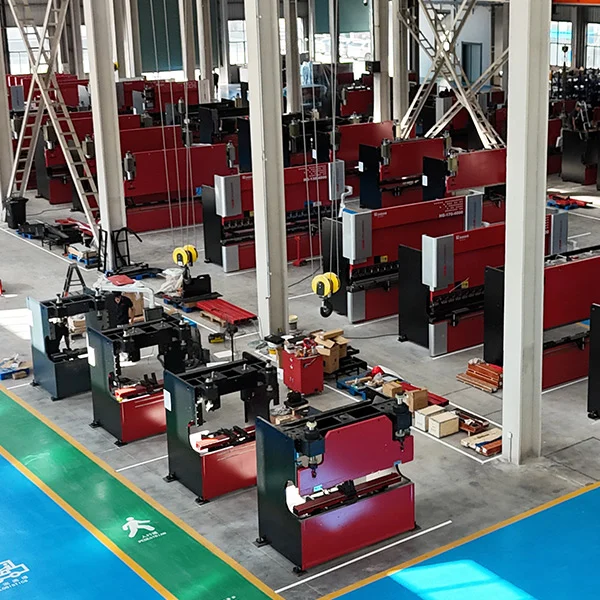
The New CNC Press Brake Machine reaches its full potential inside a well-designed bending cell. We start with a clear material flow to avoid backtracking and waiting. A typical layout includes a loading plate for raw sheets, an alignment table for pre-positioning, the bending area, and an unloading plate for finished parts. Floor cabinets keep tools and fixtures in order, so operators spend time producing rather than searching.
Our 7-axis bending robot adds reach and flexibility. It can work longer parts with steady control and move aside when an operator needs to bend an additional piece manually. That hybrid mode is practical. It preserves throughput while keeping options open for special parts and urgent jobs. A dedicated flipping or regrip station turns parts for multi-side bends with accurate repositioning. It reduces manual lifts and preserves precision on complex geometries.
We also design and build the grippers ourselves at JS RAGOS. This matters because part stability depends on the right contact, vacuum, or clamp at the right point. Balanced grip, tuned compliance, and scratch-free surfaces all contribute to faster cycles and repeatable angles. When the handling is right, the press brake can do its job without interruption.
✅ Key Components At A Glance
- Loading and alignment for consistent infeed
- Bending area with intelligent CNC control
- Flipping/regrip station for multi-side parts
- Unloading and organized storage for smooth outfeed
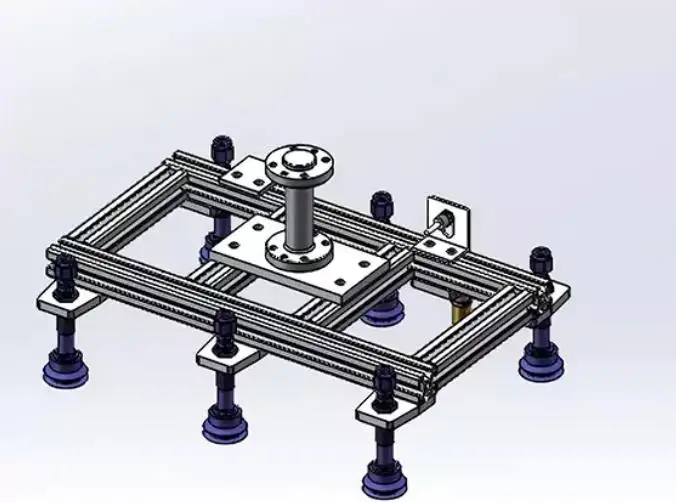
Software, Integration, And ROI
Precision is also a planning problem. Our 3D offline software prepares both the robot and the machine before the first sheet lands on the backgauge. It auto-calculates grips and paths, generates CNC code for the press brake and the robot, and keeps both synchronized. Visual tools let engineers adjust paths with simple control points. This reduces teach time and shortens changeovers for high-mix, low-volume work - exactly where many shops lose margin.
- Why The Software Matters?
• Automatic gripping and path planning for faster setup
• Visual fine-tuning to resolve collisions before production
• Support for vacuum and clamp grippers, rails, and easy stacking
• CNC code for machine and robot to keep processes in sync
The business case is straightforward. Consistent angles after one hit mean fewer test bends and less scrap. Automated handling reduces labor intensity and fills shifts that are hard to staff. Flexible control platforms (DELEM, ESA, Cybelec) and multi-brand robot support (FANUC, KUKA, ABB, Yaskawa) protect your investment. You can scale the cell, change tooling, or add new parts without starting over.
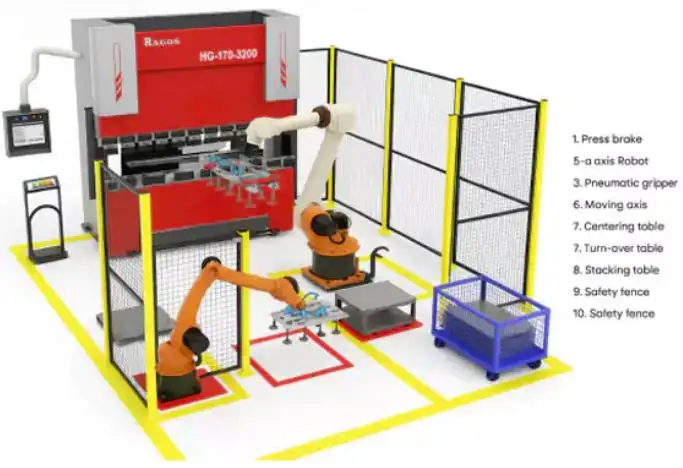
For many plants, the first win is stability - same angle, same time, every time. The second is flow - no piles of WIP waiting for an expert to return. The third is safety - light curtains that prevent accidents and keep uptime high. Together, these unlock high-efficiency bending that fits modern scheduling and quality demands.
Call To Action
If you are evaluating a New CNC Press Brake Machine for your smart factory, talk to JS RAGOS. Share a few part drawings, and we'll simulate a bending cell with custom grippers, tooling options, and a realistic cycle plan. You'll see how ±0.1° laser-checked accuracy, synchronized CNC-robot control, and safe automation can raise throughput and lower unit cost - without adding headcount.
Ready to explore your precision upgrade? Contact JS RAGOS for an application review and a tailored bending cell concept. We'll help you turn variability into repeatability, and repeatability into profit.