


Robot de flexión de frenos de presión: Guía práctica para automatizar flexiones más inteligentes
Press Brake Bending Robot systems are becoming a serious consideration for fabricators that want more output without simply adding more labor, Más espacio en el suelo, o mayor presión de producción. Para muchos talleres, the challenge is no longer just how to bend sheet metal accurately. The real issue is how to keep quality stable, shorten turnaround time, and manage rising operating costs at the same time.
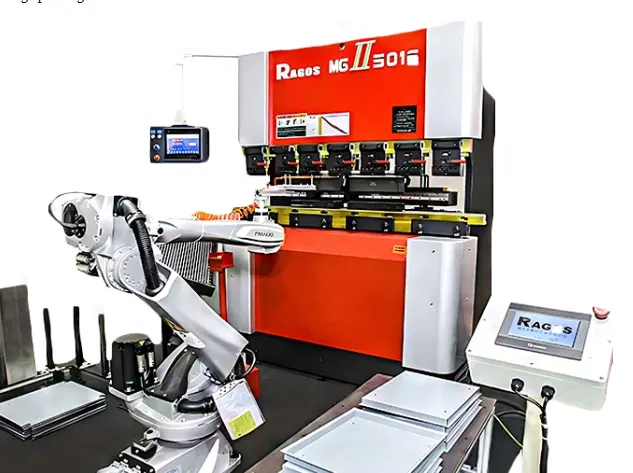
That is why robotic bending is getting more attention across modern metal fabrication. A well-matched robotic cell can help a factory increase repeatability, improve part handling, and keep production moving through longer runs or off-shift hours. For manufacturers under pressure to deliver faster while controlling scrap and labor dependency, that shift matters.
Why More Factories Are Looking unt Robotic Bending
In many plants, press brake capacity is limited by operator availability, setup variation, part handling difficulty, and fatigue over long runs. Even a strong conventional press brake may struggle to deliver the same output when jobs involve repeated bends, larger blanks, or demanding tolerance control.
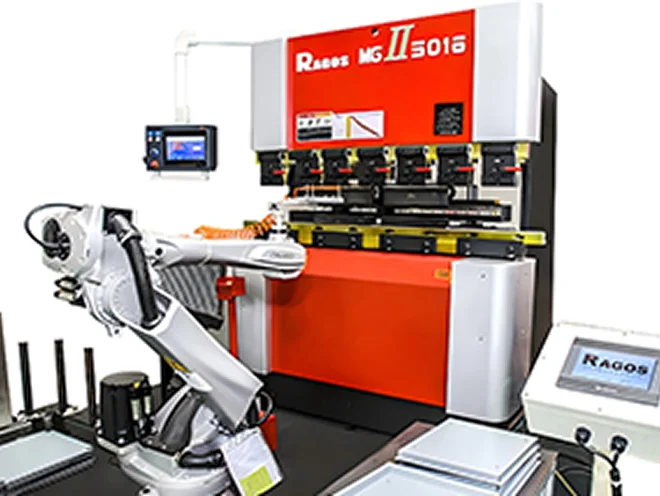
A robotic bending setup helps address these problems by combining the press brake with an automated loading, Posicionamiento, doblamiento, and unloading sequence. Instead of depending on manual repositioning for every cycle, the robot follows a programmed path and repeats it with steady control.
This offers a lot of practical benefits:
• Stable bend consistency across an entire batch.
• Variation due to operator fatigue is reduced.
• Repetitive production is managed better.
• Safety is improved when working with small or heavy components.
• Labor utilization is improved across different machines or processes.
This means that for an expanding factory, it is possible to increase throughput without having to scale up the facility or the workforce.
¿Qué un Press Brake Bending Robot Does
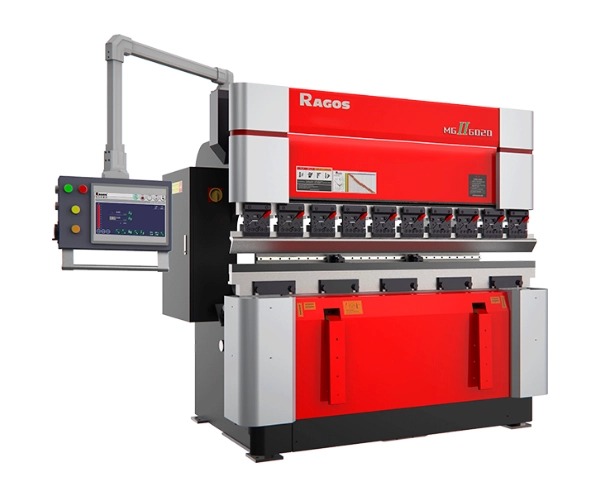
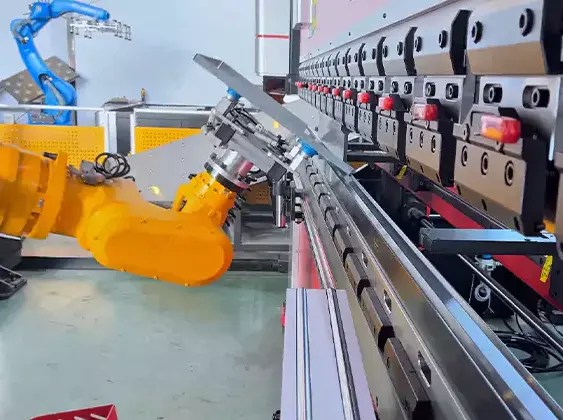
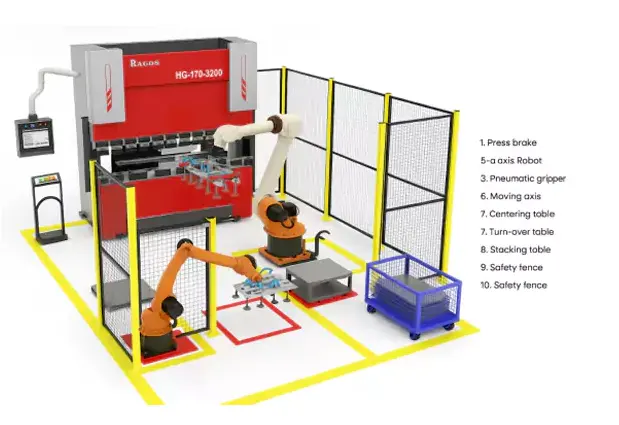
A Press Brake Bending Robot is an automated bending workcell that integrates robotic manipulation with control of CNC press brakes. The robot picks up the sheet or formed blank, positions it at the tooling area, supports the part during each bend step, then moves or unloads it after forming is complete.
The exact structure can vary. Some systems use a standard articulated robot paired with a press brake. Others are designed as more integrated cells with dedicated grippers, sheet-following logic, safety guarding, and offline programming support.
In practical production, the robot is responsible for repeatable movement. The press brake delivers the forming force. Junto, they create a more controlled bending process, especially where part sequences are repeated often.
When Robotic Automation Makes Sense
Not every bending job needs automation. Some low-frequency prototype work is still better handled manually. But there are clear situations where robotic bending becomes highly attractive.
1. Repetitive High-Volume Work
If a job runs often and follows the same bend sequence, automation can save time and reduce variation. Once the program is verified, the robot can repeat the process with far less interruption.
2. Repeat Low-Volume Orders
Some jobs are not high volume in a single batch, but they return regularly. En ese caso, saved programs make robotic bending worthwhile because setup knowledge does not depend only on a specific operator.
3. Heavy Or Difficult Parts
Some bending jobs involve large panels, challenging geometries, or parts that are not easy to handle manually. With robotic assistance, factories can improve handling consistency while easing the physical burden on workers.
4. Long Off-Shift Production
For factories that want to add output during evenings or lower-supervision hours, a robotic cell can help extend production time more effectively.
Main Benefits Yon Daily Fabrication
The value of robotic bending is not only speed. En muchos casos, the bigger benefit is process control.
• Better Repeatability
A robot does not lose focus after long cycles. It follows the programmed motion path, gripping logic, and bend sequence with the same rhythm across the run. That helps reduce part-to-part inconsistency.
• Lower Risk Of Human Error
Manual bending involves judgment, Sincronización, Posicionamiento, and physical handling. Even experienced operators can produce variation when the job is demanding. A robotic system reduces those manual variables.
• Improved Tolerance Control
Consistent part positioning helps the press brake perform more reliably. When material thickness variation is measured and compensated correctly by the bending system, the process becomes more stable.
Higher Productivity From The Same Footprint
En muchos casos, a robotic cell uses roughly the same core bending area as a conventional press brake while delivering more output through better cycle organization.
Safer Part Handling
This is especially valuable for:
• Sharp-edged blanks
• Small parts near the tool zone
• Large sheets that are difficult to support manually
• Repetitive jobs that create operator fatigue over time
Common Types of Robotic Bending Systems
Factories can choose from different automation approaches depending on part type, Presupuesto, and production structure.
• Articulated Robot Cells
These are among the most common options. They offer flexible movement and can support a wide range of bending tasks, especially where parts vary in size or orientation.
• Collaborative Robot Solutions
Cobots can be useful for lighter-duty applications where flexible deployment and simpler interaction matter. They are not the answer for every bending task, but they can fit some smaller production environments.
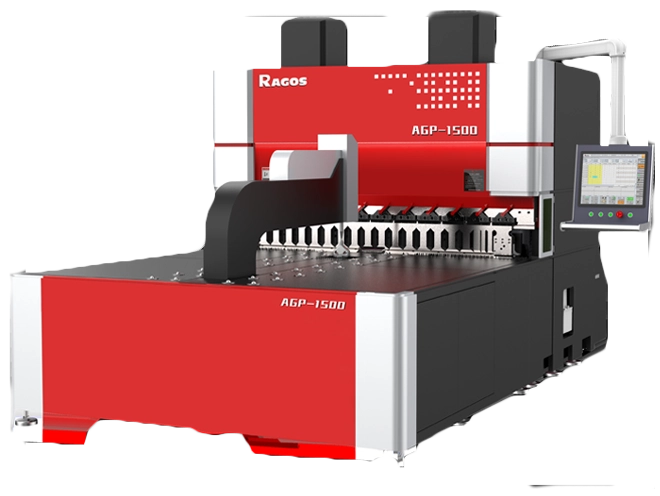
• Integrated Robotic Press Brake Cells
These systems are designed from the start as a combined automation package. They often simplify coordination between the robot, tooling area, and handling logic.
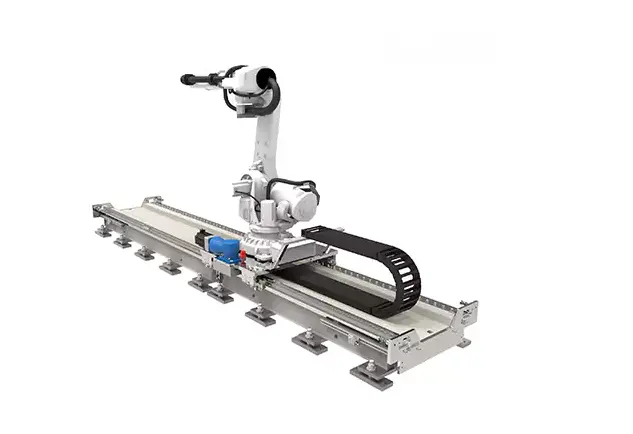
• Specialized Bending Robots
Some robots are purpose-built for bending tasks, featuring specialized end-effectors and handling strategies that match the demands of sheet metal processing.
En JS RAGOS, the right choice depends less on trend language and more on part family, repeat frequency, handling difficulty, and expected return on investment.
Questions to Ask Before You Automate
Before buying a robotic bending system, a workshop should look carefully at its real production pattern.
Ask these questions first:
• Are the jobs repeated often enough to justify programming effort?
• Do the parts have stable dimensions and material behavior?
• Labor availability may be restricting output already?
• Are there any quality losses due to handling inconsistency?
• Does the size of the components (heavy vs small) pose any safety concerns?
• Can the cell accommodate the real material flow of the factory?
All these questions are relevant because for robotic bending to be effective, the surrounding processes need to be streamlined. The result is also influenced by the immediate organized surrounding, bending tooling, part's orientation, loading/unloading methods, and floor layout.
The Possibilities for Robotic Bending
The limits of automation are also the limits of bending.
A robotic cell is not the best choice for every prototype, every one-off geometry, or every unstable part condition. It also requires careful programming, reliable tooling setup, and disciplined production control. If a tool is installed incorrectly or the part reference is wrong, the robot will not "figure it out" like a skilled operator might in manual work.
That is why robotic bending still needs process oversight. Good automation reduces variability, but it does not remove the need for technical planning.
How Robotic Bending Changes the Workforce
Robotic bending does not simply remove people from the process. In many factories, it changes where skill is used.
More attention moves toward:
• Programming
• Setup verification
• Tooling management
• Maintenance
• Production scheduling
• Cell supervision and optimization
That shift can help manufacturers build a more structured workflow. Instead of relying only on individual operator experience at the machine, the factory develops a more transferable process standard.
The Direction of Smart Bending
The future of bending is moving toward better integration, not just more machine movement. Programación fuera de línea, simulación, material compensation, and connected production data are all becoming more important.
For overseas buyers, the strongest appeal of a Press Brake Bending Robot is simple: it can help a factory produce more consistent parts with better labor efficiency and stronger control over repeat work.
For JS RAGOS, that is where automation becomes valuable. The goal is not to automate for appearance. The goal is to apply robotic bending where it solves real production problems, supports stable quality, and helps the workshop grow with more confidence.