

3200mm CNC Press Brake: What Parts It Fits Best
What parts can a 3200mm CNC press brake handle and when is it the right machine size for production? A 3200mm CNC press brake is the primary industrial solution for bending standard 10-foot (3-meter) sheet metal panels, providing the necessary clearance for architectural flashings, industrial cabinetry, and large-scale enclosures.
In production planning, machine length is a critical factor because it determines not only the maximum part size but also the machine’s structural stability and bending reliability across long spans. When choosing this size, fabricators must conduct a thorough power requirement comparison to ensure the tonnage matches the material thickness.
This guide explores how to match your machine choice to real-world jobs, balancing setup logistics with long-term performance to ensure your equipment handles everything from thin-gauge aluminum to heavy steel plates without compromising accuracy or tool life.
What Is a 3200mm CNC Press Brake?
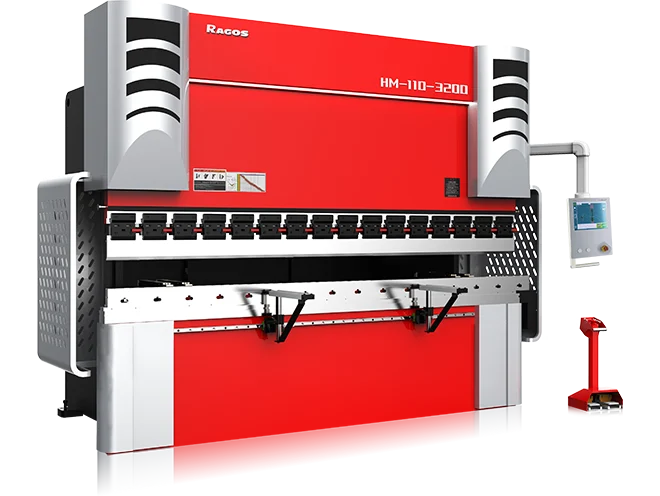
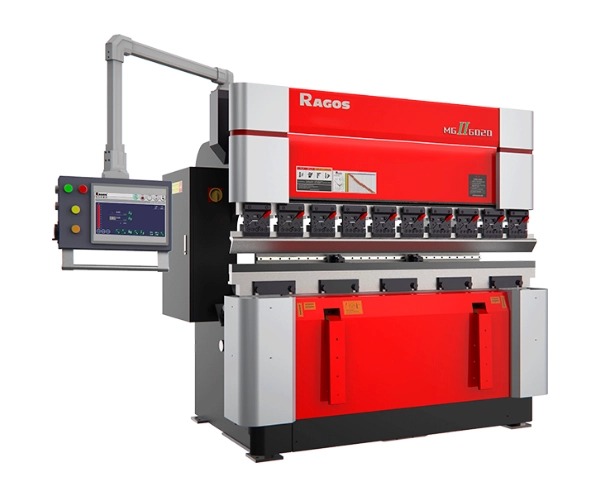
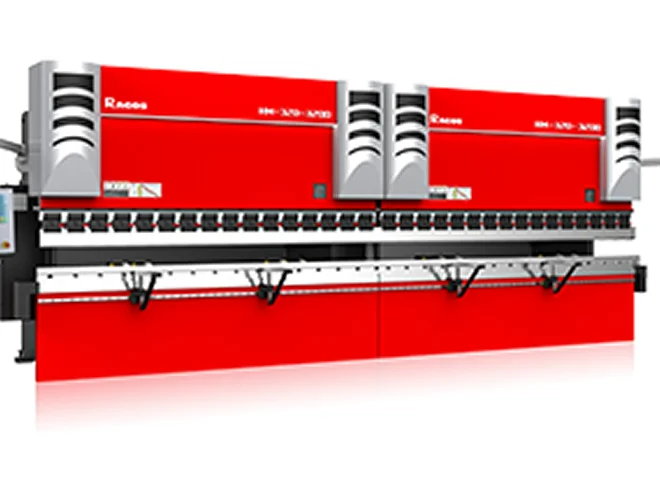
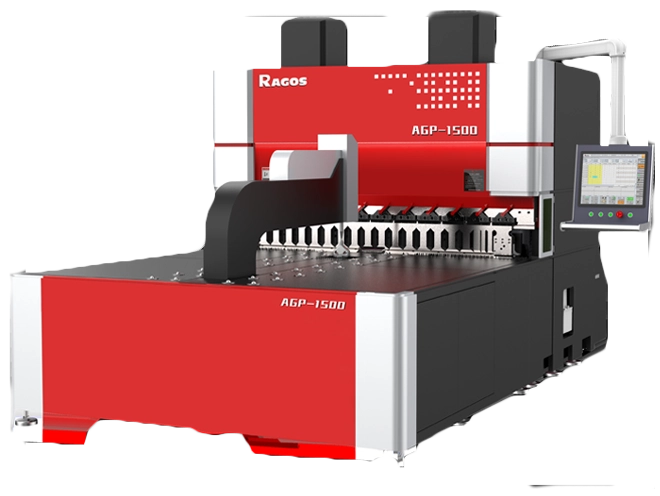
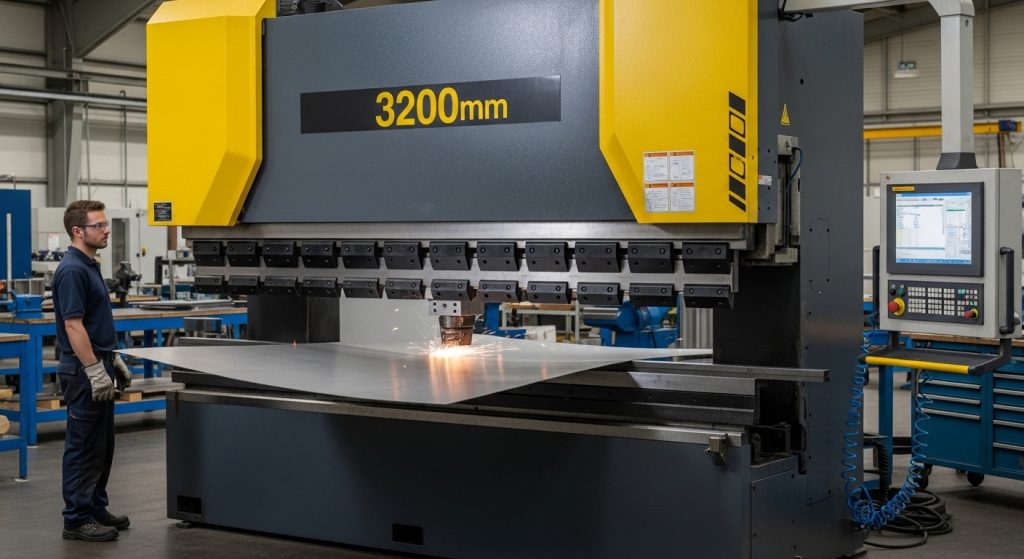
A 3200mm CNC press brake is a precision metal-forming machine with a functional bending length of 3,200 millimeters. This size is often considered the industry standard for "large-format" fabrication, bridging the gap between specialized small-part machines and massive industrial plate rollers. In simple production terms, it is the machine designed to handle the most common industrial sheet size: the 3-meter plate. This length allows for a slight margin of error on either side of a standard sheet, which is vital for maintaining bending reliability at the edges where material might otherwise flange incorrectly.
The typical production role of this machine is versatile. It acts as the backbone for shops that produce HVAC ductwork, commercial kitchen equipment, and structural components. Because the frame is wider, it usually features more advanced Y1 and Y2 axis synchronization to ensure the ram remains perfectly parallel to the bed. From a long-term performance perspective, the 3200mm frame is engineered to withstand significant deflection, often incorporating integrated mechanical or hydraulic crowning systems to compensate for the "bowing" effect that occurs during high-tonnage operations. When performing a power requirement comparison, this machine size typically requires a more robust hydraulic system or a high-torque electric motor setup compared to its 2000mm counterparts.
What Part Sizes Fit a 3200mm CNC Press Brake Best?
The 3200mm CNC press brake is optimized for parts that range from 2,500mm to 3,100mm in length. This includes full-length architectural wall panels, long-span roofing components, and elevator door skins. It is also the preferred choice for mid-size fabrication applications where multiple smaller parts need to be bent in a single "setup" across the bed—a technique known as staged tooling. This allows an operator to move from one die set to another without stopping the machine, which drastically improves throughput and simplifies setup logistics.
Real production part examples include 3-meter electrical enclosures, large industrial refrigeration panels, and truck body segments. For these parts, the 3200mm length is critical because it provides the "distance between housings" required for the part to swing up or pass through the back of the machine. If a part is exactly 3000mm, using a 3200mm machine ensures that the side frames do not interfere with the flange depth. This extra space is a key factor in maintaining bending reliability, as it prevents the operator from having to angle the part awkwardly, which would otherwise lead to dimensional inaccuracies and increased scrap rates.
How Much Tonnage Matches a 3200mm CNC Press Brake?
Tonnage selection for a 3200mm machine is dictated by the material's yield strength and thickness. Most machines in this length category are rated between 100 and 300 tons. A 100-ton 3200mm machine is ideal for light-gauge work, such as 1mm to 2mm mild steel or aluminum. However, as the material thickness increases, the power requirement comparison becomes more intense. For instance, bending a 3-meter piece of 6mm mild steel requires significantly more force than a 1-meter piece of the same thickness. Typically, a 160-ton to 200-ton model is the "sweet spot" for general fabrication shops handling up to 4mm or 5mm materials.
Production load behavior must be monitored to ensure long-term performance. If a machine is constantly pushed to its maximum tonnage across the full 3200mm length, the hydraulic seals and the frame itself will experience accelerated wear. It is best practice to select a tonnage that allows the machine to operate at approximately 70% capacity for its most common tasks. This headroom accounts for variations in material hardness and ensures that the CNC system can maintain high precision without straining the pump or the motor, thereby preserving the machine's value over a decade or more of use.
How Bend Length Affects 3200mm CNC Press Brake Performance
The length of the bend directly influences how the machine’s frame reacts under pressure. When you perform a full 3200mm bend, the force is distributed across the entire ram, but the center of the bed will naturally deflect more than the ends near the hydraulic cylinders. This is where bending reliability is tested. Without a proper crowning system—either manual or CNC-controlled—the part will have a "canoe" shape, where the angle is tighter at the ends and wider in the middle.
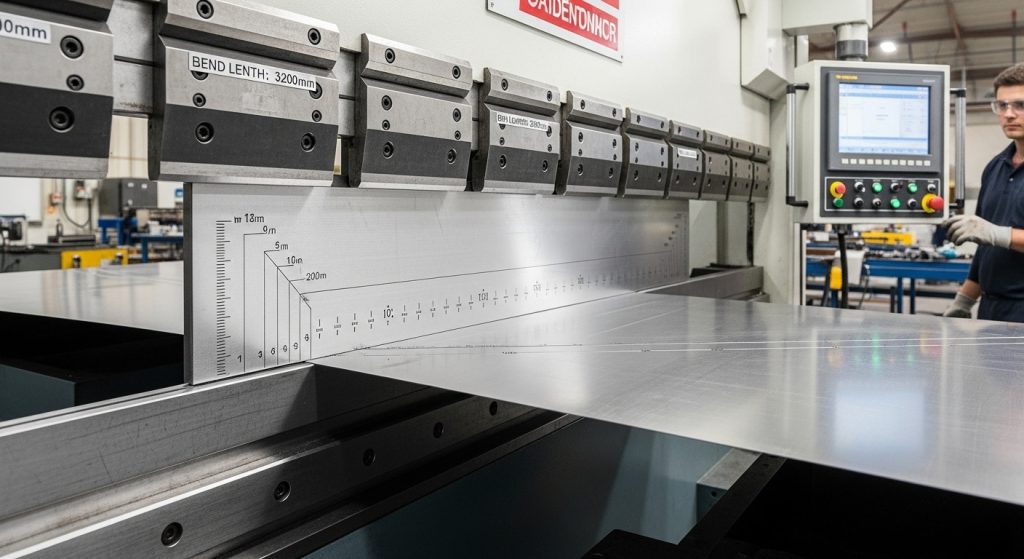
Conversely, performing a very short, high-tonnage bend in the center of a 3200mm bed can cause "localized deflection." This is why capacity planning basics are so important. Operators must understand that while the machine can handle 3200mm, the way they distribute the load impacts setup logistics. If the job requires a series of short bends, it is often better to spread them across the bed rather than stacking them in one spot. This balanced approach protects the long-term performance of the machine by ensuring the wear on the bed and the ram remains even.
What Tooling Works Best With a 3200mm CNC Press Brake?
Tooling for a 3200mm machine must be sectionalized to allow for flexibility and ease of handling. Since a solid 3.2-meter punch would be nearly impossible for a single operator to install, modern shops use 835mm or smaller segments. The V-die selection is the most critical decision; wider V-openings are used to reduce the tonnage required for long bends, which aids in long-term performance by reducing the stress on the machine. However, wider V-dies result in a larger internal radius, so the tooling must be matched to the part requirements.
Punch strength is another factor. For a 3200mm span, the punch must be rigid enough to transfer force without vibrating or "chattering," which can leave marks on the material. Managing setup logistics involves keeping a library of tooling that can be quickly swapped. For long-term reliability, it is advisable to use hardened and ground tooling. While more expensive initially, hardened tools resist the wear that occurs during the high-friction process of sliding metal across the die shoulders, ensuring that the 1,000th bend is just as accurate as the first.
Which Industries Use a 3200mm CNC Press Brake Most?
General fabrication shops are the primary users of the 3200mm CNC press brake because of its versatility. However, it is especially prominent in the cabinet and enclosure industry. Large server racks, electrical control panels, and industrial lockers all fit perfectly within this 3.2-meter window. The ability to form long, seamless corners reduces the need for welding and grinding, which significantly lowers production costs and improves the finished product's appearance.
Structural fabrication is another major sector. Companies making cable trays, light-duty bridge components, and specialized trailer parts rely on the 3200mm length to handle the long profiles common in transport and infrastructure. In these sectors, bending reliability is non-negotiable, as the parts often need to bolt together with extreme precision over long distances. The long-term performance of a 3200mm machine in these environments is often measured in its ability to run multiple shifts daily while maintaining high repeatability.
Common Mistakes When Choosing a 3200mm CNC Press Brake
One of the most frequent mistakes is choosing a machine based purely on length while ignoring the distance between the side housings. If a machine is 3200mm long but the housings are only 2600mm apart, a 3-meter part with deep side flanges will not fit through the back. This oversight can cripple setup logistics and force fabricators to perform multiple operations. Another common error is failing to perform a proper power requirement comparison. Buying a 100-ton machine for 3200mm work might seem cost-effective, but if you eventually need to bend 4mm stainless steel at that length, the machine will lack the necessary force.
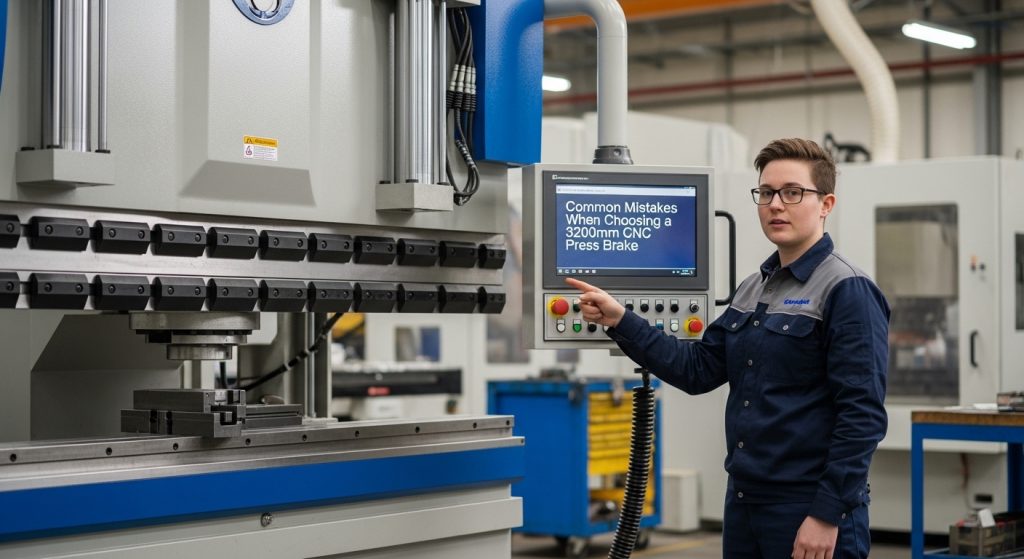
Additionally, many buyers ignore the importance of the CNC backgauge configuration. For a 3200mm machine, a 4-axis or 6-axis backgauge is often necessary to properly support long, heavy sheets that might sag or twist during the gauging process. Ignoring future growth is the final pitfall; ensuring the machine has enough "overhead" in tonnage and stroke length is vital for long-term performance.
Pre-Production Checks for a 3200mm CNC Press Brake
Before beginning a production run, a rigorous pre-flight check ensures both safety and part quality.
- Part Length Verification: Confirm that the actual sheet length fits within the machine's functional workspace.
- Material Thickness Check: Use calipers to verify the material gauge; small deviations can lead to large angle errors over 3.2 meters.
- Tooling Compatibility: Ensure the V-opening is appropriate for the thickness to avoid exceeding tonnage limits.
- Tonnage Verification: Check the CNC controller's calculated tonnage against the machine’s rated capacity.
- Program Validation: Run a "dry cycle" to ensure the backgauge and ram stroke are correctly calibrated for bending reliability.
- Safety Zone Clearance: Given the setup logistics of long parts, ensure there is enough floor space for the sheet to swing up safely.
By adhering to these checks, fabricators can maximize the long-term performance of their CNC press brake.
When Should You Use an Electric Press Brake Instead?
An electric press brake is the ideal choice when your production requires extreme precision, high speeds, and lower energy consumption. These machines offer superior long-term performance for thin-to-medium gauge materials because they eliminate the inconsistencies associated with hydraulic oil temperature fluctuations. When performing a power requirement comparison, electric models demonstrate higher efficiency during rapid-fire bending cycles.
When Do Parts Require a 4000mm CNC Press Brake?
Parts require a 4000mm CNC press brake when they exceed the 3.2-meter standard, such as long-span architectural siding or specialized transport trailers. Moving to a larger machine also simplifies setup logistics by providing more room for multiple tool stations, allowing complex parts to be completed without moving to a second machine. This size ensures long-term performance for shops that specialize in oversized industrial contracts.
When Does Stainless Steel Need a 200T CNC Press Brake?
Stainless steel is significantly harder to bend than mild steel, requiring about 50% more pressure for the same thickness. If you are regularly bending 3mm to 4mm stainless steel over a 3-meter span, a 200T CNC press brake becomes necessary to maintain bending reliability. A proper power requirement comparison shows that using a lower-tonnage machine on stainless can lead to frame fatigue and inconsistent angles.
When Do Heavy Plates Need 600T–3000T Hydraulic Press Brake?
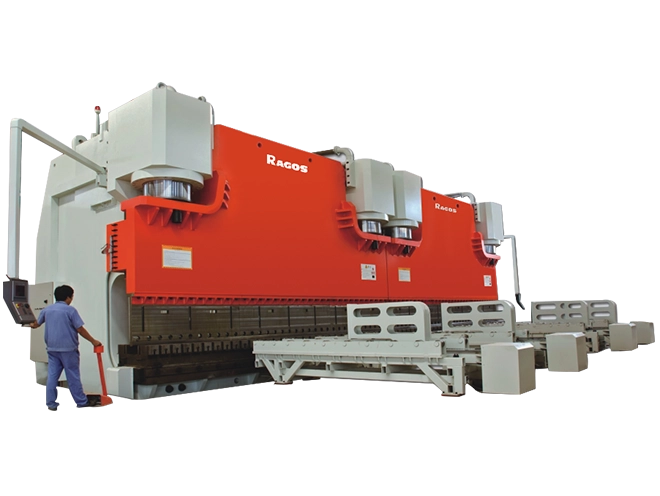
Heavy plates used in shipbuilding and mining require the massive force of a 600T–3000T hydraulic press brake. These machines are designed for the most demanding industrial tasks where a standard 3200mm shop brake would fail. They offer the rugged long-term performance needed to form 12mm to 50mm steel plates into structural beams and heavy pressure vessels.
3200mm vs 4000mm CNC Press Brake: Which Fits Better?
The choice between a 3200mm vs 4000mm CNC press brake depends on your primary part lengths and available floor space. While the 3200mm model is the standard for 10-foot sheets, the 4000mm version offers better setup logistics for oversized custom work. When considering long-term performance, the 4000mm machine provides a "future-proof" solution for shops expanding into larger architectural or structural projects.