

3200mm vs 4000mm Press Brake: Which Length Do You Need?
Stop assuming that bigger is always better. In the world of metal fabrication, the distance between your side housings determines your flexibility, your accuracy, and your bottom line. Whether you are outfitting a new facility or upgrading a legacy line, selecting between a 3200mm and a 4000mm bed is a strategic decision that affects every part you bend.
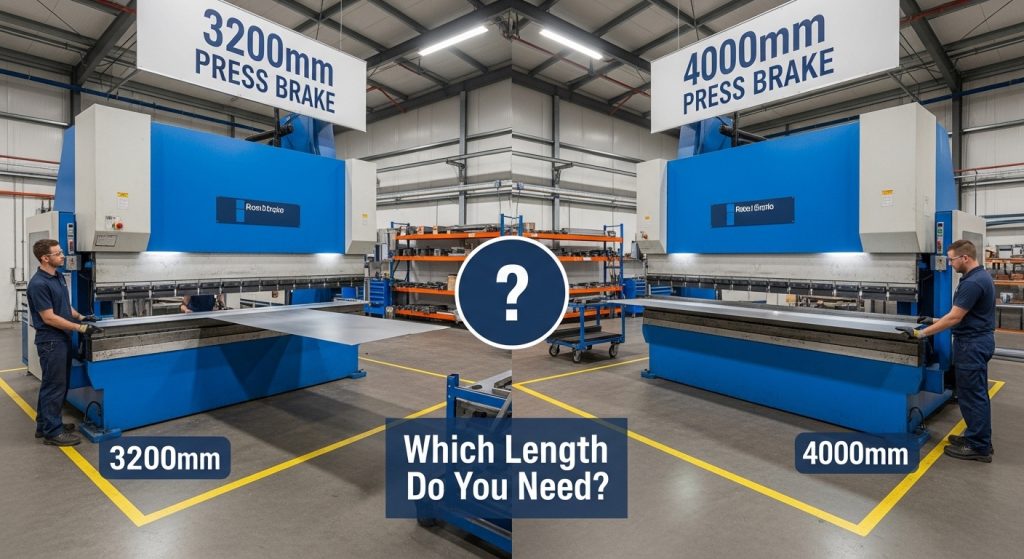
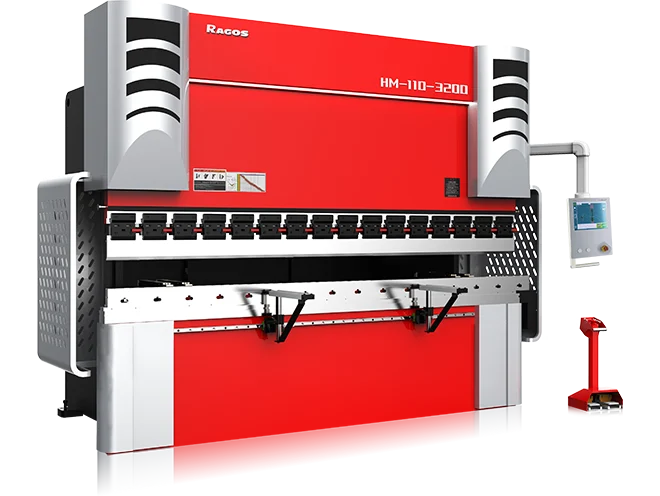
The 3200mm Press Brake: The Industry Workhorse
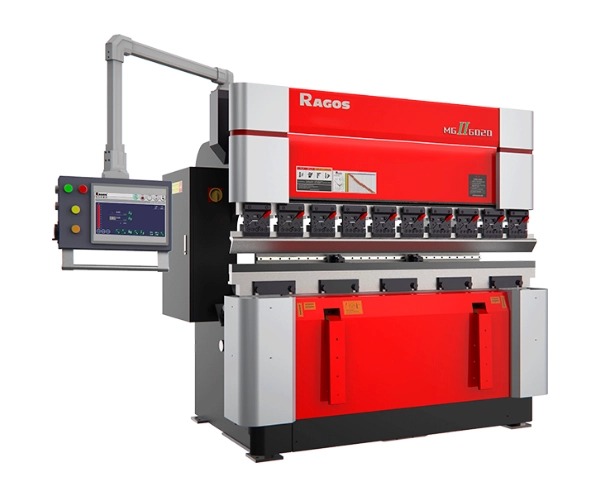
The 3200mm press brake is the most common size found in job shops worldwide. It is designed to handle the standard 3-meter (10-foot) sheet with just enough room to spare. If your daily workflow involves a mix of brackets, panels, and medium-sized enclosures, this is likely your most efficient option.
The Real Working Reality of the 3200mm Length
While the nominal length is 3200mm, your practical bending length is typically between 3050mm and 3150mm. This is because you must account for the space between the side frames. If you try to bend a full 3200mm sheet on a 3200mm machine, you might find the material hitting the side housings, preventing a full-depth bend.
- Deflection Control: Because the distance between the cylinders is shorter than a 4-meter machine, the beam deflection is much easier to manage.
- Crowning Needs: You will generally require less crowning compensation to achieve a straight bend, which simplifies the operation for less experienced staff.
- Tonnage Pairings: You will commonly see this length paired with 160T, 200T, or 250T capacities.
Best Thickness Range for 3200mm Machines
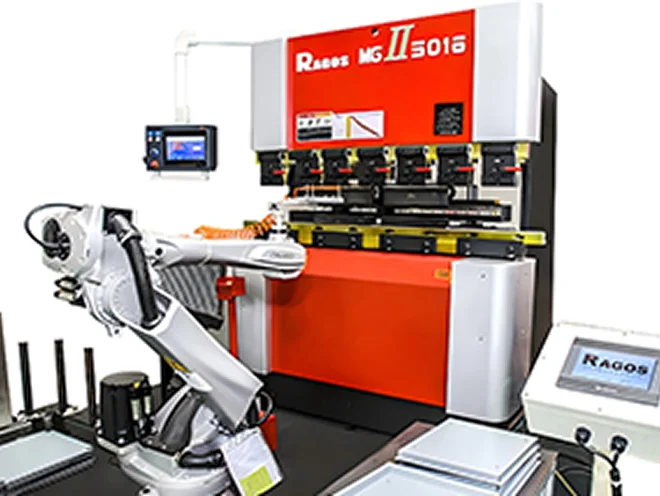
This length is exceptionally efficient for steel thicknesses ranging from 3mm to 12mm. It provides a tight, rigid setup that holds tolerances well over thousands of cycles. For shops looking to transition into cleaner technology, an electric press brake in the 3200mm range offers incredible speed and precision for these mid-range thicknesses.
The 4000mm Press Brake: Built for Structural Scale
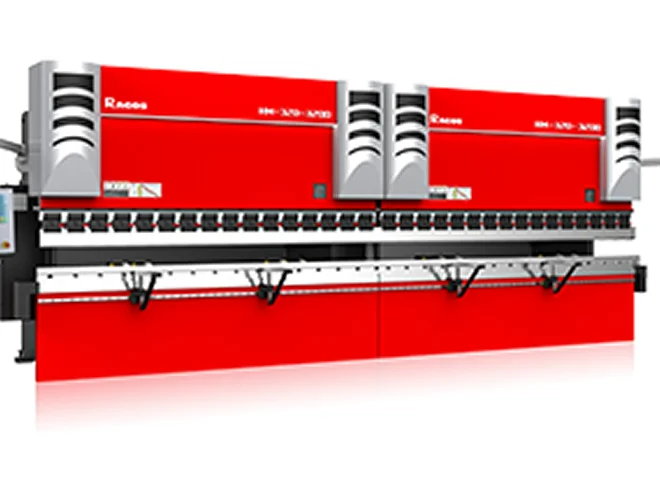
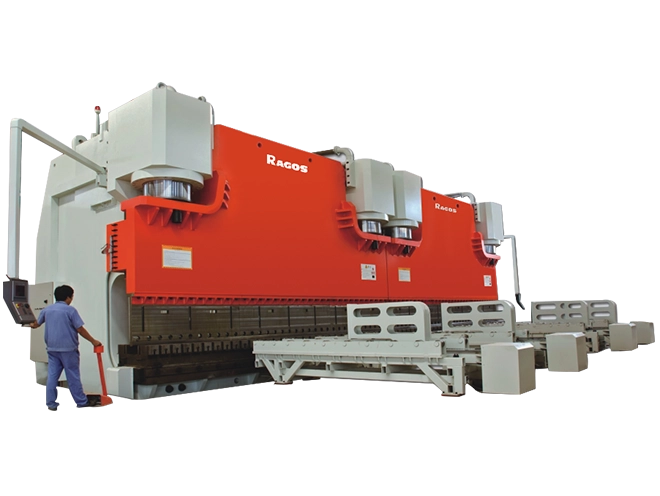
When you move to a 4000mm press brake, you are entering the world of structural fabrication and long-panel production. This extra 800mm of bed space changes the physics of the machine and requires a more sophisticated approach to maintenance and setup.
The Real Working Reality of the 4000mm Length
A 4000mm machine offers a practical bending length of approximately 3800mm to 3950mm. This extra reach allows you to bend oversized architectural panels or long structural channels that a 3200mm machine simply cannot touch.
- High Frame Deflection Risk: The longer the distance between the hydraulic cylinders, the more the beam wants to bow in the center. This is a simple matter of leverage; the wider the span, the easier it is for the metal to flex under load.
- Advanced Crowning Required: You must have a high-quality mechanical or hydraulic crowning system to ensure the middle of a 4-meter bend stays at 90 degrees. Without this, your long parts will be "open" in the middle and "tight" at the ends.
- Tonnage Pairings: Because the force is spread over a longer area, these machines are usually paired with higher tonnages, such as 220T, 320T, or 400T.
Best Thickness Range for 4000mm Machines
Depending on the tonnage, these machines excel at 4mm to 16mm steel. They are the preferred choice for 10mm sheet bending when the parts are over 3 meters long. However, you must be aware that a 200T machine at 4000mm has much less "punching power" per meter than a 200T machine at 3200mm.
Tonnage vs. Length Reality: The "Force Spread" Factor
One of the most dangerous mistakes a buyer can make is assuming that 200 tons of force feels the same on both machines. It does not. The "tonnage per meter" is the metric that actually determines your press brake capacity.
| Machine Spec | Total Tonnage | Tonnage Per Meter |
| 200T / 3200mm | 200 Tons | 62.5 Tons/m |
| 200T / 4000mm | 200 Tons | 50.0 Tons/m |
As you can see, the 4000mm machine has significantly lower bending power for every meter of the beam. This is why 4000mm machines almost always require a higher total tonnage rating to perform the same work on thick plates as a shorter machine. If you ignore this, you will find yourself struggling with die opening tonnage limits when trying to bend thick 4-meter sections.
Cost Difference and Long-Term Ownership
The price tag on the machine is only the beginning. The 4000mm machine carries a "size premium" that ripples through your entire budget.
Real Market Patterns for Cost
- Machine Price: Expect a 20% to 40% increase for the extra 800mm of length. This accounts for the extra steel in the frame and the larger hydraulic cylinders needed to move the heavier beam.
- Shipping: A 4000mm machine often requires specialized wide-load transport. Depending on your location, this can add thousands of dollars to the final delivery cost.
- Installation: You will likely need a heavier concrete foundation to support the increased weight and prevent the frame from shifting over time.
- Tooling: You have to buy longer sets of punches and dies. If you work with 4-meter parts, you need 4 meters of tooling. This adds up quickly if you use specialized profiles or gooseneck punches.
Maintenance and Resale
- 3200mm: These are easier to maintain, parts are universally available, and the resale market is huge because they fit into almost any shop.
- 4000mm: These require more complex alignment and higher-level operator skills. Calibration of the crowning system is critical and must be checked more frequently to avoid "canoeing" in your long parts.
Space and Factory Planning
You must measure your shop floor carefully before choosing. A 4000mm machine doesn't just take up an extra 800mm; it requires a much larger "operational envelope."
| Requirement | 3200mm Machine | 4000mm Machine |
| Machine Footprint | ~4 meters length | ~5 meters length |
| Recommended Line Space | 6–7 meters | 8–9 meters |
| Power Requirement | Standard | Higher |
You need enough space to maneuver 4-meter sheets into the machine and out the back. If your shop is cramped, the 4000mm machine can become a bottleneck rather than an asset. I have seen shops buy a 4000mm machine only to realize they cannot physically fit the material onto the backgauge because of a nearby wall.
Production Strategy: Which One Fits Your Business?
Your choice should be dictated by your current contracts and your 5-year growth plan. Do not buy for a job you might get; buy for the jobs that currently pay your bills.
Choose 3200mm If You:
- Do mixed job shop work with frequent changeovers.
- Bend mostly parts under 3 meters in length.
- Want a faster return on investment (ROI).
- Have limited factory space or power capacity.
- Focus on smaller, high-precision parts using an electric press brake.
Choose 4000mm If You:
- Produce long architectural panels or roofing sections daily.
- Work primarily in structural fabrication or heavy trailer manufacturing.
- Want the capacity to take on any job that comes through the door.
- Have a dedicated heavy material workflow and the space to support it.
Managing Tooling and Changeovers
The length of the machine also dictates how you manage your tooling library. On a 3200mm machine, standard 835mm sectionalized tools are easy for a single operator to handle. When you move to 4000mm, the sheer number of tool sections required for a full-length bend increases the changeover time.
Sectionalized vs. Solid Tooling
For both lengths, I always recommend sectionalized tooling. However, on a 4000mm machine, you should consider a hydraulic clamping system. Manually tightening bolts across a 4-meter beam is a tedious task that leads to operator fatigue and increased downtime.
The Impact of Throat Depth
Do not ignore the throat depth (the gap in the side frames). A 4000mm machine usually offers a deeper throat, allowing you to bend larger "return flanges" or deep boxes that would hit the frame on a smaller machine. If your parts are complex but not necessarily long, a deep-throat 3200mm machine might be a better value than a standard 4000mm machine.
Final Thought: The 25% Rule
Choosing between these two lengths comes down to a simple calculation of your output. Look at your production logs for the last 12 months.
If parts longer than 3 meters represent less than 20–25% of your total revenue, the 3200mm machine is usually the smarter, more profitable choice. You can always outsource those few long parts or "step-bend" them if the design allows. However, if long parts are your core business, the 4000mm machine is completely justified despite the higher overhead.
Choosing the right length ensures that your press brake remains an efficient tool rather than a costly oversized monument. Analyze your parts, check your tonnage requirements, and choose the machine that keeps your production moving.