

4 Axis CNC Press Brake: What You Can Build (and Why It Matters)
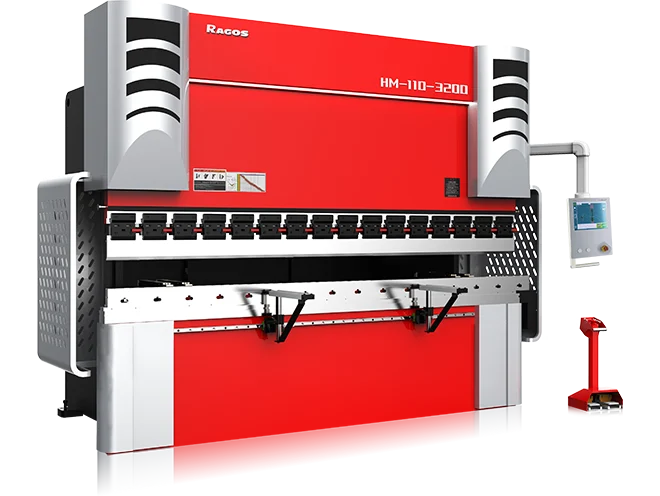
A 4 axis CNC press brake allows you to fabricate complex metal components with varying flange heights and intricate geometries in a single setup. By automating the vertical and horizontal movement of the backgauge alongside the precision of the ram, you can produce everything from specialized electrical enclosures to high-tolerance automotive brackets.
What you’ll control with 4 axes:
- Y1 & Y2: Independent control of the left and right cylinders for perfect ram leveling and angle precision.
- X-Axis: Horizontal movement of the backgauge to set the depth of the bend.
- R-Axis: Vertical movement of the backgauge to accommodate parts with different flange heights.
- Precision Repeatability: Digital synchronization that ensures every part is identical to the first.
What is a 4 Axis CNC Press Brake? (The Technical Edge)
In the world of metal fabrication, "axes" refer to the directions of motion the machine can control via the CNC computer. A 4 axis machine typically controls Y1, Y2, X, and R. While Y1 and Y2 ensure the ram descends with perfect parallelism (or intentional tilt for specific jobs), the addition of the R-axis is the true game-changer for versatility.
The R-axis allows the backgauge fingers to move up and down. This is critical when you are bending a part that already has a downward-facing flange; without R-axis control, the part would strike the backgauge. By lifting or lowering the fingers automatically, the machine eliminates the need for manual height adjustments between bends.
Example: Imagine a part that requires a 20mm flange on one side and a 50mm flange on the other. The 4-axis system adjusts the backgauge height (R) and depth (X) instantly, allowing the operator to complete the piece without stopping to reset the machine.
Common Mistakes to Avoid:
- Over-complicating the setup: Operators sometimes forget that the CNC can handle R-axis positioning automatically, leading to unnecessary manual measurements.
- Ignoring Axis Calibration: Failing to regularly calibrate the Y1/Y2 synchronization can lead to "wedging," where the bend angle varies from one end of the part to the other.
For a deeper dive into how these movements compare to more complex systems, see our guide on Multi-Axis CNC Press Brake: Axis Breakdown for Better Precision.
What You Can Build: High-Precision Applications
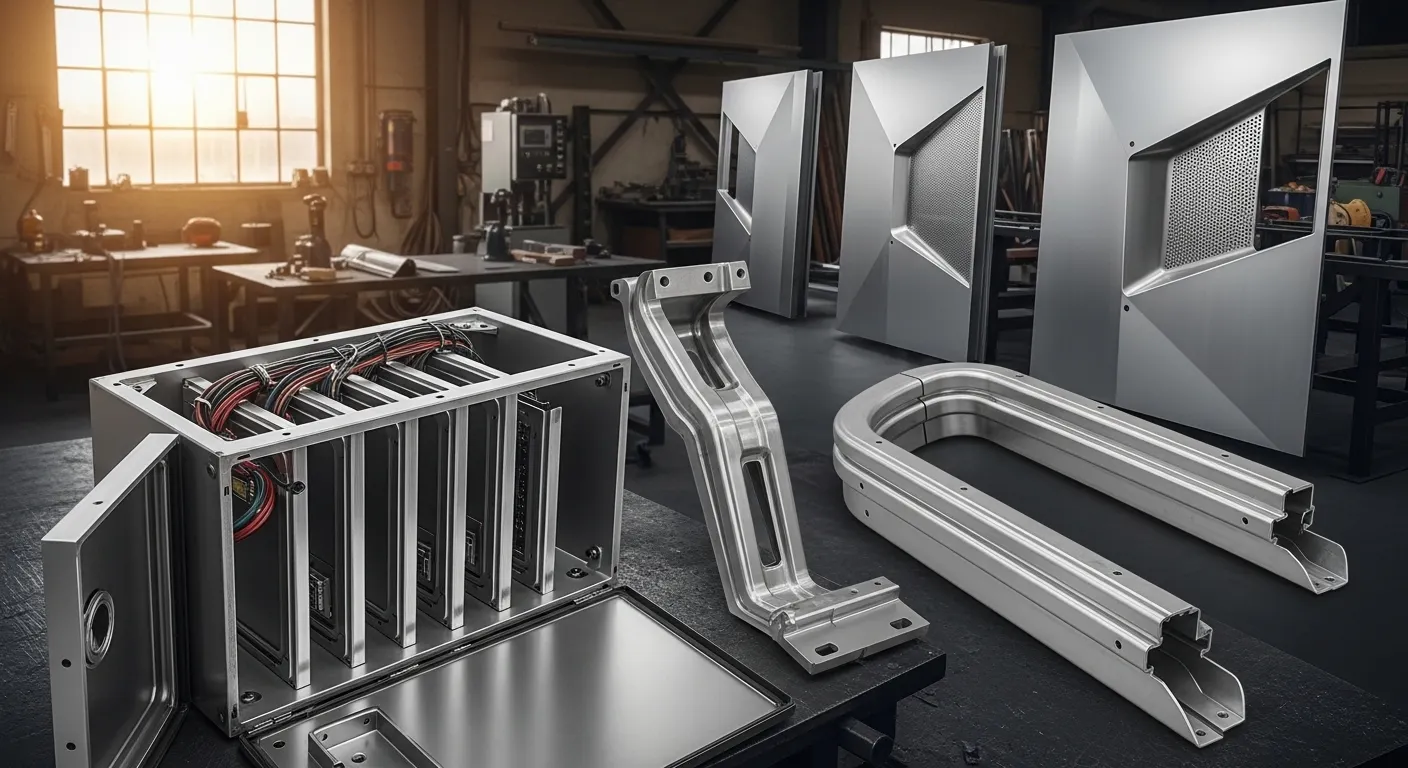
Complex Sheet Metal Enclosures & Electrical Cabinets
The 4-axis press brake is the industry standard for "box-within-a-box" shapes. Because these enclosures often feature deep returns and multi-level flanges for door seals and mounting brackets, the R-axis is essential. It allows the backgauge to "step over" existing bends to support the next fold, ensuring that cabinets remain perfectly square for easier assembly and IP-rating compliance.
Automotive Brackets and Chassis Components
Automotive parts require extreme repeatability. 4-axis machines excel at creating reinforced mounting brackets and structural supports that utilize high-strength alloys. The precision of the Y1/Y2 cylinders ensures that springback—the tendency of metal to return to its original shape—is compensated for accurately across the entire length of the bend.
HVAC Ductwork and Multi-Radius Profiles
Large-scale HVAC components often require long, consistent bends. Using a 4-axis machine with an integrated crowning system (which prevents the machine from flexing in the middle) ensures that long duct sections are perfectly straight. This reduces the gaps in duct joints, improving airflow efficiency and reducing installation labor.
Custom Furniture & Architectural Metalwork
For architectural panels and high-end metal furniture, aesthetics are as important as structural integrity. The 4-axis control allows for "hemming" and decorative folds that require the backgauge to move out of the way of the finished profile quickly, preventing scratches or "witness marks" on visible surfaces.
4-Axis vs. 2-Axis: Is the Upgrade Worth It?
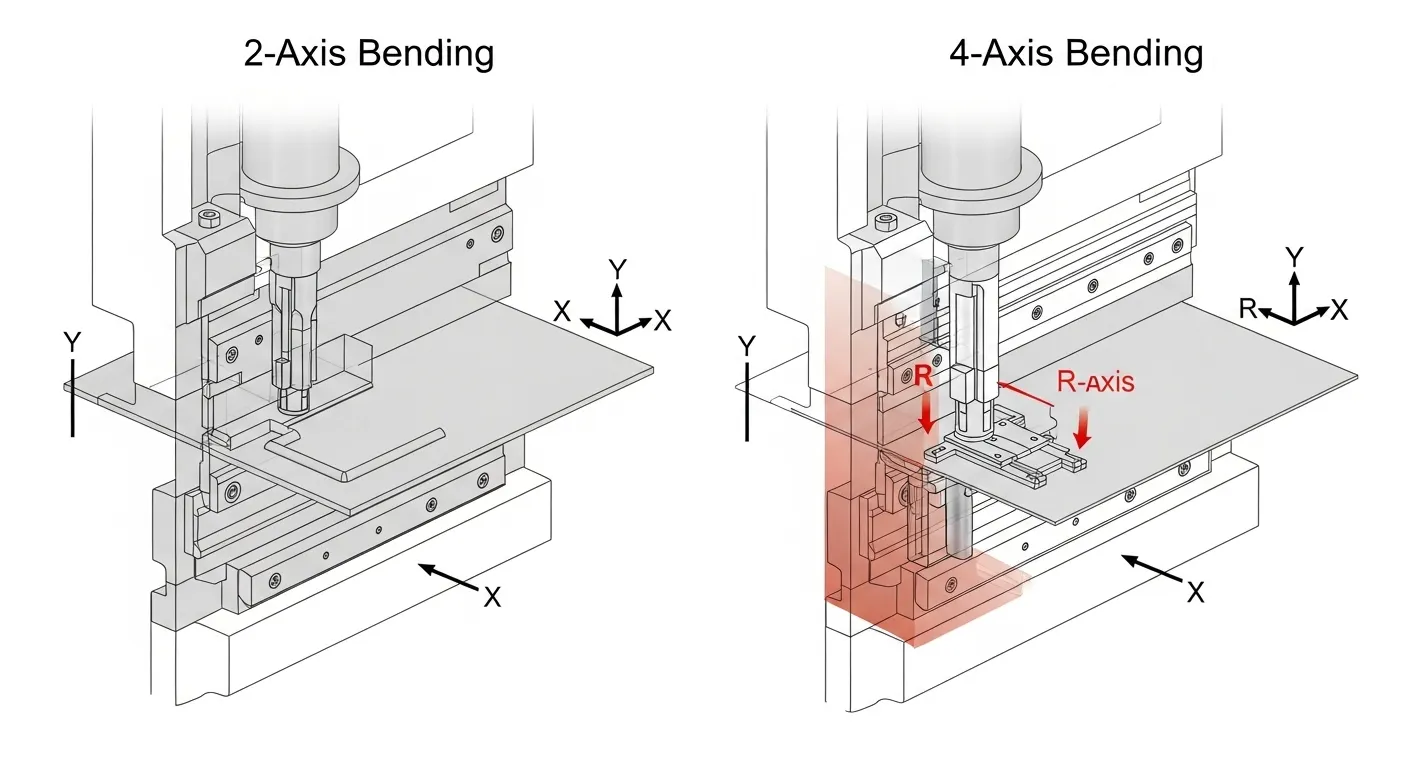
Choosing between a 2-axis and a 4-axis machine often comes down to labor costs versus machine investment.
| Feature | 2-Axis CNC (Y, X) | 4-Axis CNC (Y1, Y2, X, R) |
| Setup Time | High (Manual shimming/R-axis adjust) | Low (Fully Automated) |
| Part Complexity | Simple flanges only | Multi-level, complex flanges |
| Precision | Standard | High (±0.01mm repeatability) |
| Productivity | Slower for multi-bend parts | ~30% faster (needs verification) |
The primary mistake fabricators make is choosing a 2-axis machine to save on initial costs, only to lose those savings through increased labor and "workaround" time when handling complex geometries.
Selecting the Right Tools for Your 4-Axis Machine
To maximize the "What You Can Build" potential, you must pair the 4-axis motion with appropriate tooling:
- Gooseneck Punches: These allow for deep "return" bends where a straight punch would collide with the metal.
- Segmented Tooling: Essential for creating four-sided boxes; segments can be removed to accommodate the side flanges as the box is closed.
- 4-Way Dies: Allows the operator to switch between different V-widths quickly for different material thicknesses.
FAQ
The 4th axis is typically the R-axis, which controls the vertical height of the backgauge. This allows the machine to support parts with different flange heights without manual adjustment.
Yes, 4-axis machines are excellent for stainless steel. The Y1/Y2 control allows for precise pressure application to manage the high springback rates common in stainless alloys.
It reduces the need for the operator to reach into the machine to manually adjust backgauge heights or shims, keeping hands further away from the pinch point.
The "+1" usually refers to an automatic crowning system. While the 4 axes control movement, the crowning system compensates for bed deflection to ensure a consistent angle.
For 80-90% of general fabrication tasks, a 4-axis machine is the "sweet spot" of capability and cost-effectiveness.
Most modern 4-axis CNC machines offer a positioning accuracy of approximately ±0.01mm (needs verification), ensuring high-tolerance parts for aerospace and medical use.
Conclusion
A 4 axis CNC press brake is more than just a bending machine; it is a high-speed production tool that unlocks complex geometries and reduces human error. Whether you are building intricate electrical housings or heavy-duty automotive components, the addition of the R-axis and independent ram control provides the precision required for 2026 manufacturing standards.