

Automatic CNC Press Brake for Sale: Automation Options That Matter
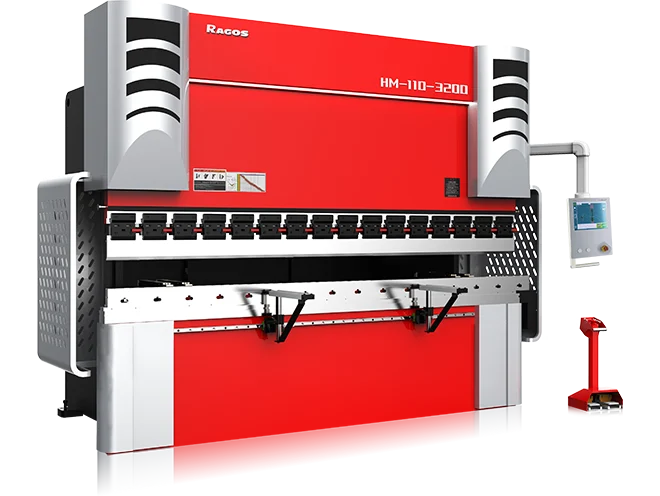
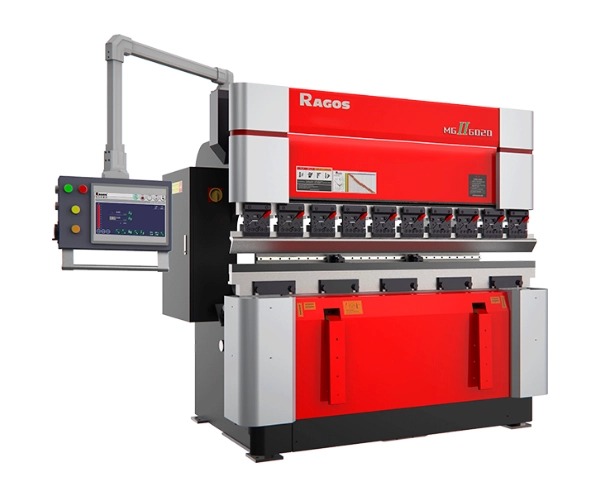
An automatic CNC press brake is a high-precision metal forming machine that utilizes advanced computer numerical control to automate axis movement, tool positioning, and angle compensation. In 2026, selecting the right machine means looking beyond raw tonnage to the specific automation features that eliminate manual labor and prevent production bottlenecks.
In this guide, you will learn how to:
- Evaluate 4-axis versus 8-axis configurations for your specific parts.
- Calculate the ROI of automatic tool changers and crowning systems.
- Integrate robotic bending cells into existing workflows.
- Avoid common procurement pitfalls that lead to under-utilized machinery.
The Shift to Total Automation in 2026
The definition of "automatic" has evolved. In previous decades, a CNC press brake simply meant the backgauge moved to a programmed position. Today, total automation encompasses the entire bending cycle, including material thickness sensing, real-time angle correction, and IoT-enabled diagnostics.
For modern fabrication shops, moving to a fully automatic system is no longer a luxury but a necessity to combat rising labor costs. A 2026-era 6-axis system can handle complex, multi-bend sequences in a single setup, whereas older manual backgauge setups required multiple machine stops and manual part re-orientation. This shift allows operators to focus on quality control rather than repetitive physical adjustments.
Key Automation Options That Drive ROI
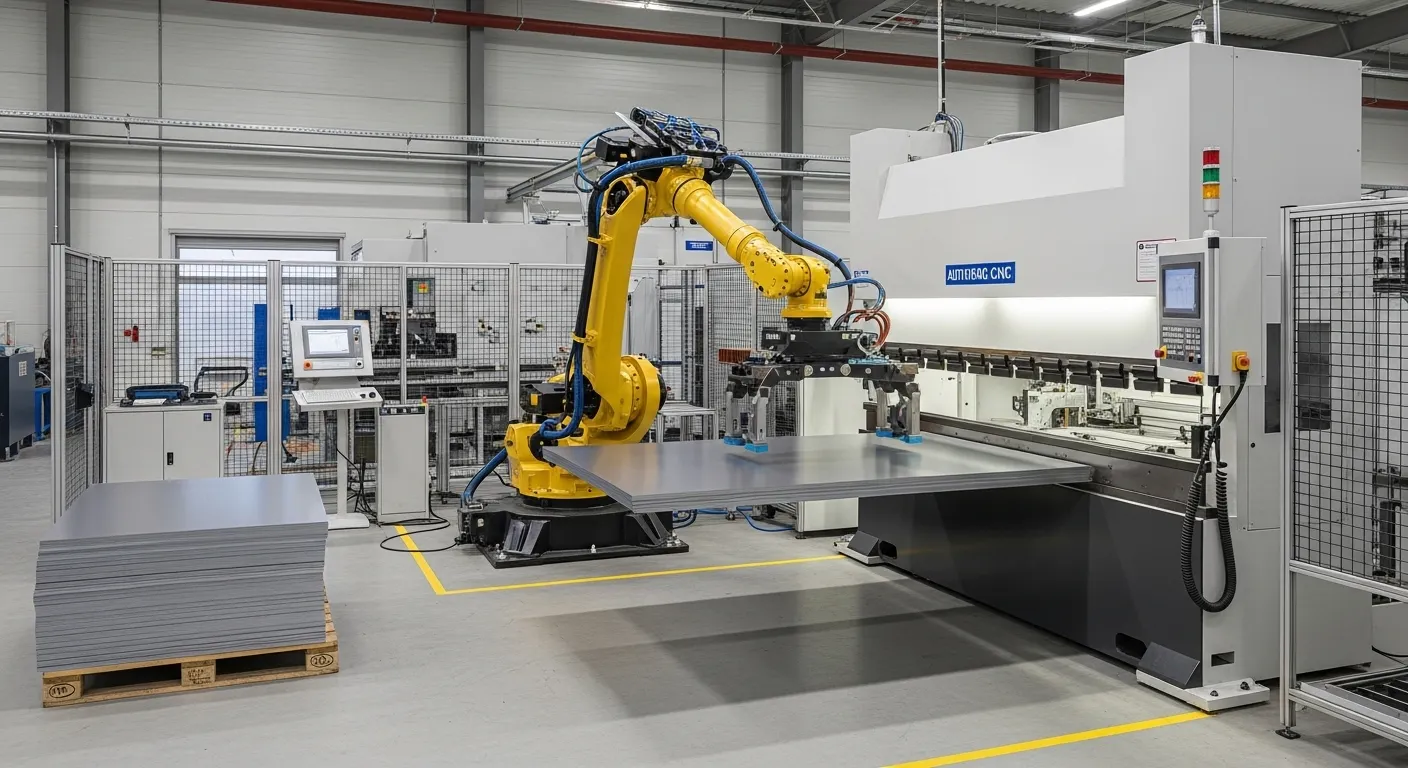
Investing in automation is only effective if the features match your production volume. Here are the primary options currently driving the highest return on investment.
Robotic Bending Cells vs. Standalone Units
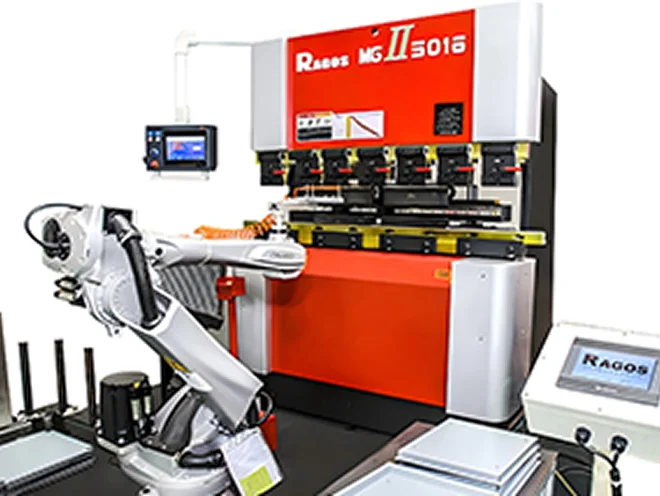
Robotic integration is the pinnacle of press brake automation. A robotic bending cell uses a specialized arm to pick, bend, and stack parts without human intervention. This is ideal for high-volume runs or heavy parts that cause operator fatigue. However, for shops doing high-mix, low-volume work, a standalone automatic CNC press brake with quick-change features often provides better flexibility.
Automatic Crowning Systems
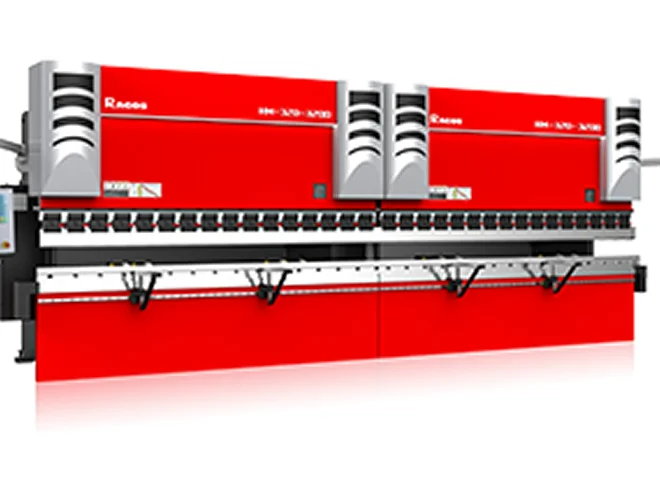
When bending long sheets, the machine's bed can deflect, causing the "canoe effect" where the middle angle is wider than the ends. Automatic crowning systems use sensors to detect this deflection and adjust the lower table in real-time. This ensures a consistent angle across the entire length of the part, which is essential for any workpiece over 3 meters.
Automatic Tool Changers (ATC)
Tool setup is the most significant cause of machine downtime. An ATC swaps punches and dies in seconds based on the digital program.
- Example: On a complex part requiring three different tool sets, an ATC can reduce setup time from 20 minutes to under 2 minutes (needs verification).
- Common Mistake: Buying an ATC but using low-quality, non-standardized tooling that causes jam-ups during the automatic swap.
To maximize these features, ensure your team understands the synergy between Tooling & Automation for CNC Press Brakes.
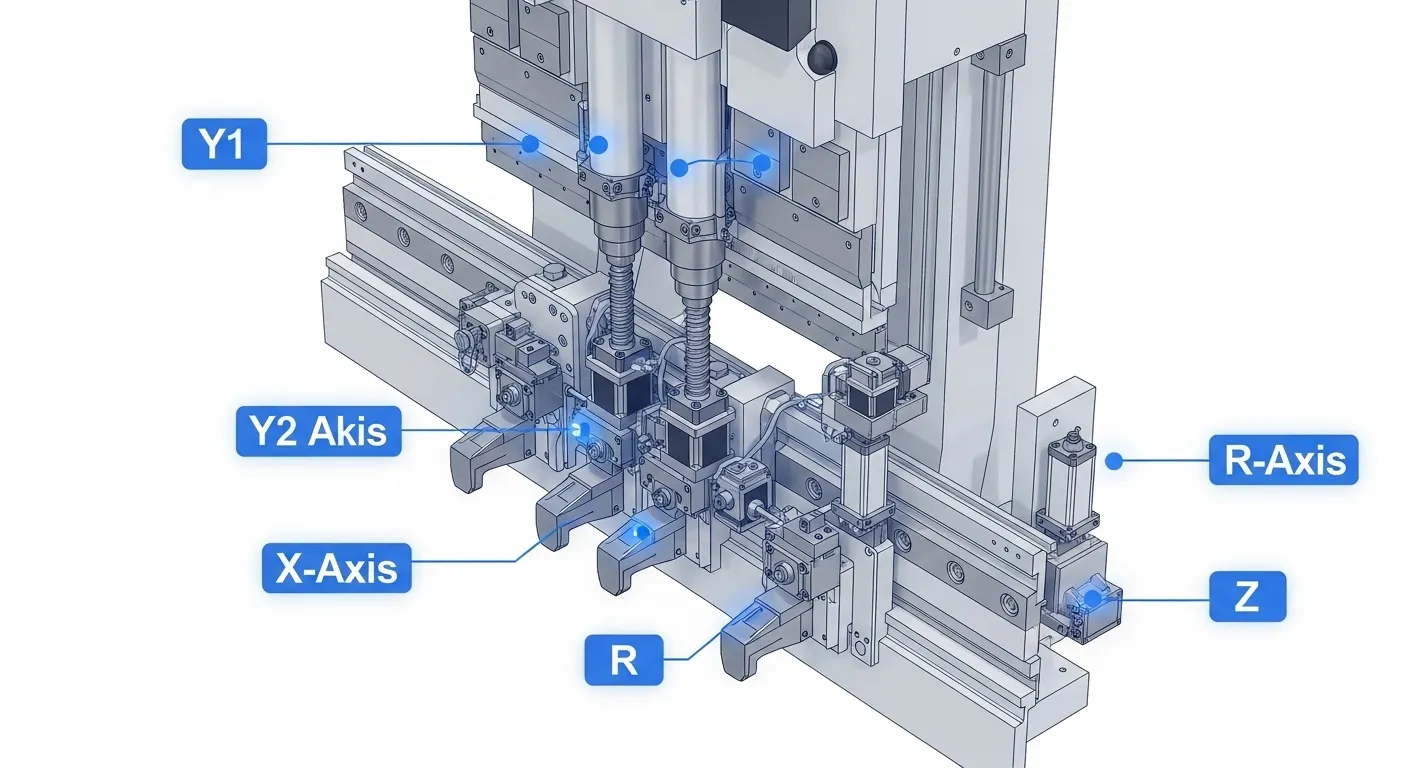
Understanding axis nomenclature is critical when browsing an automatic CNC press brake for sale. Each axis adds a degree of freedom and automation:
- Y1/Y2: Independent control of the left and right cylinders for ram positioning.
- X-Axis: Moves the backgauge forward and backward (determines bend flange length).
- R-Axis: Moves the backgauge up and down (essential for parts with pre-bent flanges).
- Z1/Z2 Axes: Moves the backgauge fingers left and right (mandatory for tapered parts or wide sheets).
Common Mistake: Purchasing an 8-axis machine for simple 90-degree bracket work. If your parts are consistently rectangular and flat, a 4-axis or 5-axis machine provides a much faster ROI.
Cost Analysis: What You Pay for in an Automatic System
The price of an automatic CNC press brake is determined by its "intelligence" and axis count. Entry-level 3-axis machines are affordable but require significant manual intervention. High-end robotic cells or 8-axis machines with ATCs represent a significantly higher capital expenditure but offer a much lower "cost per part" in high-capacity environments.
When reviewing a quote, ensure it includes the controller software (such as Delem or ESA) and offline 3D programming capabilities. For a detailed breakdown of what to check before signing a contract, refer to our Buy CNC Press Brake Machine: Step-by-Step Buyer’s Checklist.
Why Source Your Automatic CNC Press Brake from JSRAGOS?
At JSRAGOS, we specialize in high-repeatability CNC systems designed for the 2026 industrial standard. Our machines feature:
- Hydraulic Servo Synchronization: For precision within microns.
- 24/7 Remote Diagnostics: Reducing downtime through IoT connectivity.
- Custom Tooling Integration: We don't just sell the machine; we ensure it's ready for your specific geometry from day one.
Frequently Asked Questions
NC (Numerical Control) machines generally control only the depth of the ram, while CNC (Computer Numerical Control) machines automate multiple axes, provide graphical interfaces, and allow for offline programming and complex calculations.
Prices vary significantly based on tonnage and axis count. A standard 100-ton 4-axis machine may start around $30,000, while a fully automated robotic cell can exceed $200,000 (needs verification). Request a quote for 2026-specific pricing.
The Automatic Tool Changer (ATC) is the most valuable feature for small batches, as it eliminates the 15-30 minutes of downtime typically required to swap tooling between different jobs.
Yes, provided the CNC controller is "Robot Ready." This usually requires a specific interface (like Profinet or EtherNet/IP) and a machine frame designed to allow robotic arm access without obstructing safety sensors.
A 6-axis backgauge (X1, X2, R1, R2, Z1, Z2) allows each backgauge finger to move independently. This is necessary for bending asymmetrical parts, tapered shapes, or complex geometries where the bend line is not parallel to the edge.
Most industrial CNC press brakes require 220V or 480V three-phase power. Modern hybrid automatic systems are more energy-efficient and can reduce power consumption by up to 60% compared to traditional hydraulic systems (needs verification).
Conclusion
Selecting an automatic CNC press brake for sale in 2026 requires a focus on the specific automation "layers" that solve your shop's unique bottlenecks. Whether it is the precision of an automatic crowning system or the speed of a robotic cell, the goal is to maximize "green light time"—the moments the machine is actually bending metal.