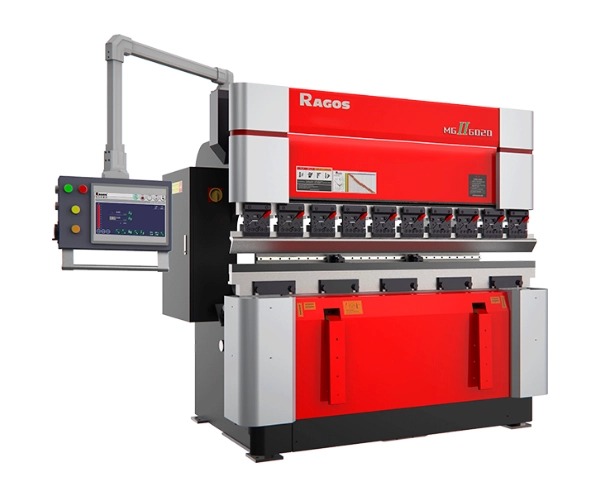
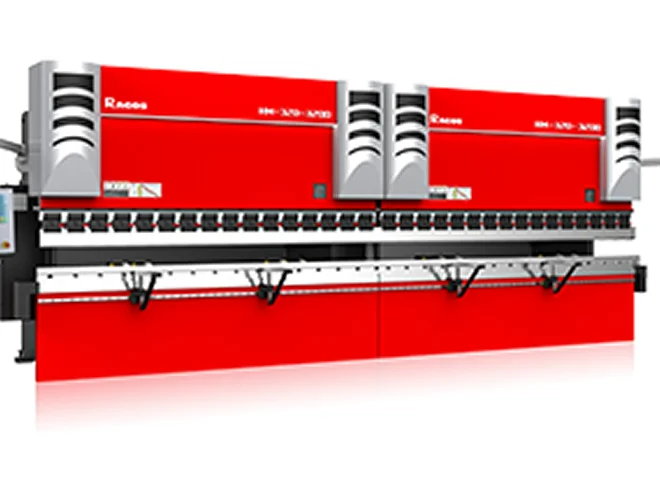
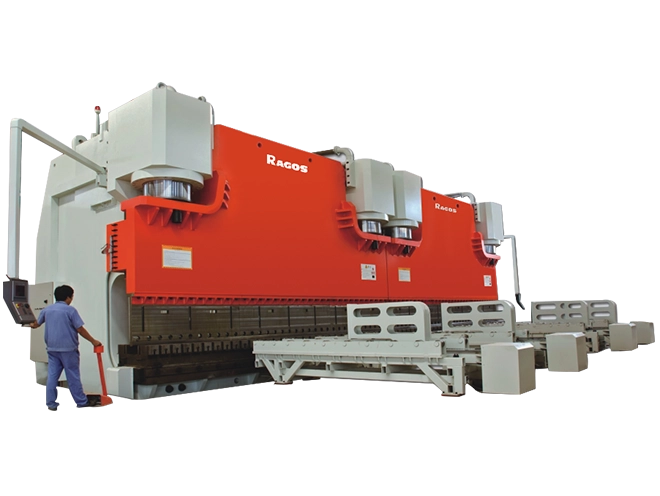


Buy CNC Press Brake Machine: The 2026 Step-by-Step Buyer’s Checklist
Buying a CNC press brake in 2026 requires balancing advanced automation with structural rigidity to ensure a long-term return on investment. This checklist provides a technical roadmap to help you navigate tonnage calculations, controller selection, and the total landed cost of importing industrial machinery.
In this guide, you will:
- Calculate precise tonnage and length requirements for your materials.
- Evaluate the "brains" of the machine (CNC controllers).
- Compare hydraulic, electric, and hybrid drive systems.
- Identify hidden import costs and rigging fees.
1. Determining Your "True" Requirements (Tonnage & Length)
The most expensive mistake in metal fabrication is underestimating the force required for your thickest or hardest materials. Tonnage is the pressure the machine applies to bend the metal, and it is governed by the material type, thickness, and the "V-opening" of the die.
To find your required tonnage, use the standard formula:
$$P = \frac{650 \cdot S \cdot L \cdot T^2}{V}$$
(Where P = Tonnage, S = Material Strength, L = Length, T = Thickness, and V = Die Opening).
Example: If you are bending 6mm stainless steel over a 1.5-meter length, a 100-ton machine might be at its physical limit. In 2026, we recommend buying at least 20% more "headroom" than your maximum calculation to prevent frame fatigue and hydraulic overheating.
- Common Mistakes to Avoid:
- Buying a machine based solely on mild steel specs when you frequently run stainless or high-strength alloys.
- Neglecting the "distance between uprights"—if your machine is 3 meters long but the uprights are only 2.6 meters apart, you cannot pass a wide sheet through the machine.
2. Choosing the "Brain": CNC Controllers (Delem vs. Cybelec vs. ESA)
In 2026, the CNC controller is the primary factor in operator retention. Modern operators expect a 2D or 3D touch-screen interface that simulates the bend sequence before the ram moves.
- Delem (Netherlands): The industry standard for reliability. The DA-66T or DA-69T models are preferred for complex, multi-axis bending.
- ESA (Italy) / Cybelec (Switzerland): Excellent for high-speed synchronization and integration with tooling and automation for CNC press brakes.
Selecting a "name-brand" European controller ensures that your shop can find local technicians and software updates for the next decade. Avoid proprietary, closed-source controllers that lock you into a single manufacturer for repairs.
3. The Power Source: Hydraulic, Electric, or Hybrid?
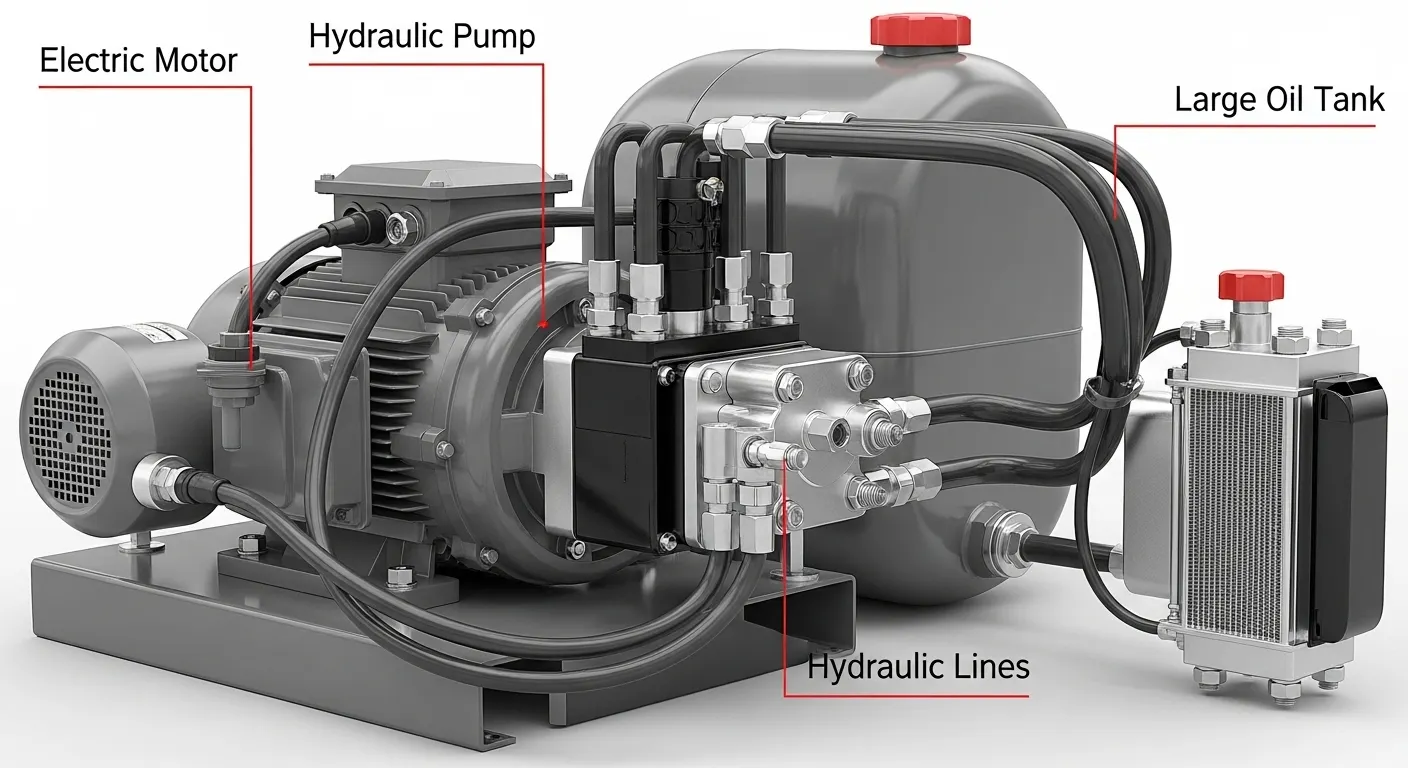
The drive system dictates your cycle speed and monthly utility bill.
- Standard Hydraulic: Best for heavy-duty, high-tonnage applications (200+ tons). It is cost-effective upfront but consumes power even while idling.
- Full Electric: Extremely fast and precise for thin-gauge electronics or medical parts. It uses zero oil but becomes prohibitively expensive at higher tonnages.
- Servo-Hybrid: The 2026 "sweet spot." It uses a servo motor to drive the hydraulic pump only when the machine is moving.
- Example: A job shop switching from a standard hydraulic to a Servo-Hybrid system can reduce energy consumption by up to 60% and oil volume by 70%.
4. The 2026 Landed Cost: Beyond the Sticker Price
The "factory price" is rarely what you pay. For global buyers, especially in the US and EU, logistics and taxes can add 30–50% to the base cost.
| Cost Component | Estimated Impact (2026) |
| Ocean Freight | $3,000 - $8,000 (standard vs. open top) |
| Import Duties | Varies by country (e.g., Section 301 in USA is ~25%) |
| Local Rigging | $2,000 - $5,000 (forklift/crane rental) |
| Electrical Prep | $1,500 (transformers for 480V conversion) |
5. The "Frankenstein" Quality Checklist
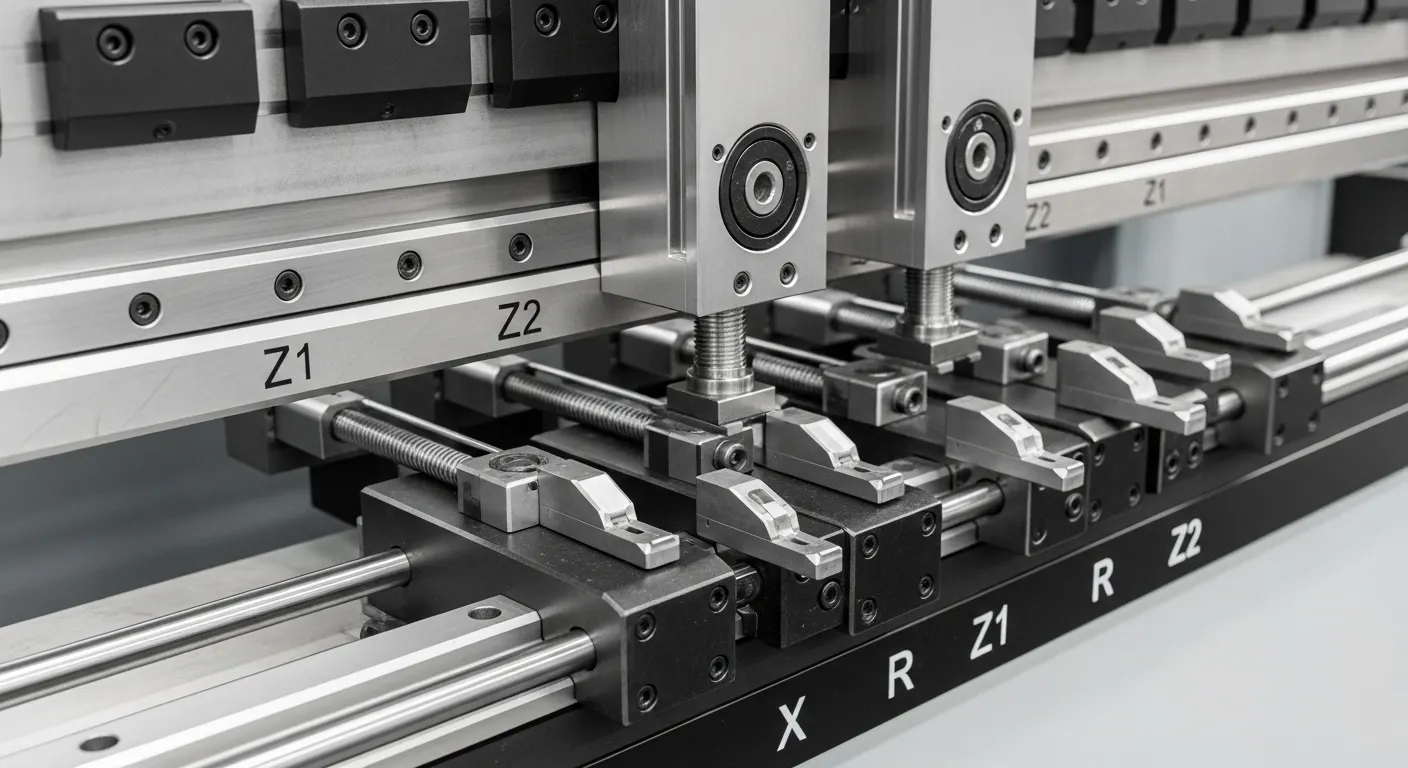
Top-tier manufacturers in 2026 often use a "Global Assembly" strategy: high-quality steel frames from specialized regions paired with world-class internals. Before buying, verify these specific components:
- Hydraulic Valves: Look for Bosch Rexroth (Germany) or Hoerbiger (Germany).
- Electrics: Schneider (France) or ABB (Switzerland) are the gold standards.
- Linear Scales: Heidenhain or Givi Misure to ensure Y1/Y2 axis precision within 0.01mm.
- Backgauge: Ensure it has at least 4-axis (X, R, Z1, Z2) for maximum versatility.
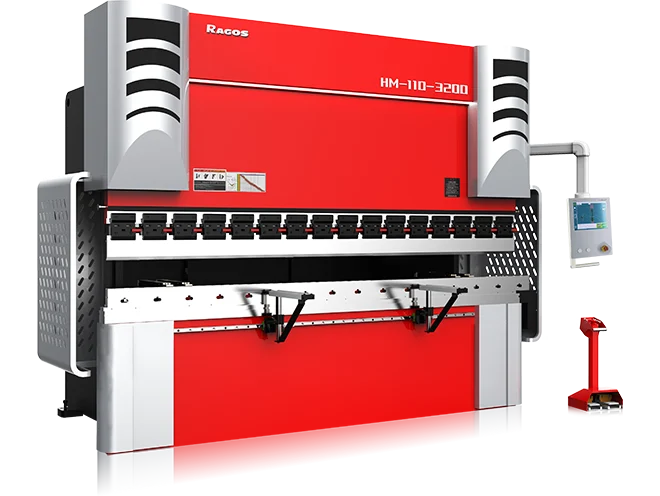
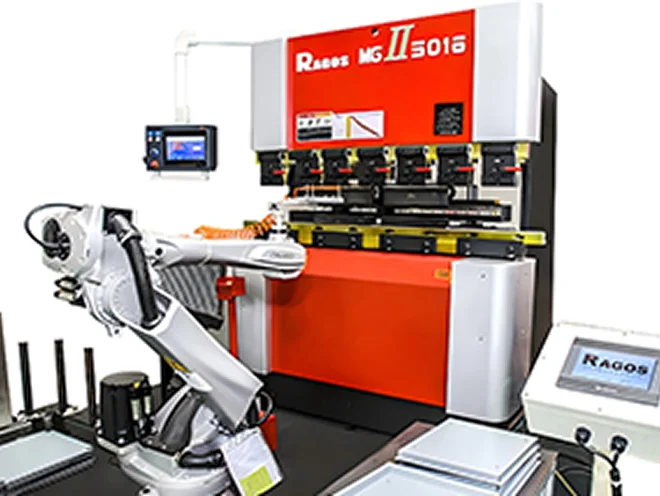
For shops looking to scale, consider an automatic CNC press brake for sale that includes robotic interface capabilities for future lights-out manufacturing.
FAQ: Buying a CNC Press Brake
Yes, the ROI is typically realized within 12–18 months through reduced setup times and the elimination of "scrap" parts caused by manual measurement errors.
In 2026, factory prices for a high-quality 100-ton machine range from $35,000 to $55,000, while European-branded machines may exceed $100,000 (needs verification).
A 3-axis machine controls the ram (Y1, Y2) and backgauge depth (X). A 6-axis machine adds height (R) and lateral movement (Z1, Z2), which is essential for bending parts with multiple widths.
No. Almost all industrial CNC press brakes require 3-phase power (220V, 380V, or 480V). You may need a phase converter or a new transformer.
Oil should be filtered or changed every 2,000 to 4,000 operating hours. Daily tasks include lubricating the backgauge rails and checking the hydraulic pressure seals.
Crowning compensates for the natural deflection of the machine bed during a bend. For any machine over 2.5 meters in length, automatic CNC crowning is mandatory to ensure the angle is consistent across the entire part.
Conclusion
Buying a CNC press brake is a foundational investment for any metal fabrication business. By focusing on a high-quality "Frankenstein" build—combining a heavy, rigid frame with elite European controllers and hydraulics—you secure high precision without the premium "big brand" markup.