


Cybelec CT15 vs CT12: Key Differences for CNC Bending
The primary difference between the Cybelec CT15 and CT12 lies in the user interface and programming complexity. While both offer high-precision control, the CT15 features a larger 15-inch screen with advanced 2D graphical bending simulation, whereas the CT12 utilizes a 12-inch screen optimized for numerical and basic 2D tasks.
In this guide, you will learn to:
- Compare hardware specifications and screen responsiveness.
- Differentiate between numerical and 2D graphical programming workflows.
- Identify which controller supports your specific axis configuration.
- Calculate the ROI based on operator skill levels and part complexity.
The Evolution of Cybtouch Controllers
The Cybelec Cybtouch (CT) series has become a global standard for CNC press brakes due to its intuitive, tablet-like interface. In 2026, the demand for "Smart Fabrication" means that choosing between the CT12 and CT15 is no longer just about screen size—it is about how much automation your workflow requires.
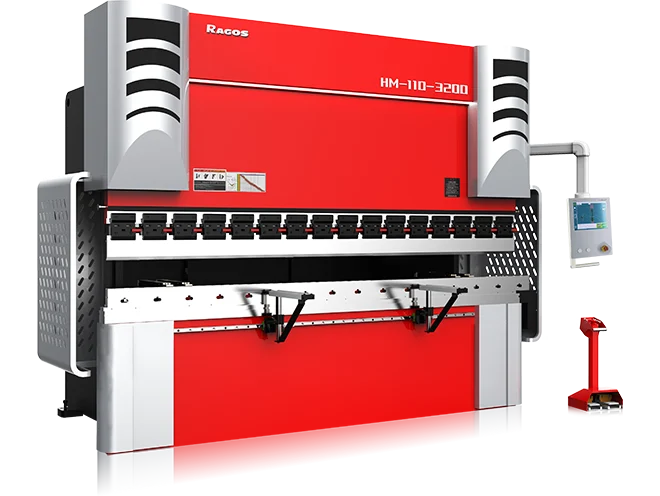
The CT12 was designed as a robust, streamlined solution for standard bending applications. However, as parts become more complex, the CT15 has emerged to bridge the gap between entry-level control and high-end workstations. Understanding these nuances is essential for maximizing the efficiency of machines like the Cybelec CT12 CNC Press Brake, which remains a staple for many production shops.
Hardware Comparison: Screen Size & Durability
The physical interface is the first point of contact for your operator. The Cybtouch 12 provides a compact 12-inch display. It is highly effective for shops with limited space or those who prefer a more traditional, "rugged" feel.
In contrast, the Cybtouch 15 offers a 15-inch high-resolution display. This 25% increase in screen real estate is not just for aesthetics; it allows for larger touch targets, reducing input errors for operators wearing industrial gloves. Both units feature IP65-rated front panels, protecting them against dust and oil splashes common in fabrication environments.
Common Hardware Mistakes to Avoid:
- Ignoring Touch Sensitivity: Assuming both screens behave identically. The CT15 generally offers better glass-on-glass responsiveness, which is vital for dragging and dropping bend sequences.
- Overlooking Ergonomics: Mounting a 12-inch screen too far from the operator can lead to neck strain and slower input speeds.
Software & Interface: 2D Graphical vs. Numerical
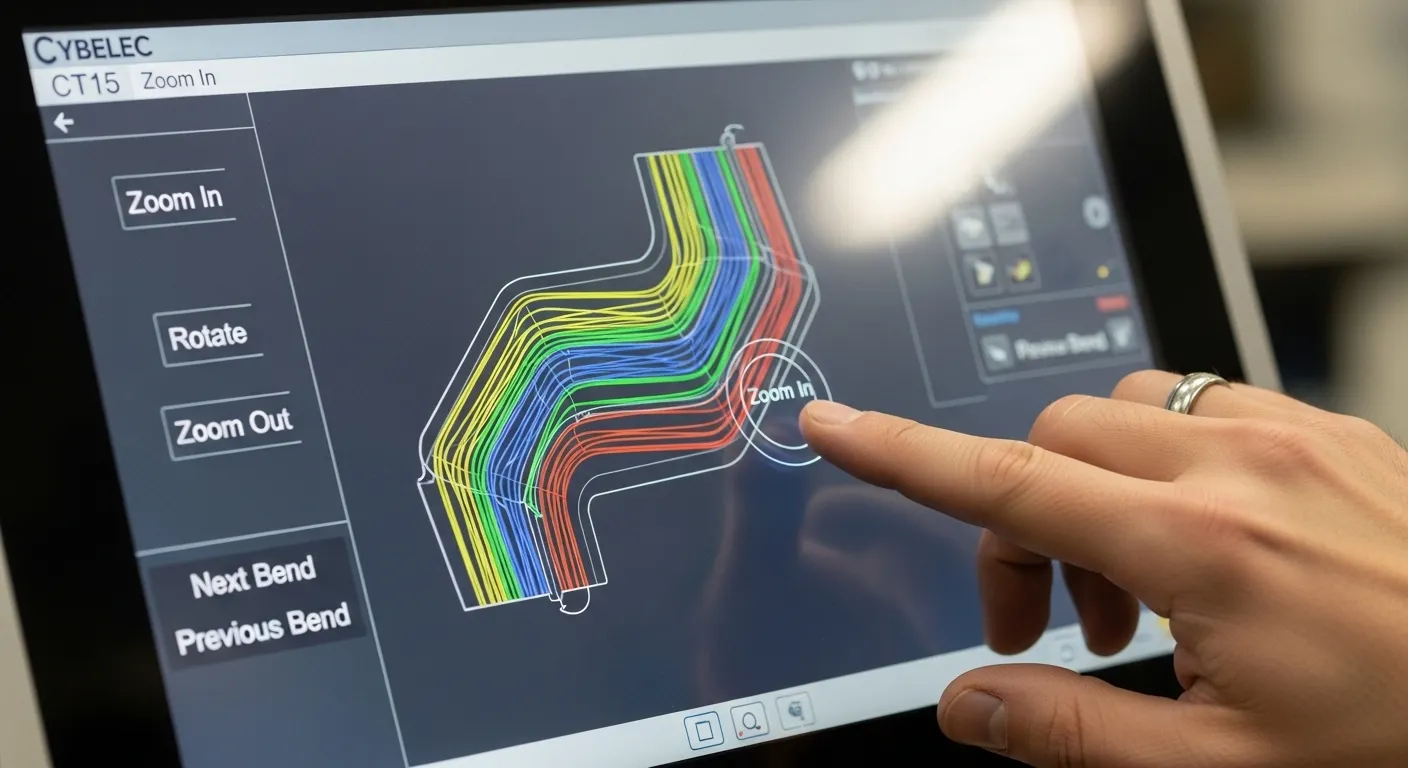
The software logic is where these two controllers diverge most significantly. The CT12 is primarily a numerical controller with basic 2D visualization. It excels when the operator already knows the bend sequence and needs to input data quickly.
The CT15 utilizes the full power of Cybelec’s interactive 2D graphical editor. This allows the operator to draw the part directly on the screen. The software then automatically calculates the bend sequence, identifies potential collisions, and suggests the optimal tool setup.
- Example: For a Z-fold part with tight tolerances, the CT15 allows you to visualize the "collision check" before the beam even moves, saving material waste.
- Pro Tip: If you frequently switch between different brands, comparing this to the Delem DA58T Press Brake programming basics can help you decide which interface logic matches your team's current skills.
Axis Control & Multi-Step Automation
Control over axes determines the versatility of your press brake. Both controllers manage the standard Y1 and Y2 (beam depth) and X (backgauge) axes. However, the CT15 is better optimized for machines requiring R-axis (height) and Z1/Z2 (lateral) movement.
The CT15’s processor handles complex algorithms for automatic crowning compensation more fluidly than the CT12. This is crucial for maintaining a constant angle across the entire length of a stainless steel sheet.
- What to include in your setup: Ensure your controller is calibrated for the specific feedback of your linear scales.
- Opportunity: For shops moving into heavy-duty production, the Industrial CNC Press Brake DA66T offers an even higher level of multi-axis synchronization compared to the Cybtouch series.
The Decision Matrix: Which One Should You Buy?
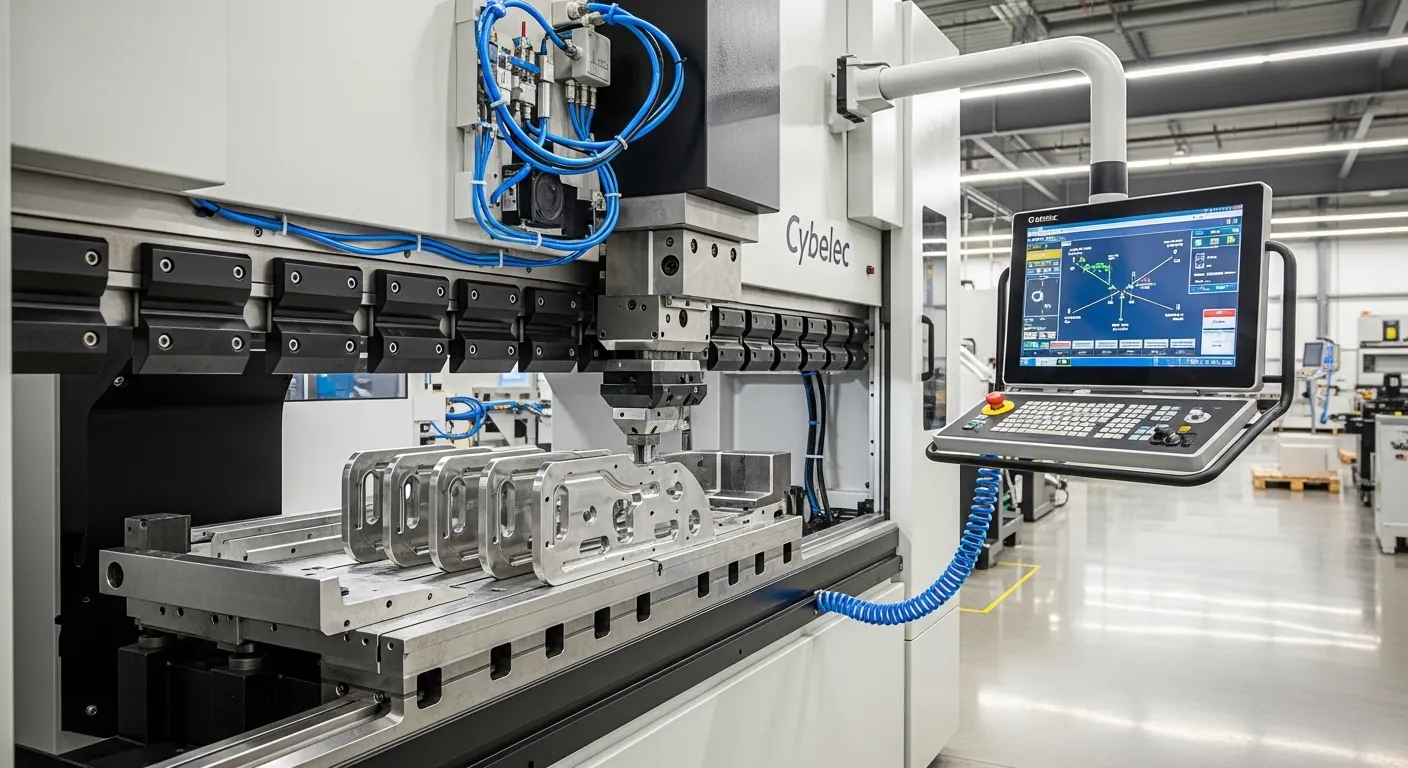
Choosing the right controller is a balance of current needs and future-proofing. Use this checklist to determine your path:
| Feature | Choose Cybtouch 12 if... | Choose Cybtouch 15 if... |
| Complexity | You produce simple 90-degree bends or boxes. | You handle complex, multi-bend profiles. |
| Operator Skill | Your staff is experienced with numerical input. | You have high turnover or need faster training. |
| Axis Count | You run a 3+1 or 4-axis machine. | You run a 4+1, 6-axis, or 8-axis machine. |
| Budget | Initial capital expenditure is the priority. | Long-term productivity and reduced scrap are the goals. |
FAQs: Real-World Operator Questions
The main difference is the programming interface. The CT15 offers full 2D graphical drawing and simulation on a 15-inch screen, while the CT12 focuses on numerical data entry on a 12-inch screen.
The CT15 can typically control up to 6 axes or more depending on the machine configuration, including Y1, Y2, X, R, and Z1/Z2 axes, plus crowning.
Yes, Cybelec controllers generally support program portability via USB, though some 2D graphical data created on a CT15 may appear as numerical data when opened on a CT12.
For complex parts, yes. It reduces programming time by (needs verification)% because the software calculates the bend sequence and tool positions automatically.
The CT12 supports basic 2D visualization to show the bend result, but it lacks the interactive "draw-your-part" graphical editor found in the CT15.
The CT15 is generally preferred for stainless steel because its superior processing power handles the complex spring-back and crowning calculations required for high-tensile materials.
Conclusion
The Cybelec CT12 remains a workhorse for high-speed, simple production, offering reliability and value. However, the CT15 is the clear winner for shops aiming to reduce setup times and empower operators with visual tools. By choosing the controller that matches your part complexity, you ensure that your CNC press brake remains a profit center rather than a bottleneck.