

Press Brake Tooling and Accessories: What to Buy First
Success in precision metal fabrication depends less on the number of tools you own and more on the strategic utility of your first setup. At J.S. Ragos, we have observed that 80% of standard bending tasks can be accomplished with just 20% of a typical tooling catalog. Investing in high-performance 42CrMo alloy steel tooling ensures your shop achieves consistent ±0.1° accuracy from the very first day of production.
The "Rule of 8" and Beyond: Selecting Your Core Dies
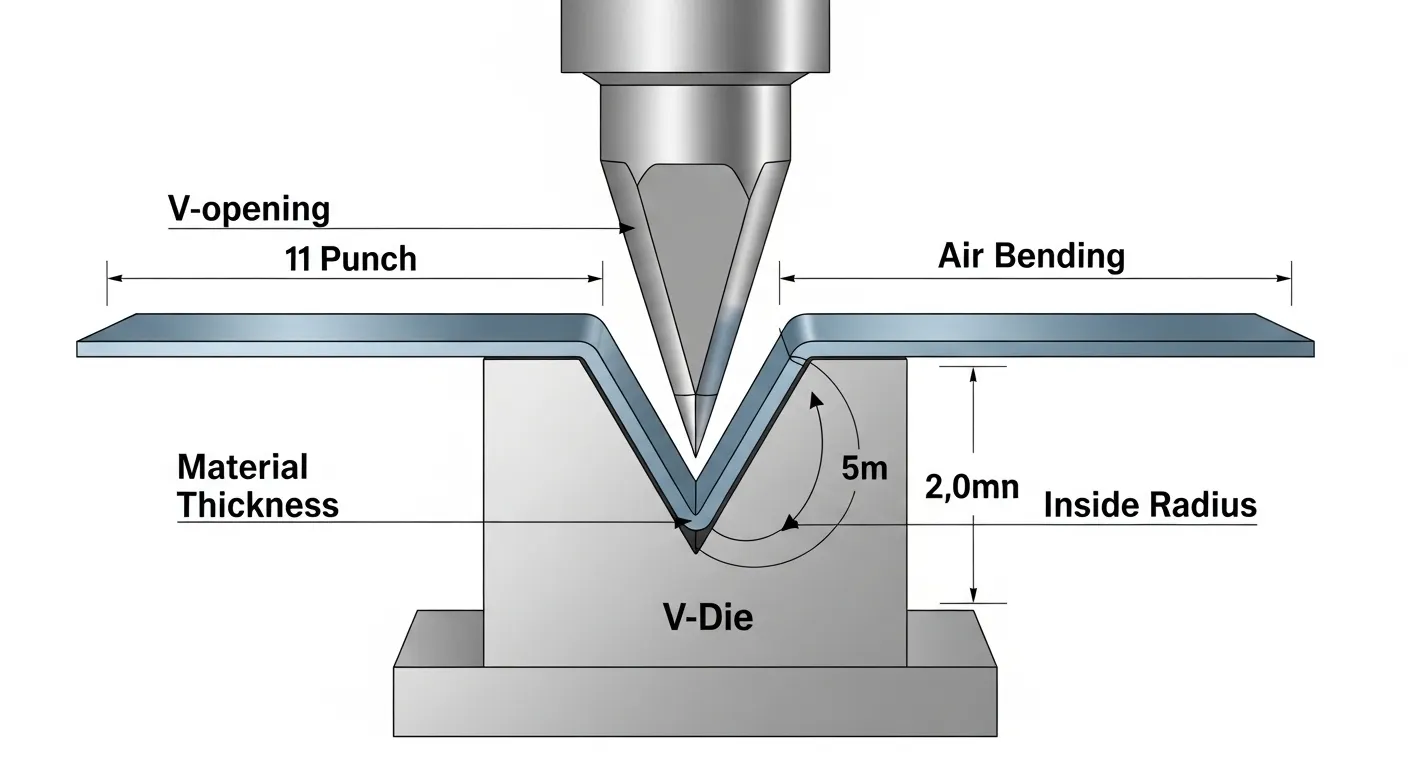
What is the "Rule of 8" in press brake tooling?
The Rule of 8 is a fundamental fabrication guideline stating that the ideal V-die opening should be eight times the material thickness (8T). For materials over 12mm, this ratio often increases to 10T or 12T to manage tonnage requirements and prevent tool fracture. Selecting the correct opening ensures an inside bend radius of approximately 16% of the V-width.
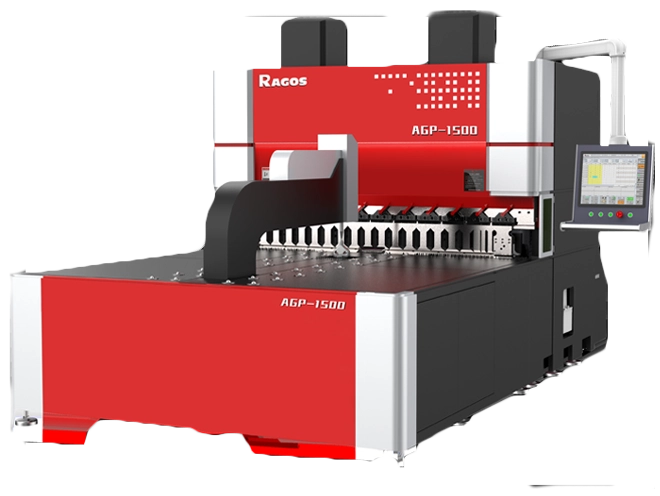
When we assist clients in speccing their first JS Ragos CNC Press Brake, we emphasize that air bending is the modern standard for versatility. Unlike coining, air bending allows you to produce multiple angles using a single set of tools by controlling the depth of the punch.
| Material Thickness | Recommended V-Opening | Resulting Inside Radius | Tonnage Factor |
| 1.0 mm - 1.5 mm | 8 mm - 12 mm | 1.3 mm - 2.0 mm | Low |
| 2.0 mm - 3.0 mm | 16 mm - 24 mm | 3.2 mm - 4.8 mm | Medium |
| 4.0 mm - 6.0 mm | 32 mm - 50 mm | 6.4 mm - 8.0 mm | High |
| 10.0 mm+ | 80 mm - 100 mm | 16.0 mm - 20.0 mm | Critical |
The "Triple Threat" Punch Selection
What are the essential press brake punches to buy first?
The three essential punches for any new workshop are an 88° Universal Punch, a Gooseneck Punch, and an Acute Punch. The 88° punch handles most 90-degree air bending, while the gooseneck profile is critical for deep-box geometries. Acute punches are necessary for over-bending materials with high springback, such as stainless steel or high-tensile alloys.
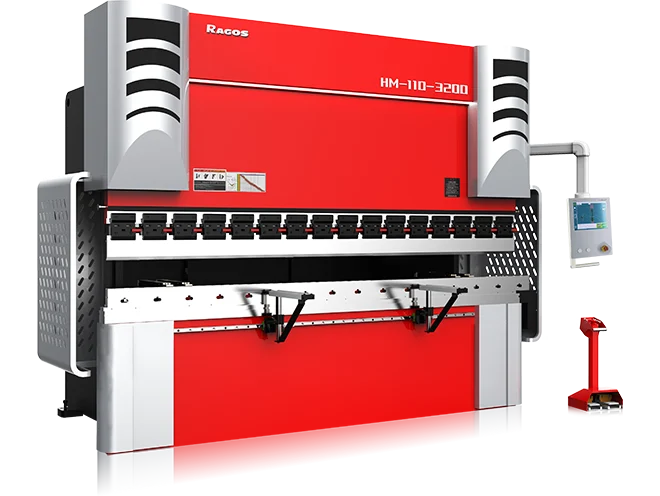
In our experience manufacturing the HG and HM Series hybrid brakes, we’ve seen that the following trio offers the highest ROI:
- 88° Universal Punch: Your "daily driver." It provides enough clearance to compensate for springback in mild steel.
- Gooseneck Punch: Designed with a deep relief to allow for return flanges. If you are making electrical cabinets or 4-sided boxes, this is non-negotiable.
- Acute (30°) Punch: Essential for high-precision shops. These allow you to bend any angle from 30° to 170° when paired with the right die.
Critical Accessories: More Than Just "Add-ons"
What accessories are necessary for a CNC press brake?
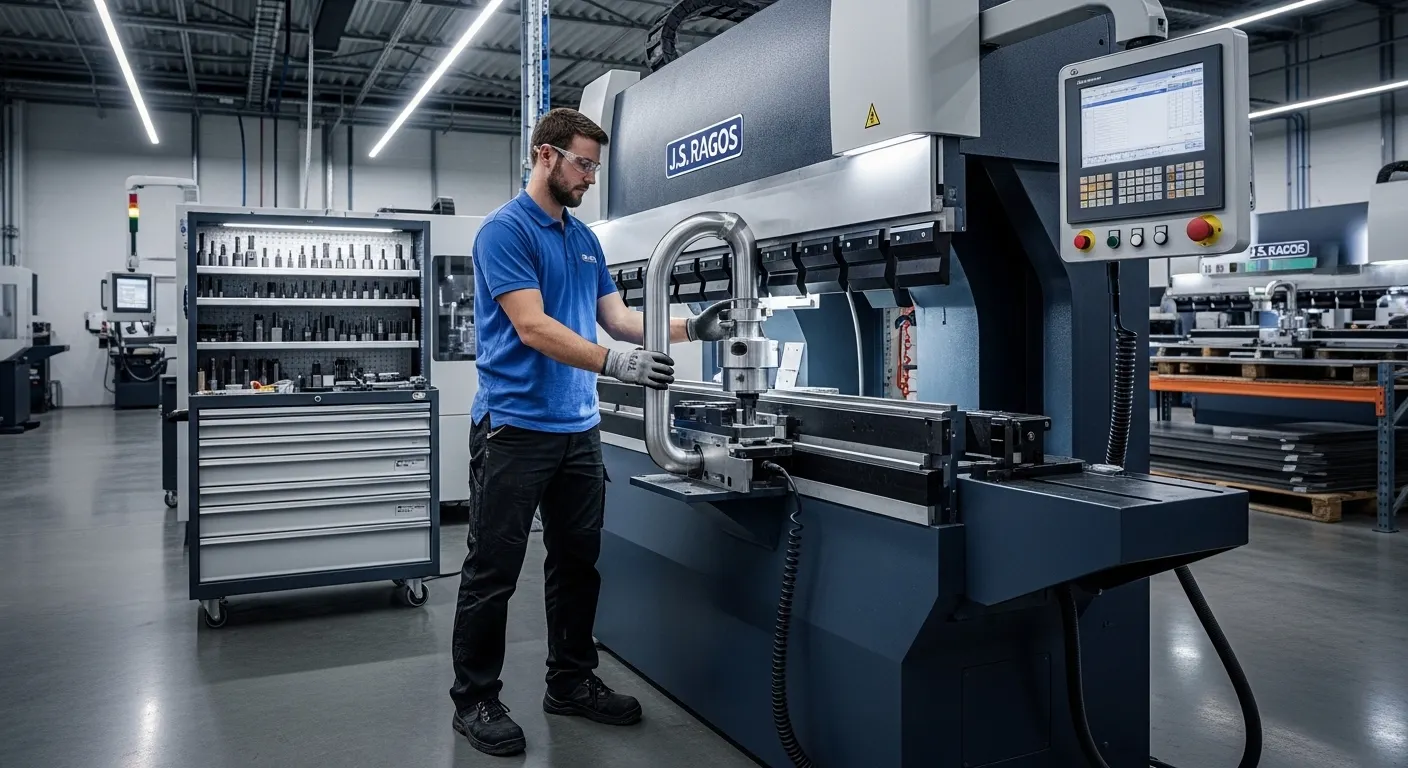
Essential press brake accessories include Amada-style quick clamps, CNC-controlled crowning systems, and laser-assisted angle measurement tools like the iMeasure. Quick clamps reduce setup times by over 50%, while automatic crowning ensures angle consistency across the entire length of the machine bed, preventing "boating" or "canoeing" effects in long workpieces.
At J.S. Ragos, we integrate several high-tier components into our Tooling & Automation for CNC Press Brakes setups:
- Safety Tangs: We use precision-ground safety clicks to ensure tools cannot fall out during setup.
- Digital Protractors: Even with advanced Delem DA-66T controllers, we recommend manual verification for the first piece of a run.
- Tooling Cabinets: Humidity-controlled storage is vital to protect the phosphating treatment on our 42CrMo steel tools from corrosion.
Material Matters: Why 42CrMo is the Industry Standard
What is the best material for press brake tooling?
The industry standard for professional-grade tooling is 42CrMo (Chromoly alloy steel), known for its high strength and wear resistance. When precisely heat-treated to HRC 47-52, this material maintains its geometric integrity under extreme tonnage. Choosing premium alloys prevents the tip deformation and shoulder wear common in cheaper, surface-hardened carbon steel alternatives.
Maintenance and Tool Longevity
How do you maintain press brake tooling?
Maintain press brake tooling by cleaning surfaces after every shift, applying a light coat of industrial lubricant, and inspecting for "galling" (material buildup). Specifically, when bending aluminum or galvanized steel, use protective bending film to prevent surface marring. Regularly check for micro-cracks in dies used for high-tonnage, heavy-plate applications to ensure operator safety.
Tip: In our training sessions for theAutomatic CNC Press Brake, we emphasize that a single piece of scale trapped in a V-die can throw off a bend by 0.5 degrees. Clean tools are accurate tools.
Frequently Asked Questions
Amada-style (often called Oriental or North American) usually features a tang that fits into a specific holder, while European Precision (Wila/Trumpf) uses a different clamping engagement. J.S. Ragos machines are highly versatile and can be configured for either standard through our Global CNC Press Brake Sourcing service.
While a 40-ton machine like our Affordable Press Brake for Small Workshop is exceptionally fast, bending 10mm steel requires significantly higher tonnage depending on the length of the bend. Always consult a tonnage chart before attempting heavy plate bending to avoid "over-tonnaging" and damaging your bed.
This is usually caused by "deflection." To solve this, ensure your machine is equipped with an automatic CNC crowning system that applies upward pressure to the center of the bed to counteract the natural bowing of the ram.
With proper maintenance and use within rated capacities, 42CrMo tooling can last over 10 years. However, if you notice "shining" or wear on the radii of your V-dies, it is time for a professional re-grind to maintain accuracy.