

How to Calculate Press Brake Tonnage for 10mm Steel (Simple Method)
Stop guessing your machine settings and risking a cracked die or a stalled ram. When you work with 10mm steel, you enter heavy-duty territory where the margin for error disappears. This guide gives you the exact math and professional steps to get a perfect bend every time.
How Do You Calculate Press Brake Tonnage for 10mm Steel?
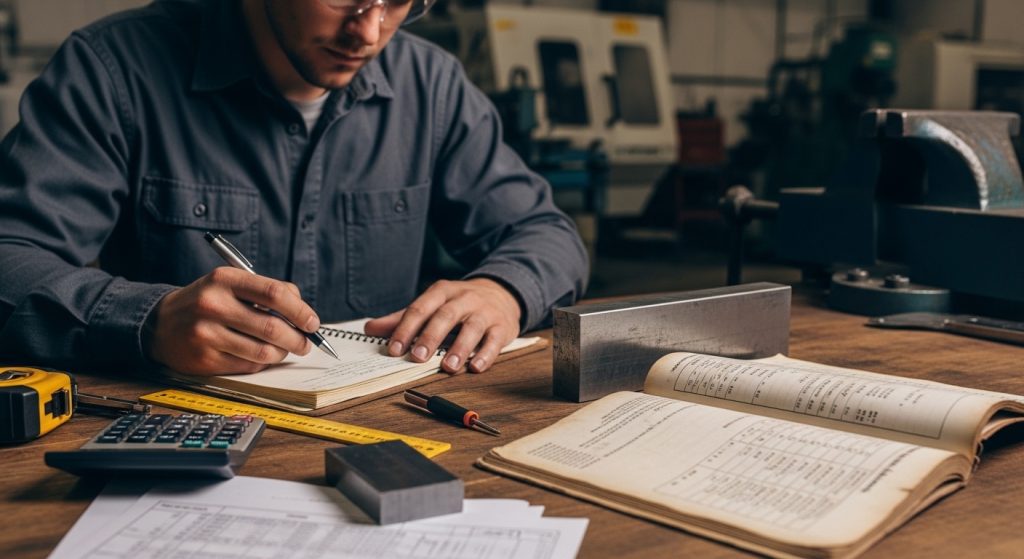
To calculate press brake tonnage for 10mm steel, use the formula $P = (650 \times S^2 \times L) / V$. For 10mm mild steel, you typically select a V-opening of 80mm to 100mm. With an 80mm V-die, you need approximately 82 tons of force per meter of length. Always check your machine's capacity chart before cycling the ram.
The Standard Formula for Air Bending Force
Most shops rely on a proven formula for air bending. You need to know your material thickness ($S$), the length of the bend ($L$), and the V-die opening ($V$).
For mild steel with a tensile strength of $450\text{ N/mm}^2$, the formula looks like this:
$$P = \frac{650 \times S^2 \times L}{V}$$
In this equation, $P$ is the force in kilonewtons ($10\text{ kN} \approx 1\text{ ton}$). If you bend 10mm steel over an 80mm V-die for one meter:
- Square the thickness: $10 \times 10 = 100$.
- Multiply by 650: $100 \times 650 = 65,000$.
- Divide by the V-opening (80): $65,000 / 80 = 812.5\text{ kN}$.
- Convert to tons: 81.25 tons per meter.
Why V-Die Selection Is Your Most Important Decision
You cannot pick a V-die at random when you hit the 10mm mark. The rule of thumb for steel this thick is a V-opening 8 to 10 times the thickness. A smaller V-opening makes the bend tighter but spikes the tonnage required. A larger V-opening makes the bend easier on the machine but increases the inner radius.
If you choose a 60mm V-die for 10mm steel, your tonnage requirement jumps to over 108 tons per meter. This could easily exceed the limit of a standard 4000mm press brake if you bend full-length sheets. Always aim for a balanced die opening tonnage to protect your tooling.
The Impact of Material Type on Your Calculation
Mild steel is the baseline, but stainless steel changes the math. Stainless is tougher and requires about 50% more pressure. If your 10mm project uses 304 stainless, you must multiply your final tonnage by 1.5.
| Material Type | Multiplier | Tonnage for 10mm (80mm V) |
| Mild Steel | 1.0 | 82 Tons/m |
| Aluminum | 0.5 | 41 Tons/m |
| Stainless Steel | 1.5 | 123 Tons/m |
How Does 10mm Steel Thickness Affect Tooling Wear?
Bending 10mm steel creates massive friction at the "shoulders" of your V-die. This thickness forces the material to drag across the die edges under high pressure. You must use hardened tooling and proper lubrication to prevent the steel from galling or "picking up" on the die.
Selecting the Right Press Brake for Heavy Plate
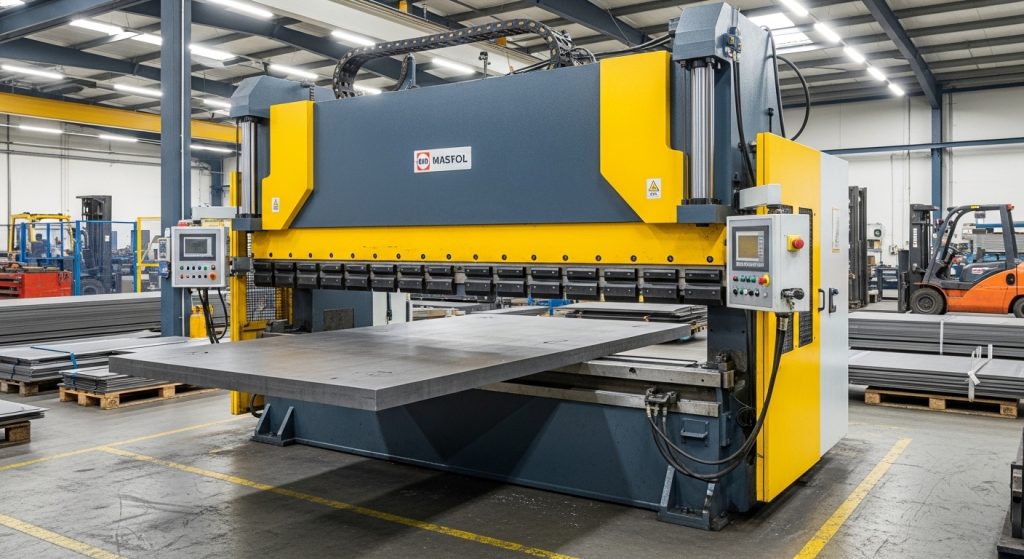
When your daily work involves 10mm sheet bending, you need a machine built for structural integrity. A light-duty machine might flex under 80+ tons of pressure, leading to "boat-shaped" bends where the middle is not as crisp as the ends.
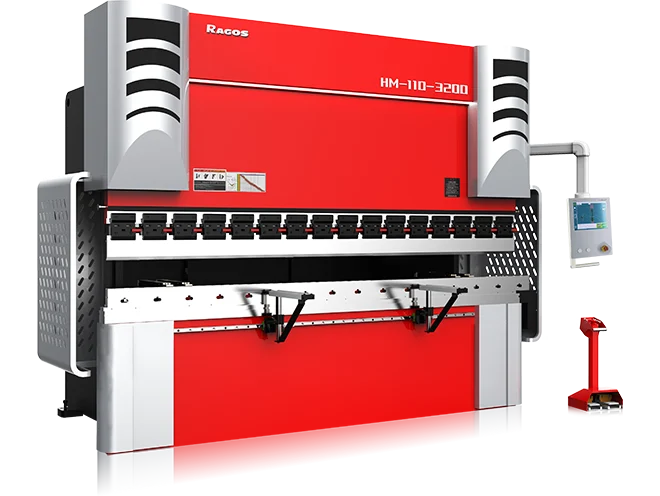
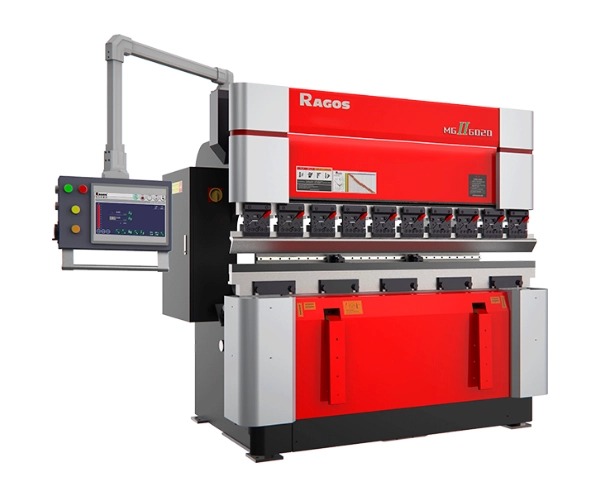
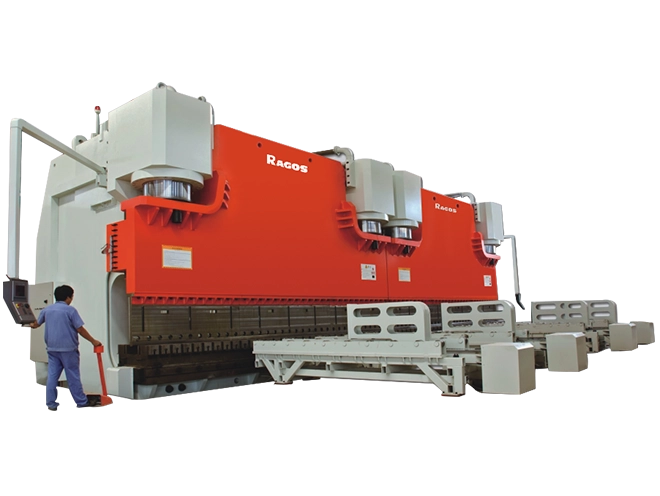
For consistent results on 10mm plate, a heavy duty press brake with a crowning system is vital. The crowning system compensates for the natural deflection of the bed, ensuring your 10mm bend is 90 degrees from one end to the other.
Calculating Length vs. Capacity
Do not forget that tonnage is cumulative. If your press brake capacity is 200 tons and you bend a 3-meter piece of 10mm steel, you are in trouble. At 82 tons per meter, a 3-meter bend requires 246 tons. You would either need to increase your V-opening to 100mm or find a larger machine.
Avoiding the "Coining" Trap on 10mm Plate
You should almost never "coin" 10mm steel. Coining involves bottoming the punch into the die with enough force to stamp the metal. For 10mm plate, coining tonnages can be 5 to 10 times higher than air bending. Most standard machines and dies will explode or deform long before you achieve a coined bend on 10mm plate. Stick to air bending for anything over 3mm.
How Does the Inner Bend Radius Change with Tonnage?
The inner radius ($Ri$) of your bend is directly tied to the V-die opening you choose. In air bending, the $Ri$ is approximately 1/6th of the V-opening ($V/6$). For 10mm steel on an 80mm V-die, your inner radius will be about 13.3mm. If you decrease tonnage by using a 100mm V-die, your radius increases to roughly 16.6mm.
Calculating the Minimum Flange Length
You cannot bend a 20mm flange on 10mm steel using an 80mm V-die. The piece will simply fall into the hole. The minimum flange length ($b$) is usually calculated as $0.7 \times V$. For an 80mm V-die, your flange must be at least 56mm long to stay seated during the bend.
Why Tensile Strength Varies by Batch
Not all 10mm steel is equal. Steel plates often have a higher carbon content or are work-hardened from the rolling process. If your plate is "hot rolled" versus "cold rolled," the resistance changes. Always keep a margin of safety—at least 20%—between your calculated tonnage and your machine's maximum limit.
How to Set Up Your Press Brake for 10mm Steel?
Setting up for 10mm plate requires checking your tool alignment twice before the first hit. Because the forces are so high, any slight misalignment can damage the ram or throw the backgauge out of calibration. Start with a test piece of the same material batch to verify your angles.
Inspecting Your Tooling for Stress Fractures
Before you apply 80 tons of pressure, inspect your punch and die for small cracks. High-tonnage bending on 10mm steel can cause "fatigue" in the metal over time. Look for chips along the V-edges or any mushrooming on the punch tip.
Using Proper Lubrication for Heavy Bends
A heavy-duty bending lubricant reduces the force needed to slide the material into the die. This lowers the actual tonnage slightly and extends the life of your V-die. Apply a thick layer of grease or a specialized bending film to the top edges of the die.
Managing Springback in 10mm Steel
Springback is the tendency of the metal to "unbend" slightly after the pressure is released. For 10mm mild steel, you usually experience 1 to 2 degrees of springback. You must over-bend to about 91 or 92 degrees to achieve a final 90-degree angle.
Advanced Calculations for High-Precision Projects
While the basic formula works for 90% of jobs, precision engineering requires looking at the "K-Factor" and the specific tensile strength of your batch. If you are fabricating components for the aerospace or defense sectors, you need to account for the way 10mm steel grains behave under extreme stress.
The Role of Grain Direction in Tonnage Requirements
When steel is rolled at the mill, it develops a grain direction. Bending "with the grain" is easier and requires slightly less tonnage, but the metal is more likely to crack on the outside of the bend. Bending "across the grain" (perpendicular) requires roughly 5% to 10% more tonnage but results in a much stronger, more durable bend. For 10mm structural plates, always try to bend across the grain to avoid structural failure.
Tensile Strength Adjustments for High-Strength Alloys
If you are working with Hardox or other high-strength abrasion-resistant steels in a 10mm thickness, the standard $450\text{ N/mm}^2$ multiplier no longer applies. Some of these materials have tensile strengths exceeding $1000\text{ N/mm}^2$.
To adjust the formula for these materials:
$$P_{adj} = P \times \frac{\text{Actual Tensile Strength}}{450}$$
If your 10mm steel has a tensile strength of $700\text{ N/mm}^2$, your tonnage per meter will jump from 82 tons to nearly 128 tons. Failing to account for this is the primary cause of snapped punches in heavy-duty shops.
Understanding the "Pressure Spike" in Bottom Bending
While this guide focuses on air bending, some operators occasionally "bottom" 10mm plate to achieve better repeatability. Be warned: the moment the punch makes full contact with the material and the die at the bottom of the stroke, the tonnage does not just increase—it spikes.
In a bottoming scenario, the pressure required can easily triple or quadruple. This means your 82-ton air bend suddenly demands 250 to 320 tons. Most press brake capacity ratings are based on air bending limits. Bottoming 10mm plate is the fastest way to warp your machine's bed permanently.
Machine Selection and Structural Integrity
You cannot produce quality 10mm bends on a machine that "yawns." Machine yawning occurs when the C-frame of the press brake stretches open under high tonnage. This deflection causes the angle at the ends of the bed to differ from the angle in the center.
The Importance of Hydraulic Crowning Systems
On a 4000mm press brake, the center of the bed will naturally deflect downward when you apply 300 tons across a 4-meter length. A high-quality machine uses a "crowning" system—either hydraulic cylinders in the lower beam or a mechanical wedge system—to push back against this deflection.
Without crowning, your 10mm steel part will have a "canoe" effect, where the bend angle is 90 degrees at the ends but maybe only 87 degrees in the middle. For heavy plate, active crowning isn't a luxury; it is a necessity for passing inspection.
Speed and Dwell Time for Heavy Plate
When bending 10mm steel, slower is better. Using a high approach speed is fine, but the actual "pressing speed" should be kept low—typically around 8 to 10mm per second. This allows the molecules in the steel to relocate without generating excessive heat or microscopic fractures.
Additionally, setting a "dwell time" (holding the pressure for 0.5 to 1.0 seconds at the bottom of the stroke) helps neutralize springback. This brief pause allows the material to "set" into its new shape, providing much higher repeatability across a production run.
Safety Protocols for Heavy-Duty Tonnage Operations
Managing 100+ tons of force is inherently dangerous. Beyond the mechanical limits of the steel, you must consider the safety of the operator and the environment.
Managing "Whip-Up" on Large Plates
When you bend a long sheet of 10mm steel, the part of the plate sticking out from the machine will "whip up" rapidly as the bend progresses. Because 10mm steel is heavy, this whip-up has significant momentum.
- Use Sheet Supports: Large hydraulic sheet supports that move in sync with the bend are essential for preventing the plate from bending under its own weight or injuring the operator.
- Operator Positioning: Ensure the operator stands to the side of the "swing zone" of the plate.
- Speed Control: Slow down the bending speed to make the whip-up movement more predictable.
Tooling Safety and "Point Loading"
Never use a narrow punch on a high-tonnage job. If you use a sharp, narrow punch to push 10mm steel into an 80mm die, you are concentrating all that force into a very small area. This is called "point loading," and it can cause the punch to "dig" into the material or even shatter under pressure. For 10mm plate, use a punch with a radius of at least 3mm to 6mm to distribute the load effectively.
Troubleshooting Common 10mm Bending Issues
Problem: The Bend Angle Is Inconsistent
- Check the Material: Plate thickness can vary by +/- 0.5mm across a single sheet. A 10.5mm plate will bend differently than a 10.0mm plate.
- Inspect the Die: Ensure the die is clean. A small piece of scale or slag trapped in the V-opening can change the bend angle by a full degree.
Problem: Cracking on the Outside of the Bend
- Increase the V-Opening: Your bend is too sharp. Switch from an 80mm V to a 100mm or 120mm V to increase the inner radius.
- Check the Radius: Use a punch with a larger tip radius to reduce the stress on the outer fibers of the steel.
- Warm the Material: If the steel is extremely cold (sitting in a freezing shop overnight), it becomes brittle. Let it reach room temperature before bending.
Problem: The Machine "Bottoms Out" or Stalls
- Tonnage Limit Reached: Your calculation was likely based on mild steel, but the material is actually a harder alloy.
- Incorrect V-Die: You are trying to bend 10mm steel in a die that is too small. Check your die opening tonnage requirements again.
Final Check: Before You Cycle the Machine
- Verify the Material: Is it definitely mild steel, or is it a high-strength alloy?
- Check the V-Opening: Are you using at least an 80mm V for 10mm thickness?
- Calculate Total Tonnage: Multiply the tonnage per meter by your total part length.
- Inspect the Machine: Is the press brake capacity sufficient for this specific job?
- Set the Crowning: Adjust your bed compensation to ensure a straight bend across the entire length.
Bending 10mm steel is an engineering task, not just a manual labor task. By using the formulas and setup tips provided, you protect your machine and produce high-quality structural components every time.