

4-Axis vs 8-Axis CNC Press Brake: Which One Should You Choose?
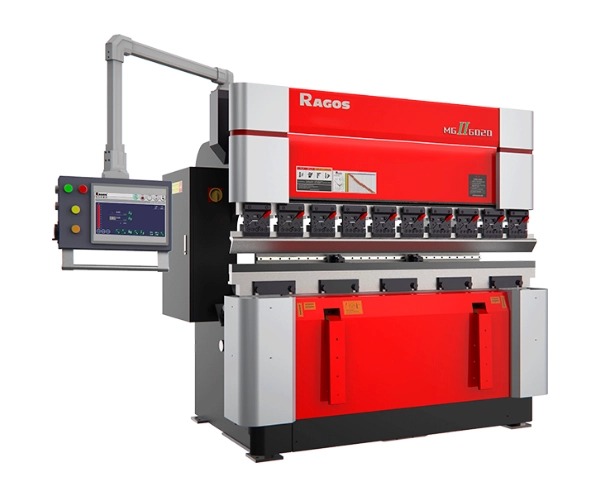
Choosing between a 4-axis and an 8-axis CNC press brake depends entirely on the complexity of your parts and your required production speed. A 4-axis CNC press brake is the industry standard for general fabrication, offering precise control over the ram (Y1, Y2), backgauge depth (X), and backgauge height (R). It is ideal for 90-degree bends and straightforward parallel flange work. However, if you handle complex geometries, tapered flanges, or multi-stage bending in a single setup, an 8-axis CNC press brake is the superior choice. By providing independent control over each backgauge finger (X1, X2, R1, R2, Z1, Z2), the 8-axis machine eliminates manual adjustments, significantly reduces setup time, and handles asymmetric parts with high precision.
What is the Difference Between 4-Axis and 8-Axis CNC Press Brakes?
The primary difference lies in the independence of the backgauge movement. In a 4-axis configuration, the backgauge fingers move together as a single unit for depth (X) and height (R). While this is highly accurate for standard rectangular parts, it limits your ability to bend shapes with different flange lengths on the same side.
An 8-axis machine breaks this limitation. It treats each backgauge finger as an independent robot. This allows the machine to position one finger deeper than the other (X1 vs. X2) or at different heights (R1 vs. R2). For a deeper dive into how these axes are calculated, you can read What Does an 8-Axis CNC Press Brake Mean? (Axes Explained).
Understanding the Axis Breakdown
- 4-Axis: Y1, Y2 (Ram), X (Depth), R (Height).
- 8-Axis: Y1, Y2 (Ram), X1, X2 (Independent Depth), R1, R2 (Independent Height), Z1, Z2 (Independent Lateral spacing).
When Should You Choose a 4-Axis CNC Press Brake?
For many workshops, a 4-axis machine is the "sweet spot" of value and performance. If your daily operations consist of standard brackets, boxes, and sheet metal bending machine CNC tasks where the bends are parallel to the edge, 4 axes are more than sufficient.
- Cost-Effectiveness: 4-axis machines have a lower initial investment and lower maintenance costs due to fewer servo motors and mechanical parts.
- Ease of Use: Operators can master 4-axis programming quickly.
- High Accuracy: You still get the benefit of Y1/Y2 dual-ram positioning for perfectly leveled bends.
Why Upgrade to an 8-Axis CNC Press Brake?
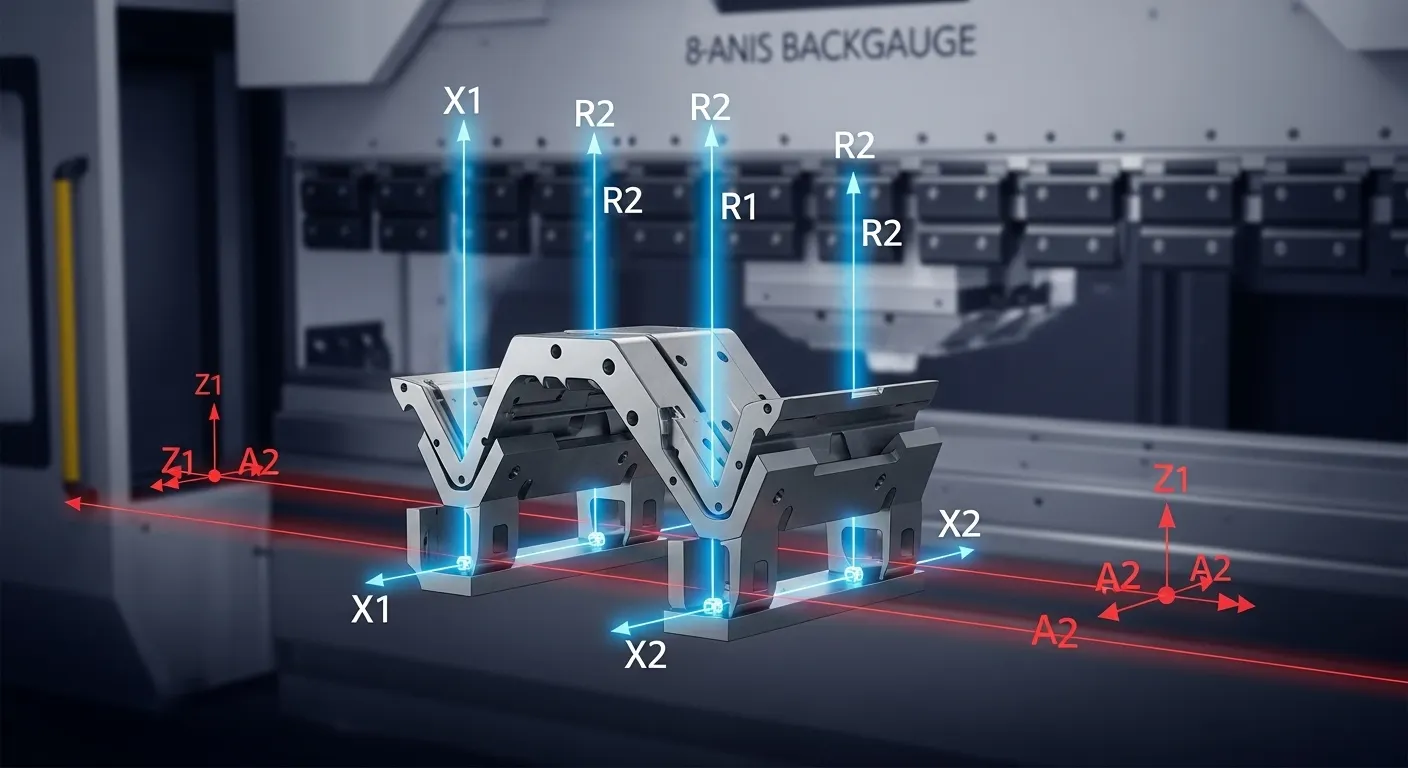
The 8-axis machine is built for high-mix, complex production. When you have a part that requires a tapered bend—where one side of the flange is longer than the other—an 8-axis machine handles it automatically.
Handling Complex Geometries
On a 4-axis machine, a tapered bend often requires custom jigs or manual "shimming," which wastes time and risks inaccuracy. With independent X1 and X2 axes, the 8-axis CNC simply moves the fingers to different depths to create the angle.
Multi-Stage Setup Efficiency
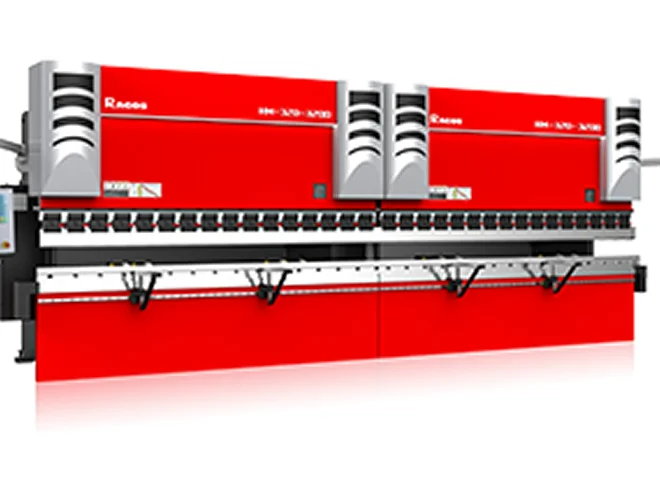
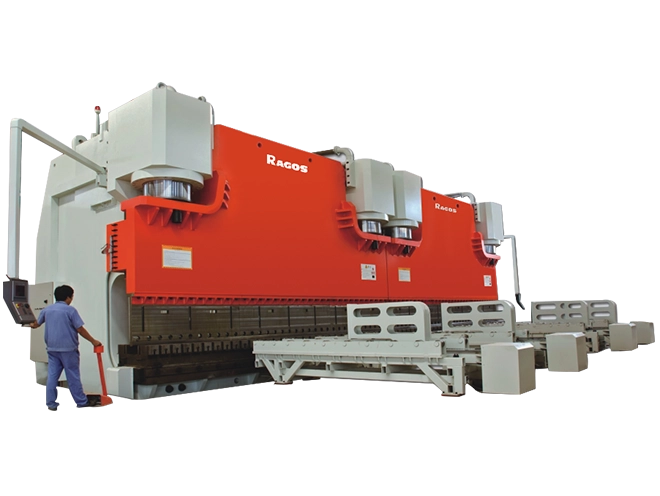
If you are running a large part that requires multiple different bends, you can set up different tool stations along the bed. The Z1 and Z2 axes automatically move the fingers to the correct station for each hit. This is especially useful when using a tandem press brake for long sheet metal where precision across a long distance is critical.
People Also Ask: Is an 8-axis press brake harder to program?
No, modern CNC controllers use 3D graphical interfaces that make programming an 8-axis machine nearly as simple as a 4-axis one. The software automatically calculates the positions for X1, X2, and R axes based on the 3D part file you import.
While the initial setup of the software parameters takes a bit more "under-the-hood" knowledge, the day-to-day operation is streamlined. Most high-end 8-axis machines allow for offline programming software so your engineers can prep the jobs before they even reach the shop floor.
People Also Ask: Does more axes mean more maintenance?
Yes, an 8-axis machine has more moving parts, including extra servo drives, cables, and guide rails for the independent backgauge fingers. This requires a more disciplined preventive maintenance schedule to ensure all axes remain calibrated.
However, the "cost" of maintenance is usually offset by the massive reduction in setup time and scrap material. If you save 10 minutes of setup per job across five jobs a day, the machine pays for its own maintenance in labor savings alone.
Comparison Table: 4-Axis vs. 8-Axis
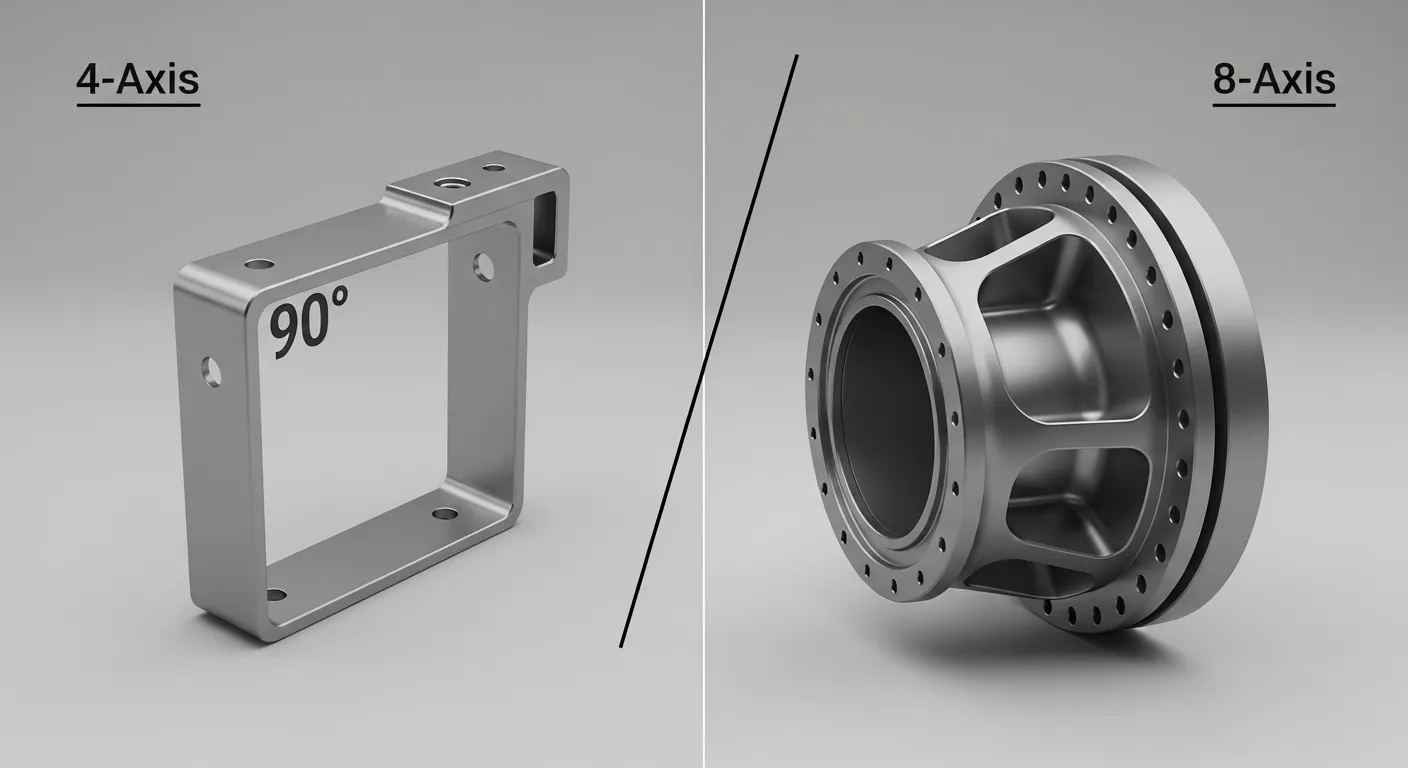
| Feature | 4-Axis CNC Press Brake | 8-Axis CNC Press Brake |
| Best For | Standard parts, 90° bends | Tapered flanges, complex parts |
| Backgauge Fingers | Move together (X, R) | Move independently (X1/X2, R1/R2) |
| Setup Time | Moderate (Manual for complex) | Ultra-Fast (Fully automated) |
| Investment | Lower | Higher |
| Lateral Movement | Usually manual or fixed | Automated (Z1, Z2) |
Frequently Asked Questions
Generally, no. Upgrading the backgauge system, adding four additional servo drives, and replacing the CNC controller is often more expensive than trading in the machine for a new 8-axis model.
The Z axes control the left-to-right movement of the backgauge fingers. This is vital for supporting different widths of sheet metal without the operator having to manually slide the fingers into position.
Not necessarily. The number of axes relates to the shape and complexity of the part, while the tonnage relates to the thickness and material. You can have a 1000-ton 4-axis machine for simple heavy plates.
Conclusion
The decision between 4-axis and 8-axis CNC press brakes comes down to your "part portfolio." If your shop is seeing more diverse, complex designs from customers, the 8-axis machine is a future-proof investment that will keep your production line moving without manual interruptions. If you stick to the basics, the 4-axis remains a reliable workhorse.