

How Linear Scales Measure Y1/Y2 Ram Position in an Electric Press Brake
By Author: Mark Hanks
After the controller issues a position command, it must determine where the ram has actually moved. In an electric press brake equipped with ram-side position feedback, optical linear encoders provide the control system with linear displacement measurements.
In a dual-drive configuration, measuring the left and right sides independently allows the controller to determine whether each axis is following its commanded position and whether a positional difference has developed between the two sides.
The linear scales perform the measurement. Position correction, however, requires coordinated operation of the controller, servo drives, motors, and mechanical transmission system.
What a Linear Scale Measures
A linear scale measures linear displacement along a defined measurement direction. An optical linear encoder uses an optical scanning mechanism to convert relative displacement into signals that the control system can process.
When used for ram-side position feedback, it measures the linear motion at the corresponding measurement point.
The programmed target position and the measured position describe different quantities. The target position shows where the control system commands the ram to move. The measured position is where the feedback device locates the ram.
The difference between these values provides the position error information required for corrective control.
Why a Dual-Drive Press Brake Uses Two Position Measurements
A dual-drive electric press brake uses two independent drive systems to move a common ram. A single measurement point can indicate motion at its location, but that reading alone cannot establish whether the opposite end of the ram is at the same position.
By measuring Y1 and Y2 independently, the controller can compare the actual positions of both sides.
When the same target position and reference frames are used for the feedback signals, these signals can be used to determine
• Left-axis tracking error = Yref − Y1
• Right-axis tracking error = Yref − Y2
• Synchronization error = Y1 − Y2
These calculations enable the control system to assess both the tracking performance of individual axes as well as the synchronization of the two axes.
In the absence of independent position feedback from one of the ends of the ram, the controller cannot determine both ram-end positions from the opposite end’s position feedback alone.
Motor Encoders and Linear Scales Measure Different Points
A motor encoder measures rotational motion of a motor shaft and can thus be used to measure angular position of the motor shaft, depending on configuration. A linear scale measures linear position.
In a servo motor and ball screw drive system, the rotation of the motor is mechanically coupled to movement of the ram. The nominal relationship is determined by the reduction ratio and ball-screw lead. This calculated relationship is not a direct measurement of ram position.
| Feedback Device | Measurement Point | Information Provided |
| Motor encoder | Motor shaft rotation | Motor-side motion feedback |
| Ram-side linear scale | Linear displacement at the ram-side measurement point | Ram-side position feedback at the corresponding measurement location |
These devices measure motion at different points along the transmission chain and can be used together at different levels of the control system.
When evaluating a press brake, buyers should ask more than whether the machine has an encoder. They should also confirm where the feedback device is installed and which control loop uses its signals.
Learn how dual servo motors and ball-screw transmission move the ram.
How Ram Position Feedback Closes the Loop
In a ram-side full closed-loop position control system, actual linear displacement feedback is used to adjust the drive output so that the ram follows the commanded motion.
The sequence for basic control is as follows:
1.The CNC system determines the target position and trajectory of motion.
2.The motion controller sends commands to the left and right servo drives.
3.The motors move the ram through the mechanical drive system.
4.The actual positions of the ram are measured by the two linear scales.
5.The controller compares target positions with measured positions and calculates control outputs.
This process is repeated. In the control system, actual ram motion is measured by position feedback. This allows the control system to tell whether the ram is moving and if it has reached its target position, without having to depend solely on calculated displacement and motor commands.
Achieving full closed-loop position control does not mean that positioning errors vanish. Stable tracking still requires suitable feedback processing, control tuning and mechanical response.
See how Y1/Y2 synchronization works in the complete control loop.
How Linear Scales Support Y1/Y2 Synchronization
The two linear scales provide the position measurements for the Y1/Y2 synchronization control. The controller takes the Y1 and Y2 readings, determines the positional difference between the two sides and adjusts the drive outputs according to the synchronization logic employed.
If one side temporarily lags because of a load change, position feedback can detect the resulting deviation. The controller then coordinates the movement of both axes according to the measured errors and its control logic.
The linear scales therefore form part of the feedback system. They do not independently determine motor output. Replacing a linear scale with a higher-resolution model does not, by itself, guarantee better overall synchronization performance.
Evaluating Y1/Y2 synchronization requires consideration of measurement locations, signal processing, servo configuration, and mechanical transmission characteristics.
For more on the positional difference between both sides, see Y1/Y2 synchronization errors.
Resolution Is Different from Measurement Accuracy
The resolution specified for a linear scale describes the displacement increment that the measurement system can distinguish. Measurement accuracy, on the other hand, describes how closely the measured displacement corresponds to the actual displacement.
The ability to display smaller displacement increments does not necessarily mean lower measurement error. Similarly, additional decimal places on a controller display do not prove that the ram can achieve the corresponding positioning accuracy under load.
When comparing technical specifications, buyers should verify the following separately:
• Linear scale resolution: The displacement increment detectable by the measurement system.
• Measurement accuracy: The specified accuracy over the applicable measuring length.
• Position feedback configuration: How the machine uses the encoder signals in its position control system.
• Machine-level verification: The test methods used to evaluate ram positioning accuracy and Y1/Y2 synchronization performance.
Component-level specifications and machine acceptance test results should be documented separately. The accuracy specification of a linear encoder must not be treated as the positioning accuracy of the complete press brake.
Ram Position Feedback Does Not Measure Bend Angle
A linear scale measures ram displacement. It does not directly measure the bending angle of the workpiece.
Even if the ram reaches the same position for each material batch, variations in thickness and strength in the material can cause different bend angles. Springback can also play a role in the difference in bend angles. Tooling and structural deformation also affect the final bend.
Ram position feedback and workpiece angle measurement therefore serve different purposes. The former supplies position information for motion control, while the latter evaluates or supports correction of the actual bending result.
When purchasing a press brake, buyers should request both position control specifications and workpiece acceptance criteria. Neither measurement can substitute for the other.
What to Ask About the Feedback Configuration
When a supplier describes a press brake as being equipped with "high-precision linear scales," buyers should request more specific information:
• Where are the left-side and right-side position measurements taken?
• Are the linear encoder signals directly incorporated into the ram position control loop?
• Can the controller display or record Y1 and Y2 positions independently?
• What are the specified resolution and measurement accuracy?
• Are the feedback devices identified by model number and supported by technical documentation?
• How are machine positioning accuracy, positioning repeatability, and synchronization performance tested?
• Are details about ram travel, the applied load, the operating speed and the number of repeated measurements, specified in the test procedures?
The encoder brand alone does not explain how the complete feedback system performs.
Encoder selection must also take into account the requirements of the machine under consideration. The measuring range, output signals, and control interface must be reviewed against the technical documentation of the specific press brake model.
Compare the Complete Position-Control System
A linear scale allows the controller to measure ram-side linear displacement, while position feedback from both sides of the ram provides the basis for comparing Y1 and Y2 positions.
The final motion performance still depends on how the complete control system processes these measurements and executes corrections through the servo drives and mechanical transmission.
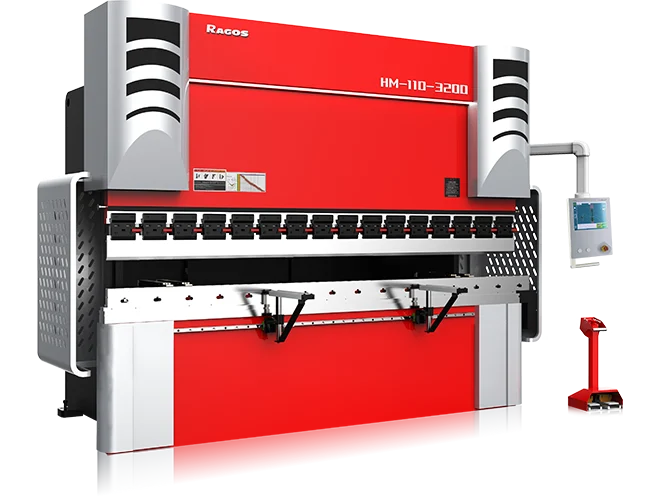
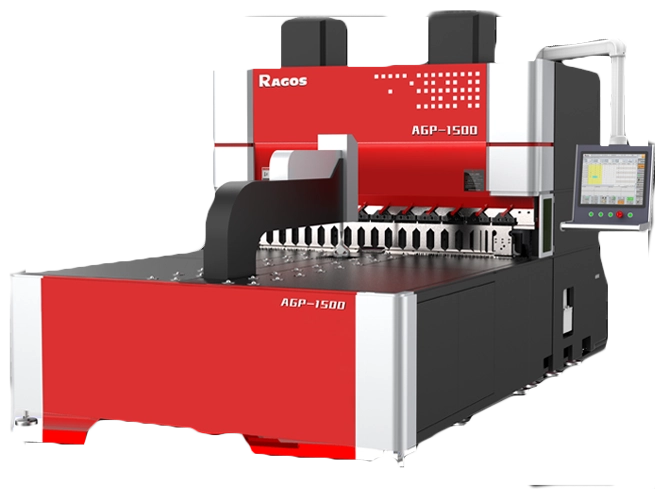
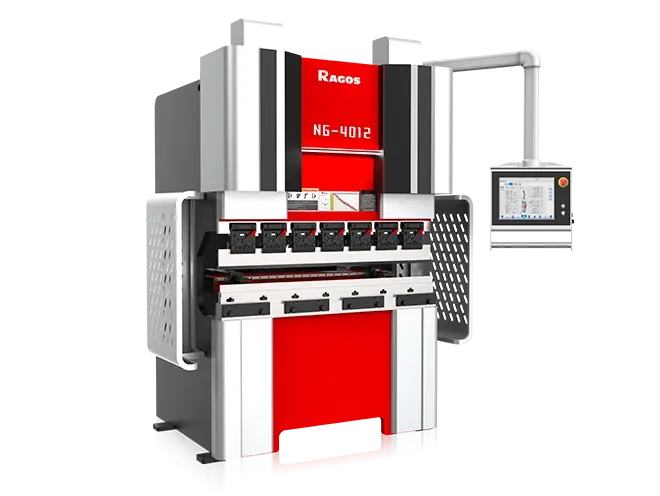
When evaluating the JS RAGOS Servo Electric Press Brake, buyers can request an explanation of the position feedback configuration for the specific machine model. Ram positioning accuracy, Y1/Y2 synchronization performance, and finished bending results should then be verified using representative workpieces.
Frequently Asked Questions
Q1: Is a Linear Scale the Same as a Motor Encoder?
No. A motor encoder measures the angular position or rotational motion of the motor shaft, while a linear scale measures linear displacement. Both devices can provide feedback at different levels of the control system.
Q2: Does a Linear Scale Keep the Ram Synchronized by Itself?
No. A linear scale supplies position measurement signals. The controller calculates the required corrections, which are executed through the servo drives, motors, and mechanical transmission system.
Q3: Why Are Two Linear Scales Used in a Dual-Axis Feedback System?
Independent position measurements from both sides allow the controller to compare the actual Y1 and Y2 positions. A single measurement point cannot independently represent the motion of both ends of the ram.
Q4: Does Higher Resolution Guarantee Better Bending Accuracy?
No. Resolution is only one characteristic of the measurement system. Machine positioning accuracy, control response, mechanical structure, and bending process conditions also affect the finished workpiece.
Q5: Can Linear Scales Replace Angle Measurement?
No. Linear scales provide linear position feedback, while angle measurement determines the actual bend angle of the workpiece. They measure different physical quantities and serve different functions in the bending process.