

CNC Press Brake for Furniture Hardware: Tight Tolerance Bending Tips
Selecting a CNC Press Brake for Furniture Hardware is the most important choice you will make for your production line. Unlike general metal work, furniture hardware involves tiny parts that must fit together perfectly in complex assemblies. You must ensure your machine offers high repeatability and micro tolerance bending stability to avoid assembly failures. In this industry, the positional accuracy of the ram and back gauge matters far more than raw tonnage. You are often working with thin materials where even a small radius bend accuracy deviation can ruin a part. Protecting the surface finish is also a top priority, as hardware is often a visible decorative element.
This guide explores how to manage small flange deformation control and how to pick the right tooling for micro-bends. You will learn why repeat cycle positional accuracy is the heart of hardware manufacturing. By following these precision tips, you can reduce waste and improve the cosmetic quality of your hinges, slides, and brackets.
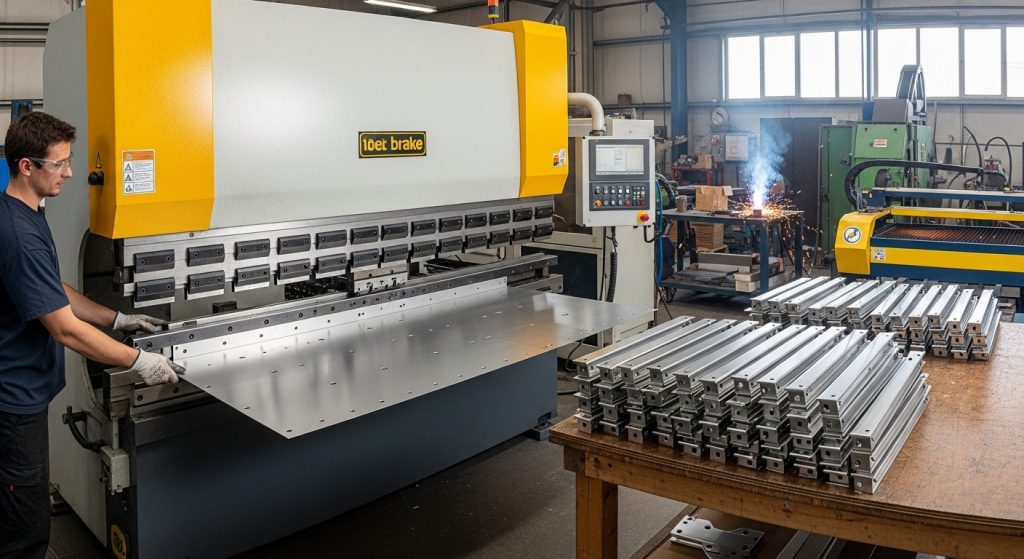
Your production success depends on solving these specific application challenges:
- Achieving a micro bend repeat tolerance window for high-volume batches.
- Preventing surface mark visibility amplification on decorative aluminum or brass.
- Controlling tool alignment positional drift effect during long production runs.
- Managing small part bend tolerance accumulation in multi-bend sequences.
Why Furniture Hardware Production Depends on CNC Press Brake Precision
Producing furniture hardware is a game of millimeters. You are not just bending metal; you are creating the mechanical heart of a cabinet or desk. If a hinge is off by a fraction of a degree, the door will not close straight. This is why you must rely on a micro positional repeat accuracy band that only a high-end CNC system can provide.
- Tight Dimensional Limits: Hardware parts are small, meaning any error is a large percentage of the total size.
- Assembly Fit Dependency: Your parts must have a perfect hardware assembly fit tolerance dependency to work with wood or plastic components.
- Sequence Alignment: Multi stage bend positional stack error can ruin a part if the first bend is not exactly right.
- Batch Consistency: You need the 1,000th part to be identical to the first part to ensure a smooth assembly line.
Small parts often have many bends close together. If your back gauge has even a tiny amount of drift, the small part bend tolerance accumulation will make the final product unusable. A CNC press brake uses servo motors to hold these positions with extreme care. This level of control is what allows you to produce high-quality hardware at scale.
Typical Furniture Hardware Parts Requiring Tight Tolerance CNC Bending
You will find that most furniture hardware relies on complex shapes made from thin sheet metal. Each of these parts has a specific mechanical movement clearance control requirement that you must meet.
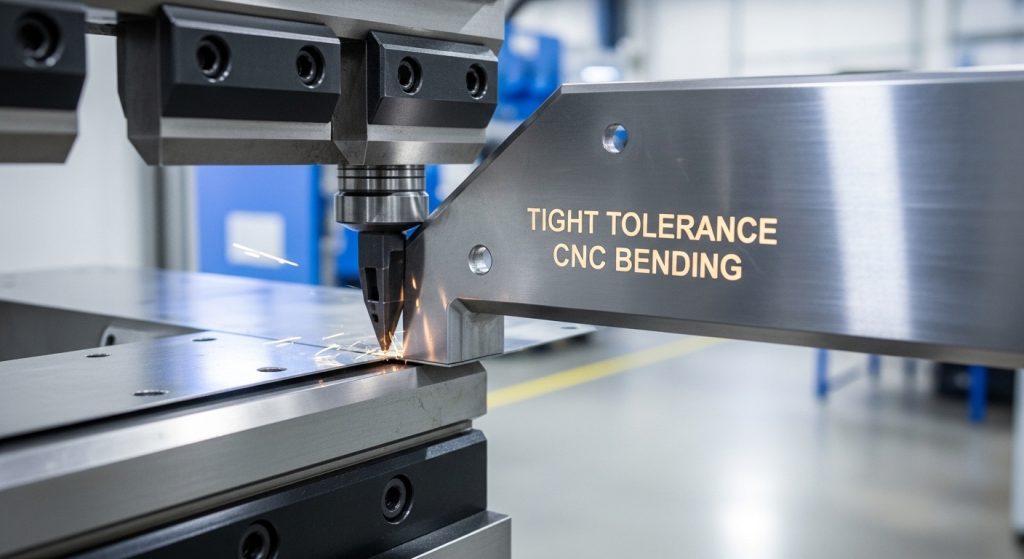
- Hinges: These require a precision hinge axis alignment requirement so the pin fits and rotates without sticking.
- Drawer Slide Brackets: You must maintain a tight assembly fit alignment tolerance so drawers glide smoothly without wobbling.
- Cabinet Mounting Brackets: These parts need high strength and exact angles to hold the weight of heavy furniture.
- Furniture Frame Connectors: These often involve return bends where return bend interference avoidance geometry is vital.
- Decorative Visible Hardware: These parts are sensitive to visible hardware cosmetic distortion sensitivity and must be bent without scratches.
When you bend a drawer slide, the distance between the two sides must be exact. If the bend angle is off, the slide will bind or feel loose. Using a CNC press brake allows you to program these exact distances and angles into a single sequence. This ensures that every bracket you make fits the sliding mechanism perfectly every time.
Material Behavior Differences in Furniture Hardware Bending
Different metals react in unique ways when you apply pressure. You must adjust your process based on how the material moves and recovers.
| Material | Primary Challenge | Process Adjustment |
| Cold Rolled Steel | Yield point variations | Use thickness sensors for angle control |
| Stainless Steel | High elastic recovery | Increase overbend to hit the target angle |
| Aluminum | Surface scratch risk | Use protective film or nylon tool inserts |
| Brass specialty | Low thickness instability | Slow the ram speed to prevent cracking |
Stainless steel hardware parts often show a low thickness deformation instability if the pressure is too high. You must also watch for surface scratch propagation risk on decorative brass or aluminum. Each material has a specific elastic recovery micro shift behavior that your CNC program must compensate for automatically. If you do not account for surface work hardening sensitivity, the metal might become brittle and snap during the second or third bend in a sequence.
Why Small Tooling Selection Matters More in Furniture Hardware Than Heavy Fabrication
In heavy fabrication, you use big V-dies to move thick plates. In hardware, you need tiny, specialized tools to handle small flanges. Your micro flange support stress distribution must be even to prevent the metal from warping.
- Narrow V-Dies: You need a small V opening pressure concentration to bend flanges that are only a few millimeters long.
- Segmented Tooling: This allows you to set up multiple stations on one ram for batch flexibility.
- Gooseneck Punches: These are vital for return bend interference avoidance geometry on complex cabinet brackets.
- Acute Angle Tools: These help you manage high springback materials like stainless steel.
Using the wrong tool can lead to a high tool contact surface marking risk. For furniture, where look is everything, a mark on the metal is a failure. You should look for tools with a large radius on the die shoulders to spread the load. This prevents the "v-mark" from showing up on the outside of the bend. Small part production thrives when you have the right mix of narrow punches and specialized dies.
Springback Control Challenges in Thin Furniture Hardware Materials
Thin materials are very springy. When the tool releases the part, the metal wants to return to its flat shape. This thin gauge elastic recovery dominance is one of the hardest things to manage in hardware bending.
The cause of this is often a neutral axis micro shift displacement within the thin metal. Because the material is so thin, there is not enough "permanent" deformation in the center of the bend. This leads to an angle memory recovery effect that can change from one batch of metal to the next. You must use an overbend compensation strategy to hit your final 90-degree goal.
To control this, follow these setup rules:
- Measure the actual thickness of every new sheet of metal.
- Use a CNC system with "angle tracking" to adjust the depth in real-time.
- Account for the low thickness stress relaxation curve by holding the pressure for a split second.
- Keep your tools clean to ensure the pressure is applied exactly the same way every time.
Why Back Gauge Precision Directly Impacts Hardware Assembly Fit
Your back gauge is what tells the machine where to bend. In hardware, your flanges are often very short. A back gauge micro positioning resolution of 0.01mm is often needed to get a perfect fit.
If your back gauge is off, you will see a bend sequence cumulative tolerance stacking issue. The first bend might be okay, but by the third bend, the part edge reference repeatability drift has made the piece too long or too short. This directly affects the hardware hole alignment positional dependency. If the holes do not line up with the pre-drilled holes in the wooden furniture, the hardware cannot be installed. You must ensure your back gauge fingers are perfectly square and that the CNC program accounts for the thickness of the metal at every stop.
Cycle Speed vs Precision Balance in Furniture Hardware Mass Production
You want to make parts fast, but speed can lead to errors. High-speed strokes can cause a high speed stroke vibration transfer that moves the part slightly before the bend.
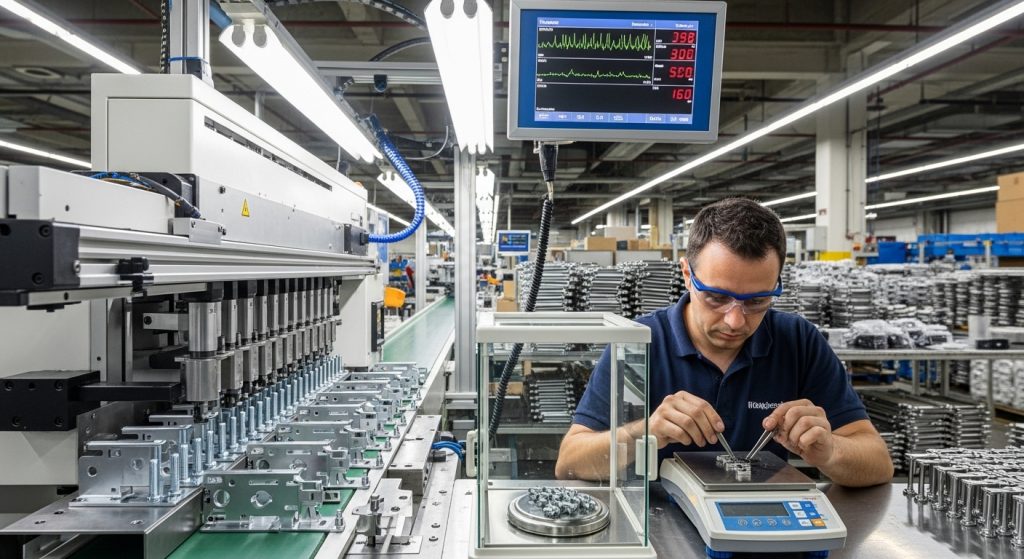
| Factor | Impact on Quality | Strategy |
| Fast Cycle | Higher heat and vibration | Use servo-driven rams for smoother motion |
| Thermal Expansion | Tooling grows and shifts | Monitor tool temp and recalibrate at noon |
| Program Library | Faster setup times | Use 3D simulations to check for hits |
Mass production often leads to a high cycle thermal expansion deviation. As the machine works, the oil and the metal tools get warm and expand. This can cause a small change in the bend depth. You need a servo positioning micro correction response to handle these tiny shifts. Keeping your program repeatability tolerance retention high is the only way to stay profitable during a 24-hour production run.
Choosing the Right CNC Press Brake Platform for Hardware Manufacturing
Selecting a precision servo bending platform stability is the first step for any hardware shop. You need a machine that handles hardware production repeat cycle reliability with ease. Look for a multi tooling compatibility platform design that allows you to swap between small hinge dies and large bracket tools. A high-quality small part bending control architecture ensures that your ram stops at the exact same micron every time. This platform will be the backbone of your hardware manufacturing process for years to come.
Why Aluminum Hardware Needs Dedicated Press Brake Setup Strategy
When you work with aluminum sheet press brake units, you must plan for aluminum elastic recovery amplification. This metal is soft and shows a low hardness surface marking sensitivity. You might see thin aluminum bend radius instability if your tools are too sharp. A surface cosmetic preservation bending method is required to keep the parts looking clean for the customer. Aluminum is popular for decorative furniture trim, so your setup must prioritize look and feel as much as the final angle.
How Sheet Steel Hardware Production Changes Force Planning and Tooling
Using a sheet steel press brake requires a different approach than aluminum. Cold rolled steel forming stability zone is predictable, but you must watch the steel yield plateau forming behavior. There is always a sheet steel surface galling interface risk when the metal slides over the die. You should use a steel bending pressure predictability curve to plan your ram depth. Steel hardware is the most common type, so mastering this material is vital for any hardware production house.
Cross Industry Lessons From HVAC Sheet Metal Bending Precision
You can learn a lot from an HVAC press brake setup. These machines focus on thin sheet duct bending stability and long flange deflection control strategy. While hardware parts are smaller, the way they handle sheet panel vibration tolerance management is very similar. Even in a simple air duct seam bending repeat accuracy setup, the goal is a perfect fit. These large-scale lessons can help you improve the stability of your hardware bending station.
Precision Lessons From Electrical Enclosure Sheet Metal Bending
An electrical enclosure bending process demands a tight enclosure corner alignment tolerance. This is very similar to making a drawer slide or a metal cabinet box. You need a panel door gap consistency requirement that is very high. Sheet edge straightness bending dependency is what keeps these enclosures square. Applying these enclosure assembly seam alignment precision tips to your furniture hardware will lead to much better final products.
Heavy Plate Bending Contrast: Why Furniture Hardware Is a Precision Game
Comparing your work to a boiler plate bending machine shows why hardware is special. In heavy work, thick plate plastic deformation dominance is the main force. You deal with heavy gauge stress distribution uniformity and plate compression load forming behavior. This heavy industry tolerance vs hardware tolerance contrast shows that while they move more metal, you move it with more care. Hardware is a precision game where microns matter more than tons.