

Pole Bending Press Brake: Complete Guide to Machines, Specs, and Pole Production
A pole bending press brake is a purpose-built or configured CNC press brake used to form steel plates into cylindrical and conical poles — street lights, high mast towers, flag poles, and utility poles. Standard press brakes don't handle this work well. Pole forming requires long bed lengths, high tonnage over extended bending lines, specialized conical tooling, and in most cases, two synchronized machines operating as a single unit.
This guide covers everything you need to know about selecting and running a pole bending press brake — from machine configuration and tooling to the step-by-step bending process.
What Is a Pole Bending Press Brake?
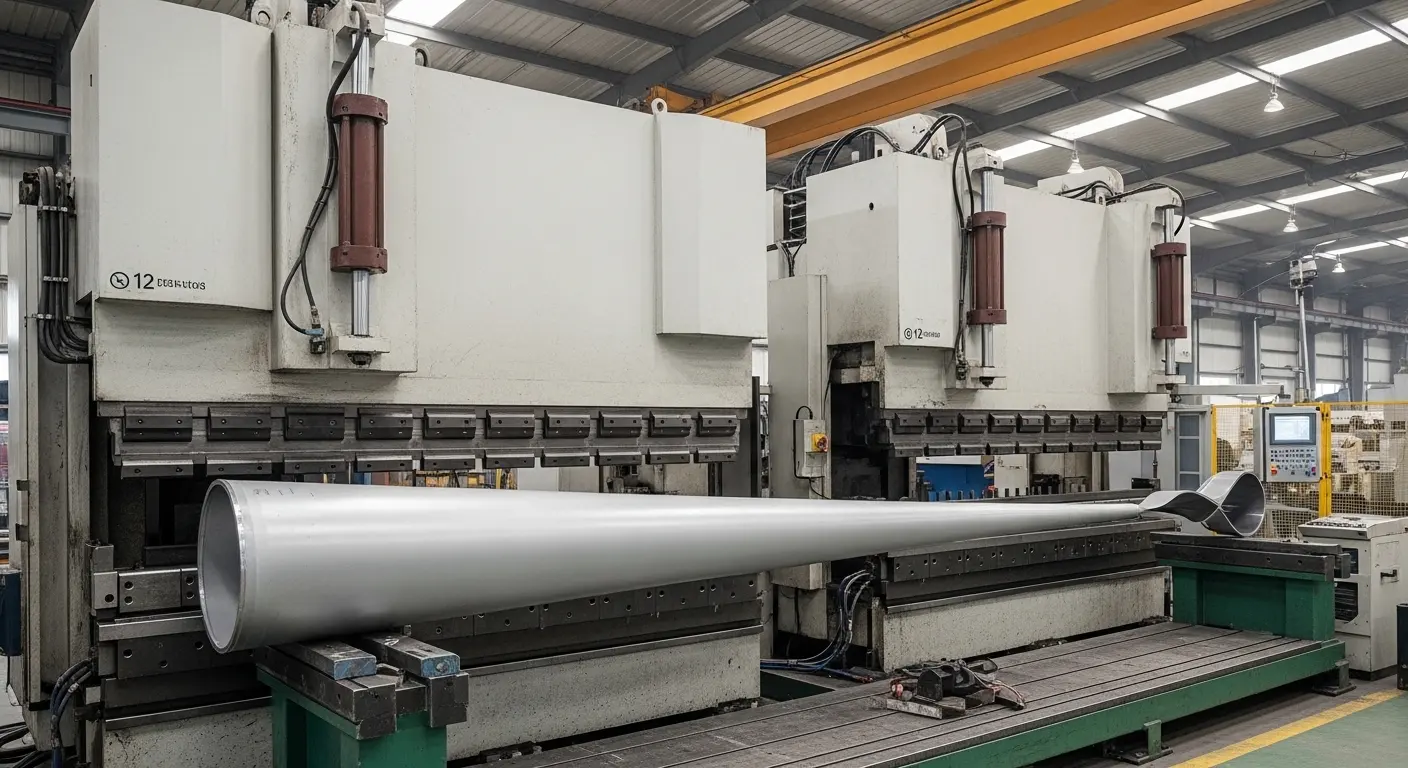
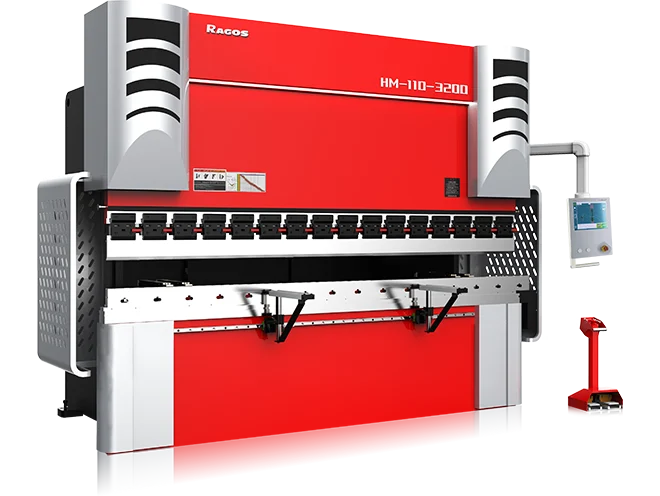
A pole bending press brake is a heavy-duty hydraulic CNC press brake — or a synchronized tandem pair — configured specifically to bend steel plate into the longitudinal profile needed to form a pole. The machine uses large-radius or V-die tooling to progressively bend a flat steel blank through multiple passes until the plate rolls into a cone or cylinder shape ready for seam welding.
Unlike standard sheet metal bending, pole forming doesn't produce a single sharp bend. Instead, the operator programs a sequence of closely spaced small-radius bends along the plate length, each slightly progressing the curvature until the full round or tapered profile takes shape.
Key characteristics of a pole bending press brake include:
- Long bed length — Typically 4m–12m+ to accommodate poles from 6m to 16m finished length
- High tonnage — 200T minimum for thin single-piece poles; 600T–2200T for tandem configurations handling thick structural pole plate
- Deep throat depth — Minimum 400mm to allow the curved plate to clear the frame during multi-pass bending
- CNC synchronization — In tandem setups, both machines must synchronize ram position to ±0.01 mm across the full bed
- Crowning compensation — Active crowning prevents the centre of long plates from bending at a different radius than the ends
Pole Types Made with a Press Brake
Not all poles are the same, and each type places different demands on your pole bending press brake configuration.
Street light poles (6m–12m) — The most common application. Typically 3–5 mm mild steel plate, tapered (conical) profile, pole diameter ranging from 60mm at the top to 300–500mm at the base. A single 200T × 6m press brake handles shorter poles. Longer poles above 8m require a tandem setup.
High mast poles (20m–40m) — Multi-section poles joined by field splices. Each section is 6m–12m in length, requiring tandem press brakes and high tonnage for thicker plate (5–10mm). Common in highway lighting, airport aprons, and port facilities.
Flag poles and decorative poles — Thinner material (1.5–3mm), often requiring precise taper geometry and smooth exterior surface finish. Lower tonnage requirements, but tight radius control is essential.
Utility and power poles — Structural poles for electrical distribution lines. Thick plate (6–12mm), high-tensile steel (Q345, S355), significant tonnage requirements. Tandem press brakes at 600T–1200T are standard for this category.
Conical vs cylindrical — Conical poles taper from base to top and require adjustable or conical tooling die sets. Cylindrical poles maintain a constant diameter along their length and use standard radius tooling with uniform pass spacing.
Single Bed vs Tandem: Which Pole Bending Press Brake Do You Need?
The decision between a single large-bed machine and a tandem configuration is the most important specification choice for pole production.
Single bed press brake (200T–600T, 4m–8m) is the right choice when:
- Your pole range is 6m–8m finished length
- Plate thickness stays below 6mm
- Material grade is Q235 or mild steel equivalent
- Production volume is moderate — 30–80 poles per shift
- You want a simpler machine setup with lower capital cost
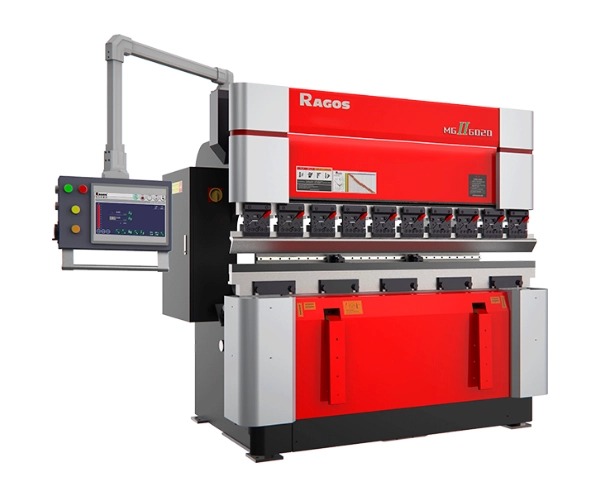
The 200-ton stainless and structural steel press brake handles light to medium pole production with a long enough bed for standard street light pole lengths.
Tandem press brake configuration is required when:
- Finished pole length exceeds 8m
- Plate thickness is above 6mm (requiring combined tonnage over 400T)
- Material is high-strength structural steel (Q345, S355, or higher)
- You need to produce multiple pole sections simultaneously
- High-volume production demands maximum machine uptime with split-mode flexibility
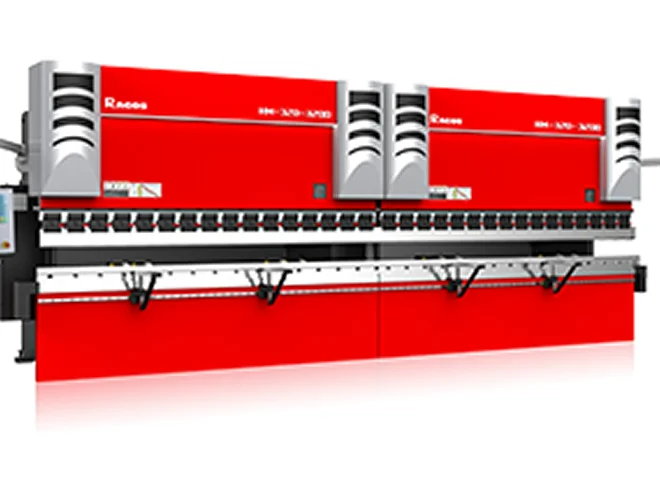
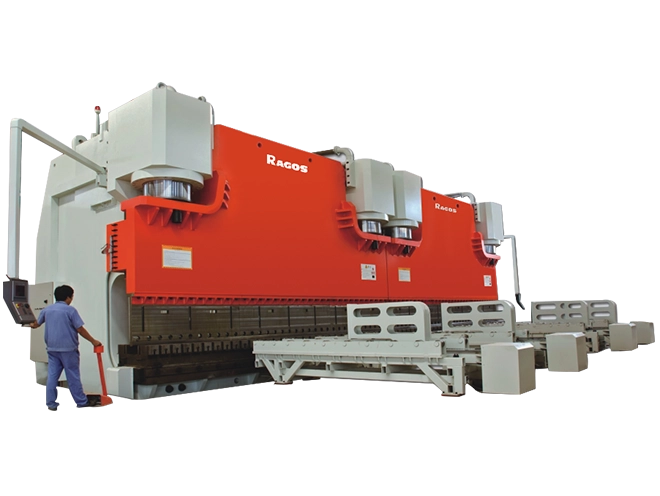
A tandem press brake for long sheet metal production synchronizes two machines via a master CNC controller, enabling bending across 10m–16m+ with ±0.1° accuracy across the full length. Split mode allows the two machines to operate independently for smaller jobs when the tandem configuration isn't needed.
| Feature | Single Bed | Tandem Setup |
|---|---|---|
| Typical bed length | 4m – 8m | 8m – 16m+ |
| Combined tonnage | 200T – 600T | 400T – 2200T |
| Pole length range | Up to 8m | Up to 16m+ |
| Setup complexity | Standard | Higher — synchronization required |
| Capital cost | Lower | Higher — two machines |
| Versatility | Good for one pole range | High — split mode for other work |
Key Specifications for a Pole Bending Press Brake
When evaluating a pole bending press brake, these are the specifications that determine whether a machine can handle your pole range.
Bending length — Must match or exceed your longest pole section. For 12m poles, a tandem configuration with 2 × 6m beds giving 12m total working length is the standard setup. For shorter poles up to 8m, a single 8m or tandem 2 × 4.6m configuration works well.
Tonnage — Calculate required tonnage based on plate thickness, material grade, and bend length. For Q235 structural steel at 5mm over 6m, approximately 300–400T is required. For Q345 at 8mm over 12m, 800T–1200T combined tonnage in a tandem setup is typical.
Throat depth (gauge depth) — For pole bending, a minimum 400mm throat is required. As the plate curves during multi-pass bending, the partially formed shape must clear the machine frame without collision. Larger diameter poles (500mm+) may require 600mm throat depth or more.
Synchronization accuracy (tandem only) — The two rams in a tandem setup must maintain ±0.01 mm position agreement throughout every stroke. Deviation beyond this causes a "step" deformation at the junction point between the two machines. EtherCAT-based CNC synchronization with dual grating ruler feedback is the current technical standard.
Crowning system — Over a 6m–12m bed, the machine frame deflects under load, causing the centre of the plate to bend at a slightly larger radius than the ends. Active hydraulic or mechanical crowning compensates for this deflection, maintaining consistent radius across the full bend length.
For long-bed applications, the CNC press brake 4000mm configuration shows how extended bed length delivers measurable production value on large structural parts.
Tooling for Pole Bending: Conical and Cylindrical Die Sets
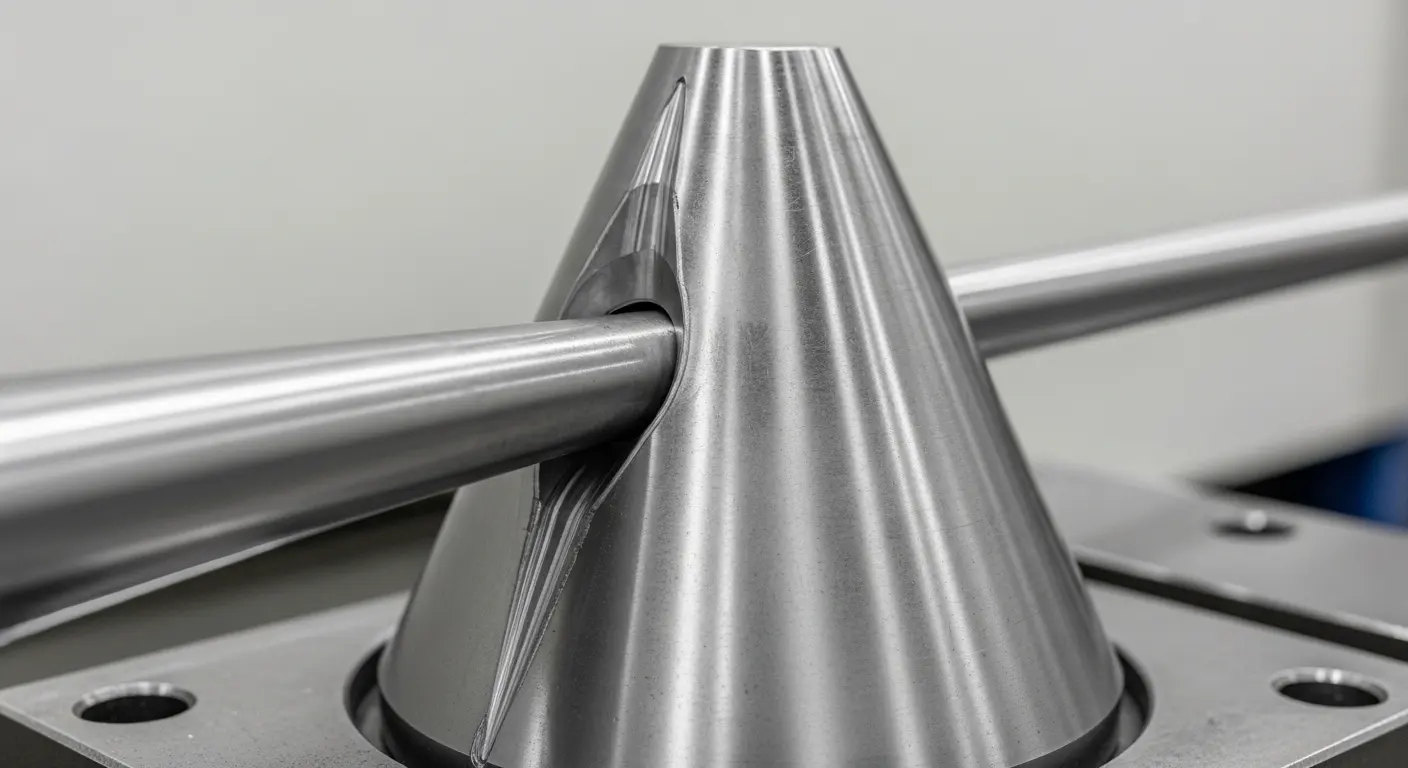
Pole bending uses different tooling than standard sheet metal bending — and getting this right is what separates clean pole geometry from distorted or cracked plate.
Radius tooling (curved punch and die) — For cylindrical poles, matched radius punch and die sets apply a consistent curve across the plate. Multiple passes with the same tooling progressively close the plate into a full cylinder. The die radius matches the target pole diameter at each bending stage.
Conical tooling die sets — Tapered poles require tooling that applies different radii at different positions along the plate length. Conical die sets achieve this by varying the die groove profile along the bed. A single press stroke bends the narrow end of the taper at a tighter radius than the wide end — replicating the finished taper geometry in each pass.
Multi-pass V-die bending — For smaller fabrication shops producing poles without dedicated conical tooling, multi-pass air bending using a standard V-die achieves the pole shape through a programmed sequence of straight bends placed at calculated intervals. The closer the intervals, the smoother the curve. For a 500mm diameter pole, typically 12–18 bending passes are programmed across the plate width.
Tooling material and hardness — Pole bending tooling works under repeated high-load conditions. Tool steel at 58–62 HRC is standard. Surface coating (chrome plating or nitriding) extends tool life significantly under the repetitive contact of structural steel plate.
The street light pole bending machine supplier page covers the complete tooling configuration options for tapered and cylindrical pole production in detail.
The Pole Bending Process: Step by Step
Understanding the bending sequence helps you evaluate any pole bending press brake accurately against your production requirements.
Step 1: Plate preparation
Steel plate is cut to a trapezoid shape (for conical poles) or rectangle (for cylindrical poles) on a plasma or laser cutting machine. Edge preparation — deburring and beveling — prepares the seam edges for subsequent welding.
Step 2: Pre-bending the edges
The long edges of the plate are pre-bent first — typically 15–25mm from each edge — to establish the starting curve. This step prevents flat spots at the seam line after the main forming sequence.
Step 3: Multi-pass forming sequence
The CNC program executes a series of progressive bends across the plate width. Each bend moves the material progressively closer to the target radius. The sequence begins from one edge and works toward the opposite edge, typically completing 10–20 passes depending on plate thickness and pole diameter.
Step 4: Closing and seam fit-up
After all bending passes, the plate forms a nearly closed cylinder or cone. The two long edges are brought together with the seam gap controlled to the welding tolerance — typically 0–2mm for longitudinal SAW or MIG welding.
Step 5: Tack welding and transfer
The formed pole section is tack-welded to hold its shape before transfer to the longitudinal seam welding station.
Materials Used in Pole Bending and Their Machine Requirements
Material grade determines the tonnage and tooling configuration your pole bending press brake needs.
Q235 / S235 structural steel — The standard grade for street light poles and smaller decorative poles. Tensile strength 370–500 MPa. Forgiving to bend, moderate spring-back. A 200T × 6m single machine handles Q235 at up to 5mm for poles up to 8m.
Q345 / S355 structural steel — Higher-strength structural grade for high mast poles and utility poles. Tensile strength 490–630 MPa. Requires approximately 1.3–1.5× the tonnage of Q235 at the same thickness. Spring-back is more pronounced — CNC spring-back compensation is mandatory for consistent radius across production runs.
Weathering steel (Corten A/B) — Used for architectural and decorative poles. Similar strength to Q345, but surface oxidation creates a protective layer that eliminates painting. Bending behavior is comparable to Q345.
Stainless steel (304, 316) — Used in high-specification architectural poles and coastal environments. Requires additional tonnage multiplier (×1.5 over mild steel), Rolla-V or polished tooling to protect surface finish, and spring-back correction specific to austenitic stainless grades.
The Full Pole Production Line Beyond the Press Brake
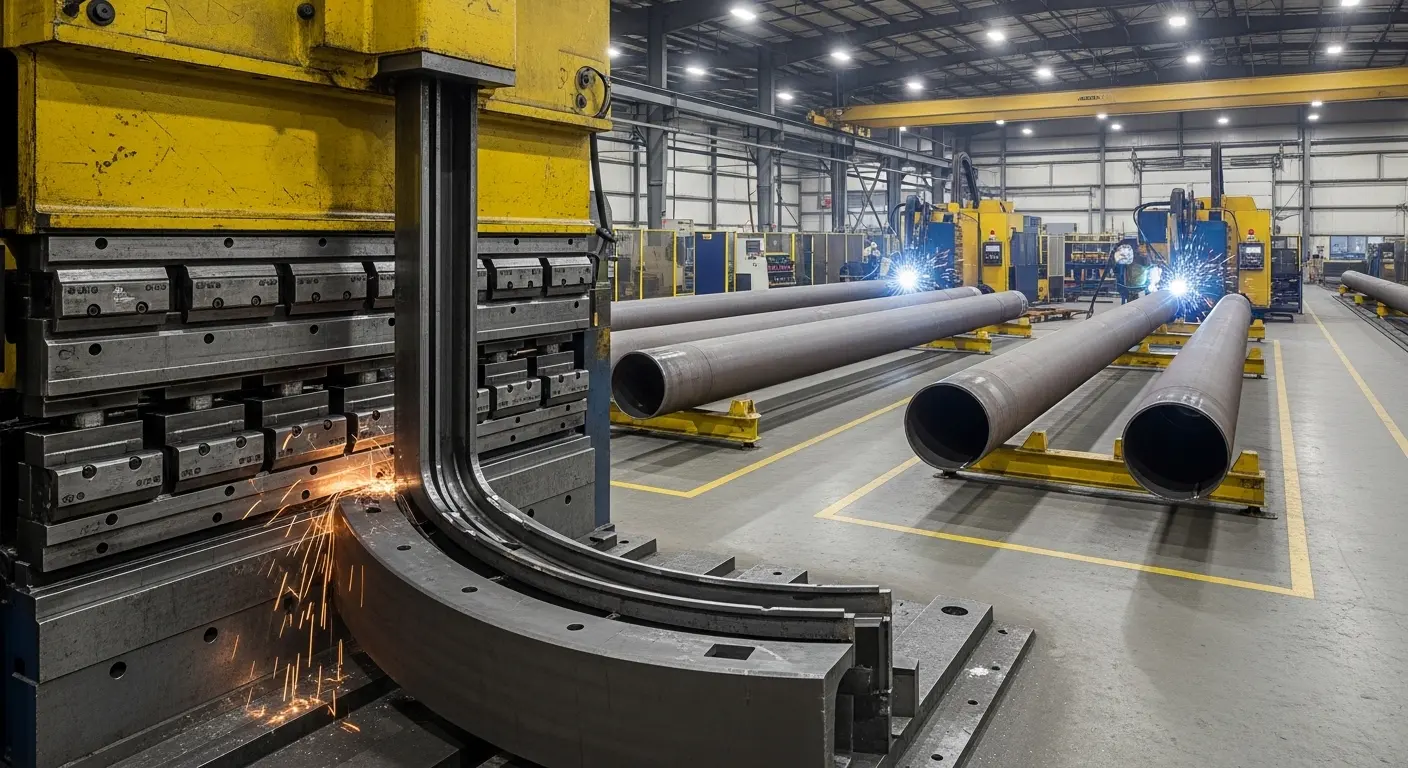
A pole bending press brake is the core of pole manufacturing, but the full production line includes several downstream processes that affect overall output capacity and quality.
Longitudinal seam welding — After forming, the pole seam is welded on a dedicated seam welding station using submerged arc welding (SAW) for thick plate or MIG for thinner wall poles. Weld quality directly affects the structural integrity of the finished pole.
Straightening — Long poles tend to develop slight bows or sweeps after welding due to weld heat distortion. A hydraulic straightening press corrects these deformations before the next process step.
Flange and base plate welding — Base flanges, top caps, and access door frames are welded onto the formed pole section. These secondary operations require fixtures and welding equipment alongside the bending line.
Surface treatment — Street light poles and utility poles are typically hot-dip galvanized for corrosion protection. Powder coating or paint systems are used for decorative poles. Surface treatment follows all forming and welding operations.
Shops sourcing a pole bending press brake alongside full-line capability should confirm that the press brake supplier can also advise on downstream equipment sequencing and production line layout.
How to Choose the Right Pole Bending Press Brake
Use these five selection criteria to narrow your machine specification before speaking with any supplier.
1. Define your maximum pole length
Your longest finished pole determines whether you need a single long-bed machine or a tandem configuration. Poles up to 8m: consider a single 6m–8m machine. Poles 8m–16m: specify a tandem setup.
2. Calculate your maximum tonnage requirement
Use your thickest plate, highest-strength material, and longest pole as your worst-case scenario. Apply the material tensile strength multiplier and add a 25% safety margin. For Q345 at 8mm over 12m, plan for at least 800T combined in a tandem.
3. Confirm throat depth for your largest pole diameter
A 500mm diameter pole requires at least 600mm throat depth to clear the frame during multi-pass bending. Verify this specification for your largest pole diameter before ordering.
4. Specify your tooling package
Confirm whether you need conical die sets (for tapered poles), radius tooling (for cylindrical poles), or a multi-pass V-die setup. Tooling is often quoted separately — include it in your total machine cost evaluation.
5. Evaluate synchronization and crowning in tandem setups
For tandem configurations, confirm synchronization accuracy (±0.01mm between rams), crowning system type (hydraulic or mechanical), and whether the CNC supports split-mode independent operation. These features directly affect your finished pole quality and machine ROI.
Frequently Asked Questions About Pole Bending Press Brakes
What is a pole bending press brake?
A pole bending press brake is a heavy-duty CNC hydraulic press brake — single or tandem — configured to bend steel plate into cylindrical or conical pole shapes for street lighting, high mast, utility, and flag pole manufacturing. It uses multi-pass bending sequences and specialized radius or conical tooling to progressively form the plate into a closed profile ready for seam welding.
What tonnage is needed for a pole bending press brake?
Tonnage depends on pole length, plate thickness, and material grade. A 200T × 6m single machine handles Q235 steel at up to 5mm for poles up to 8m. Longer or thicker poles require tandem configurations with combined tonnage from 600T to 2200T depending on the plate specification.
What is the difference between a single and tandem pole bending press brake?
A single machine uses one long-bed press brake (4m–8m) for shorter poles. A tandem setup links two machines via a master CNC controller to create a combined bed of 8m–16m+, enabling production of longer poles at higher combined tonnage. Tandem machines also support split-mode operation — allowing both machines to work independently on different jobs.
How many bending passes does a pole require?
The number of passes depends on pole diameter and plate thickness. A 300mm diameter pole from 4mm plate typically requires 10–14 bending passes. A larger 500mm diameter pole at 6mm may require 16–20 passes. Conical poles need more programming complexity because the radius changes along the plate length.
Can a standard CNC press brake be used for pole bending?
A standard press brake can produce simple poles at limited lengths and smaller diameters, but it lacks the throat depth, bed length, crowning compensation, and specialized tooling that dedicated pole bending press brake machines provide. For commercial pole production above 6m length or above 4mm plate thickness, purpose-configured equipment gives significantly better results.