

How to Choose a CNC Press Brake Supplier (Checklist)
Choosing a CNC press brake supplier is a decision that dictates your shop's productivity for the next decade. In the industrial world, the gap between a high-tier manufacturer and a low-end trading company isn't just a few dollars—it is the difference between $\pm 0.01\text{ mm}$ repeatability and a machine that "drifts" every afternoon. You must look beyond the glossy catalog and perform a forensic audit of the supplier’s background, engineering depth, and component sourcing. A common procurement mistake is focusing on the sticker price while ignoring the "black swan" costs of downtime.
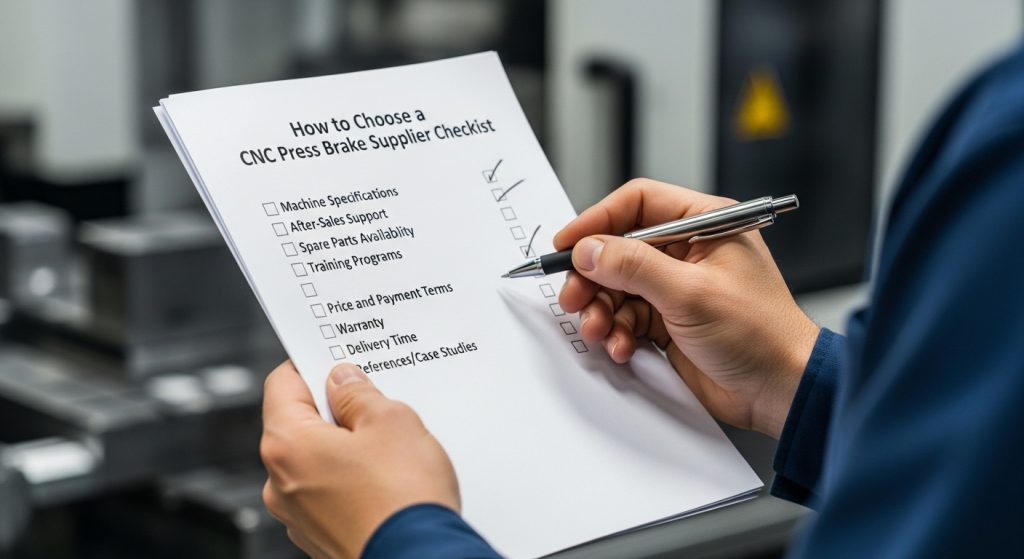
To protect your investment, you should watch for these critical supplier risk triggers:
- The "Software Wall": Suppliers using generic controllers that cannot handle modern 3D CAD/CAM imports.
- Structural Fatigue: Frames that haven't been stress-relieved, leading to permanent deformation under high tonnage.
- Phantom Support: Dealers who lack local technicians or a stocked spare parts warehouse in your region.
- Component Masking: Using "house brands" for hydraulics and electrics to hide lower-quality parts.
How Can You Verify If a CNC Press Brake Supplier Is a Real Manufacturer?
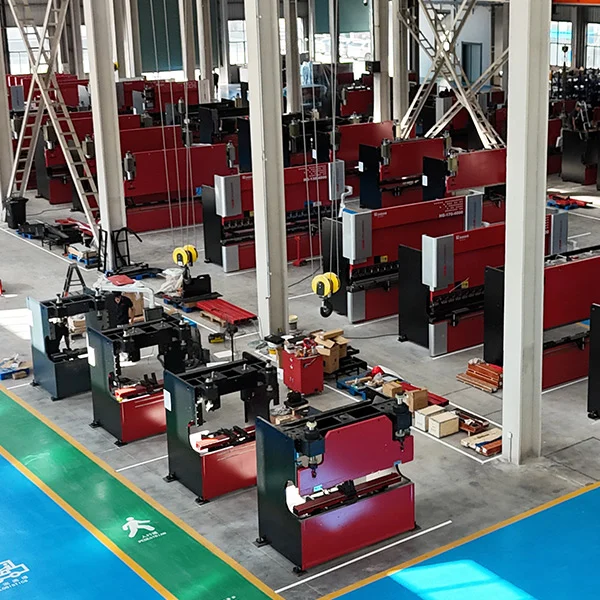
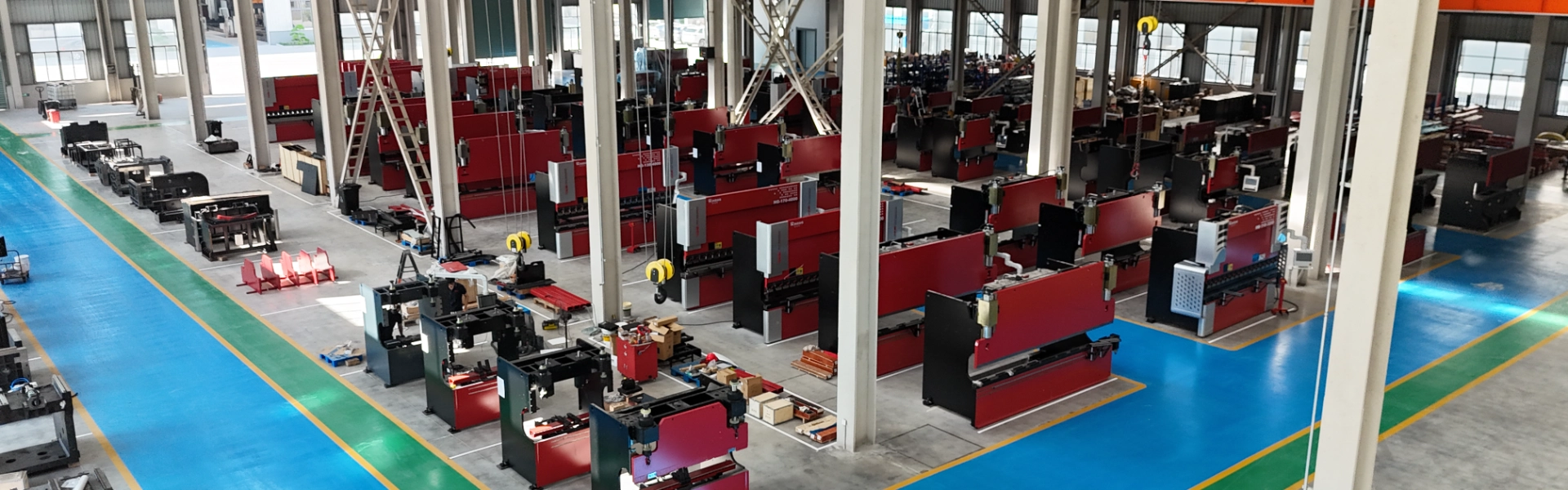
The internet makes every trading company look like a titan of industry. To verify a real manufacturer, you must demand proof of the assembly line. Ask for a live video walkthrough of the factory floors—real factories have massive machining centers for frames and distinct assembly stations for hydraulics and electrics.
Pro Tip: Ask for the serial number of a machine shipped last month. A real manufacturer can send you a photo of the nameplate and the corresponding factory test report within minutes. A trading company will usually stall.
Check the export shipment history. Large manufacturers maintain a steady stream of Bill of Lading records to global markets. If a supplier claims 20 years of experience but cannot show you a machine running in a shop similar to yours, they are likely a middleman with limited technical depth.
What Supplier Background Information Should Buyers Check First?
Years in business matter, but "years manufacturing press brakes" matters more. Many companies pivot to bending machines because they are popular, but they lack the engineering "DNA" required for high-precision hydraulics. Check for ISO 9001 and CE certifications, but don't just take a PDF at face value—verify the certificate number with the issuing body.
Validate customer references. Ask for two references in your country and call them. Ask about the "first year" experience: How many service calls did they need? Was the remote support actually helpful? A supplier who is proud of their machines will give you references willingly; one who hesitates is a supplier to avoid.
What Machine Technical Specifications Should Buyers Request From Suppliers?
Never settle for a generic "100 Ton" headline. Request a full technical specification sheet that includes the safety factor of the frame. You need to know the yield strength of the steel used in the side plates and the total weight of the machine—a lighter machine often means a less rigid frame that will flex under load ($F$).
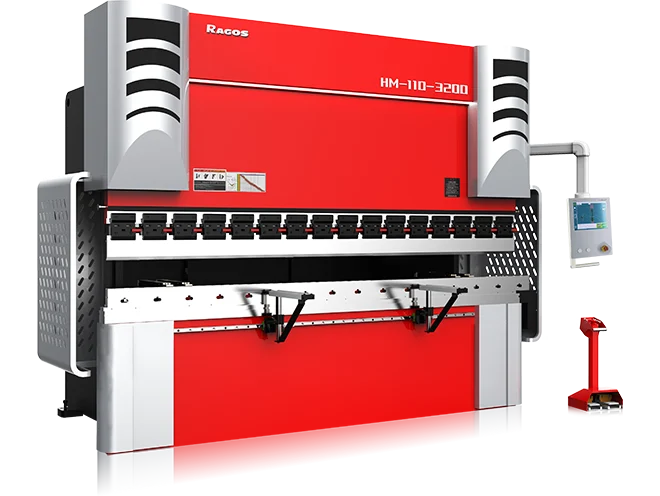
Verify the crowning system design. High-end suppliers use motorized mechanical crowning or hydraulic compensation to prevent "boat-shaped" bends. Request the "Deflection Compensation" parameters. Furthermore, ask for the Approach, Bending, and Return speeds in $\text{mm/sec}$. If these are not listed, the hydraulics may be underpowered for high-cycle production.
How Important Is CNC Controller Brand When Choosing a Supplier?
The controller is the "brain" of your press brake. If the brain is weak, the machine is just a manual press. Stick to industry-standard brands like Delem (Netherlands), Cybelec (Switzerland), or ESA (Italy).
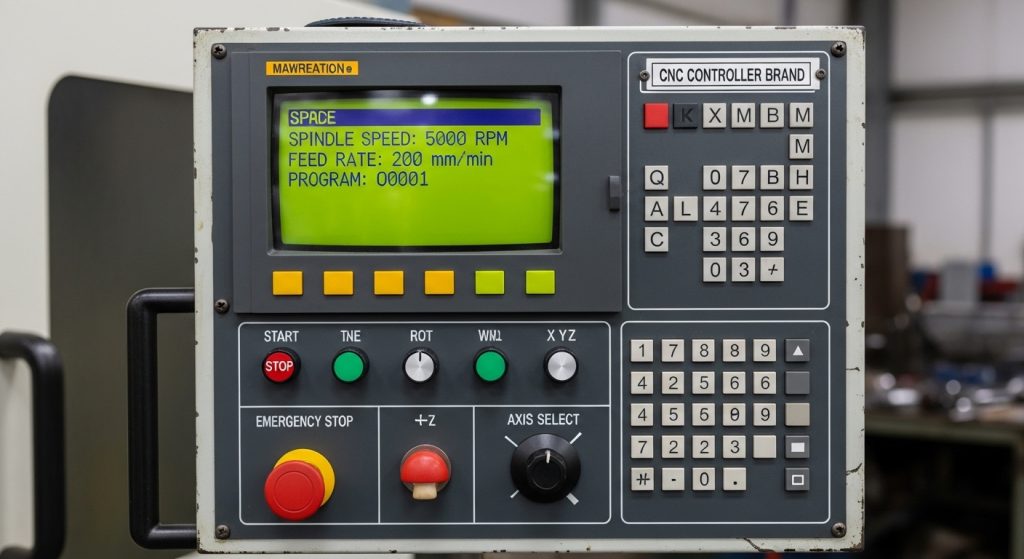
These brands ensure:
- Software Longevity: You can get updates and 3D offline programming support five years from now.
- Operator Availability: It is much easier to hire or train an operator on a Delem than on a generic "house brand" system.
- Global Support: If your supplier disappears, the controller manufacturer can still help you.
What Hydraulic and Electrical Component Brands Should Buyers Verify?
Open the electrical cabinet. It should be a masterpiece of organization, not a "nest" of wires. Look for Schneider, Siemens, or ABB components. These are easy to source locally if a contactor fails.
For hydraulics, verify that the valves and pumps are from Bosch Rexroth or Hoerbiger. These components must handle high-pressure cycles without leaking or suffering from "thermal drift"—where the oil heats up and the bend angle changes. Ask for a list of all major component brands in the contract; don't accept "equivalent quality" clauses.
What Accuracy and Testing Reports Should Buyers Ask Before Ordering?
A machine that works in a video might not work in your shop. You must demand a Factory Acceptance Test (FAT) report. This document should detail the angle accuracy over the full length of the bed—typically looking for $\pm 0.5$ degrees or better.
Request a real bending test video of the machine you are actually buying, showing the serial number. Ask for a "Parallelism Test" where they measure the gap between the ram and the bed at both ends. If the Y1 and Y2 axes are not perfectly synchronized, your parts will never be square.
How Should Buyers Evaluate After-Sales Support Capability?
When a machine goes down, you lose approximately $150/hour in revenue. Ask the supplier: "Do you have a VPN-based remote support tool?" Modern CNC machines allow technicians to log in and fix $90\%$ of software glitches instantly.
Verify the "Spare Parts Lead Time." Ask where the closest warehouse is located. A supplier who has to fly every seal and valve from overseas is a high-risk partner. Finally, check the training coverage. Will they train your operators via video, or will they send a technician to your site? Inadequate training is the leading cause of "user error" machine damage.
What Contract Terms Should Buyers Include When Ordering CNC Press Brakes?
A handshake is not a procurement strategy. Your contract must itemize the exact component brands (Delem, Rexroth, etc.) and the final FAT performance benchmarks.
Include a "Delivery Timeline Penalty" clause. If the machine is three months late, your production plan is ruined; the supplier should share that risk. Most importantly, tie the final $10-20\%$ payment to the successful installation and on-site accuracy verification. This ensures the supplier stays motivated to fix any "shipping gremlins" that appear after the crates are opened.
What Are the Most Common Red Flags When Choosing a CNC Press Brake Supplier?
Identifying a bad supplier early saves you a decade of headaches. Be wary of these "Red Flag" signals:
- The Ghost Factory: They refuse to show a live video of their production line or claim "confidentiality" for simple assembly areas.
- The "Too Good" Price: If the price is $40\%$ below the market average, they are likely using reclaimed steel for the frame or generic "grey market" hydraulics.
- Vague Accuracy Claims: Using phrases like "Industry Standard" instead of specific values like $\pm 0.01\text{ mm}$ for backgauge positioning.
- No FAT Allowed: If they won't let you or a third party inspect the machine before it goes into the shipping container, walk away.
How Do Global CNC Press Brake Suppliers Compare Across Different Regions?
When comparing global CNC press brake suppliers, you must weigh the "Service Density" of the brand in your region. While a brand might be a titan in Europe, if they lack a local office in your city, their high quality is offset by slow support. Global leaders like Amada and TRUMPF offer the highest precision, but their lifecycle cost is often triple that of a mid-tier industrial manufacturer.
How Do European CNC Press Brake Suppliers Compare in Quality and Automation?
European CNC press brake suppliers like Bystronic or LVD are the gold standard for "unmanned" production. They lead the market in robotic integration and AI-driven crowning. If your labor costs are high and your parts are complex, the premium price for European engineering is an investment in automation that pays off through reduced operator dependency.
How Do Chinese CNC Press Brake Manufacturers Compare in Cost and Production Scale?
Chinese CNC press brake manufacturers like Yawei or Shenchong have achieved massive production scales that drive down costs. In 2026, the top-tier Chinese brands use the exact same Delem controllers and Rexroth hydraulics as their European rivals. They are the best choice for "Value-to-Performance," provided you verify the dealer's local service reputation first.
How Should Buyers Compare China vs Europe CNC Press Brake Suppliers?
The China vs Europe supplier decision comes down to your "Tolerance for Downtime." European suppliers offer a security blanket of local engineers and high-speed parts delivery. Chinese suppliers offer much faster ROI due to lower initial capital investment. For most mid-sized shops, the best move is a top-tier Chinese machine sold through a reputable local dealer who handles the warranty.
What Import Questions Should Buyers Ask Before Ordering CNC Press Brakes Overseas?
Before you wire the deposit, use this import questions checklist to uncover hidden costs. You must ask: "Is the price CIF or DDP?" "Who handles the customs clearance?" and "Does the warranty cover the travel costs of the technician?" Many buyers forget that a 'free' warranty part still costs $1,500 in air freight if it isn't stocked locally.
How Do CNC Press Brake Prices in South Asia Affect Supplier Selection Strategy?
When you analyze Pakistan press brake price and India market trends, you see a focus on rugged, hydraulic simplicity. These regions are excellent for low-tech, high-tonnage applications. However, if your goal is 3D simulation and high-speed precision, you will find that suppliers in Turkey or China offer better "Technology-per-Dollar" than the local South Asian manual market.