

CNC Press Brake Price in Pakistan: What Changes the Final Cost
Navigating the industrial machinery market in Pakistan requires more than just a surface-level quote. When investing in a CNC press brake, the "sticker price" is rarely the final landed cost. In Pakistan’s current economic landscape, prices are influenced by fluctuating exchange rates, varying import duties, and the specific technical configurations required for local manufacturing demands.
Understanding the price of a CNC press brake involves dissecting the machine’s DNA—from its tonnage and controller complexity to the origin of its hydraulic components. Buyers often face significant financial risks by overlooking the following:
- Configuration Mismatch: Paying for high-end features that remain unused, or choosing an under-powered machine that fails to meet production tolerances.
- Hidden Import Fees: Underestimating the impact of port handling, inland freight from Karachi, and customs clearing agents.
- The "Cheap Machine" Trap: Saving 15% on the initial purchase but spending 40% more on maintenance due to a lack of local spare parts.
- Controller Obsolescence: Opting for outdated controllers that cannot integrate with modern CAD/CAM software.
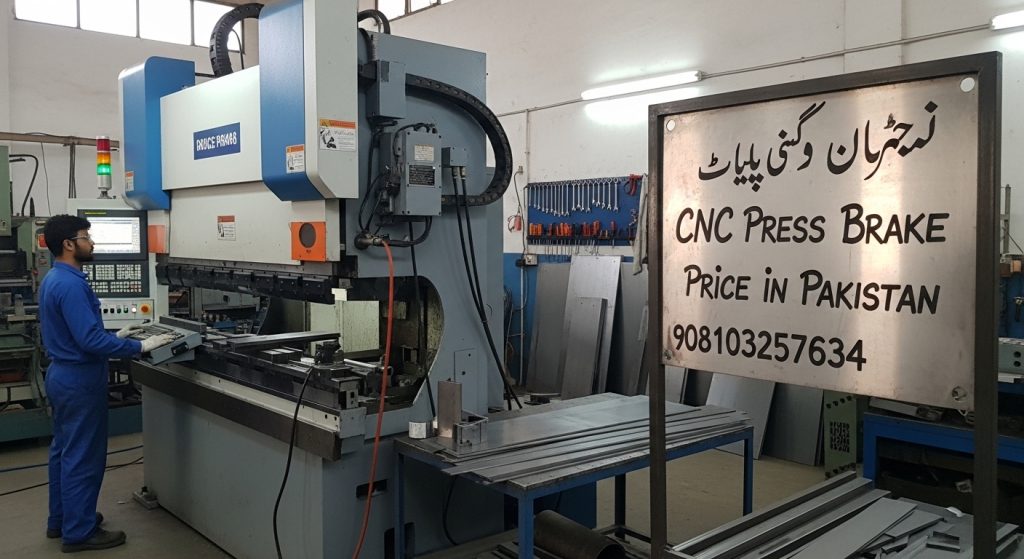
What Is the Typical CNC Press Brake Price Range in Pakistan?
The price of a CNC press brake in Pakistan is segmented primarily by its technological "tier" and bending capacity. Because these machines are almost exclusively imported, prices are usually pegged to the US Dollar (USD) or Euro (EUR).
Entry-Level Hydraulic/NC Machines
These are typically "NC" (Numerical Control) rather than full "CNC." They offer basic 2-axis control (X and Y).
- Price Range: $12,000 – $22,000 (Ex-Factory)
- Best For: Simple bending tasks, small workshops, and low-tolerance architectural work.
Mid-Range CNC Press Brakes
These feature synchronized hydraulic systems and 3 to 4 axes (Y1, Y2, X, R). They often use reliable controllers from brands like Delem (Netherlands) or Cybelec (Switzerland).
- Price Range: $25,000 – $55,000 (Ex-Factory)
- Best For: General sheet metal fabrication, switchgear cabinets, and automotive parts.
Advanced Multi-Axis CNC Machines
High-precision machines with 6+ axes, automatic crowning, and high-speed hydraulics.
- Price Range: $60,000 – $120,000+ (Ex-Factory)
- Best For: Aerospace, high-volume production, and complex geometry bending.
High-Tonnage Automation-Ready Machines
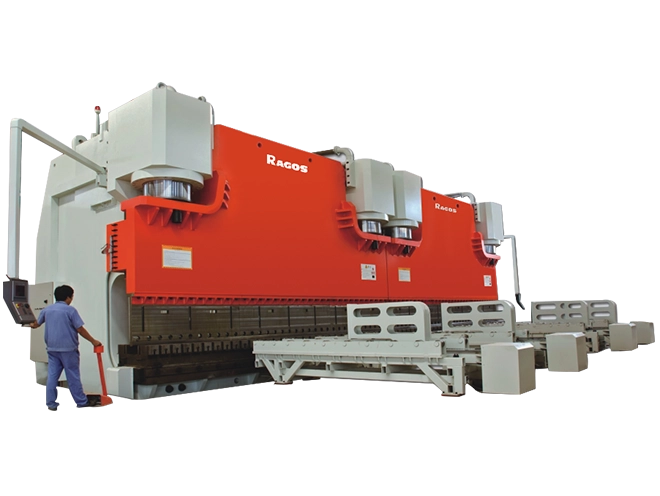
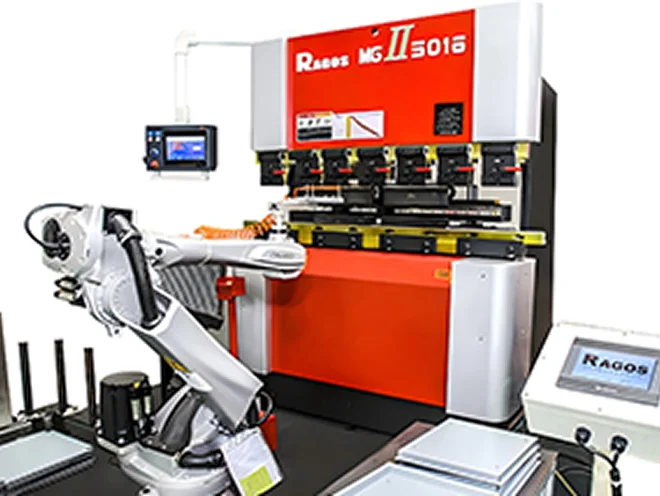
Custom-built machines exceeding 400 tons, often integrated with robotic arms or automatic tool changers.
- Price Range: $150,000 – $350,000+ (Ex-Factory)
How Do Tonnage and Bending Length Change CNC Press Brake Price in Pakistan?
The physical scale of the machine is the most direct driver of the base cost. This is due to the raw material (steel) and the power of the hydraulic system required.
Frame Size and Structural Reinforcement
As the bending length increases (e.g., from 2500mm to 4000mm or 6000mm), the machine frame must be significantly reinforced to prevent "deflection" or bowing under pressure. A 6-meter machine isn't just twice as long as a 3-meter machine; it requires exponentially more steel and specialized machining to maintain accuracy across the bed.
Hydraulic Cylinder Capacity
Higher tonnage (e.g., 100T vs. 300T) requires larger cylinders, higher-capacity pumps, and more robust valves. In the Pakistan market, 100-ton to 160-ton machines are the most common "sweet spot" for pricing, as they are produced in higher volumes by manufacturers, leading to better economies of scale.
| Tonnage | Typical Length | Price Impact Factor |
| 40T - 60T | 1300mm - 2000mm | Baseline (1.0x) |
| 100T - 130T | 2500mm - 3200mm | 1.4x - 1.6x |
| 160T - 250T | 3200mm - 4000mm | 2.2x - 2.8x |
| 400T+ | 4000mm+ | Custom Quote Required |
How Does CNC Controller Brand Change the Final Machine Price?
The controller is the "brain" of the press brake. Choosing the wrong one can make a high-quality mechanical frame nearly useless for precision work.
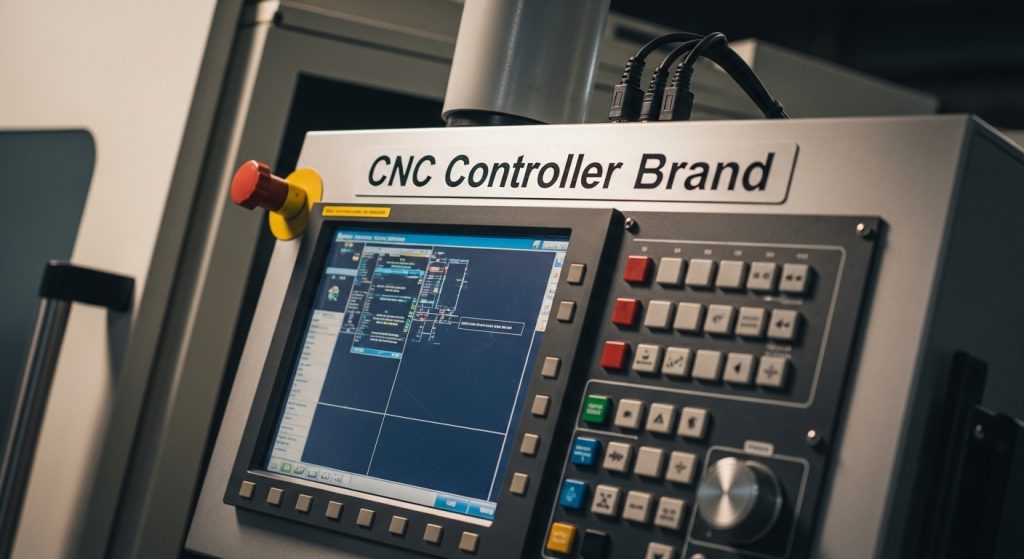
- Basic Controllers (e.g., E21, TP10): These are simple positioners. They add minimal cost but lack graphical interfaces and 3D simulation.
- Mid-Tier Controllers (e.g., Delem DA-53T, Cybelec CybTouch): These offer touch-screen interfaces and 2D graphical programming. Expect a price increase of $3,000 – $5,000 over basic models.
- High-End Controllers (e.g., Delem DA-66T / DA-69T): These support 3D visualization, offline software, and multi-axis control. These can add $8,000 – $15,000 to the machine price but significantly reduce setup time and waste.
How Do Machine Brand Origin and Country of Manufacture Affect Price?
Pakistan's import market is dominated by three main geographical tiers:
- China (Economy & Value): Offers the most competitive pricing. While "cheap" machines exist, China also produces "High-End Export" grades that rival European entry-level machines at 40% lower costs.
- Turkey (Mid-Tier): Turkish brands (like Durma or Ermaksan) are highly respected in Pakistan. They offer a middle ground: European-standard components with lower labor costs than Germany or Italy. Expect to pay 30-50% more than a Chinese equivalent.
- Europe (Premium): Brands from Germany, Switzerland, and Italy (e.g., Trumpf, Bystronic) represent the peak of precision. These machines are often 2x to 3x the price of Chinese machines but offer unmatched longevity and speed.
What Import Costs Should Buyers in Pakistan Add to Base Machine Price?
The "Ex-Factory" price is only the beginning. To calculate the Landed Cost in cities like Lahore, Karachi, or Gujranwala, you must factor in:
- Ocean Freight: Shipping a heavy, oversized machine in a 20ft or 40ft Flat Rack container.
- Import Duties & Taxes: Pakistan’s customs tariff (PCT Code 8462) includes Customs Duty, Sales Tax, and Income Tax. Depending on the current SROs (Statutory Regulatory Orders), this can add 25% to 45% to the invoice value.
- Port & Terminal Charges: Clearing at Port Qasim or Karachi Port.
- Inland Transport: Moving a 10-ton machine from the port to your factory requires specialized low-bed trailers and cranes.
- Installation: While some suppliers include this, you must often cover the engineer’s travel, lodging, and daily allowance.
How Do Optional Features Increase CNC Press Brake Final Cost?
Customization is where many buyers blow their budget. Common "add-ons" include:
- Additional Back Gauge Axes (R, Z1, Z2, X-Prime): Essential for complex parts. Each additional axis can add $2,000 – $4,000.
- Laser Safety Systems: Systems like DSP or LazerSafe protect operators and are often mandatory for international safety standards, adding $3,000 – $6,000.
- Mechanical Crowning: Compensates for machine deflection. An automatic CNC crowning system is almost mandatory for lengths over 3 meters and adds roughly $2,500.
- Tooling Packages: High-quality hardened and ground punches and dies can easily add $3,000 – $10,000 depending on the variety of profiles required.
How Does After-Sales Service Availability Affect Press Brake Price?
A machine that is "down" is a liability, not an asset. In Pakistan, local support is the most valuable "hidden" component of the price.
- Local Agent Margin: Buying through a local dealer often costs more than buying direct, but that margin covers their local engineers and stocked spare parts.
- Warranty Scope: Ensure the price includes "on-site" labor, not just parts replacement.
- Spare Parts Inventory: Machines using standard components (Schneider electronics, Rexroth hydraulics) are easier to fix in Pakistan than those using proprietary, brand-only parts.
What Are the Most Common Price Comparison Mistakes Buyers Make in Pakistan?
- Comparing Tonnage Only: Not all "100-ton" machines are equal. Compare the frame weight; a heavier frame means less deflection and better accuracy.
- Ignoring the Hydraulic System: A high-end Delem controller paired with a low-quality Chinese hydraulic valve block will result in inconsistent bending.
- Overlooking Power Consumption: Modern servo-hybrid CNC press brakes can save up to 60% in electricity—a massive factor given Pakistan's rising industrial energy tariffs.
- FOB vs. DDP: Ensure you know if the quote includes shipping and taxes. An $18,000 FOB quote can easily become a $28,000 Landed cost.
How Do Global CNC Press Brake Prices Compare to Pakistan Import Market Pricing?
Global pricing often fluctuates based on raw material costs (steel) and semiconductor availability for controllers. Pakistan buyers should monitor global trends as local dealers adjust prices based on international benchmarks. Explore Global CNC Press Brake Models
How Do European CNC Press Brake Suppliers Compare to Pakistan Import Pricing?
European machines command a premium due to their high-speed hydraulics and long-term accuracy. For Pakistani firms doing high-end export work, the higher initial investment is often offset by the prestige and reliability of European engineering. European Supplier Price Analysis
How Do China CNC Press Brake Manufacturers Impact Price Levels in Pakistan?
China remains the primary source for the Pakistani industrial sector. The high volume of trade between the two nations and the presence of specialized import channels make Chinese machines the benchmark for "value-for-money." Chinese Manufacturer Price Comparison
How Do Turkey Press Brake Dealers Supply Machines Into Pakistan Market?
Turkish manufacturers have carved a significant niche in Pakistan, offering machines that meet CE standards at prices more accessible than German alternatives. Turkish Machine Availability in Pakistan
What Import Questions Should Pakistan Buyers Ask Before Ordering CNC Press Brakes?
Before opening an LC (Letter of Credit), buyers must clarify the incoterms, the specific PCT codes for customs, and the availability of local technical commissioning. View the Import Checklist
How Does India Press Brake Supply Compare to Pakistan Import Market Pricing?
While India has a robust manufacturing base for press brakes, direct trade barriers often make importing these machines into Pakistan more complex and costly than importing from China or Turkey. Regional Price Benchmarking