

CNC Press Brake Dealer in Turkey: How to Compare Quotes Properly
Finding a CNC press brake dealer in Turkey is a strategic move for any shop looking to balance high-end precision with smart capital spending. The Turkish market is unique because it serves as a massive manufacturing hub that bridges European engineering standards with competitive production costs. However, when you start receiving quotes, you will notice a wide range in pricing that can be confusing if you don't know what lies beneath the sheet metal.
Comparing these quotes properly requires you to look past the "sticker price" and evaluate the specific components, frame rigidity, and long-term service capability of the dealer. A cheap quote often hides compromises in the controller brand or the quality of the hydraulic valves, which can cost you thousands in downtime later.
This guide will walk you through the Turkish dealer landscape and provide a framework to validate every technical detail. By following this procurement logic, you can ensure your investment delivers the repeatability and speed your production demands.
You should watch for these common quote risks when evaluating Turkish dealers:
- Standard quotes that exclude essential tooling or safety systems to look cheaper.
- High-performance claims backed by "generic" controllers instead of industry-standard brands.
- Vague descriptions of "installation and training" that lead to hidden costs later.
- Low-cost frames that lack the stress-relieved steel needed for heavy-duty work.
Who Are the Main CNC Press Brake Dealers and Supply Channels in Turkey?
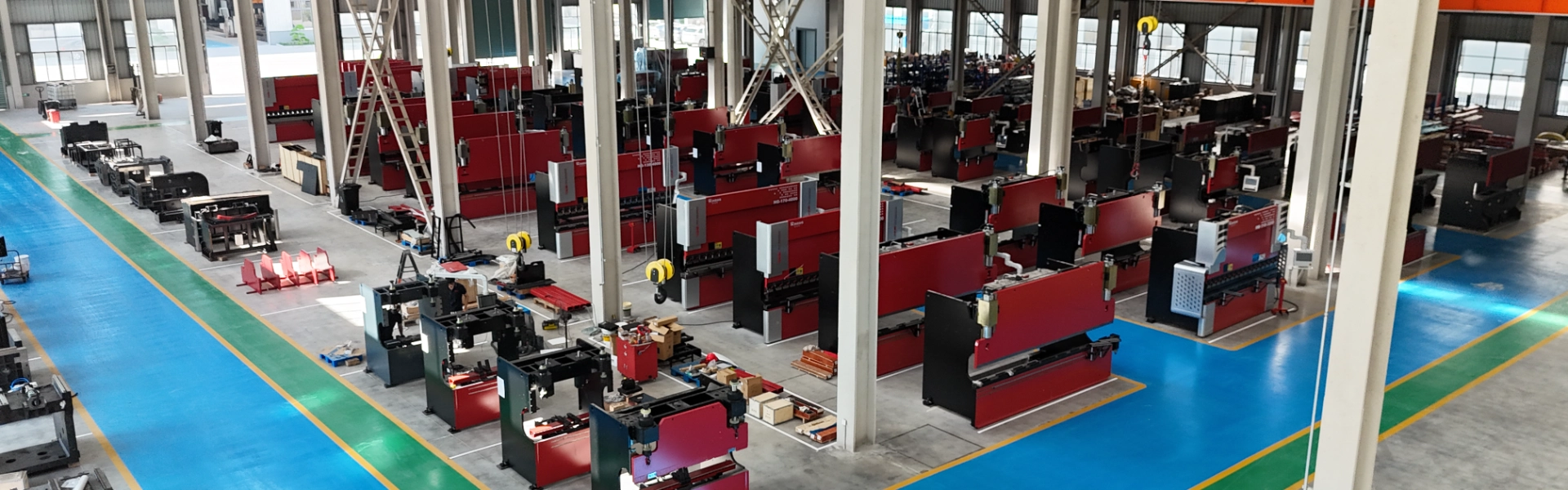
The supply chain for CNC press brakes in Turkey is divided into three primary channels that you must navigate. First, you have the large local manufacturers like Durma, Ermaksan, and Dener, who often handle direct sales or work through dedicated regional branch offices. These companies are the "titans" of the Turkish market, providing a factory-direct relationship that ensures deep technical knowledge and immediate access to spare parts.
Second, you will find dealers that specialize in European brands. These suppliers cater to high-end shops that require specific German or Italian technologies. Finally, there is a growing network of import dealers who bring in machines from Asia, specifically China. These dealers focus on high "cost-performance," offering a lot of features for a lower price point. Understanding which channel you are talking to is vital because it changes the level of support and the origin of the components you will be getting.
How Does the CNC Press Brake Dealer Market Structure Work in Turkey?
The Turkish market operates on a hybrid model of local manufacturing excellence and regional distribution. Most of the action is centered in industrial hubs like Bursa, Konya, and Kayseri. In these cities, you will find a dense ecosystem of dealers who not only sell the machines but often provide regional service for multiple brands. This regional distribution model is beneficial for you because it means help is usually just a short drive away.
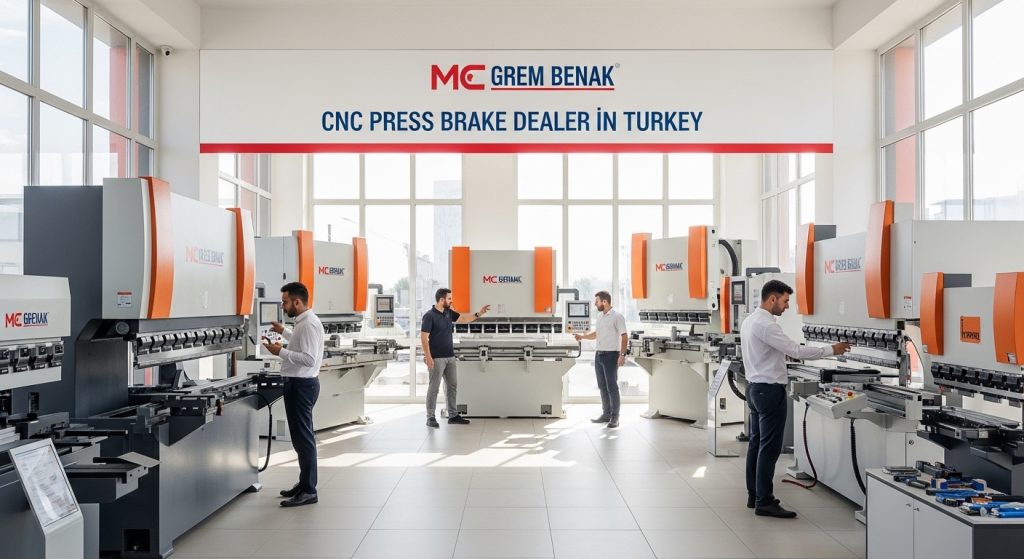
Large manufacturers often use this dealer network to reach smaller workshops, while handling major industrial contracts directly. For you as a buyer, this means you can often find a local dealer who can show you a demo machine nearby. This structure keeps the market competitive, but it also means you must verify if your dealer is a "certified partner" or just a middleman. A certified partner will have factory-trained technicians, whereas a general dealer might struggle with complex software issues.
What Should Be Included in a CNC Press Brake Quote From a Turkey Dealer?
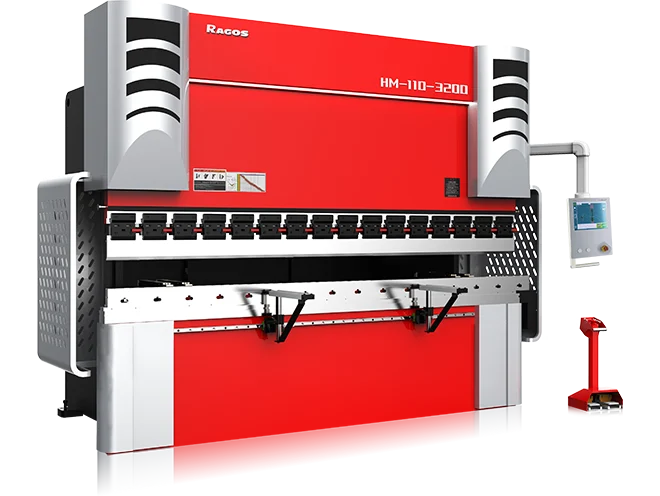
A professional quote from a Turkish dealer should be a detailed roadmap of the machine’s capabilities. You must look for the specific bending force ($F$) and length to ensure it matches your thickest materials. Beyond the basics, the quote must specify the CNC controller brand—look for names like Delem, Cybelec, or ESA. These "brains" of the machine dictate how easy it is for your operators to program complex parts.
The backgauge configuration is another critical line item. A "4-axis" backgauge (X, R, Z1, Z2) provides much more flexibility than a simple 2-axis setup. Your quote should also clearly state the safety system included, such as laser guarding (like Fiessler or LazerSafe), and whether the tooling is a "standard set" or customized for your drawings. Finally, verify that installation, on-site training, and at least a 12-month warranty are part of the total price.
Why Do Some Turkey Dealer Quotes Look Cheaper Than Others?
When you see a price that looks too good to be true, it usually comes down to component "downgrading." A dealer might save money by using a basic 2D controller instead of a high-end 3D graphical interface. You might also find that the hydraulic block is a generic brand rather than a Tier-1 German brand like Bosch Rexroth or Hoerbiger. These components are the heart of the machine’s accuracy and longevity.
Frame design is another hidden cost-cutter. High-quality Turkish machines use heavy-duty, stress-relieved monoblock steel frames. Cheaper quotes might use lighter frames that flex more under load, leading to inconsistent angles. You should also check if the "optional" accessories like motorized crowning—which compensates for frame deflection—are missing from the low quote. Motorized crowning is essential for maintaining accuracy across the full length of the bed.
How Can Buyers Compare CNC Press Brake Technical Specifications Properly?
To compare machines fairly, you must look at the "Repeatability" and "Positioning Accuracy." For a quality Turkish machine, you should expect a repeatability of $\pm 0.01\text{ mm}$ on the Y-axis. If a quote doesn't list these numbers, ask for them. You should also compare the "Approach" and "Return" speeds of the ram. Higher speeds mean shorter cycle times and more parts per hour.
Frame rigidity is harder to see on a spec sheet, but you can compare the total weight of the machine. A heavier machine generally indicates a more robust frame with less potential for deflection. Furthermore, check the "Throat Depth"—this determines how deep a flange you can bend before the part hits the machine frame. If you plan to bend deep boxes or large panels, a deeper throat is a specification you cannot ignore.
How Do Turkish Machines Compare to European and Asian Press Brakes?
Turkish press brakes are often called the "value disruptors" of the global market. They typically offer a 30% lower cost than premium European rivals like Trumpf or Bystronic, while maintaining very similar precision and using many of the same high-end components. This makes them the "sweet spot" for many growing fabrication shops.
Compared to Asian imports, Turkish machines are generally seen as more robust and easier to service within the EMEA region. While Chinese machines often lead on price and hyper-automation features, Turkish manufacturers have a longer history of meeting strict CE safety standards. This means when you buy through a Turkish dealer, you are getting a machine that is built for the rigors of the European market but at a price that reflects Turkey's efficient manufacturing ecosystem.
What Service and Spare Parts Questions Should Buyers Ask Turkey Dealers?
The machine is only as good as the support behind it. You must ask your dealer exactly how many service engineers they have based in your region. Ask them for a "Service Level Agreement" (SLA) that defines their emergency response time. If your machine goes down, every hour of waiting is a loss of revenue.
You should also verify the "Local Spare Parts Stock." Many Turkish machines use standardized parts from global brands (Siemens, Schneider, Rexroth), which is a huge advantage because you can find replacements locally if the dealer is out of stock. However, specific mechanical parts like backgauge fingers or ram seals should be on the dealer's shelf. Ask if they offer "Remote Support" via a VPN connection to the CNC controller, which can often solve software glitches in minutes without a site visit.
What Are the Most Common Mistakes When Comparing Press Brake Quotes in Turkey?
The most frequent error you can make is choosing a machine based purely on the "Tons and Meters" without looking at the controller. A machine with a 150-ton capacity is useless if the controller is too difficult for your team to use. Another mistake is ignoring the cost of tooling. Some dealers include a "starter set" that is poor quality, forcing you to buy new tools immediately.
Don't forget to check the service coverage. A dealer might offer a great price but have no technicians in your city, meaning you'll pay high travel costs every time you need a check-up. Finally, verify the "Real Manufacturer Source." Some dealers in Turkey act as "private label" sellers, putting their own brand on machines made by smaller, lower-quality factories. Always ask to see the manufacturing facility or proof of the machine’s origin to ensure you are getting a reliable product.
How Do Global CNC Press Brake Manufacturers Compare to Turkey Dealer Supply?
When you look at global CNC press brake manufacturers, you will see that many top-tier brands now compete directly with Turkish dealers. While the global giants focus on high-speed automation and Industry 4.0 integration, the Turkish supply market remains the leader for "workhorse" machines. The main difference is often the software ecosystem; global brands offer integrated CAD/CAM suites that can manage an entire fleet of machines, whereas Turkish dealers focus on providing a standalone, high-performance bending platform.
How Do European Press Brake Suppliers Compare to Turkey Dealer Supply?
The primary difference you will notice with European press brake suppliers is the premium price for advanced ergonomics and "unmanned" production capabilities. European machines are often designed for high-wage environments where every second of operator time saved is vital. In contrast, Turkish dealers provide machines that are robust and precise but may require a bit more manual interaction unless you opt for their high-end robotic bending cells.
How Do Chinese CNC Press Brake Manufacturers Supply Machines Into Turkey?
You will find that Chinese CNC press brake manufacturers are increasingly active in Turkey, often partnering with local trading companies. They provide a massive variety of styles and very short delivery times. The "China-Turkey" connection is driven by extreme cost-performance, where you can get a servo-electric machine for the price of a traditional hydraulic one. For you, this means more options, but it also requires more careful vetting of the dealer's technical support capabilities.
How Should Buyers Compare China vs Europe CNC Press Brake Suppliers Before Importing?
Before you decide to compare China vs Europe suppliers, you must evaluate your "Tolerance for Downtime." European suppliers offer a high-security blanket with extensive service networks, while Chinese suppliers offer the fastest return on investment due to the low initial cost. When buying through a Turkey dealer, you are getting a blend of these worlds, as many Turkish machines use European "brains" and hydraulic systems with efficient local assembly.
What Import Questions Should Buyers Ask Turkey Dealers Before Ordering Overseas Machines?
If your dealer is offering a machine from outside Turkey, use an import questions checklist to protect your budget. You must ask who is responsible for the customs clearance, the VAT, and the "Last Mile" delivery to your shop floor. More importantly, verify if the warranty is handled by the local dealer or if you have to wait for parts to ship from overseas. Clear communication on these points prevents a "cheap" import from becoming a financial headache.
How Does the India Press Brake Supply Market Compare to Turkey Dealer Supply?
While the India press brake supply market is growing, it is currently more focused on manual and NC hydraulic machines for its domestic market. Turkish dealer supply is generally more advanced in terms of CNC technology and synchronization. If you are looking for high-precision, multi-axis bending, the Turkish market is currently the more mature choice compared to the lower-cost but less technologically advanced options often found in the emerging Indian export market.