

What to Ask Before Importing a CNC Press Brake (Avoid Costly Mistakes)
Importing a CNC press brake can save your shop thousands in capital costs, but it isn't without its "potholes." You aren't just buying a machine; you are buying a decade-long partnership with a supplier thousands of miles away. If you don't ask the right questions upfront, you risk receiving a machine with a flexible frame, generic hydraulics, or software that doesn't have a legal license. Supplier verification matters far more than a glossy PDF catalog. You need to verify that your manufacturer is actually building the machine and not just middle-manning a lower-quality unit.
This guide provides a structured audit to help you validate everything from the ram’s accuracy to the quality of the export crate. By following this framework, you can ensure that your import is a growth engine for your business, not a maintenance nightmare.
Before you wire that deposit, you must clear these risk triggers:
- Verification Gap: Is the "factory" just a trading office with a good website?
- Component Masking: Are they using "equivalent" parts instead of the premium brands you paid for?
- Testing Void: Will the machine be tested with your specific material thickness before it leaves?
- Support Silence: Who answers the phone at 2 AM when your controller throws an error code?
How Can You Verify If a CNC Press Brake Supplier Is a Real Manufacturer Before Importing?
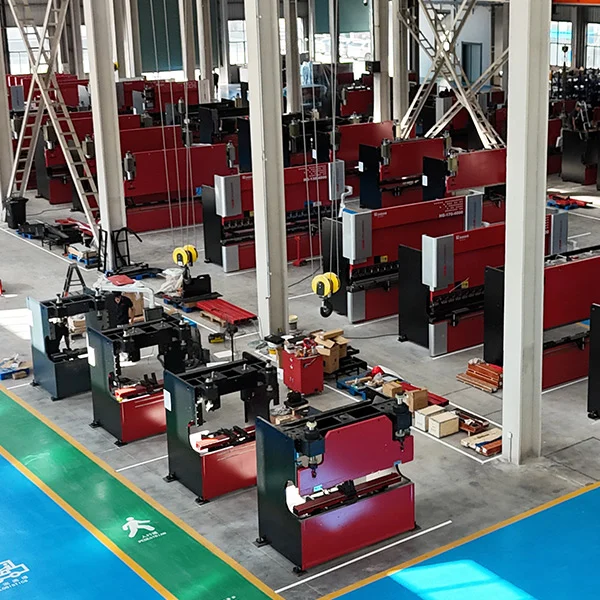
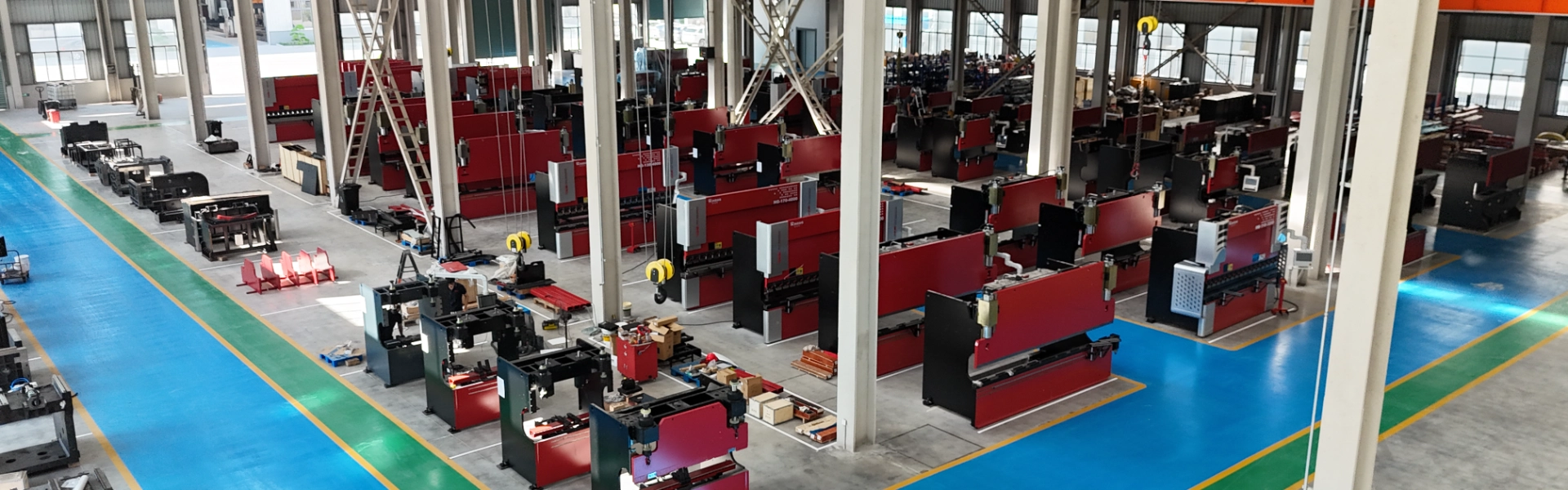
The industrial world is full of "trading companies" that look like massive factories online. To verify you are talking to a real manufacturer, you must ask for a live video walkthrough of the production floor. A real factory will show you heavy frame machining centers, distinct assembly lines for hydraulics, and a testing area with machines under power.
Look for the "Identity Match": Ask the salesperson to show their face and the factory nameplate in the same shot. If they refuse, you are likely talking to an agent.
You should also request an export shipment history. Real manufacturers can provide Bill of Lading records showing recent deliveries to your region. Finally, verify their assembly line capacity. Ask: "How many 100-ton units do you have in assembly right now?" A real factory will have several stages of production visible at once, not just a single finished machine in a showroom.
What Manufacturer Background Questions Should Buyers Ask Before Importing?
Years in the "machinery" business isn't the same as years building press brakes. You need a partner with deep metal forming DNA. Ask: "How many years has your specific factory been manufacturing CNC press brakes?" You want a team that understands why a frame needs to be stress-relieved, not just how to weld steel together.
Request real customer references from your own country. A reputable supplier will have a list of buyers who can testify to the machine’s performance and the supplier's honesty. Furthermore, ask about their production capacity. If they only build three machines a month, they may lack the scale to provide a stable spare parts supply chain. A supplier with a high volume of export history is more likely to understand the unique requirements of international power grids and shipping standards.
What Technical Machine Questions Must Be Asked Before Importing a CNC Press Brake?
You cannot rely on a catalog to tell you the truth about a machine's strength. You must ask for real tonnage test proof. Ask: "What is the maximum $F$ (force) your frame can handle without exceeding the safety factor?" A high-quality frame should be made of stress-relieved monoblock steel.
Specific Technical Checkpoints:
- Crowning Type: Is it a mechanical or hydraulic crowning system? Mechanical is often preferred for precision across the full bed.
- Ram Accuracy: What is the Y1/Y2 repeatability? You should look for $\pm 0.01\text{ mm}$ for professional work.
- Throat Depth: How deep can the part go into the machine? A shallow throat limits your ability to bend large panels.
- Accuracy Standards: Does the machine meet ISO or CE standards for bending parallelism?
How Important Is CNC Controller Authenticity When Importing Press Brakes?
The controller is the "brain" of your operation. If the brain is a fake or a generic clone, your machine will never reach its potential. You must ask for controller brand verification. Stick to industry leaders like Delem, Cybelec, or ESA.
Ask for proof of an original software license. Some low-end suppliers install "cracked" versions of 3D software that cannot be updated. This is a major risk, as you will be locked out of future features or bug fixes. Also, confirm the remote support capability. Most modern CNC controllers allow the manufacturer to log in via VPN to fix software glitches instantly. If the supplier doesn't offer this, you will be waiting days for a technician to travel for a simple software fix.
What Hydraulic, Servo, and Electrical Component Brands Should Buyers Verify Before Importing?
You must "look under the hood" of the machine. A cheap machine often uses "house brand" hydraulics that leak or drift as the oil heats up. Ask for a specific list of brands for every major component.
Gold Standard Components
The provided table lists preferred global brands for key industrial machine components, likely for high-reliability applications like manufacturing or automation equipment.
Component Breakdown
Here's the list formatted cleanly as a Markdown table for better readability:
| Component | Preferred Global Brands |
|---|---|
| Hydraulic Valves | Bosch Rexroth, Hoerbiger |
| Hydraulic Pump | Sunny, Marzocchi |
| Servo Motors | Yaskawa, Panasonic, Delta |
| Electricals | Siemens, Schneider, ABB |
| Linear Scales | Givi Misura, Heidenhain |
If the supplier uses "Equivalent Quality" brands that you don't recognize, it is a major red flag. Standardized components from global brands are easy to replace in your local market if something fails five years from now.
What Testing and Inspection Proof Should Buyers Request Before Machine Shipment?
The most critical step before the machine leaves the factory is the Factory Acceptance Test (FAT). You must include a clause in your contract stating that the final payment is only due after you approve the FAT.
Ask for a real material test bending video. Don't let them test with thin scraps; ask them to bend a piece of your specific material thickness over the full length of the machine. You should see a high-precision protractor measuring the angle to verify it meets the promised $\pm 0.5$ degrees. Finally, ask for a comprehensive test report that logs the Approach, Bending, and Return speeds in $\text{mm/sec}$. This document proves the hydraulic system is performing at its peak.
What Shipping and Packaging Questions Should Buyers Ask Before Importing CNC Press Brakes?
The ocean is a harsh environment for a precision machine. You must ask about the export packing standard. A simple plastic wrap is not enough. The machine should be sprayed with a rust protection oil and covered in heavy-duty shrink-wrap with silica gel packets inside.
Shipping Safety Questions:
- Controller Protection: Is the expensive CNC screen protected with a separate wooden box or foam?
- Base Fixing: How is the machine anchored to the bottom of the container? It must not shift during heavy seas.
- Documentation: Will you provide the "Original Packing List" and "Certificate of Origin" promptly for customs clearance?
- Corrosion Plan: What specific brand of anti-rust coating do you use for the polished ram and table surfaces?
How Should Buyers Evaluate After-Sales Support Before Importing CNC Press Brakes?
Importing a machine means you are the first line of maintenance. You need a supplier who can support you remotely. Ask: "What is your remote support response time for my time zone?" If they only answer during their local business hours, you might lose an entire day of production waiting for a reply.
Verify the spare parts stock availability. Ask them to show you their warehouse of hydraulic seals, controller cables, and backgauge fingers. You also need to know the delivery speed. If a part fails, can they send it via DHL/FedEx Express within 24 hours? A supplier who doesn't stock their own parts is a massive risk. Lastly, ask about the installation support. Will they provide a step-by-step video guide or a live video call with an engineer for the first startup?
What Payment Terms and Contract Clauses Should Buyers Confirm Before Importing?
Your contract is your only protection once the money leaves your bank. You should avoid 100% upfront payments. A standard staged payment structure (e.g., 30% deposit, 70% after FAT approval) is the safest way to keep the supplier motivated.
Include a FAT approval clause that explicitly states the machine must meet your accuracy specifications before it is packed. You should also include a delivery delay penalty. If the machine is two months late, it hurts your production; the supplier should be accountable for that delay. Finally, make sure the technical specification agreement is an official part of the contract, listing the exact brands of the controller, hydraulics, and motors you agreed upon.
What Are the Most Common Red Flags When Importing CNC Press Brakes?
Identifying a bad supplier early will save you a "world of hurt." If you notice any of these signs, it is time to walk away:
- No Real Test Videos: They only send "marketing" videos with loud music and fast cuts. You need to see the raw, uncut footage of the machine you are buying.
- Missing Brand Disclosure: They refuse to name the brands of the servo motors or valves, calling them "high quality" or "international standard."
- No FAT Allowed: They tell you that "factory policy" doesn't allow customers to see the machine under power before shipping.
- Extremely Low Price: If the price is 40% lower than everyone else, they are cutting corners on frame stress-relieving or using "grey market" electronics.
How Do Global CNC Press Brake Suppliers Compare When Importing Machines?
When you compare global CNC press brake suppliers, you will find that the "Service Density" varies by region. While some manufacturers focus on high-speed robotic integration, others specialize in rugged, high-tonnage machines for heavy plate work. Your goal is to find the supplier whose technical depth matches your specific industry requirements.
How Do European CNC Press Brake Suppliers Compare for Import Buyers?
European CNC press brake suppliers are the gold standard for "unmanned" production and ultra-tight tolerances. They lead the market in AI-driven crowning and ergonomic software. If your budget allows for a premium investment, European engineering offers the highest long-term resale value and the most advanced safety features.
How Do Chinese CNC Press Brake Manufacturers Compare for Import Projects?
Chinese CNC press brake manufacturers have achieved massive production scales that drive down initial capital costs. In 2026, top-tier Chinese brands use the same global controllers and hydraulics as their Western rivals. They are the best choice for "Value-to-Performance," provided you perform a rigorous audit of their after-sales response history.
What Import Questions Should Buyers Always Ask Before Ordering CNC Press Brakes?
Before you sign any purchase order, use this import questions checklist to uncover hidden costs. You must confirm who is responsible for the "Last Mile" delivery and the customs duty in your country. Asking these questions early prevents a "cheap" machine from becoming a financial trap during the delivery phase.
How Do CNC Press Brake Prices in South Asia Affect Import Strategy?
Analyzing Pakistan press brake price and regional trends shows a market focused on manual and NC hydraulic simplicity. If you are importing from these regions, you get rugged durability at a low cost. However, for high-speed CNC precision, you may find that the technology-per-dollar value is currently higher in the more advanced manufacturing hubs of Turkey or China.
How Does India CNC Press Brake Supply Affect Import Decision Making?
The India press brake sale market is a competitive alternative to importing. Indian manufacturers provide excellent local service and frames built for harsh industrial environments. If you are in the South Asia region, the "Make in India" advantage often provides a better balance of price and long-term support than importing from an overseas supplier without a local service partner.